Clear concern: How safe is the water in Wichita-area splash parks?
READ MORE
Are Wichita-area splash parks safe?
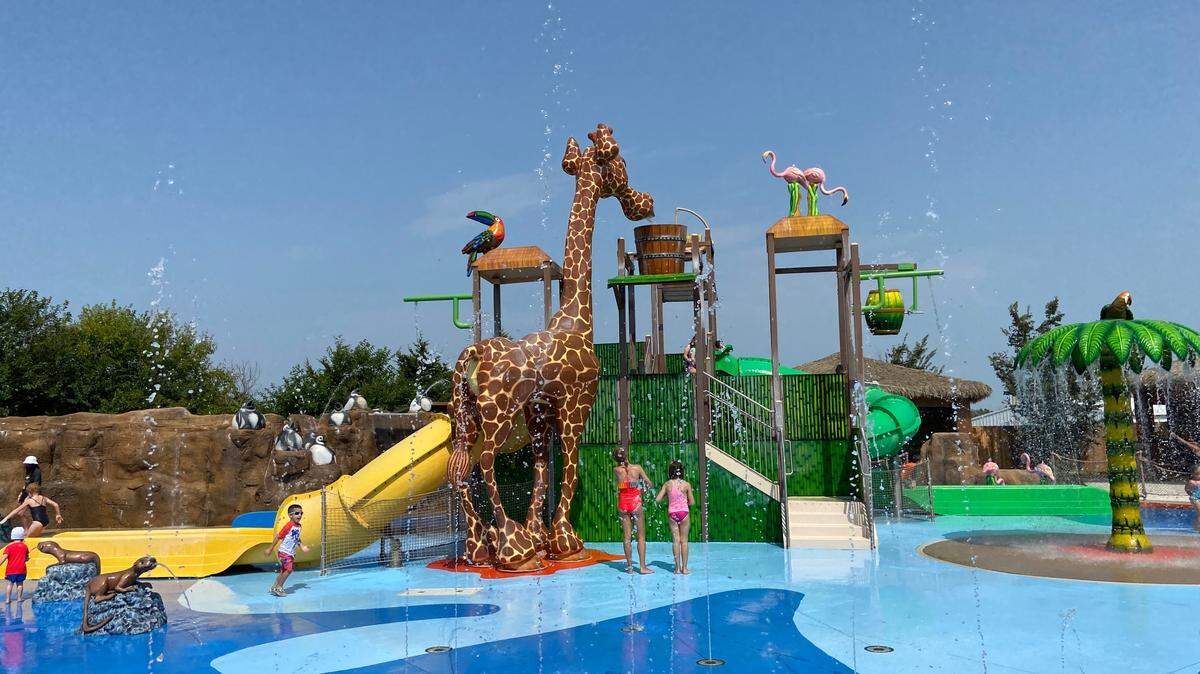
An incident at Tanganyika Falls Splash Park west of Wichita in the summer of 2021 raised questions about sanitation and oversight in the maintenance of splash pads throughout Sedgwick County.
Expand All
Katie Eppley, a local mother of two young boys, said she was already somewhat wary of splash pads before the gastrointestinal illness outbreak at Tanganyika Falls Splash Park in Goddard.
But the June incident, which left several children hospitalized and dozens more violently ill, served as a reminder that unsanitary conditions at water playgrounds can be dangerous.
“I always have the fear of ear infection in the back of my mind with regular splash pads because my friend had one when we were younger after visiting a water park. But Shigella? No thanks,” Eppley told The Eagle.
Eppley isn’t the only local parent wondering how sanitation is maintained at area splash pads. The incident has raised questions about sanitation, oversight and transparency in the maintenance of splash pads throughout Sedgwick County.
Wichita’s splash pads are inspected routinely by the city’s Environmental Health department and facility operators are expected to adhere to the water quality standards specified in the municipal code. But that level of oversight is uncommon throughout the rest of Sedgwick County and much of the state, where facilities operate in something of a water feature Wild West.
The Eagle requested all inspection reports that Environmental Health has filed on Wichita’s splash pads and swimming pools in the past five years and found that more than half of the department’s inspections turned up code violations.
Of the 220 inspections where facilities were evaluated and chemical levels were recorded, 128 reports specified corrective measures that needed to be taken, usually a readjustment of the chemical balance.
In 29 cases, roughly 13% of the time, free chlorine levels at pools and splash pads were below the acceptable levels outlined in the municipal code.
Because splash pads are a favorite of families with young children who may be in diapers or not fully potty trained, the Centers for Disease Control and Prevention call for them to be monitored closely and for public disclosure of inspection scores.
But in Kansas, there are no statewide regulations for the construction, operation, filtration, disinfection or inspection of recreational water features, including pools, water parks and splash pads. And public information about the safety of any individual splash pad in the Wichita area is murky at best.
“Outside of Wichita, there aren’t inspections,” Sedgwick County Health Department Director Adrienne Byrne said. “We don’t have Environmental Health with the county health department, and so cannot provide inspections unless there’s an issue like there was with Tanganyika.”
Michele Hlavsa, chief of the CDC’s Healthy Swimming Program, described splash pads as “a venue where you are more likely either to get an infection or the water is more likely to be contaminated.” She said people should be calling for more inspections and disclosure.
“In this country, we take our food inspections much more seriously [than water inspections]. We expect to see an inspection score when we walk in the front door of a restaurant, and that’s important because you’re putting that food into your body,” Hlavsa said.
“But I would turn it around and say we should be expecting the same thing at our swimming pools that we’re sharing with other households. We should be walking in and we should be seeing inspection scores.”
Before coming to Wichita in 2014, city Parks and Recreation Director Troy Houtman served as operations division manager for Parks and Recreation in Austin, Texas, where he said water quality enforcement was much more stringent.
“We would post the inspection sheets right there in the pool,” Houtman said. “There’s just a lot more oversight, through the state and through the county.”
He said Sedgwick County does a “great job” addressing health concerns but that the health department is unequipped to provide additional oversight that would ensure water quality standards are maintained around the county.
“I don’t think they have the background, program and knowledge to really have the same type of programs I’ve seen in other places,” Houtman said.
Health experts say a certain level of contamination should be expected at splash pads and that it’s up to parents to make sure their children use them safely — instructing them not to drink the water, making sure they shower before and after using them, and avoiding water parks when kids are sick.
The Eagle obtained emails through an open records request showing that the state health department has ruled out animals as a potential source of contamination at the splash park.
Wichita mother Monica Lopez said that when she takes her five children to local splash pads, she makes sure they know not to drink the water.
“I tell them it comes from the dirty pond, so they’re like, ‘Ew, that’s disgusting’ and I say, ‘That’s why you just play in it. You don’t drink it,’” Lopez said.
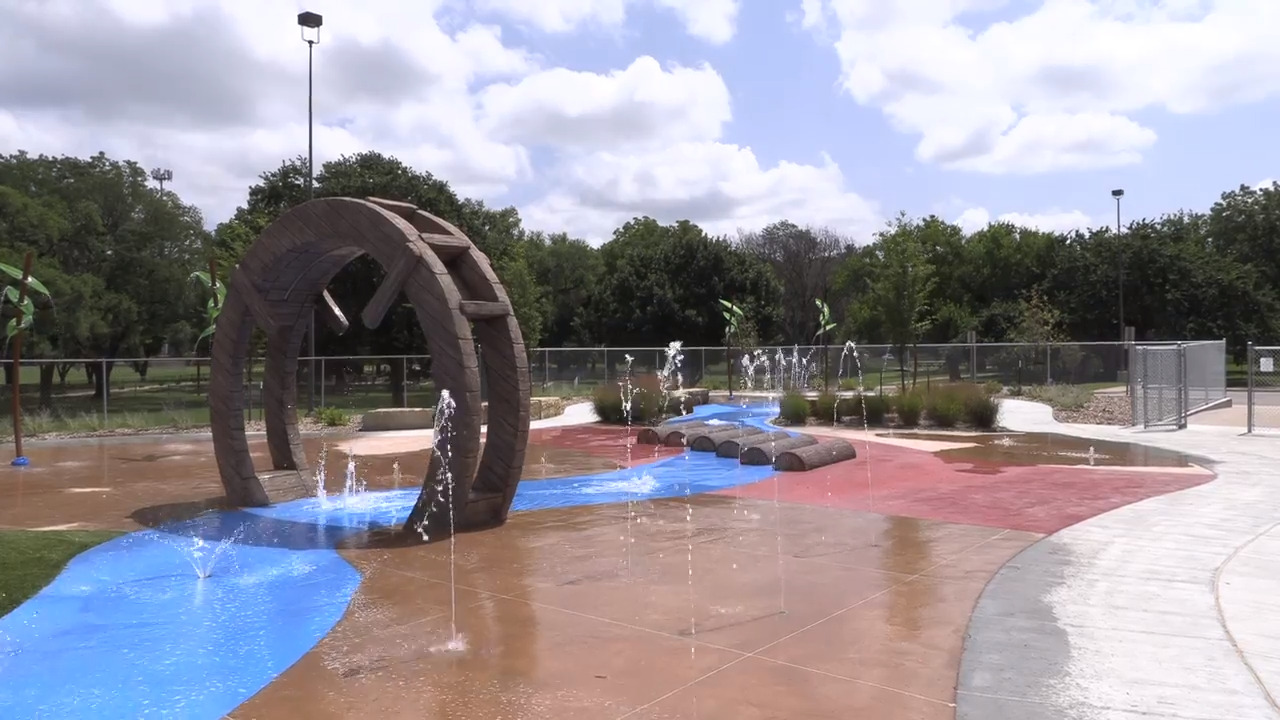
Wichita has invested heavily in splash pads — also known as wet decks, spray pads and interactive fountains — as an alternative to swimming pools in recent years. The city replaced four existing pools this summer at Boston, Edgemoor, Evergreen and Linwood with splash pads as part of a $22 million recreational water facilities upgrade approved by the Wichita City Council in 2019.
Other nearby cities with their own splash pads include Andover, Augusta, Derby, El Dorado, Hutchinson, Maize, Newton and Valley Center.
But because there is minimal local oversight, including a lack of water quality standards and routine facility inspections in many jurisdictions, waterborne illness outbreaks at local recreational water facilities are difficult to identify or prevent.
How infections happen
Health officials have linked Tanganyika’s splash park to eight positive cases of Shigella, a bacteria that spreads from person to person through exposure to contaminated feces, and people who visited the splash park have also tested positive for norovirus, sapovirus and enteropathogenic E. coli.
The Tanganyika incident has now metastasized into a 47-plaintiff lawsuit alleging that unsanitary conditions at the splash park led to children and adults becoming violently ill.
Since Tanganyika’s water playground reopened in late July, visitors have been required to take off their shoes before getting in.
The Kansas Department of Health and Environment only started looking into potential issues with Tanganyika’s splash park after local health departments identified it as the likely source of a Shigella outbreak by linking multiple cases to the same location, an agency spokesperson said.
“KDHE does not inspect water parks or splash pads, but provides assistance for disease investigation,” KDHE Communications Director Kristi Zears wrote in an email, adding that “other agencies may conduct inspections depending on their authority.”
Goddard itself does not enforce any health or safety standards for recreational water facilities within city limits and the Sedgwick County Health Department has adopted a hands-off approach to oversight.
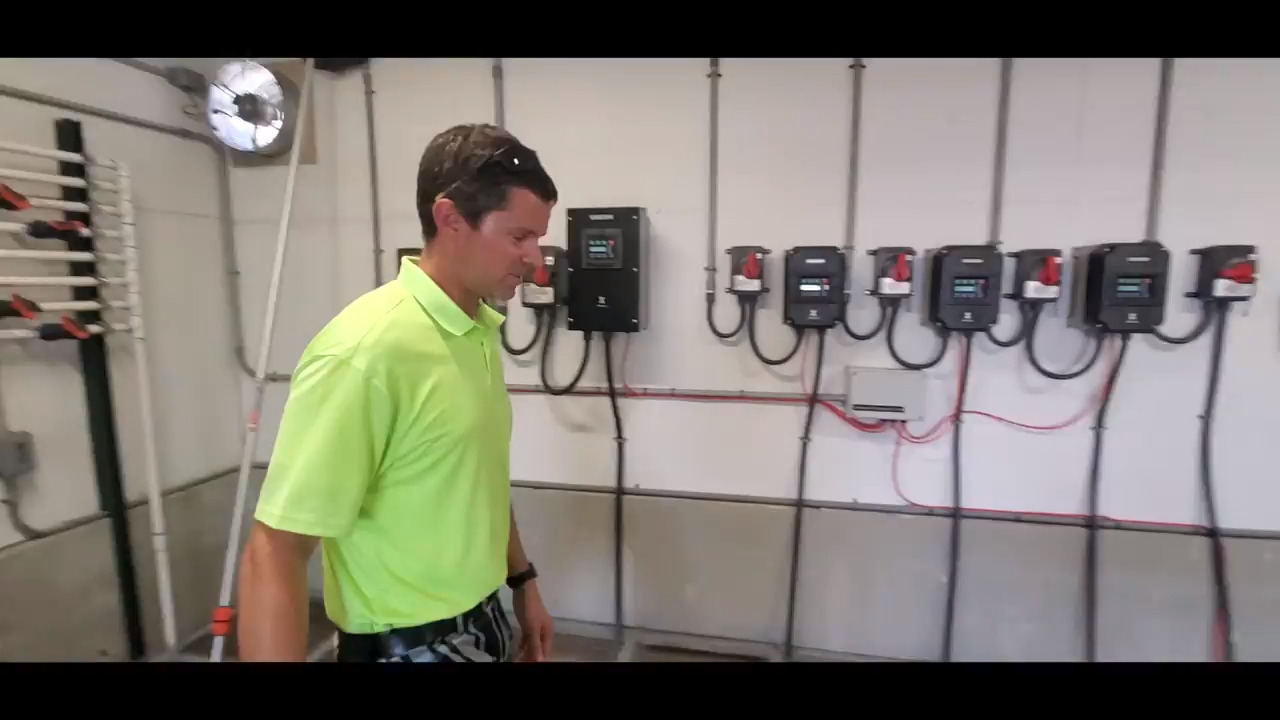
Wichita’s splash pads are equipped with automated controllers that continually monitor the water and alert staff if the chemical balance is out of whack. This automated controller can add acid or chlorine to balance pH levels.
Although the 10 city-run splash pads receive daily maintenance and are usually inspected on a monthly basis by Environmental Health, those inspection reports can only be obtained through an open records request, a process largely foreign to the general public and virtually unadvertised by city authorities.
Briana Barrientos, a childcare worker with Trailblazers Academy in Wichita, said that after hearing about the Tanganyika outbreak, administrators at the private academy researched safety precautions and got parental approval before taking children to play in Riverside Park’s interactive fountains.
“We looked into them a little bit more after we saw that,” Barrientos said. “I’m a little wary about it but their parents said it’s okay.”
Oversight in Wichita
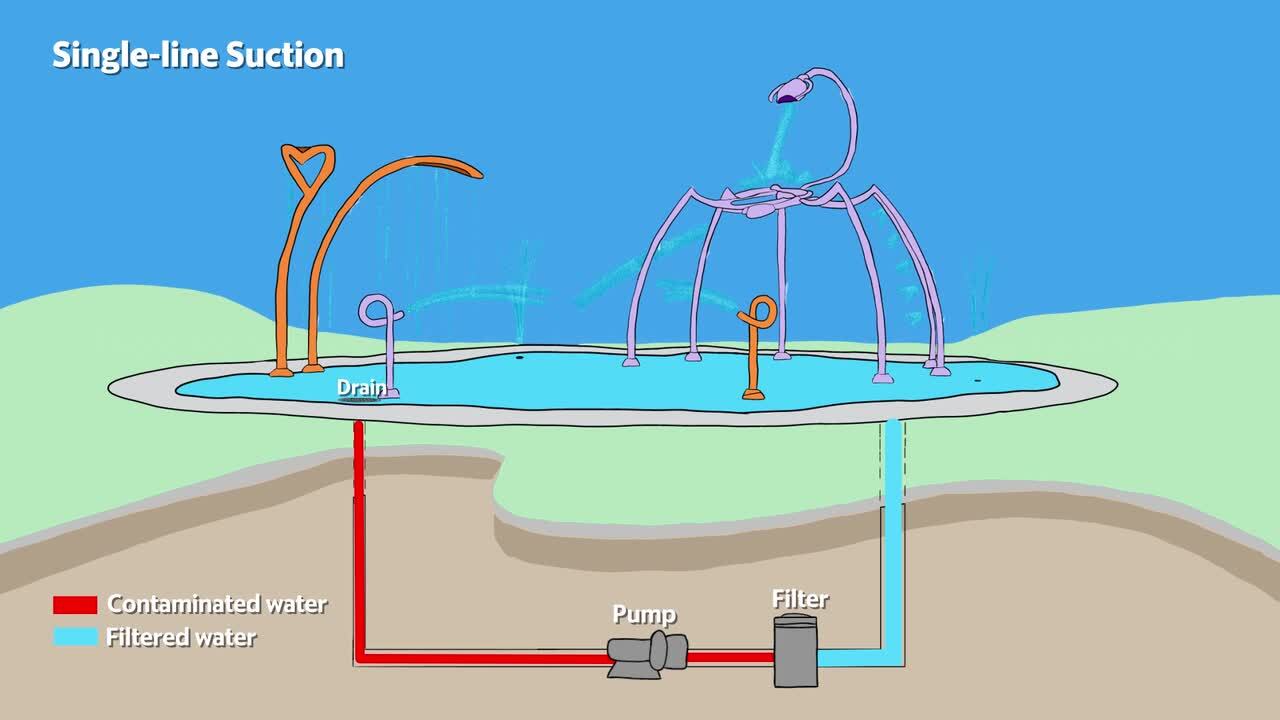
Drinking water from splash pad fountains is strongly discouraged, but city Aquatics Director Brian Hill said that’s not because it goes untreated. He said the water at Wichita’s splash pads is constantly being recirculated through a system that filters and cleans it, even when the parks are turned off for the night.
Some of the other splash pads near Wichita, including facilities in Valley Center, Maize, Augusta, one of Hutchinson’s three water playgrounds and Goddard’s city-run counterpart to Tanganyika’s splash park, do not recycle water, instead relying on potable water that drains directly into the sewer. This method is less water-efficient but has also been linked to fewer bacterial outbreaks.
Hill said the water at any given Wichita splash pad, usually between 5,000 and 7,000 gallons originally from the city’s potable water supply, is treated from May to September without being replaced.
In past years, plumbers from the Public Works department have handled day-to-day maintenance duties at city splash pads, but this year a team of five Parks and Recreation employees has begun performing daily maintenance, cleaning, chemical balancing, water testing, recording and safety inspections of each site.
“This team works seven days a week. They are the first on site to make sure everything is ready for the day,” Hill said. “They continue to check back throughout the day to do water samples to make sure the chemicals are in the proper range.”
He said employees perform maintenance duties at least twice a day at each splash pad site but aim to visit each as many as three to four times a day.
Houtman, the Parks and Recreation director, said picking up trash around the facility is another routine maintenance task for these employees.
“While they’re doing that, they also go out there and make sure there’s no trash on the ground, looking for any — I’ll be very blunt — if there’s any dirty diapers, we want to make sure to get that in the trash because that’s one of the big concerns, right?” Houtman said.
He said that compared to pools, it’s “a little bit tougher to find out” when a fecal accident occurs at splash pads because the water playgrounds are not staffed. Lifeguards must always be on duty at the city’s public pools.
“We’re relying on folks to make sure that if they’re not feeling well that they’re not going to come in here and have an accident in the splash pad,” Houtman said.
Mother Tammy Downen said some parents don’t seem to understand that sick children shouldn’t be playing in splash pads.
“Luckily, we’ve never been sick from them,” she said. “Unfortunately, no matter where you go, you’re taking a chance. Unfortunately, some people just won’t stay home when they’re sick.”
Hlavsa of the CDC said that when splash pads are designed and operated well, they are “healthy and safe places” for children to play. But as water features have gained popularity over the past 20 years, they often slip through regulatory cracks.
“It’s often the case where these venues are accidentally not regulated, not monitored by a local pool inspection program or a state inspection program,” Hlavsa said.
Wichita’s municipal code says recreational water features must maintain a pH balance between 7.0 and 8.0, which is neither too acidic nor alkaline enough to pose a danger to humans. Splash pads are to be kept at a free chlorine level of at least 2.0 parts per million (ppm) while swimming pools must only maintain 1.0 ppm of chlorination to kill most microorganisms.
Inconsistent standards
Sedgwick County does not track the number of people who visit splash pads and water parks annually. The city of Wichita does not keep track of splash pad visitors either, but estimates that more than 80,000 people visit public swimming pools every year.
The county health department encourages public and private recreational water facilities to abide by the CDC’s Model Aquatic Health Code, which provides guidance on disinfection and testing, policies and maintenance and a host of other issues related to aquatic facilities. However, the county does not conduct its own routine inspections.
Byrne, Sedgwick County’s health department director, said this lack of oversight doesn’t usually pose an issue.
“When someone is operating a facility, they have trained people on staff and are aware of the amount of chlorine that needs to be in the water,” she said.
But Hlavsa said independent inspections are key to maintaining safe recreational water facilities.
“This is not specific to Sedgwick County, but in general, I would like to see more inspections,” she said.
Scientists and policymakers who study water features have long placed them in an increased risk category: a 2014 study of 29 Tennessee splash parks found that 21% of water samples taken were positive for indicators of fecal or environmental contamination.
Splash parks that treat and recirculate their water throughout the season as Wichita’s do have been the source of a number of major gastrointestinal illness outbreaks across the country, including a cryptosporidiosis outbreak in New York that infected as many as 1,800 people.
Keeping kids safe
Byrne said a certain level of contamination in splash pad water is to be expected.
“It can happen because you have kids there that may have diapers on, maybe they’ve had diarrhea at home and think they’re better but they’re still — so it’s not unusual for that to be in the water,” Byrne said. “You just have to have the monitoring and testing and chlorine. They just need to be on top of that and most often are.”
But she said the impetus is also on parents to make sure their children stay safe and don’t participate in high-risk behaviors that could get them sick or contribute to contamination.
“There’s a lot that people can do for prevention,” Byrne said. “They’re definitely not powerless in this.”
Too often, she said, children don’t know not to drink the chlorinated water.
“In no circumstance should water go in their mouth,” Byrne said. “I know it can be a fun thing, but the parents have to know to tell their kids, ‘Keep the water out of your mouth. You could get very sick if you ingest that water.’”
No one who has had diarrhea in the past 24 hours should play at a splash park, she said, and diapers should never be changed near the water.
Byrne said parents should be checking their children’s diapers frequently while they’re playing in the water.
“They need to have some kind of a plastic protector or something over the diaper,” Byrne said. “It’s not going to be waterproof, but just to provide another seal, because when the children sit on these sprays and there’s just a teenie weenie weenie little bit of feces in there, the chlorine is able to take care of that, but if it were to get overloaded, then it’s challenged.”
Hlavsa said another important safety precaution is showering before entering the water, although most Wichita splash parks and interactive fountains don’t have showers on site.
“Regardless of whether you’re going through a wildlife park before you go to a water playground or you’re just coming from home, I think it’s really important to shower before you get into the water,” Hlavsa said.
“If we’re not showering before and really washing our rear ends with soap and water, we are going to be bringing some feces into the water.”
Crystal Thompson said it concerns her that other splash pad visitors’ reckless behavior could get her kids sick.
“I was worried at first because I can’t control how others are washing [or] sanitizing, but if I keep worrying, we would never go anywhere, so all we can do is the best we can with our own children and hope other parents are doing the same,” Thompson said.
Signs around Wichita’s splash pads instruct children not to drink the water, horseplay or engage in other “reckless behavior,” but make no mention of showering before entering the water playground.
Tanganyika’s splash park has showers on site but the only Wichita water playgrounds with showers are the ones that have been converted from swimming pools. Interactive fountains, including the one in Old Town Plaza, are sometimes used as showers by homeless people.
Houtman, the Parks and Recreation director, said his department has no immediate plans to add showers at splash pad locations that don’t already have them.
“We do plan to provide more information and instructions on how to use our splash pads and continue to answer questions,” Houtman said.
Splash pad visitors who witness a contaminating incident or have other maintenance concerns are encouraged to call Park and Recreation at 316-268-4361.
If a contaminating incident is reported, splash pad visitors will be asked to leave the water while extra chlorine is pumped into the system to kill germs. Different contaminants require different levels of chlorination and some take longer for the chemical to work. Splash pad visitors can’t re-enter the water until given the go-ahead by a maintenance worker.
Hlavsa recommended that parents do their own “mini inspections” by purchasing test strips at a pool store that can give accurate pH and chlorine readings in 15 seconds.
“There’s 365 days in a year,” Hlavsa said. “Even in your probably more proactive health departments that are doing three inspections a year, that still means there’s still over 360 days that there is no pool inspector at the pool.”
This story was originally published August 15, 2021 at 5:05 AM.