Animals ruled out as cause of Tanganyika outbreak, Sedgwick County Health says
READ MORE
Are Wichita-area splash parks safe?
An incident at Tanganyika Falls Splash Park west of Wichita in the summer of 2021 raised questions about sanitation and oversight in the maintenance of splash pads throughout Sedgwick County.
Expand All
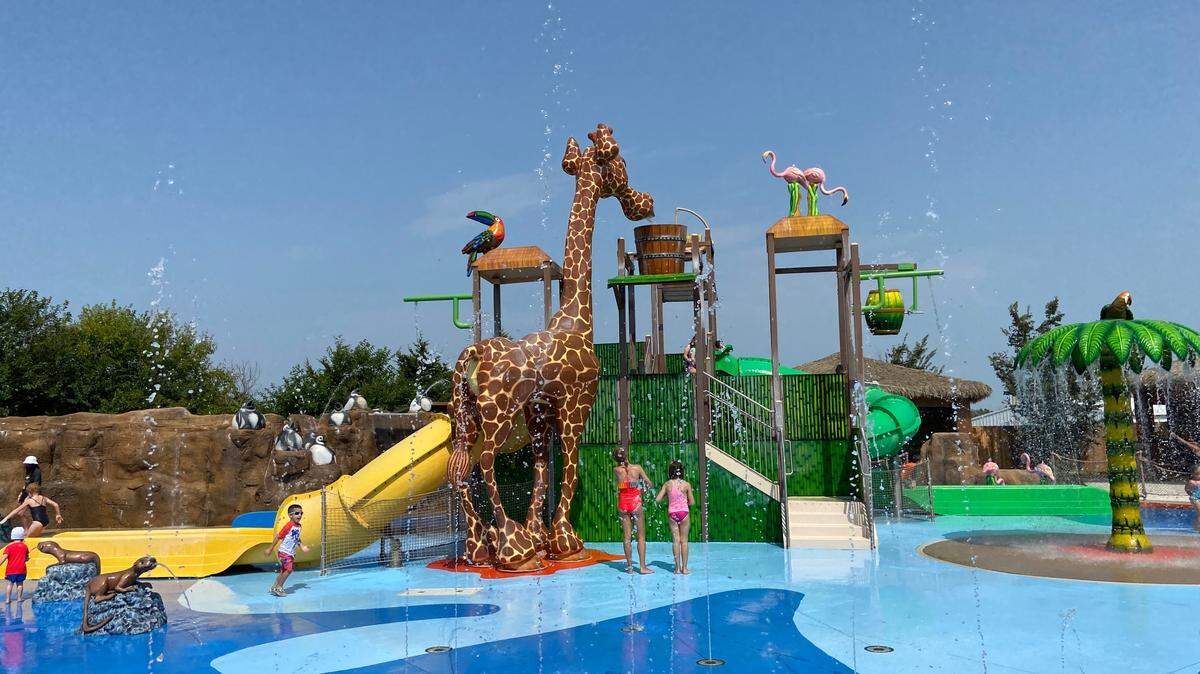
The infection of dozens of people at Tanganyika Wildlife Park’s splash park was not caused by animals in the park’s interactive zoo, emails obtained through a Kansas Open Records Act request show.
The splash park closed June 19 after an outbreak of waterborne illness was traced to the attraction the day before, with health officials eventually linking Tanganyika to multiple positive cases of Shigella, a bacteria that spreads from person to person through exposure to contaminated feces.
People who visited the splash park also tested positive for norovirus, sapovirus and enteropathogenic E. coli.
More than a month of email correspondence between state and county health officials and Tanganyika Park Director Matt Fouts provides more details about the results of water samples taken June 19 and sent to the Centers for Disease Control and Prevention.
Christine Steward, deputy health director with the Sedgwick County Health Department, sent Fouts an email on July 8 following a conversation with the CDC that showed none of the 12 water samples had animal-linked contamination.
“The organisms isolated from the water samples help us rule out the animals at the park,” she wrote. “There was no STEC (Shiga toxin-producing E. coli) or other specific animal organisms isolated. The organisms are generally human.”
The new finding was surprising, because Tanganyika also showcases exotic animals and patrons were allowed to walk through their enclosures before entering the splash park.
That lead many people, including media pundits, frequent visitors to the park and parents, to assume that the cause of the outbreak was from animals, not humans.
Cameron Vandusen told The Eagle his 4-year-old daughter, Kennedy, went to the hospital on June 19 after she had visited the park the day before and started vomiting.
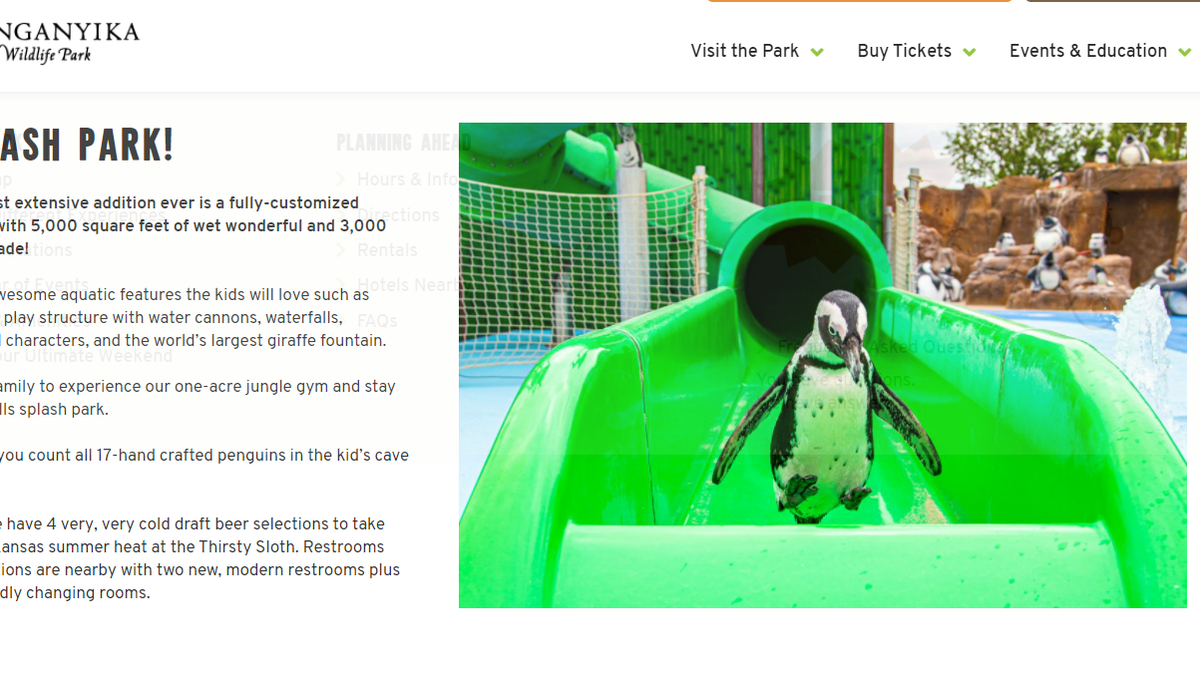
Vandusen later sent The Eagle photos of a penguin in the splash park.
“Here’s the problem I solved it,” he wrote.
Tanganyika addressed the concerns about the penguin, named Paco, on its website under a frequently asked questions section about the outbreak.
“We do not allow animals in the splash park with the public,” the post says. “That was a photoshoot we did with Paco the penguin a few weeks before the splash park opened to the public.”
“His keeper cleaned up after him, we power-washed the splash park after his visit, and ran chlorine over those areas for days prior to opening … He only walked through a little water in front of two fountains. None of the other features including the blue and green slides were running at the time.”
The splash park was allowed to reopen July 27 after improvements were made, but an ongoing lawsuit alleges that its 47 plaintiffs became “violently ill and suffered repeated bouts of vomiting, diarrhea, headaches and fever and other symptoms due to the negligence and/or carelessness” of the park.
Before being approved to reopen, Tanganyika adopted the CDC’s Model Aquatic Health Code.
Sedgwick County Health officer Dr. Garold Minns told the park in a letter the park shared in a Facebook post that, after reviewing changes to the facility and inspections, the health department is “satisfied that all requirements are met and that there is no risk of infection.”
This story was originally published August 7, 2021 at 8:57 PM.