Timeline of events at Tanganyika Falls Splash Park
READ MORE
Are Wichita-area splash parks safe?
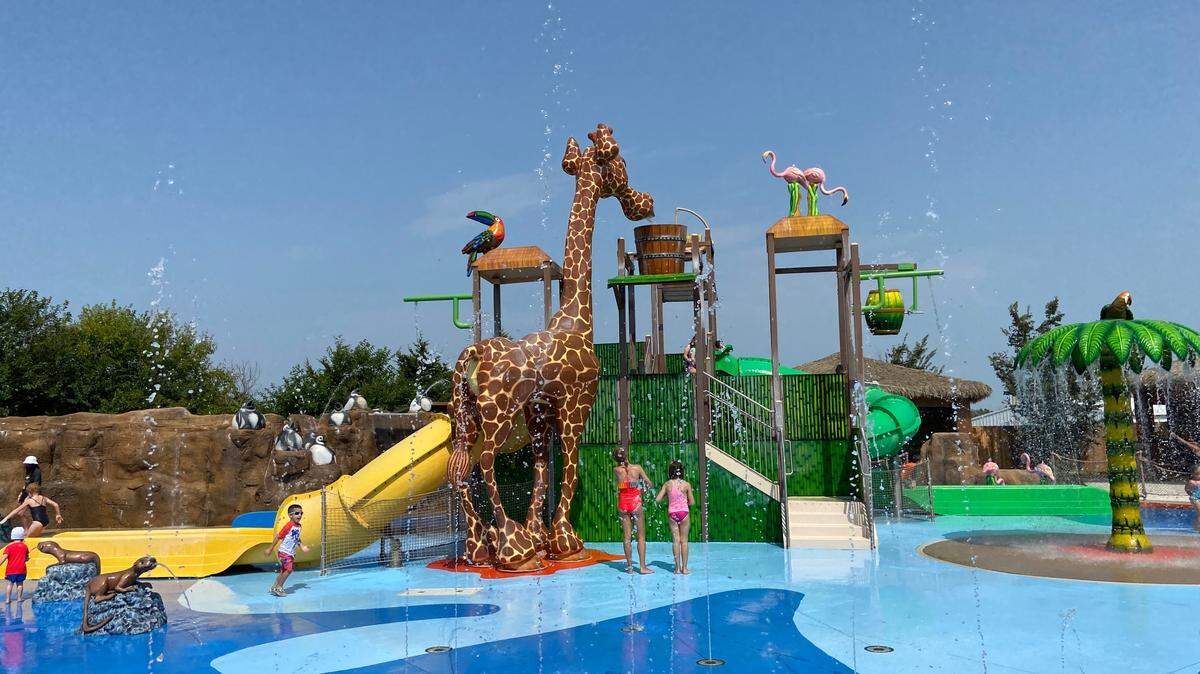
An incident at Tanganyika Falls Splash Park west of Wichita in the summer of 2021 raised questions about sanitation and oversight in the maintenance of splash pads throughout Sedgwick County.
Expand All
June 11
Eight people who visited the splash park at Tanganyika Wildlife Park that day would later test positive for Shigella, a bacteria that spreads person-to-person through exposure to contaminated feces. Others would later test positive for other diseases.
June 18
Health officials contact the park about a connection between people getting sick and the splash park. Tanganyika director Matt Fouts said they were notified at the end of the day and cut short an after hours event at the splash park.
June 19
State and Sedgwick County health officials meet park staff at Tanganyika that morning. Water samples are taken and sent to the Centers for Disease Control and Prevention. The results came back negative for Shigella, but coliform and E. coli were found. Those bacterium likely indicate fecal contamination.
Fouts said health officials told him to “shock” the system, meaning to drastically increase the amount of chlorine to disinfect the water, and then reopen, but health officials a few hours later decided to close the splash park for good.
Sedgwick County Health Department director Adrienne Byrne later asked Fouts specifically who told him to reopen the park Saturday and that she and other officials never told him to do so, according to emails obtained in an open records request. She also threatened a legal order “could be requested” to keep the splash park closed “but you stated that was not necessary.”
Fouts said Byrne wasn’t there that day and he followed what health officials told him to do.
Around 5:30 p.m., Tanganyika posted on Facebook that the splash park was closed because of a filtration system problem and that it was “working diligently to remedy the issue.”
“The splash park is a new adventure for us animal people, and it was an issue we could not foresee,” the post said, not mentioning anything about a possible link of visitors getting sick.
The post has more than 1,300 comments, many with people complaining of their children or family members getting sick and even hospitalized after visiting the splash park.
June 20
A KDHE news release said health officials are investigating a link between several people who visited the splash park coming down with a diarrheal illness. The KDHE asked for people who visited the park after May 28 to fill out a survey.
June 22
A lawsuit filed against Tanganyika said Elena Davis and her three children became “violently ill and suffered repeated bouts of vomiting, diarrhea, headaches and fever,” as well as other symptoms after visiting the park. Severe symptoms sent one of her children to the hospital, according to the lawsuit.
June 23
Health officials report the first named cases of disease linked to the park. A few people who visited the park tested positive for Shigella. That number would eventually increase to eight.
July 2
An amended lawsuit is filed to represent 47 people who became “violently ill and suffered repeated bouts of vomiting, diarrhea, headaches and fever and other symptoms due to the negligence and/or carelessness” of the park, the lawsuit says.
The 47 plaintiffs include people from Kansas, Missouri, Washington and Alabama.
Also that day, the results of the June 19 water samples were reported, showing coliform and E. coli present but not Shigella.
Health officials also reported people who visited the splash park tested positive for norovirus, sapovirus, and a type of E. coli called enteropathogenic E. coli.
July 8
Deputy health director Christine Steward sent an email to Fouts with an update following a conversation with the Centers for Disease Control and Prevention.
July 14
Whole genome sequencing on two of the Shigella cases showed the cases were closely related genetically, the KDHE said.
“This means that they likely share a common source of infection,” the KDHE said, adding the sequencing “could not be performed” on the other Shigella cases.
The KDHE also announces a second survey. The survey asks people where they went in the splash park, what animals they interacted with and what symptoms they experienced.
July 23
Sedgwick County health officer Dr. Garold Minns signs off on the splash park reopening. Minns, who noted changes the park made and results of inspections by health officials and an independent inspector, said there is “no risk of infection.”
The park implemented the CDC’s Model Aquatic Health Code, which was not required. The CDC says the code is based on the “latest science and best practices to help ensure healthy and safe experiences” in public pools and splash parks. The Sedgwick County Health Department director called it the gold standard.
This story was originally published August 15, 2021 at 5:05 AM.