Details emerge on what happened at Tanganyika Wildlife Park
READ MORE
Are Wichita-area splash parks safe?
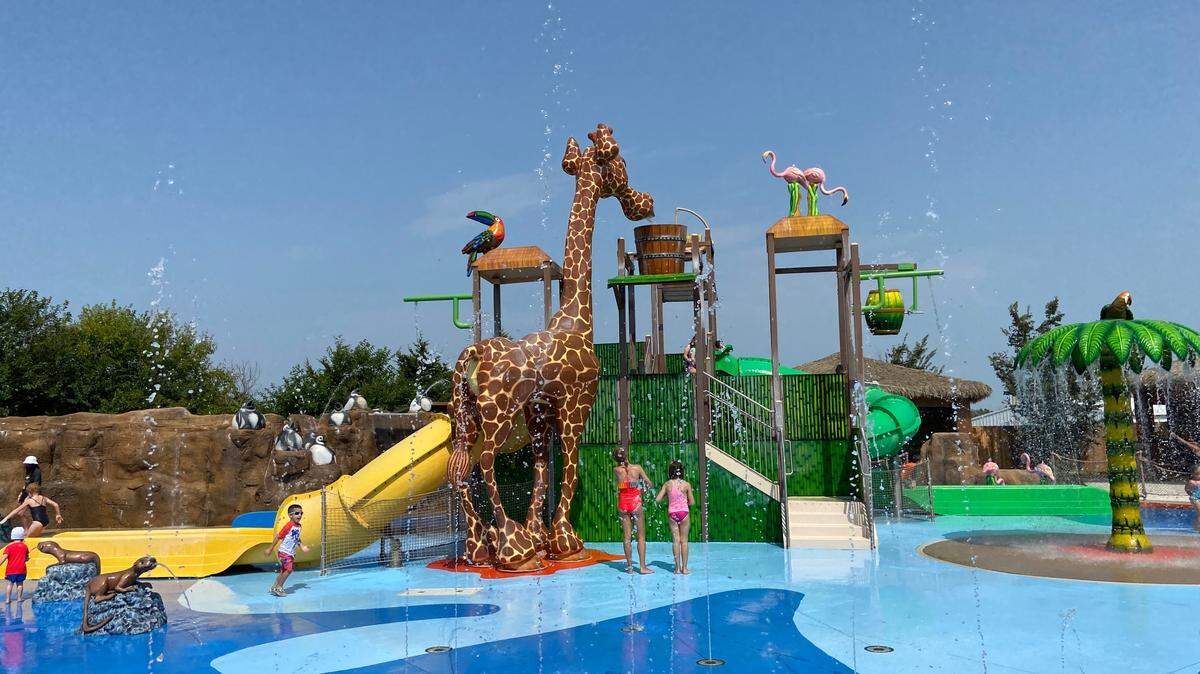
An incident at Tanganyika Falls Splash Park west of Wichita in the summer of 2021 raised questions about sanitation and oversight in the maintenance of splash pads throughout Sedgwick County.
Expand All
State and county health officials told Tanganyika Wildlife Park it was safe to open its splash park the day after linking a bacterial illness to the site, park director Matt Fouts says.
Emails between health officials and Fouts, requested by The Eagle through an Kansas Open Records Act request, show more details into the outbreak at Tanganyika that caused a month-long shutdown of the splash park and possibly dozens of cases of bacterial waterborne illness.
The key detail that the park’s wildlife section was not linked to the outbreak was also revealed in the email correspondence.
On July 8, deputy health director Christine Steward sent an email to Fouts with an update following a conversation with the Centers for Disease Control and Prevention.
“The organisms isolated from the water samples help us rule out the animals at the park,” she wrote. “There was no STEC (Shiga toxin-producing E. coli) or other specific animal organisms isolated. The organisms are generally human.”
The splash park was allowed to reopen July 23 after a health official signed off on improvements made to the park.
The emails reveal several things not previously known: that Fouts was provided talking points from the Sedgwick County Health Department on what to tell the public, what the source of the outbreak was and possible lapses in the park’s quality control measures to prevent an outbreak.
The outbreak at Tanganyika spurred a lawsuit involving 47 plaintiffs. The lawsuit says the people became “violently ill and suffered repeated bouts of vomiting, diarrhea, headaches and fever and other symptoms due to the negligence and/or carelessness” of the park.
The Goddard park opened in 2008 and attracts tens of thousands of visitors each year. The water park first opened for several weeks toward the end of last year’s swimming season.
The Kansas Department of Health and Environment first alerted the Sedgwick County Health Department of the connection to the splash park on June 18.
Three people in different counties took their children to the doctor and all of them tested positive for Shigella, SCHD director Adrienne Byrne said. All of them visited the park on June 11. The positive tests for Shigella could not rule out E. coli, so more testing needed to be done, she said.
Shigella is a bacteria that spreads person to person through exposure to contaminated feces. People can become infected by swallowing contaminated water or touching a contaminated surface and then touching their mouth.
Byrne said she and Steward notified the park about visitors getting sick. Fouts shut down the splash park early that evening.
That night, Steward sent an email to Fouts titled “Talking Points for Tanganyika.” Byrne was included in the email. It said Fouts could use some or all of them. None of them mentioned anything about park patrons being sick.
“Due to an unforeseen problem with our water system, we have to close Tanganyika Falls Splash Park,” one of the talking points said.
Byrne said Fouts was not under any obligation to use those talking points, but they were provided at his request. Fouts did not respond to questions from The Eagle about the talking points.
Fouts never said anything to the public that night. Health officials didn’t say anything to the public for two days.
“It’s not like we were not putting out a public health announcement that would keep people from being ill because we were stopping what we believed was the source at that time,” Byrne said.
Byrne said Fouts asked when he could reopen that night and she relayed someone from either the KDHE or CDC said he could “shock the system” — meaning spike the level of chlorine to kill off bacteria in the park’s water equipment — then dilute the water and reopen.
Officials from the county and state health departments met at the park the morning of June 19. Water samples were taken and sent to the CDC.
At some point during that day, the splash park was reopened after being shocked.
During a discussion that day, Byrne and other health officials said the splash park needed to remain closed and Fouts never indicated it had reopened, Byrne wrote in an email.
Byrne later found out it had reopened and pressed Fouts for the name of who exactly during the June 18 site visit had told him to reopen the next day.
She also threatened a legal order “could be requested” to keep the splash park closed “but you stated that was not necessary.”
Fouts told The Eagle that Byrne wasn’t there in person during the site visit and that he followed what state and county who visited the park on the morning of June 19 told him to do.
“I think there was some miscommunication, misunderstanding or whatever,” Byrne said.
Later that night, in a post on Tanganyika’s Facebook page, Fouts announced the splash park was closed. He didn’t use the talking points from the county or mention anything about people getting sick, instead he wrote that the shutdown was because of a filtration system problem and said that they are “working diligently to remedy the issue.”
“The splash park is a new adventure for us animal people, and it was an issue we could not foresee,” the post said.
The post has more than 1,300 comments, many with people saying their children or family members became sick or were hospitalized after visiting the splash park.
One person commented that the “vagueness and tone” of the Facebook post is “awful.”
“You need to be honest with your members and let them know what’s going on so that they may be able to take measures in figuring out what’s going on with them, if they’re sick,” another person wrote.
Tanganyika would later reply to one person’s comment about the vagueness of the Facebook post.
“As for what is and isn’t released, we [are] following the guidance of the health department,” it read. Tanganyika also replied to a comment six minutes before and two minutes after that and signed the reply “Matt.”
Fouts, in a June 20 update on Tanganyika’s website, said his post was “based on the limited information I had at the time and what I was allowed to share.”
The public first heard about an outbreak related to the splash park on June 20, more than 48 hours after health officials made the connection.
The KDHE news release said there was a “diarrheal illness” related to the park, but didn’t mention any specific numbers of cases or types of diseases. It also asked people who visited and experienced fever, diarrhea or vomiting to fill out a survey.
It also said the park closed “immediately after learning of the illness” on June 18, without mentioning the splash park was open again the next day, June 19.
Byrne, who was included in the edits of the news release, said health officials didn’t know at the time the splash park was reopened on June 19.
Fouts was sent two more sets of talking points before the news release went out.
Health officials found out the results of the CDC samples on June 29, Steward told Fouts in an email. Fouts replied later that night, asking in the “interest of getting some sleep tonight, did the CDC find anything?”
Steward, who didn’t respond until the next morning, said the results did not find Shigella, but some samples tested positive for fecal coliforms, which is a bacteria found in human and animal feces. Fecal coliform indicates the water is contaminated. E. coli is a type of fecal coliform.
“Please do not distribute,” she wrote. “We are working on what messaging to do.”
The KDHE wouldn’t release those results until July 2. That news release reported people who visited the splash park tested positive for norovirus, sapovirus and a type of E. coli called enteropathogenic E. coli, which is associated with diarrhea.
A subsequent news release said whole genome sequencing showed some cases of Shigella were “closely related genetically.”
The news releases did not mention the source of any disease or how it could have happened. But the month-plus of emails requested by The Eagle fill in those details.
Emails rule out animals, point to quality control problems
The filtration and sanitation system is meant to kill off bacteria, but Steward, citing the CDC, mentioned issues with Tanganyika’s system.
The system used to be shut down each night which could cause “biofilms to proliferate and inadequate disinfection,” Steward wrote. Bullet points under a heading about “No 24/7 filtration and disinfection” said “contamination could be in the reservoir. Need to do regular cleaning.”
Steward also said, under a section titled “no controller to automatically sense and regulate chlorine levels,” that “free chlorine was not checked” and a “single manual check from the sink in the pump room by Tanganyika staff identified a reading at a point in time and not all the fluctuations that occur during the day.”
Two days later, Fouts replied with his own position.
He said contaminants possibly being in the reservoir is a “statement of anonymous authority without substantive evidence.” He said the water tested on June 19 tested negative for coliforms and other bacterium and an acceptable level of free chlorine was found.
No Shigella was found in the water on June 19, but samples did find coliform and E. coli, according to the KDHE. None of the levels measured that day meet Wichita’s standard for a splash park, according to city code.
He also defended the park’s automated and manual checks on chemical levels in the water.
Sedgwick County health officer Dr. Garold Minns signed off on the park reopening July 23 after the park volunteered to implement the CDC’s Model Aquatic Health Code, which Byrne called the gold standard. Minns, citing the changes made by the park, said the health department is “satisfied that all requirements are met and that there is no risk of infection.”
The sanitation system now operates 24/7, Fouts said, declining to comment about former processes because of the lawsuit.
The Goddard park, which attracts tens of thousands of visitors each year, had an event Saturday, Aug. 7, to celebrate its 13th anniversary.
This story was originally published August 15, 2021 at 5:05 AM.