
Bagworms are active in Kansas and feeding on your trees, roses. How to stop them
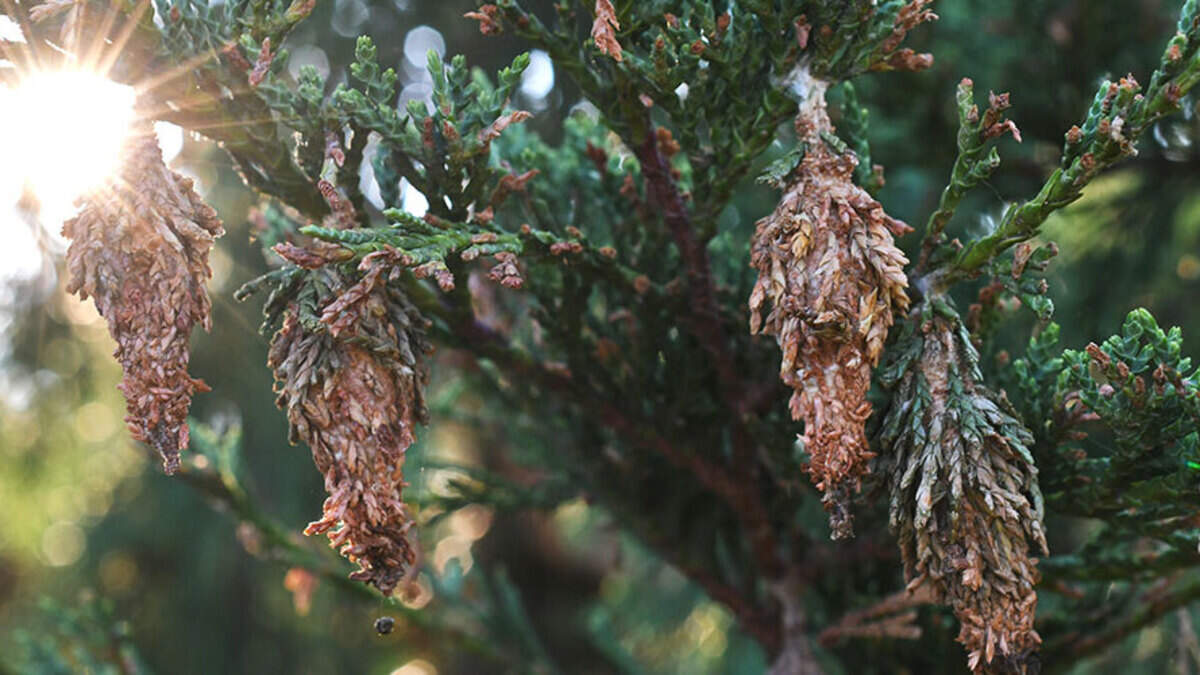
A major pest known to damage trees and shrubs by feeding on their leaves is once again active in Kansas.
Bagworms, an insect caterpillar that can eat large amounts of plants in a short amount of time, are commonly known to feed on roses and evergreens, according to Kansas State University’s Department of Horticulture and Natural Resources.
While young bagworms typically emerge from their eggs from mid-May to mid-June in Kansas, this year they started emerging in mid-April, K-State extension agents said in the June 9 Horticulture Newsletter.
Those bagworms will then create silken bags to carry with them as they eat, later adding plant material into the bag, which helps them hide from predators. By late summer, those bags can be up to 2 inches long and noticeably hanging from plants.
“Larvae feed intensively and cause more damage as they increase in size,” extension agents said. “If not managed, excessive bagworm populations can defoliate trees or shrubs.”
Larvae may also spread to neighboring plants using silken threads — known as “ballooning,” Raymond Cloyd, a K-State extension specialist in horticultural entomology, said in a news release.
As the bagworm bags get bigger, they can cause even more plant damage, horticulture experts say.
If you do not notice your tree or plant has bagworms — or if you choose not to control them — the level of risk depends on the size and type of the plant and the number of bagworms, Cloyd told The Wichita Eagle.
“So if you have a lot of bagworms on, say, a 5-foot tree, they could probably kill it,” he said. This is especially true for conifers and evergreens, which do not regenerate growth after damage from larval feeding.
And then in August, the pests will finally stop feeding and attach their bags to branches. The males will become moths that fly to the females’ bags to mate before dying, and the females can produce up to 1,000 eggs that overwinter until the next year.
Controlling bagworms in Kansas
If you have a minor bagworm infestation, horticulture experts say you should manually pick the bags from your trees or shrubs throughout the growing season and into the winter.
The bags should be placed into buckets of soapy water for at least 15 minutes to kill the pests, then put in a pile in a spot that gets a lot of sun.
If you have a major infestation, or if your tree is too tall to be able to reach all the bags, insecticides are recommended. The type of insecticide you should use depends on the size of the bagworm bags.
“The larger and more robust the caterpillars and their cases become, the more difficult they are to manage with insecticides,” said Shad Hufnagel, forest health coordinator with the Kansas Forest Service.
If the bags are less than 1/4 inch long, experts recommend ones with Bacillus thuringiensis subspecies kurstaki (Btk) or spinosad. In Kansas, they should be applied about every 7 to 10 days from mid-May to mid-June.
If the bagworm bags are bigger than 1/2 inch in length, you should use a broad-spectrum insecticide in the early morning or late evening, when pollinators are not active. These can be applied up to twice a year from late June to late July.
This story was originally published June 19, 2026 at 3:45 AM.