How Father Kapaun’s mother — and other mothers of lost soldiers — helped bring him home
READ MORE
Once Was Lost: Father Emil Kapaun
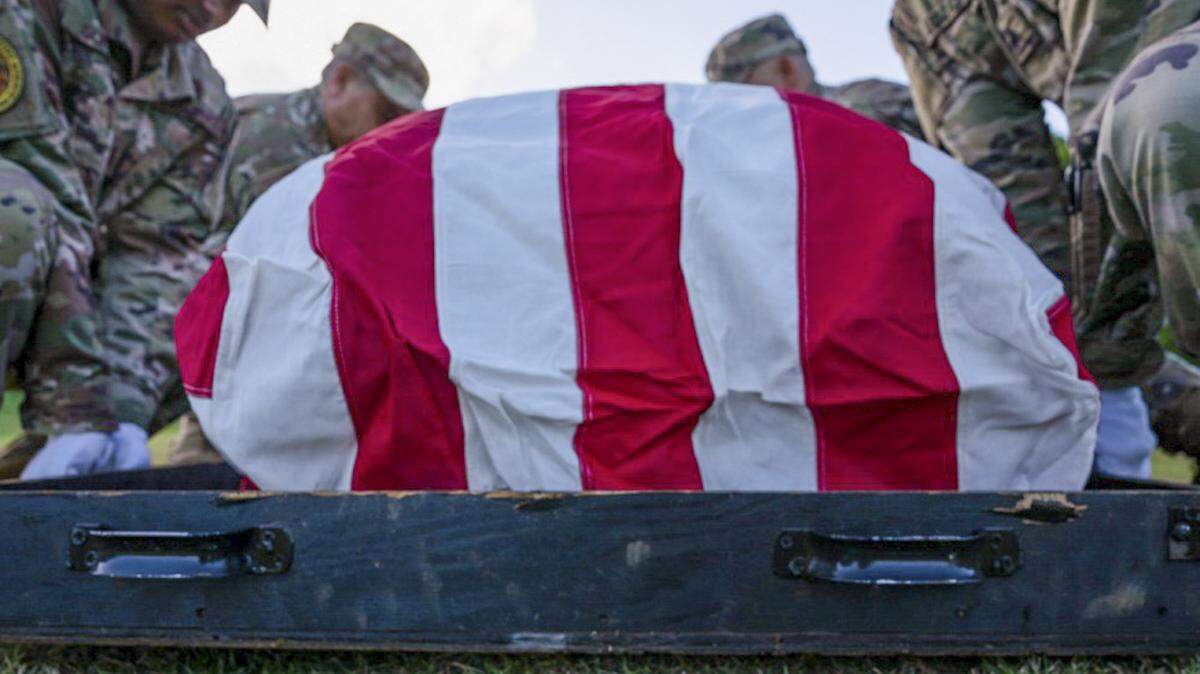
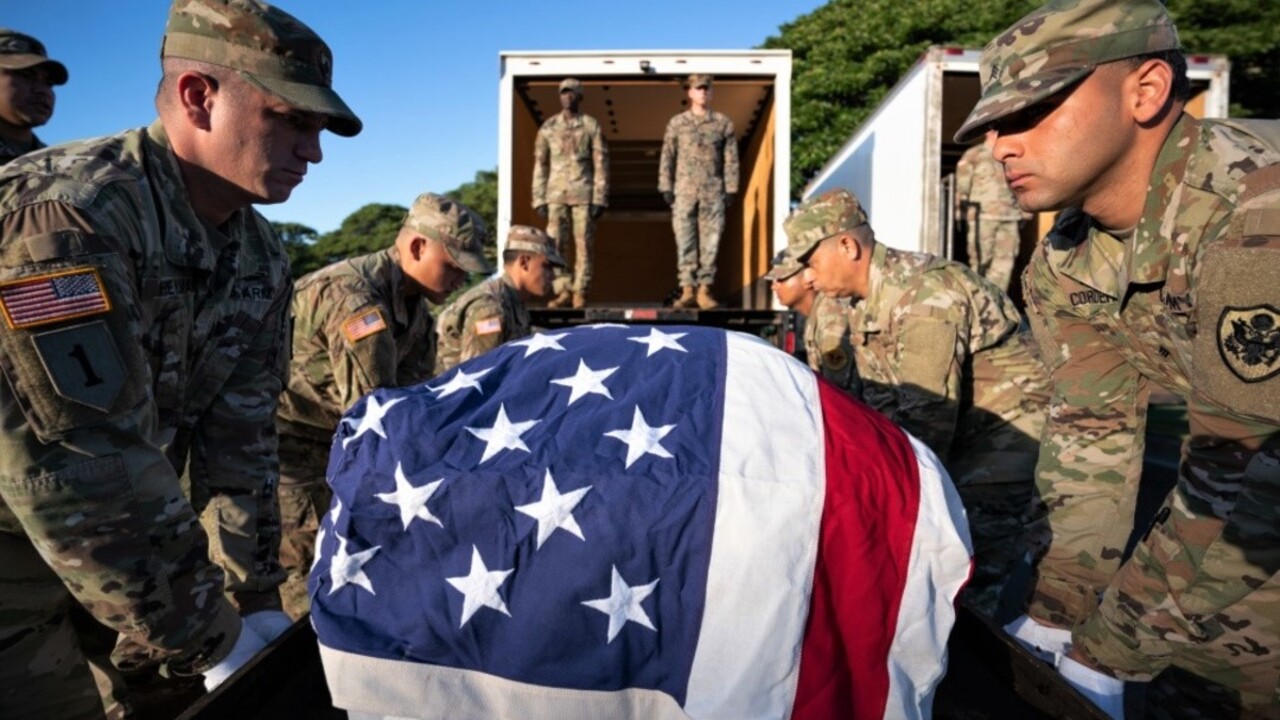
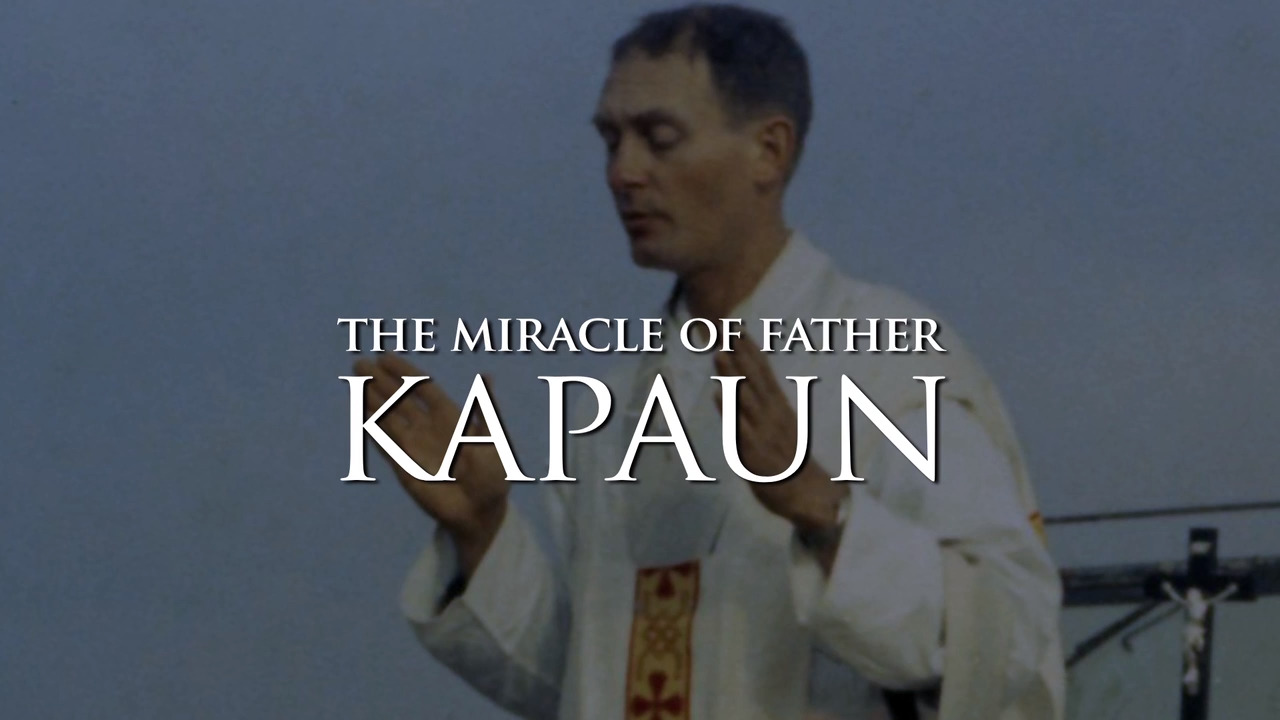
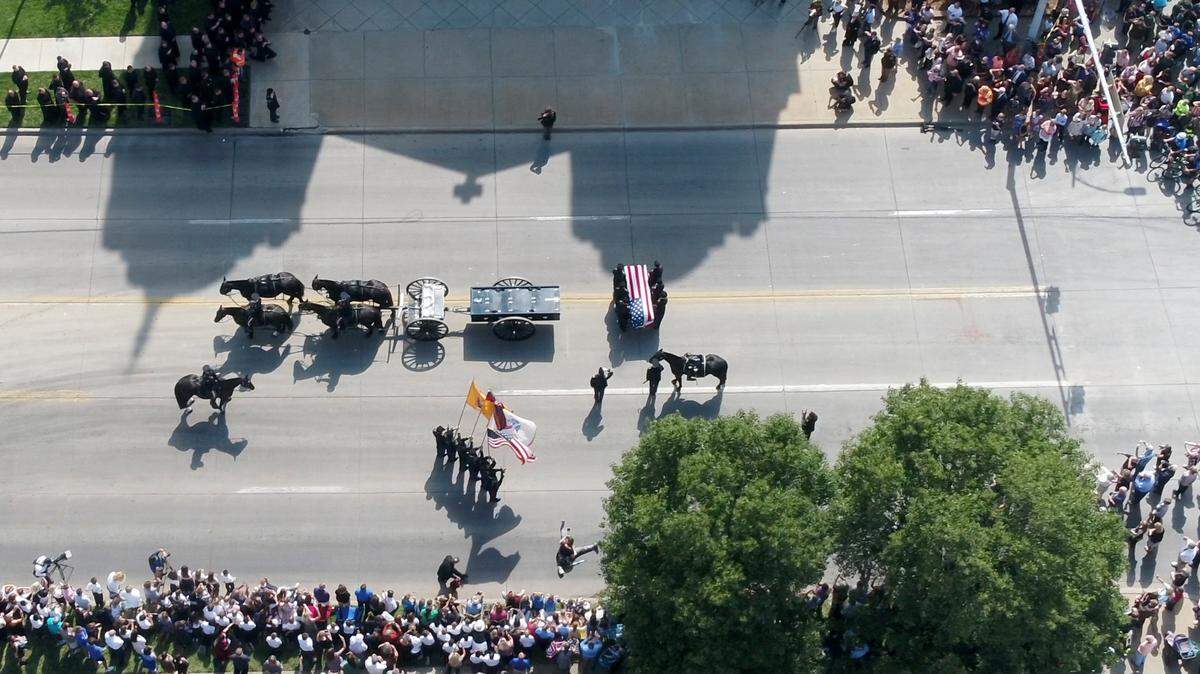
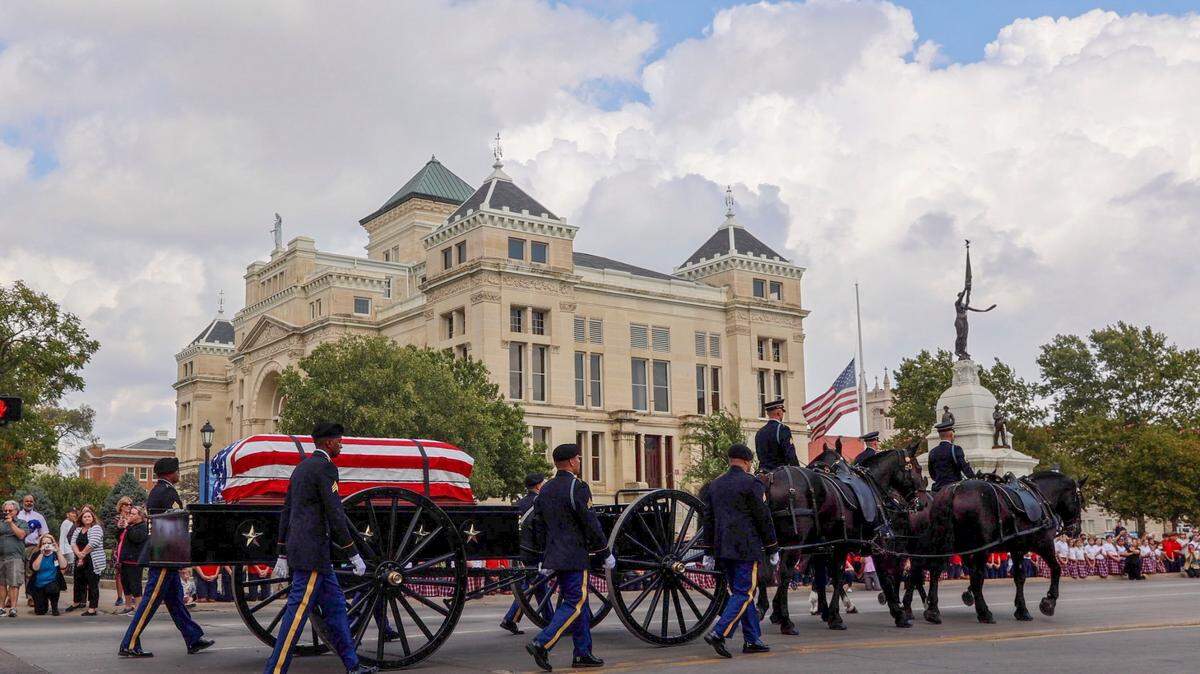
For 70 years, the remains of Father Kapaun, a Korean War hero and Catholic priest from Pilsen, Kansas, remained missing. Earlier this year, his remains were identified and now they’re back home in Kansas.
Expand All
One last story needs telling about the hero Emil Kapaun as we prepare for Veterans Day. It’s about the hero’s mother — a story familiar to all mothers of lost soldiers.
It’s about how she demanded the search that found him.
And how she gave the searchers, against improbable odds, the last great clue that brought him home to Kansas.
From a long way off
In 1951, not long after Father Emil Kapaun disappeared into the chaos of the Korean War, Bessie Kapaun began having a recurring dream.
In her dream, night after night, she stood at the front door of the Kapaun farmhouse and watched her son walk toward her along the dirt road that led home.
Emil had ridden that road on his bicycle as a kid, sometimes all 3 miles to the church in Pilsen. He’d get off the bike sometimes, pick wildflowers and then ride to the church. He’d put the flowers on the altar, then pull on his altar boy vestments.
The Kapauns lived on the open prairie, so in her dream, Bessie could see him coming from a long way off, past the wildflowers and wheat shocks. He walked past the wheat, corn fields, cow pastures. At night, there were songs of crickets and frogs. And after sundown? The Kapauns were isolated miles from the city lights that wash out the stars, so on clear nights, even when she wasn’t dreaming, Bessie could look up to God’s heaven and see star-spangled swaths of the Milky Way.
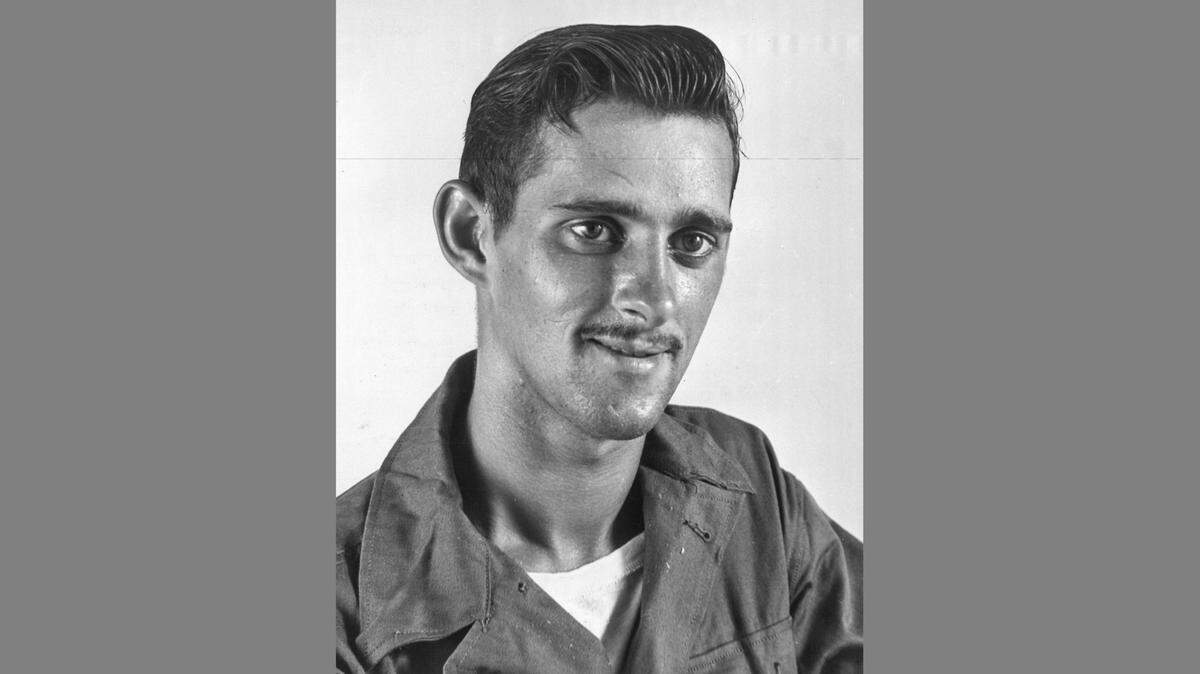
Emil wore his Army uniform in her dream, Army duffel bag slung from one shoulder. He had been a Kansas farm boy, then a Catholic priest, then a heroic U.S. Army chaplain. But he was most of all her son, gentle and curious — fond of pipe tobacco, more prone to listening than talking.
In the dream, she watched him walk to the front gate. He would put his duffel bag down.
All he had to do was unlatch the gate and come in.
But he just stood there.
Delusion
Bessie erupted in frustration one day not long after the Korean War ended. Harriet Bina, who got to know Bessie later, remembered how Bessie told everybody that she would go to North Korea and demand the body of her son.
Friends tried to talk her out of this delusion. After all, the North Korean communists had murdered many surrendered soldier prisoners. Friends of her son had told her that the communist guards had murdered him. The North Korean leaders, as Pentagon analyst Philip O’Brien later said, “were rampantly xenophobic. They hated foreigners, Americans especially.”
Bessie would not listen; she began to make plans. At last, Father Tonne, the priest in Pilsen, told her he would go with her. The journey would probably end with him in prison, Arthur Tonne told Bessie. Or worse.
That stopped her plans for a trip.
But she wasn’t done.
‘I don’t want those things’
In Iowa, young Harriet Miller went swimming one day in a pond with other children, including 7-year-old Butchy Cole.
Butchy fell off the hedge log he was floating on. He didn’t know how to swim. He started waving and sinking.
The other kids put Harriet on another hedge log and shoved her out to save Butchy, which was a lot to ask of an 8-year-old who didn’t know much more about swimming than Butchy knew.
Harriet grabbed him, and Butchy grabbed her back, but Harriet felt his fingers slip out of hers. She watched him sink. The adults who came later fished out Butchy’s body and laid it on the bank of the pond.
The grief that consumed Harriet was like a form of death. Her father moved his family to Kansas so Harriet could heal.
And so Harriet was a girl of 8 in early 1951 when she and her family moved to Lincolnville, Kansas, 5 miles from Pilsen. In Pilsen, they attended church. And at church, Harriet heard the first stories coming out of the Korean War describing the heroic acts of Pilsen’s own Father Emil Kapaun.
They told her he was an Army chaplain, alive but missing in North Korea. They said he had recently served several months on battlefields, dragging wounded men to safety while snipers shot at him.
Harriet grabbed at the story the way a drowning girl might grab at a floating log. He saw someone dying, Harriet thought. Like I saw someone dying. But he saved his boys, where I could not save mine.
Months later, in August 1951, Harriet woke up to what she thought would be a thrilling day: Officers from the U.S. Army would come to Sunday Mass. They would bestow upon Enos and Bessie Kapaun their son’s Distinguished Service Cross — the second-highest Army award for valor, behind only the Medal of Honor.
No one in Pilsen knew that Emil Kapaun was already dead. He had died of starvation and pneumonia three months before, telling Mike Dowe and other prisoners of war: “I am going to that place that I always wanted to go.” But no one outside North Korea knew he was dead. The people in the Pilsen church thought they were honoring a living hero in a lofty ritual, and they were thrilled.
Even Bishop Mark Carroll would be there, wearing his conical hat and vestments signifying leadership of the Wichita Diocese of the Catholic Church, which included Pilsen. Harriet was thrilled because she would forget her trauma again, watching soldiers hold out the medal for all to see.
But then that moment came.
Harriet heard shuffling in the back of the church as people rose to show respect. Harriet turned — and saw Bessie Kapaun.
It stunned her — the pain contorting the mother’s face. “Her broken heart, written all over her.”
Behind Bessie walked Enos Kapaun, tall and strong before this year but stooped over now, wilted. Bishop Carroll walked behind Enos, looking as stricken as the parents did.
The bishop and the Army men performed the ceremony anyway — faces frozen in stone-cold sorrow. The soldiers brought out the medal — the moment Harriet had awaited. And Bessie waved it away.
“I don’t want those things,” she said later.
“I want my son.”
Mothers rebel against ancient tradition
It was grief-stricken mothers who first made America so extraordinary in how we bring home the lost. So Jennie Jin learned long ago.
Dr. Jin is the Hawaii-based forensic anthropologist who played the key role in finding and identifying the remains of Emil Kapaun.
She is a Korean-born mother and scientist who fell in love with the United States, her adopted country as a naturalized citizen. She fell in love with America years ago, after she fell in love with the stories of the lost and missing American soldiers buried as “unknowns” from the Korean War that had saved her family and her mother country from despotism.
She has done extraordinary things to find and identify and send some of them home. And today, when people ask her why she searches for the lost, she speaks as an American and tells the following story.
Before the Civil War, the United States, France, Britain and other countries left dead soldiers buried where they fell.
That tradition was simple, cheap — perhaps lofty in sentiment.
In Greece, there had been the 300 Spartans who saved Greece and democracy with a suicidal act.
They fought shoulder to shoulder, holding off thousands of Persian soldiers for three days at Thermopylae Pass in 480 B.C. They died to give the Greek army and navy time to organize. After it was over, grateful Greeks buried the Spartans where they fell at Thermopylae and carved a stone epitaph over the mass grave.
“Stranger passing by — Go tell the Spartans that we lie here still — obedient to their orders.”
But 2,343 years later, as Dr. Jin tells people, American mothers rebelled against that lofty tradition.
After Gettysburg in 1863, where 51,000 troops were killed, wounded or captured, mothers of Union soldiers showed up by the hundreds to demand their sons’ remains. Confederate mothers showed up a short time after the war, with the same demand.
So began a new tradition.
And seven decades after Father Kapaun died, when we asked the many who were searching for his remains why they did the extraordinary things they did to find him, they said they did it for Bessie — and for all the other mothers of America’s 80,000 still-missing sons and daughters.
And they told us Bessie did more than insist.
Burned matches
Harriet Bina, who was Harriet Miller as a child, befriended Bessie Kapaun from 1951 until Bessie’s death in 1986. She ended up sharing a grief familiar to Bessie. On May 9, 1968, a few days before Mother’s Day, her son Kevin Douglas Bina died; he was 3 years, 6 months and 17 days old. When he asked about heaven in his last days, she told him all would be well there. “Bessie lost a son,” she said later. “I lost a son.”
Harriet Bina today manages the Father Kapaun museum in the priest’s house in Pilsen; she tells the Bessie stories, including about Bessie’s dream and about the cross Ralph Nardella gave to Bessie.
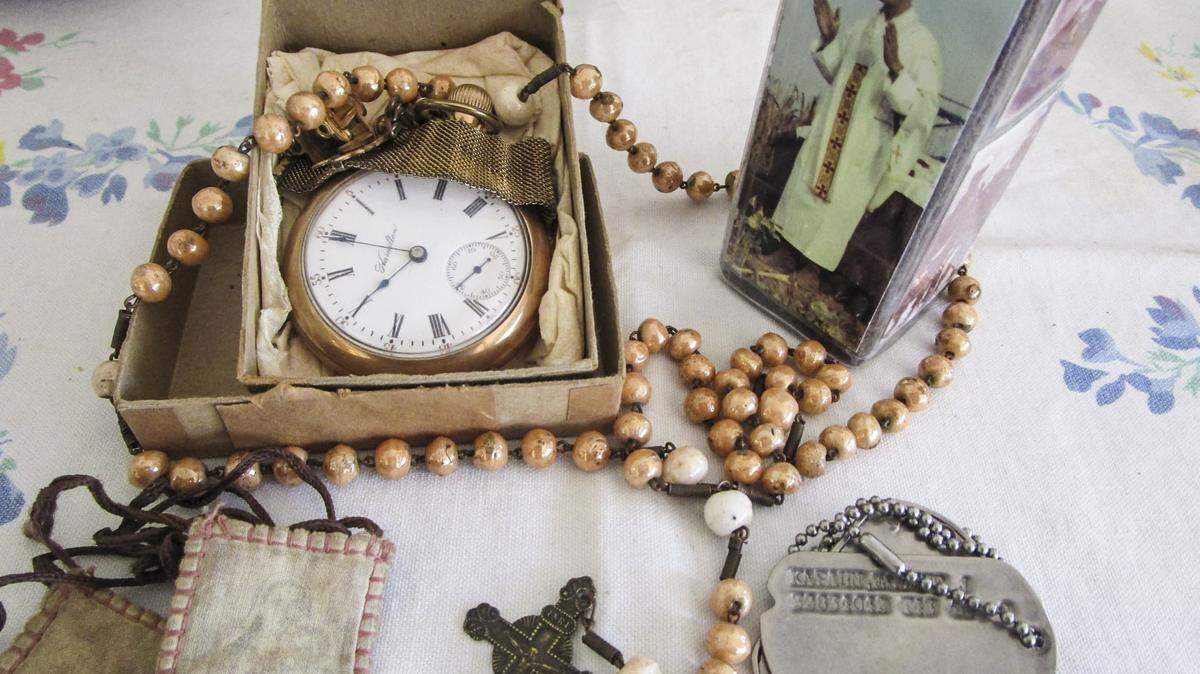
After Emil Kapaun died in the Pyoktong prison camp, one of the prisoners carved a crucifix in his honor. The Jesus on that cross looked like the bearded, starving Father Kapaun, though the prisoner, Jerry Fink, had never met him. Nardella, the POW leader in the North Korean camp, gave the cross to Bessie right after the war.
Bessie gave it to the priests of her church, which had been Father Kapaun’s church, St. John Nepomucene, the big church in Pilsen. The priests hung it on the wall in the back of the church.
Bina watched how, before every Sunday Mass, Bessie would pray beneath the cross.
But then the diocese took the cross. They hung it on a wall in Chaplain Kapaun Memorial High School in Wichita, 60 miles to the south.
This sort of thing would happen several times in the future — the big diocese in the city taking Kapaun artifacts from the little town of Pilsen.
Bessie cried. The cross was a reminder that her son was a son of God and not only a soldier or a newspaper story about his heroism.
The diocese left the wall hooks upon which the cross had hung in the Pilsen church. Bina saw Bessie pray beneath the hooks, as though the cross were still there.
She also noticed that Bessie, after every weekly Mass, lit a votive candle — tall and thick, encased in a colored glass container.
Bessie lit one every week — and kept the burned, long-stemmed matches.
People noticed this. Nobody knows how many matches she burned.
She collected the matchsticks week after week. Years later, she fused them into the shape of a Greek-style crucifix, with a halo around where the head would be.
Someone finally asked Bessie: “Why do you keep the matches?
“Because,” she said, “when Emil comes home, I’ll show him how many candles I lit for him.”
The scientists
Scientists spend most of their workdays sealed away from families and humanity, wearing masks and smocks behind locked doors inside buildings where you need a badge key and even a DNA mouth swab to get inside.
They look through microscopes, study spreadsheets.
But their motivation here was Bessie. There was Tim McMahon and Chelsie Van Sciver, DNA scientists in Dover, Delaware. There were forensic anthropologists in Hawaii, Jennie Jin and Liz Nagengast-Stevens.
They identified Emil Kapaun’s remains with work that would baffle us if they tried to explain it, but all four said they do what they do for the families — for the mothers — and not only because of the scientific challenge.
And all four say Bessie helped bring Emil home.
Bessie’s gift
On Aug. 12, when Jin learned about how Bessie Kapaun had erupted in grief long ago — and began making plans to go to North Korea to find her son — she paused.
“I have two children,” Jin said at last. “I would do exactly the same thing.”
She then learned about Harriet Bina’s stories: that Bessie started the search, gave the Army a piece of her mind, inspired old soldiers to push for his discovery for the rest of their lives. Bessie lit those tall candles, prayed to empty wall hooks in the back of her church, refused to touch her son’s medals, dreamed night after night about Emil coming home.
When Bessie died in 1986 at age 91, 35 years after her son’s death, her wish looked as if it would go unfulfilled.
But Bessie had already done one crucial thing, Jin said.
It was mitochondrial DNA that Jin and McMahon and Van Sciver used to make the link that found him at last.
“And mitochondrial DNA comes only from the mother,” Jin said.
The mitochondria that live in our cells are a gift — they generate most of the chemical energy that powers our cells’ biochemical reactions. We get it only from our mothers.
Bessie had given that gift to her sons.
Emil and his brother Gene Kapaun used that gift first as Kansas farm boys milking cows, stacking hay; they used it as altar boys. Emil carried it with him when he picked wildflower blossoms for the church altar. Emil then carried Bessie’s gift into the priesthood, where he ministered to the sick, the grieving, the sinful, the repentant.
He carried the gift when he served as a U.S. Army chaplain in Burma and India in World War II.
The gift then gave him strength to save wounded soldiers under fire during four months of terrible battles in Korea before his capture.
Bessie’s gift powered him at the battle of Unsan, where he helped drag wounded soldiers into a dugout to shelter them from bullets. It gave him the power to walk right up to the Chinese soldiers who shot their way into that dugout, arms raised, yelling at them to stop shooting. And they did.
It gave him the strength to steal food and say prayers over dying men during six months of life-saving heroics as a defiant prison captive.
And when fellow prisoner Bob Wood, on that long last walk to the Death House, saw Father Kapaun bless the guards who were sending him to his death, it was the last flickering spark of energy from Bessie’s mitochondria, passed down to him, that Kapaun used to raise his hand from the litter carrying him to bless those who were killing him.
Harriet Bina tells us that Bessie taught her sons to read, to be kind, to love God.
But Jin and those scientists also tell us that the DNA Bessie passed along to her sons was the last big clue that brought home her son. Last year, when Van Sciver and her colleagues put the mitochondrial DNA sample from the “unknown” Punchbowl Cemetery skeleton 14550 into a database and compared it to all 6,000 or more DNA samples provided by Korean War families, she got a blind hit immediately. It linked the skeleton exactly with the mitochondrial DNA supplied years ago by Gene Kapaun.
“She would never have imagined that something from her would play a role like it did, right?” Jin said.
“But that’s what she ended up doing. And that’s really powerful — I never thought about that in this way — until now.
“I don’t know if scientists will like that description I just gave, but it’s true.”
In Bessie’s dream, Emil couldn’t unlock the gate and come all the way home.
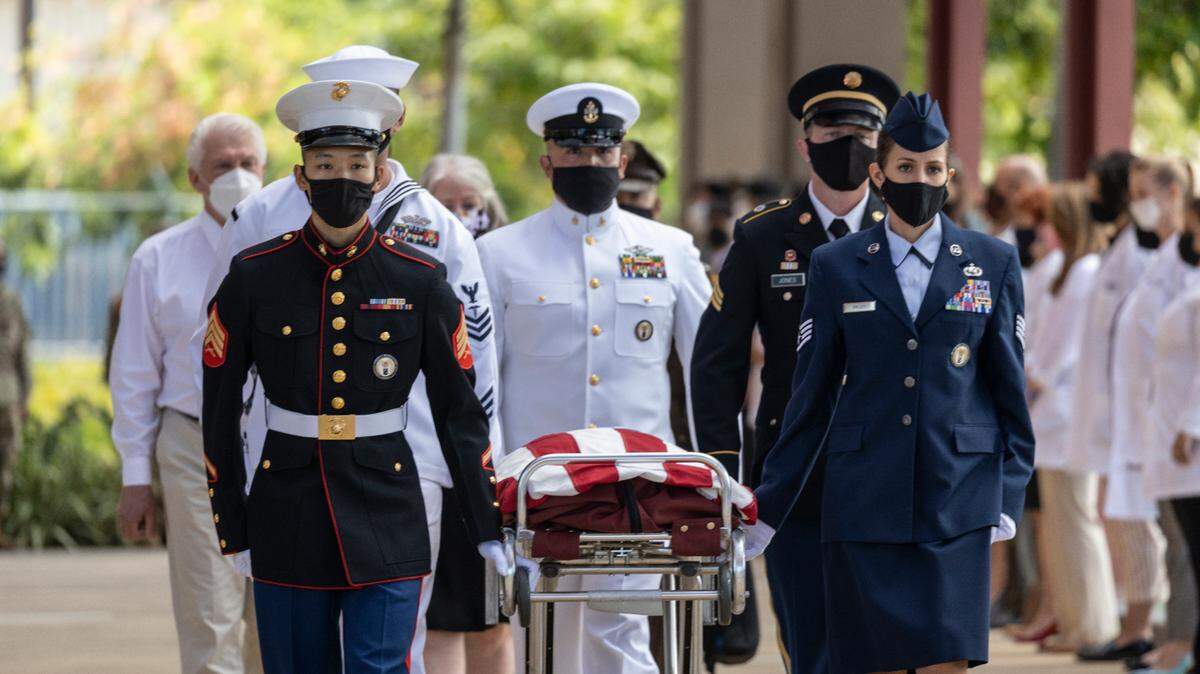
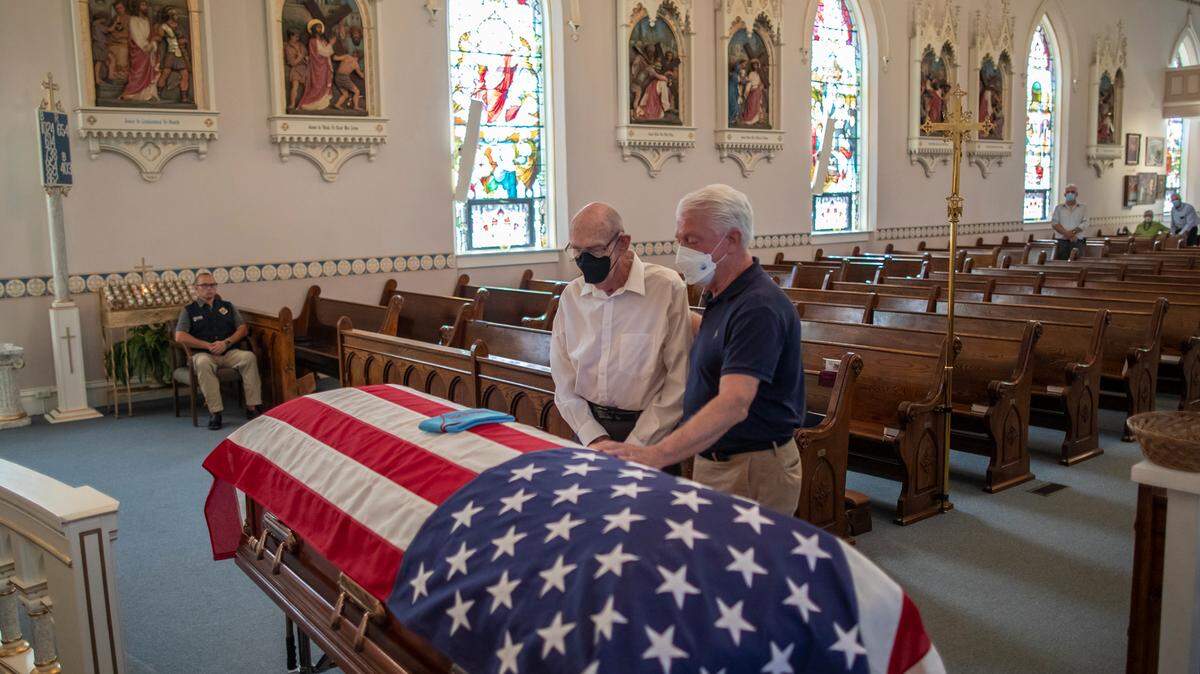
But Bessie unlocked it for him at last. When Ray Kapaun finally brought his uncle home last month, and brought him to the church in Pilsen, he had Harriet Bina drive the hearse containing Emil’s remains to the cemetery behind the church. Bina, Ray and Ray’s wife, Lee, stepped out and stood before the graves of Enos and Bessie. Ray wrapped his arms around Lee and Bina and told Bessie: “He’s here now.”
And now, because of his mother and all those long ago soldiers’ mothers, Emil rests at peace, in a marble tomb in Kansas — where all of us can find him.
This story was originally published November 7, 2021 at 4:00 AM.