How Father Kapaun, a war hero being considered for sainthood, was found after 70 years
READ MORE
Once Was Lost: Father Emil Kapaun
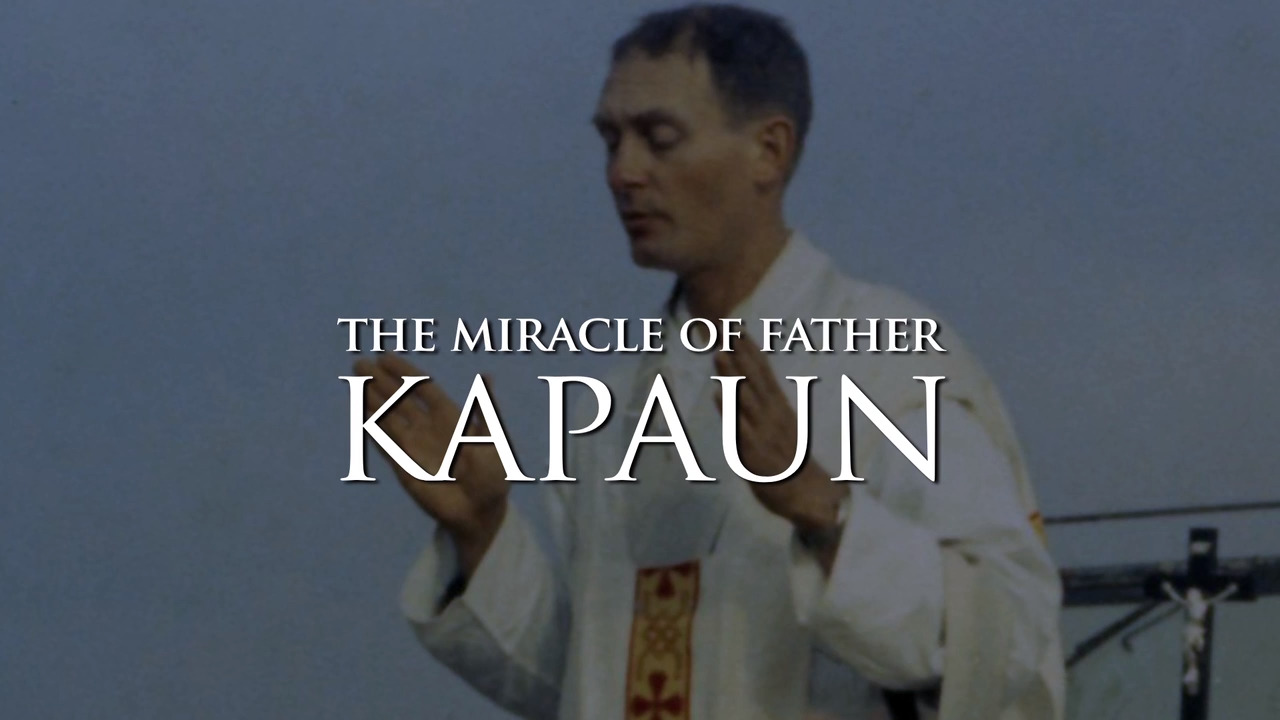
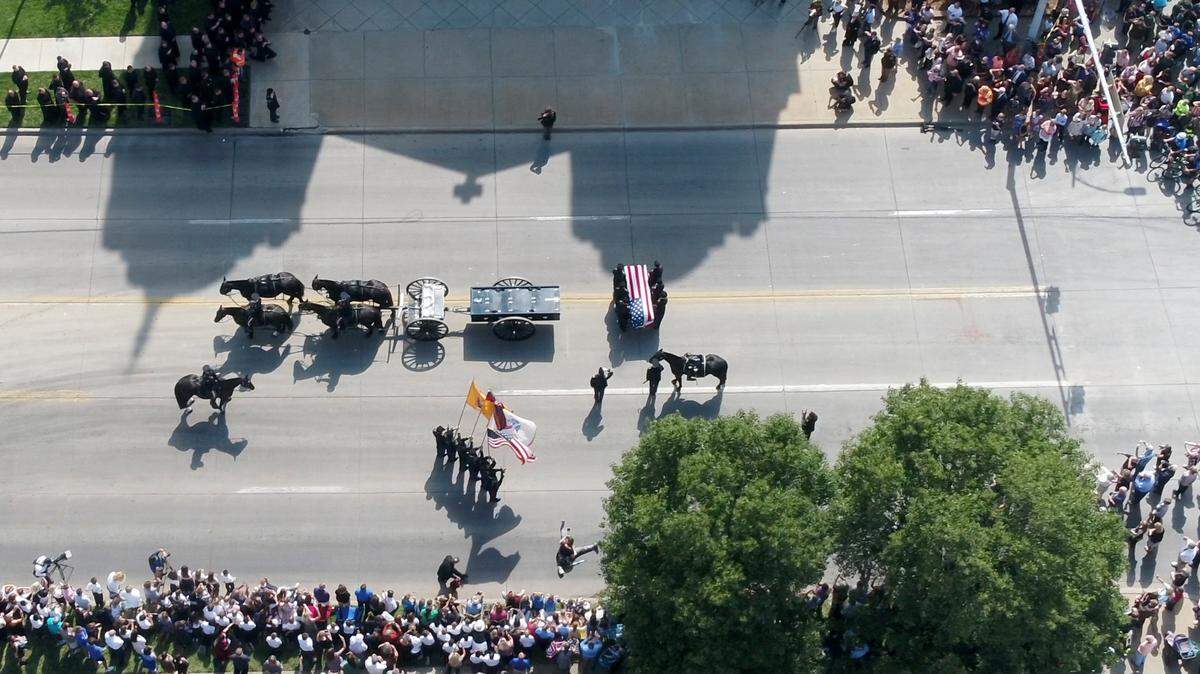
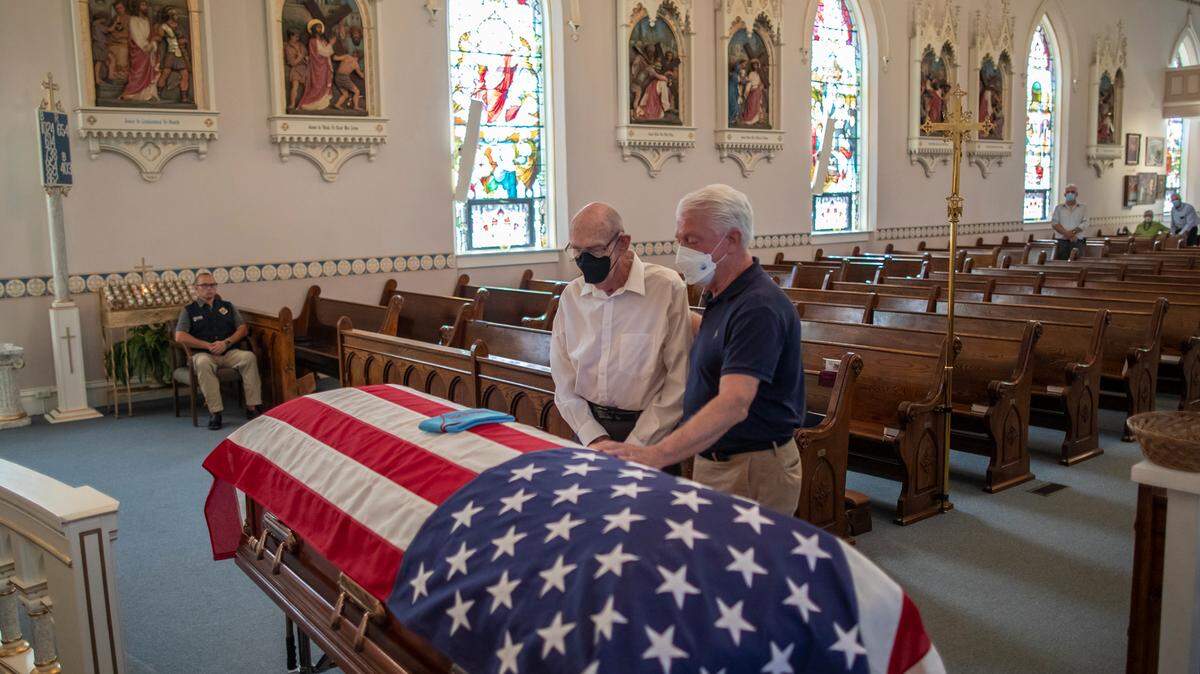
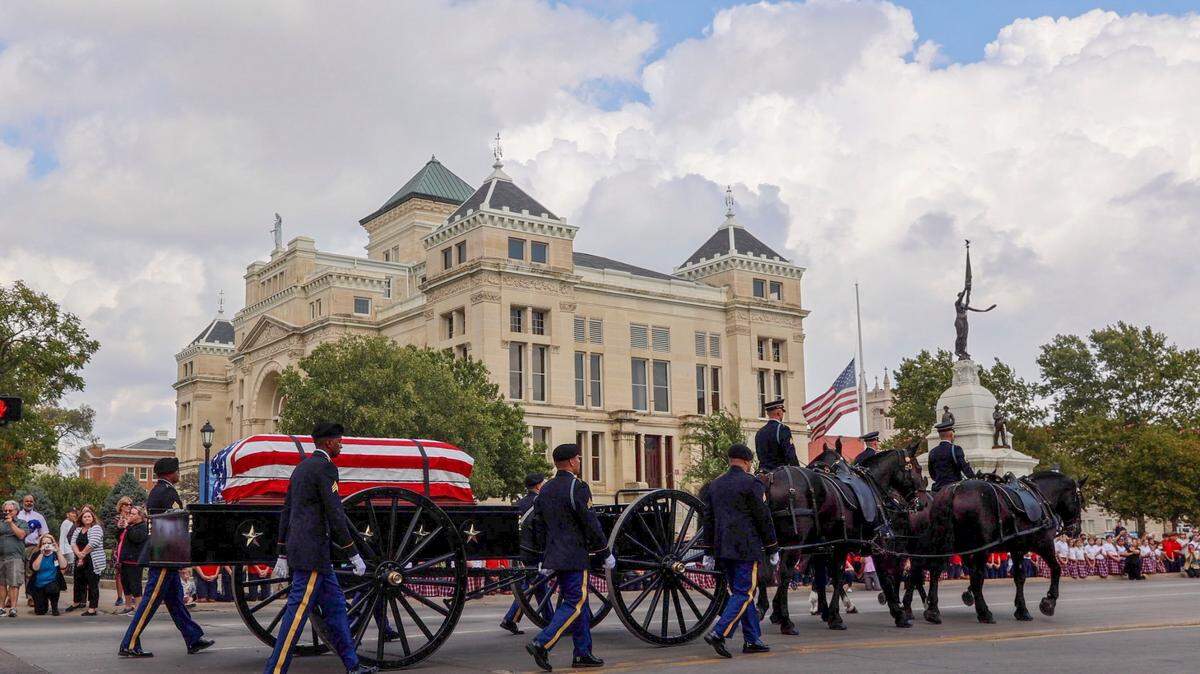
For 70 years, the remains of Father Kapaun, a Korean War hero and Catholic priest from Pilsen, Kansas, remained missing. Earlier this year, his remains were identified and now they’re back home in Kansas.
Expand All
The email that made Dr. Jennie Jin’s heart start to pound at a gallop came on Sept. 29 from a scientist at the Armed Forces DNA Identification Laboratory in Dover, Delaware.
“The sequence obtained from 2019H-314, Sample 2.1.20.1 is consistent with the reference for Emil Kapaun.”
Dr. Jin read that sentence and said two little words.
We won’t tell what the second word was.
But the first word was “Holy.”
DNA analysts prefer facts over flash, relayed in the meticulous dialect of precision science. Dr. Jin knew what the message meant.
It meant that the Dover lab had made a match — and that Dr. Jin had made a historic discovery.
Searchers for 70 years had racked their brains, dug up old graves, argued with enemies and peered through microscopes to find the remains of a long-lost American hero, Kansas priest and possible Roman Catholic saint.
Dr. Jin knew now that the search was over.
And that she had found him.
The searchers
Those who searched for Father Kapaun did extraordinary things to find him.
They made inquiries, took down names, invented new ways to amplify human DNA and wrote down clues.
Finding him looked impossible for 70 years. Even his soldier friends said so.
But his story lifted them after his death as he lifted them while he lived. POWs revered him because of his frequent battlefield heroics, and because after his capture he saved many lives in a North Korean prison camp by stealing food and medicine from the guards and by inspiring people to keep living even as they starved and sometimes froze to death.
And so the search began, and the searchers crossed the spans of one ocean, two continents, 13 time zones and seven decades overlapping two centuries. They made maps, sketched out trails of prisoner-of-war death marches, argued with each other, argued with the U.S. Army, argued with North Koreans, paged through sheets of old X-rays cracked with age.
None of them thought they’d find Kapaun unless North Korea softened its hard heart and let searchers go there.
A debt owed
Jennie Jin started life as a child of Korea who got easily bored.
Her grandfather bored her when he told how all four of her grandparents had run for their lives in 1950 in North Korea, during the first chaotic months of the Korean War. How she and her family owed an unpayable debt to 36,000 Americans who died to give them life and freedom.
“Past history,” young Jennie thought. “I didn’t pay attention.”
She was born in 1978, 28 years after the war, an ambitious girl living in a Korea where democracy and a market economy had created one of the wealthier nations on Earth. The war seemed ancient. Irrelevant.
But it’s funny, she said later. How age changes our minds.
Miracles
It is something of a miracle that the remains of thousands of lost soldiers from the Korean War came home and were sent to their loved ones. Our enemies conspired to hurt the soldiers — and then to hurt their families.
Much of what we do know about the missing is because of the most relentless searcher of all. Philip O’Brien, a Defense Department analyst now retired, spent 19 years helping to interview more than 2,000 surviving Korean War soldiers. He says many of our 7,500 missing soldiers from the war will remain forever lost.
In many battles, the North Koreans and then the Chinese shot at Kapaun as he carried wounded GIs to safety. On the march to prison camps the guards shot the wounded who couldn’t keep up. In Camp Five, village of Pyoktong, they starved survivors, including Kapaun.
In that first winter, 1,400 of 3,000 prisoners in Camp Five died, including Kapaun in May of 1951. The guards made survivors roll the dead into mass graves or into ravines.
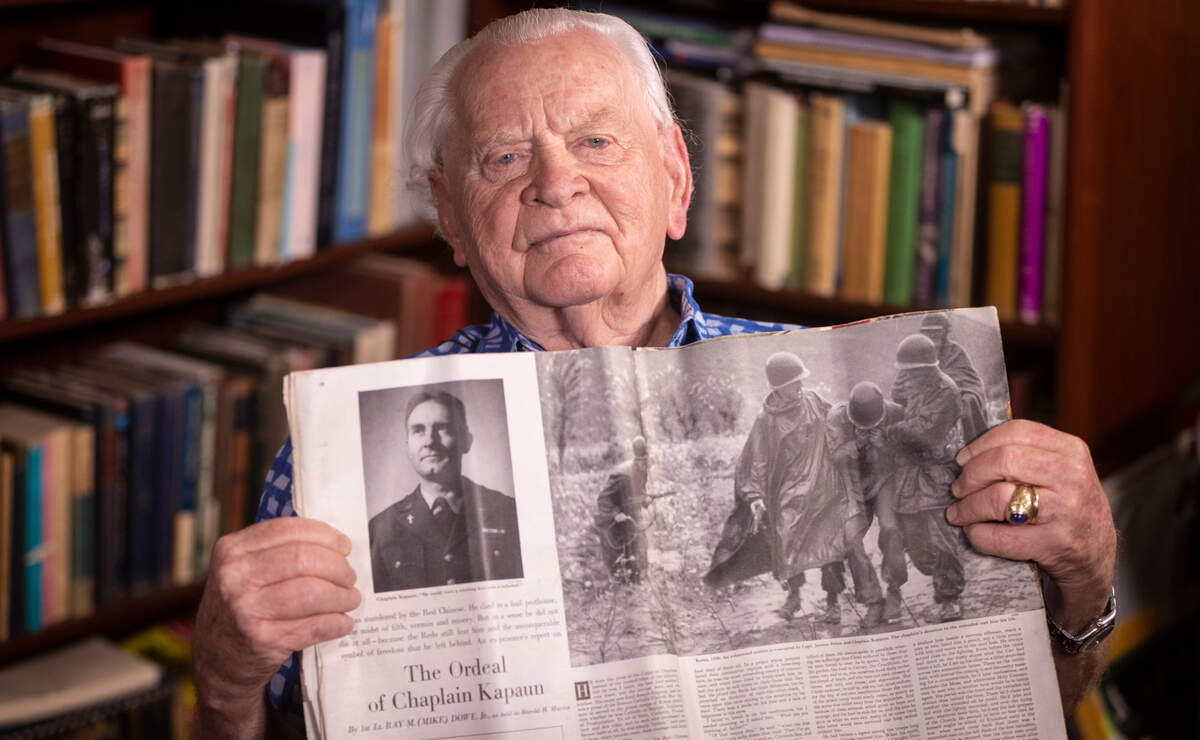
Mike Dowe and the rest of Kapaun’s prisoner-of-war friends thought he had ended up in one of the mass graves.
The Chinese, who retained control of the land where POW camps once stood, refused to dig up most of the mass graves after the war.
After the 1953 Armistice, our enemies sent 4,200 caskets of dead men south. It was a fraction of the total number lost in North Korea.
After that, once in a while, the North Koreans would send more home. But 5,000 American sons still lie in unmarked graves in North Korea.
Fate was also unkind to families, O’Brien says.
The Americans took the remains given to them by our enemies and soaked them in vats filled with a formaldehyde solution — to preserve the bones.
The soaking killed most of the DNA signatures, a fact that would dismay scientists and families after DNA identification became widespread decades later.
The Chinese and North Korean diggers had put names on those caskets, but O’Brien says the names were often wrong.
One set of remains, in casket 14459, was labeled by the Chinese as “Emil Kapaun.”
But anthropologists in Japan determined that the 14459 bones belonged to John Henry Ross, another Camp Five fatality.
Then there was casket 14550.
It had come from Camp Five, village of Pyoktong, and the Chinese had put a name to it: Grant W. Simpson, an Air Force captain who died at Camp Five.
But anthropologists soon found the real Simpson in another casket.
They tried to figure out who 14550 was.
They failed.
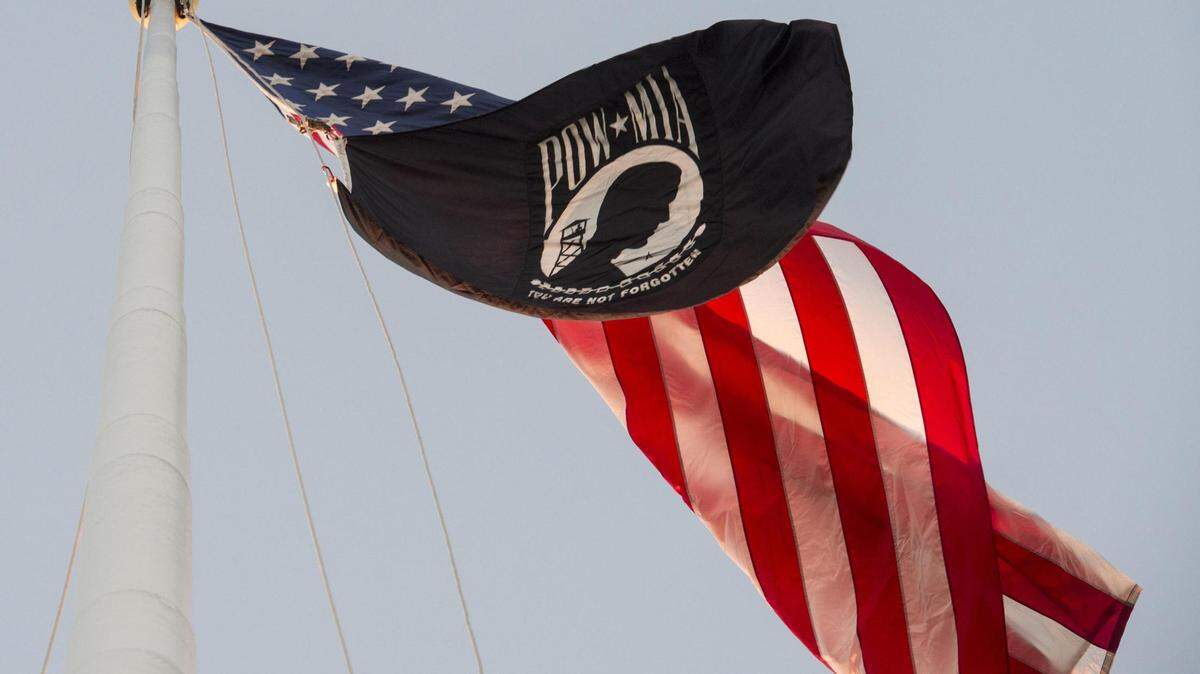
After two years, they gave up trying. They buried 14550 and nearly 850 other Korean War unknowns in the National Memorial Cemetery of the Pacific on Oahu Island, nine miles from Pearl Harbor.
That cemetery has a more familiar nickname: the Punchbowl, because it is located at the top of a round 75-foot hill — the elevated bowl of an ancient volcano cone.
It is a pretty place — green, quiet, peaceful. Johnie Webb, who has run search teams for decades, calls it “a place of beauty and dignity.”
But there was an irony about burying dead soldiers there.
The ancient Hawaiians had considered the Punchbowl a sacred place.
On that sacred hilltop their ancestors had sacrificed human victims to the gods.
“Pu’owaina,” they called the place.
“Hill of Sacrifice.”
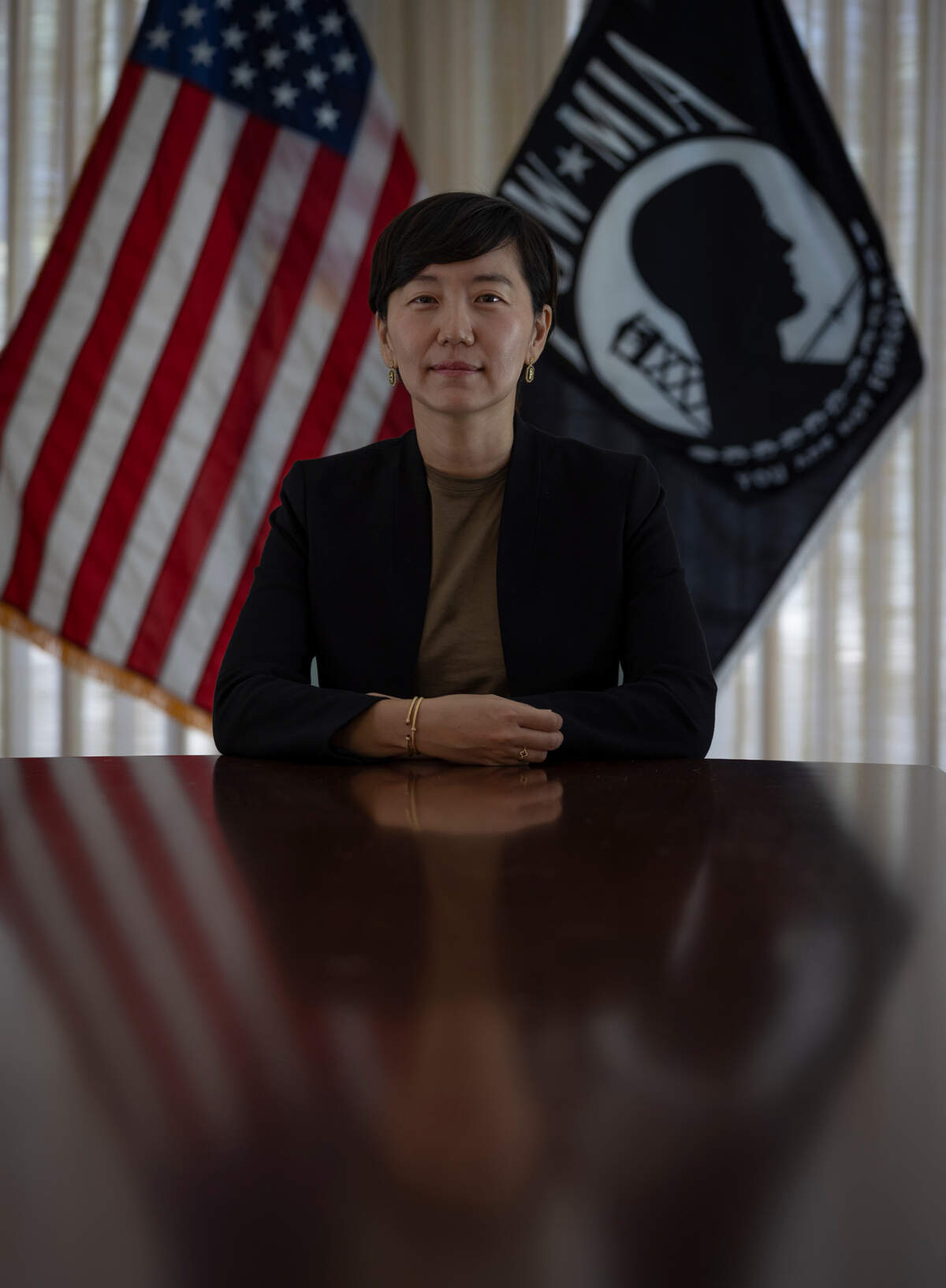
Doctor Jin
Jennie Jin in 2003 moved from Korea to the United States, not out of love for the country but because she wanted an American education.
She got her master’s degree at Stanford two years later, then her Ph.D at Penn State in 2010, both degrees in anthropology. She fell in love with a fellow anthropologist but had not yet fallen in love with America.
She still didn’t care about the Korean War.
She still didn’t care about her grandfather’s war stories.
But then her husband got a job in Hawaii, and they moved there.
She needed to find a job there.
The search for America’s lost sons
Balanced against our Korean War enemies, who rolled our sons into holes and concealed them, were the many obsessive, compulsive searchers for Father Kapaun and for thousands of other lost sons.
Kelly McKeague, who runs the Defense POW/MIA Accounting Agency, manages a $155 million annual budget and employs 725 searchers (archaeologists, forensic anthropologists, analysts, historians and more) in eight locations: four in the U.S.; four in foreign countries.
The cost, since it started after World War II, has totaled hundreds of millions of dollars. It is worth the cost, McKeague says, “Because what those soldiers gave is a debt we cannot repay.”
So far this year McKeague’s agency has identified, and sent home to families, 112 formerly lost American sons, including 10 fatalities from the Korean War and 99 from both the European and Pacific theaters of World War II. Sixty-nine of those World War II fatalities were of seamen who drowned or died — choking in burning oil — when the battleship U.S.S. Oklahoma rolled over and sank during the Pearl Harbor attack. Today, anthropologists who open the U.S.S. Oklahoma caskets from the Punchbowl can smell the scent of coal oil coming off the bones.
There were many other searchers.
In 1953 Bessie Kapaun, the hero’s mother, made her friends frantic with her stated plan to go to North Korea to retrieve her dead son’s remains. Arthur Tonne, the priest in the small town of Pilsen, where the Kapauns were from, stopped her by declaring he’d go with her, a plan she knew could get him killed. But she insisted that she wanted her son home — and told the Army so. For decades.
Some searchers for Kapaun spent decades trying to find him, including Johnie Webb, who has worked with and run search teams since 1975, Phil O’Brien, who interviewed surviving POWS, and the DNA scientist Tim McMahon, who helped devise new techniques to amplify DNA.
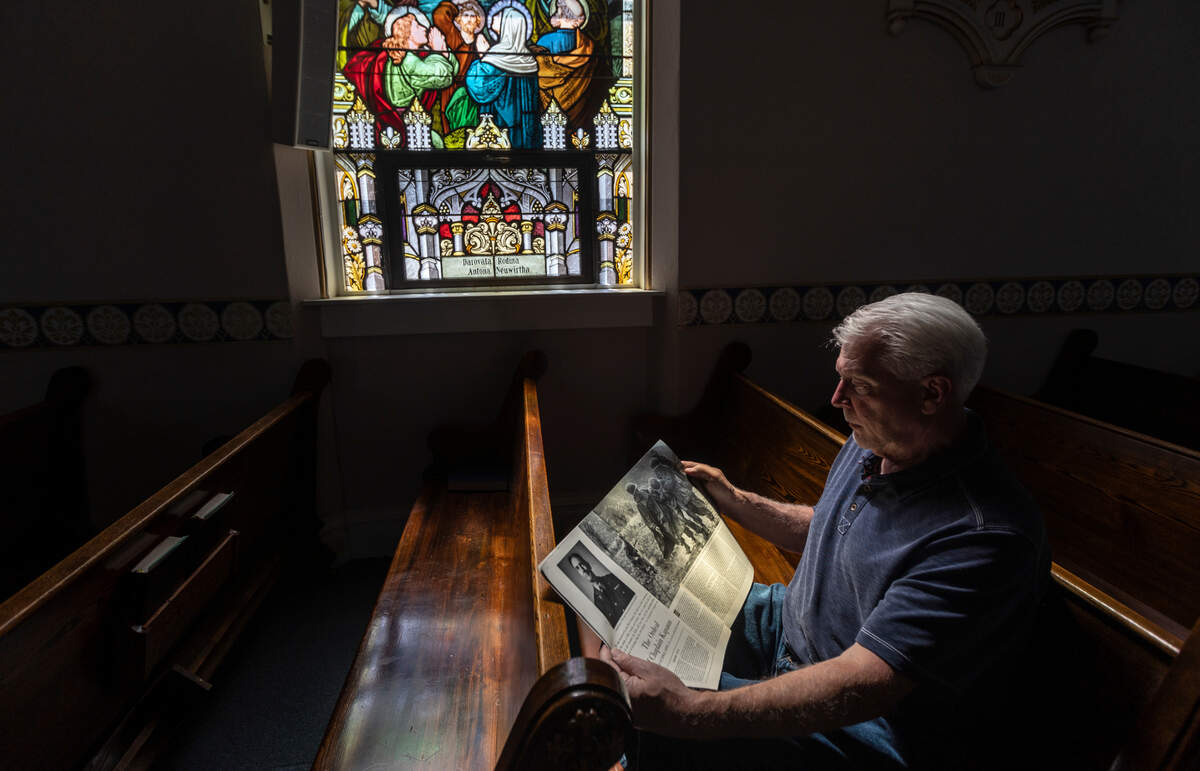
Former POW Mike Dowe spent 70 years insisting, to the military and to the Catholic church, that his friend should be remembered, honored — and found, if possible, though Dowe himself thought he was lost in a mass grave that would never be uncovered.
And there was Jennie Jin.
‘They blistered us’
The year 2013 was a tough one for the Hawaii-based search teams.
The Joint POW/MIA Accounting Command, where the Pacific search effort is based, took a hammering on a national stage: Bill Dedman, a Pulitzer Prize winning reporter working for NBC News, did a story saying the command had staged phony ceremonies on camera, in which flag-draped caskets were taken off cargo planes by honor guards as though the remains were just returned from some far battlefield.
Another Dedman story pointed out that the Hawaii teams had allowed movie-makers — including actors Bradley Cooper and Rachel McAdams — to film what became “Aloha,” a tepid romantic movie drama released in 2015. McAdams played a forensic anthropologist trying to identify missing soldiers’ remains in the laboratories. Filming inside the Defense Department laboratories put some identification work on hold.
Before that, the Hawaii searchers were frustrated about delays, and shaken about how some families lashed out at them.
Col. Mike Gann, a Marine Corps officer who ran many of the Indo-Pacific search teams from 2015 to 2018, saw this.
“We’d show up at family update meetings,” he said. “Some families would just blister us.”
Many families revered Johnie Webb, who had spent decades returning lost remains. “But some families went after him too.” Gann said he always understood their grief; some families said Johnie wasn’t doing enough to find loved ones missing for decades.
“Some families began to file Freedom of Information requests and lawsuits,” Gann said. “It began to bog us down with responding.”
This was a low point.
But there would be highs.
‘Everything humanly possible’
Jennie Jin went to work for the Pearl Harbor-based searchers of America’s lost sons in 2010.
“I wish I could tell a good story – that this work was what I’d always wanted,” she said later. “But I applied because my husband had found a job in Hawaii, and I needed a job.”
But one year after she arrived, her bosses asked her to create the new Korean War Identification Project. At the Pearl Harbor labs, where she and other anthropologists examined remains from multiple wars, they would now buckle down in a concerted effort to identify the remaining hundreds of Punchbowl unknowns.
“It was driving us crazy to disinter remains before this, because of all the paperwork involved,” Johnie Webb said. “But after we got the plan approved, we could get it done much faster.”
The assignment scared Dr. Jin. “What have I gotten myself into?” But stars were aligning.
In 2012 the Defense Department began building a vast complex for the searchers in Pearl Harbor. The Senator Daniel I. Inouye Defense POW/MIA Accounting Agency complex cost more than $80 million. It gave the Hawaii teams 140,000 square feet of storage and lab space — state of the art and the largest forensic anthropology lab in the world.
At Dover Air Force Base in Delaware, meanwhile, Tim McMahon and his DNA scientists finally solved, after 16 years of work, how to amplify DNA signatures out of the formaldehyde-soaked bones of the Korean War unknowns. One of the more inspired things they did, he said, was early on when they hired a young French scientist, Odile Loreille, because she had learned how to amplify badly degraded DNA out of the bones of ancient cave bears, including one bear that was 100,000 years old.
Before McMahon and his scientists solved the DNA problem, other searchers alongside Dr. Jin’s team created a new scientific method to identify remains without DNA. That method also would play a role in hundreds of future identifications.
They did this after discovering that during World War II and the Korean War, every person joining the U.S military had to undergo a chest X-ray to learn whether the recruit had tuberculosis. The U.S. still stored the X-rays at the National Archives.
Bumps and other markings on collarbones are nearly as unique as fingerprints. So, if Dr. Jin’s colleagues could match an old X-ray of a soldier named “John Smith” with a Punchbowl unknown collarbone, then searchers could consider that an excellent link.
It took scientists five years to perfect this method. And it took more than science. When they searched the National Archives, they found X-ray sheets “shrinking, or breaking to the point of being unusable,” Johnie said.
They solved this too. “We found a private company that knew how to restore the X-rays.” Johnie said. “Like I said — we do everything humanly possible.”
“My gosh, what have I done to myself?” Dr. Jin thought.
Sometime early on, in the lab as she studied remains of Korean War unknowns, she had to look up the history of the battle of Chosin Reservoir. As she read about the chaos of that battle she thought suddenly: “My God, this sounds like my grandfather’s story.”
She called him. “And I went into anthropologist mode, like I’m doing an ethnography interview with him.”
“Tell me your stories.”
After that, nothing about her work was abstract. It was personal. “And now his stories give me goose bumps.”
Gann saw her change.
“She had mostly ignored her grandfather’s stories as a kid, but after they put her in charge of the Korean War Identification Project in 2011, she became like a born-again Christian about it all.”
“We’re putting names and faces to graves … Putting the universe into order just a little bit,” she said in a 2020 podcast.
“The soldiers (in the Punchbowl) all had identities once; it’s my job to figure out who that person was — and give his identity back to him.”
She began doing something that seemingly had nothing to do with science.
Sometimes, when the workday wore on her, she would leave the lab with its bones and paperwork and work-day frustrations. She would drive to Pu’owaina, the Punchbowl, and sit among the graves of the Korean War unknowns, lost sons she was trying to send home to their families.
It is a beautiful place, she thought. Green grass, hundreds of graves with their light-gray markers lying flat to the grass:
U.S. UNKNOWN
KOREA
She still loved Korea — and her storytelling grandfather, who is still telling stories at age 94. But she had fallen in love now with the stories that had bored her when she was all ambition.
She had fallen in love with America, too. She had given birth to two children, the first in 2012 when her Korean War Identification Project became an obsession and then a labor of love. “I could not imagine what it must have been like for their mothers — not knowing what happened to your kid. And so the whole thing became bigger than before, bigger than me. Bigger than my job, bigger than who pays me.”
She became a naturalized U.S. citizen in 2014 and Pu’owaina for her became a place not of sacrifice but of happier endings. Her life now revolved about sending lost sons to their families at last.
At Pu’owaina she walked among the lost — to feel closer to them, to feel peace.
‘Do me a favor?’
Col. Gann took command of some of the Hawaii search teams in 2015: 150 searchers, the $42 million budget, the labs and scientists, the field teams digging up graves in far countries.
He soon met Dr. Jin, and not just to say hello.
“Jennie,” Gann said. “Do me a favor?”
He was from Wichita — had played for the Bishop Carroll football team, so he had played against the Kapaun Mount Carmel football team, their rivals across town. He knew the Kapaun stories.
“If you ever find Father Kapaun,” he asked her. “Could you please let me know immediately?”
She had not heard the name before.
Medal of Honor
President Obama in 2013 handed Father Kapaun’s Medal of Honor to Ray Kapaun, the hero’s nephew. While in Washington, Ray heard for the first time the startling news that a Defense Department analyst named Phil O’Brien thought his uncle might be buried not in North Korea but in Hawaii.
Ray called O’Brien, who suggested he also call Johnie Webb. And so weeks later, Johnie welcomed Ray to the Pearl Harbor labs, and took him to the Punchbowl.
There, Ray found the graves of the Korean War unknowns, including 75 who died at Camp Five.
Ray walked past grave after grave. He saw marker after marker:
US UNKNOWN
KOREA
He walked past every grave of the unknowns — including, though he did not know it — grave U-844, containing casket 14550, formerly labeled as Capt. Grant W. Simpson.
With each step Ray wondered how close he might be.
‘She didn’t blink’
“But of course, we couldn’t just go out to the Punchbowl and dig up just anybody,” Johnie Webb said later.
By 2013, when Ray Kapaun walked the Punchbowl, the Pentagon analyst O’Brien had spent years befriending and writing the Hawaii team searchers, telling them that the war hero Father Kapaun might be out there, just nine miles from their labs.
If they dug there, he told them, they might find an interesting skeleton with certain unique characteristics. Father Kapaun, for example, had been 35 at death, about 15 years older than most Korean War soldiers. “Taller than most,” O’Brien wrote the Hawaii searchers. “Older. All the wisdom teeth gone.” O’Brien had gathered these facts about Kapaun by interviewing POWs.
So why couldn’t the Hawaii searchers dig through their old files, find notes describing a tall, older man and dig him up?
But the Hawaii searchers, under the rules prior to 2018, could not dig like that, as Johnie said. And even O’Brien couldn’t narrow his clues to one grave.
“I had built a list of nine candidates,” O’Brien wrote. “Two arguably ‘likely’ and seven others who simply caught my eye.”
But in 2018, the search was about to get going faster.
The Defense Department approved the Hawaii searchers’ new plan — to lift all the unknowns above ground at last, apply McMahon’s new DNA protocols, and send lost soldiers home if they could. “To put the universe into order just a little bit,” as Dr. Jin put it.
There were still 652 unknowns in the Punchbowl.
But then came a surprise.
President Trump met with North Korean leader Kim Jong Un, who surprised the Americans by offering to turn over 55 more boxes of presumed American remains from the war.
The U.S. picked Dr. Jin as one of the Americans to bring those remains home — because she ran the Korean War Identification Project, and because she spoke Korean.
She was thrilled. Others worried.
“She was pregnant, and her entire family had come from North Korea originally,” Gann said. “There were actual conversations about how the North Koreans might try to snatch her. Well, she didn’t blink. ‘I want to be a part of this,’ she said.”
It went fine. The North Koreans treated her and the boxes with dignity.
The American/Allied delegation loaded the remains on a U.S. cargo plane. The delegation had draped boxes in United Nations flags. But once they cleared North Korean airspace, Dr. Jin and others draped the boxes with American flags. “One of the great experiences of my life.”
More was to come.
A dignified march
In August of 2019, military teams equipped with a backhoe and American flags began digging up half a dozen graves of unknown Americans buried inside the rim of the Punchbowl.
The diggers had already dug up about 70 Punchbowl caskets as part of Phase One of the new plan. Dr. Jin’s team was now storing those remains and preparing months-long examinations.
This dig, in August, would make up Phase Two, and most of the graves dug up this time would come from Camp Five unknowns. The searchers had chosen to dig them all up at once, in part because O’Brien had said for years that they’d find interesting stories there.
The diggers raised Casket 14550, formerly labeled as Capt. Grant Simpson, on Aug. 19, 2019.
Johnie Webb’s photographers photograph each exhumation, and so we have the photos taken at 14550’s exhumation. The photos appear to show that this exhumation occurred early — the light was low, as though at sunrise.
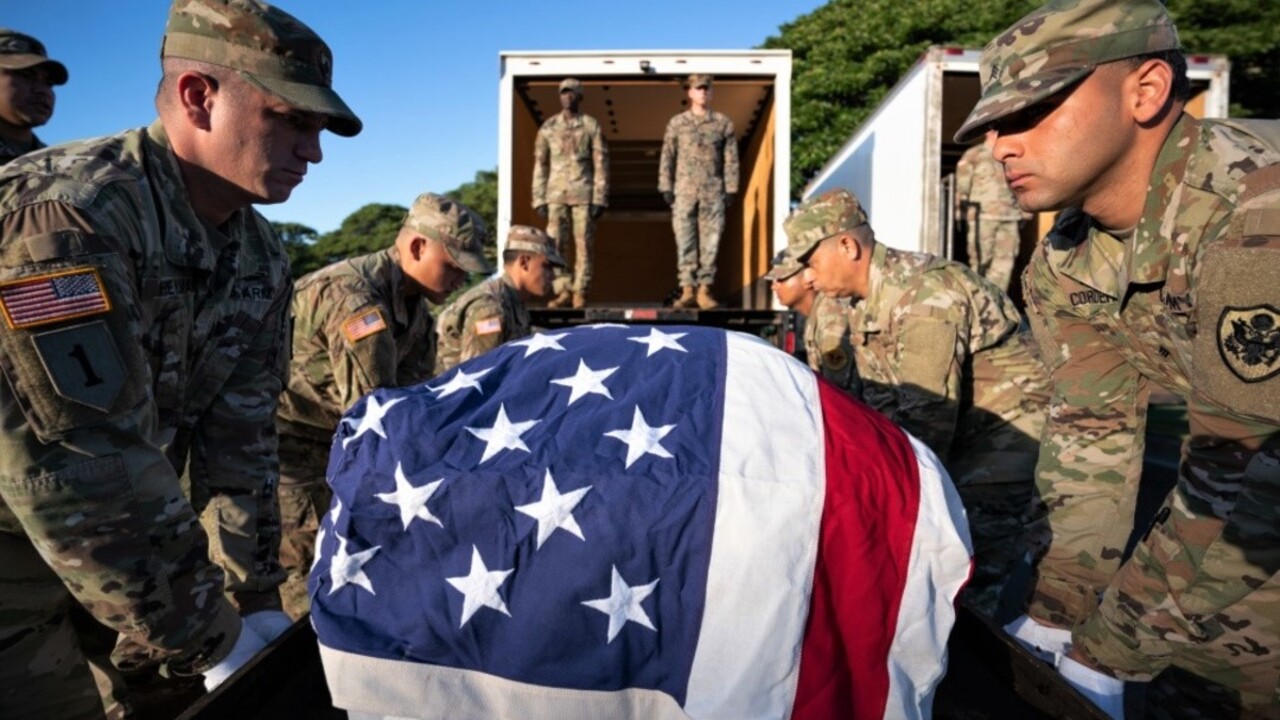
Six soldiers stepped up to Grave U-844.
They lifted casket 14550.
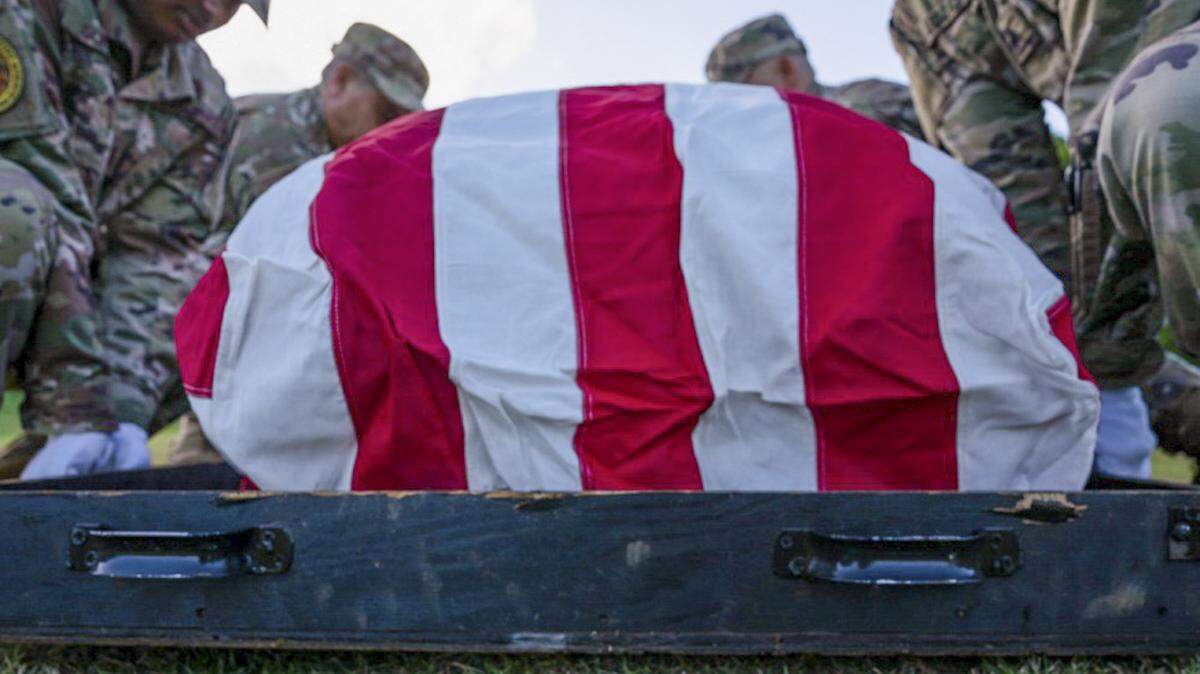
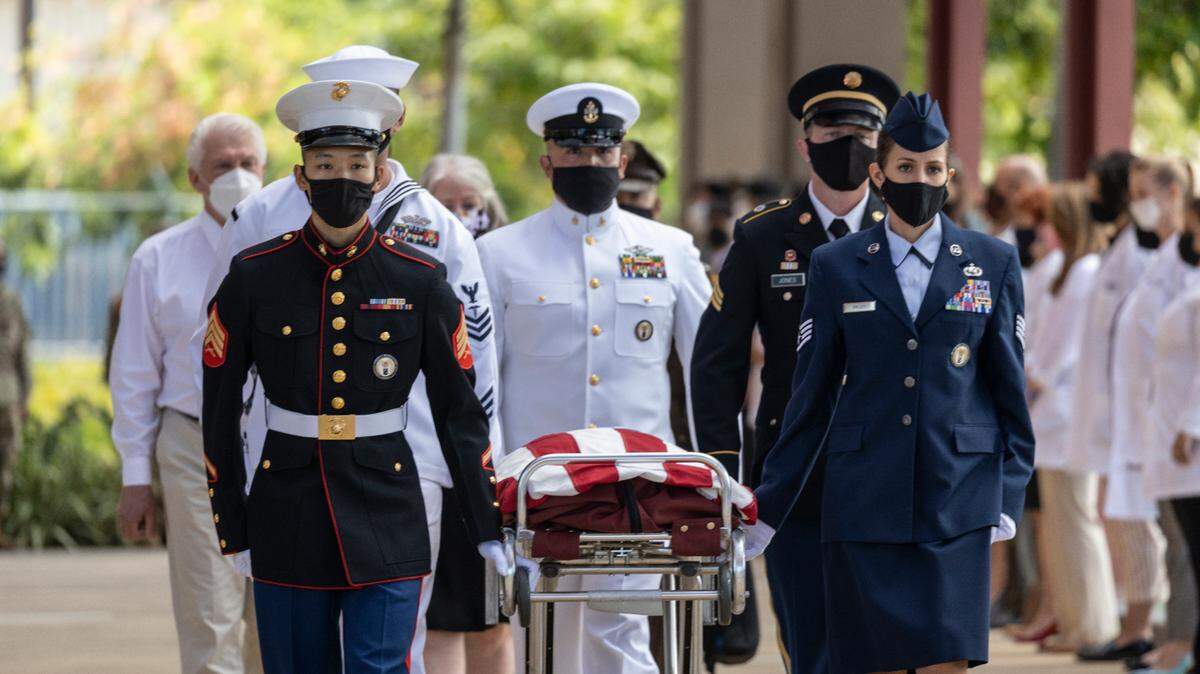
They draped an American flag over the casket. The soldiers carried it to a truck in a slow march of honor. The truck took the remains, and other remains taken up that day, to the Pearl Harbor labs run by Dr. Jin.
In the lab, Liz Stevens, a young forensic archaeologist on Dr. Jin’s team, laid out 14550’s skeleton on a lab table. She cleaned the bones slowly. She began an examination — familiarized herself with the smallest of the skeleton’s details.
“I saw right away that he was an older man,” she said later. “His age stuck out — most of the POWS from the Punchbowl were anywhere from 17 to 22. His pubic bones were knitted together more firmly than the pubic bones of younger guys.”
She saw extraction-scarring on the jawbones that told her all four of his wisdom teeth had been pulled. She saw that he was taller than most men.
14550’s skeleton looked almost perfect. All that was missing were five tiny finger-tip bones, five toe-tip bones, one small wrist bone (right hand) and one kneecap (right knee). The skull included healthy, straight teeth in front that would have made a nice smile in life.
She had no idea who he was; had anyone started saying who he might be, she would have told them to stop talking. As a scientist she wanted to know, without subconscious bias, only what she could see and touch.
She had never heard of Father Kapaun.
Her skeletal analysis complete and written for the files, she put the bones in a storage box, one bone at a time.
DNA testing would be the first step toward doing more.
A blind hit
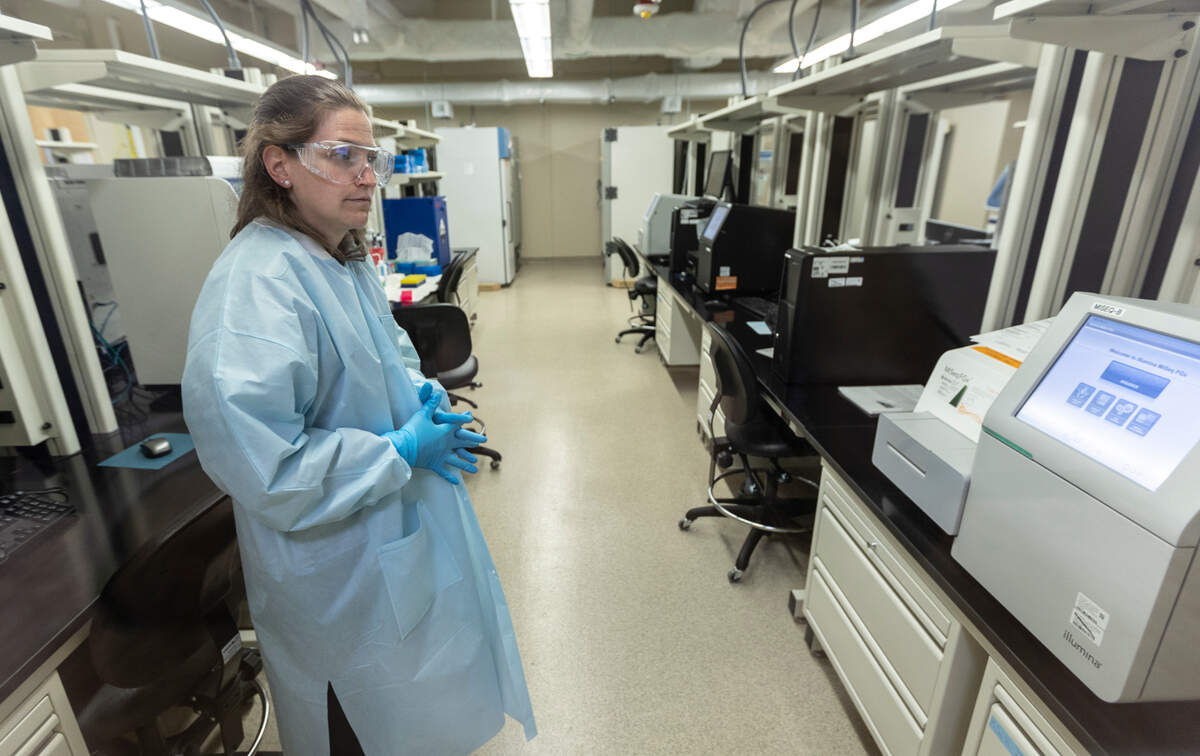
Before Liz did that, Dr. Jin’s team extracted one tooth.
They also cut a tiny U-shaped sliver of bone, smaller than a pinkie fingernail, from X-14550’s left upper leg-bone. They sent the tooth and the bone sliver to McMahon’s labs at Dover Air Force Base.
Weeks later, McMahon’s analysts sanded the outer layer of the tooth and the bone sliver to remove DNA contamination from bacteria or from other humans who might have handled the samples.
Chelsie Van Sciver, one of McMahon’s analysts, worked on the tooth while another analyst worked on the bone sample. Van Sciver drilled into the top portion of the tooth and extracted a bit of powder. The tooth was later sent back to Dr. Jin’s Pearl Harbor lab, where it was fastened back into the jaw of the skeleton, fixed in place with wax.
In Dover, the tooth and bone samples were washed with water, dried, powdered, then liquified; when finished, all that was left was a microscopic bit of 14550’s mitochondrial DNA. If that sounds simple, it was not. “Nothing about it was quick and easy,” Van Sciver said.
Humans have multiple kinds of DNA, including nuclear DNA from the nucleus of each human cell, and mitochondrial DNA from outside the cell nucleus.
All men and women have mitochondria in all their cells. It’s the part of the cell that creates energy. Mitochondrial DNA comes only from mothers, not fathers.
What came next was pivotal to the search. “Once you have a usable sample of mito-DNA,” Van Sciver said, “Then you say ‘OK, let’s go ahead and run it through our reference library and see if we’ve got a match.’”
Years before this, the U.S. Defense Department’s casualty teams had done a fantastic thing, Dr. Jin said: They hired genealogists to track down thousands of Korean War families and their family histories — connecting lost soldiers with families. They spent 15 years visiting families one by one and persuaded 7,000 families who had lost someone in the Korean War to donate cheek swabs and other samples to build a DNA reference library for the DNA searchers.
The DNA lab in Dover has an archive of the family samples.
The computer program Van Sciver used that day compared the mitochondrial DNA signature from 14550 to every one of more than 6,000 of those family DNA samples that contained mitochondrial DNA. One of those samples had come from a cheek swab donated by Emil Kapaun’s brother Gene Kapaun of Colwich, Kansas, years before.
And just that fast:
“We got a blind hit.”
Discovery
“I was shocked when I heard that,” McMahon said. “I had read all about Father, the Medal of Honor and all the heroics, but everything I’d ever read about him told us that we’d likely never find him, that he was still in a mass grave somewhere in North Korea. But one of our scientists came to me that day: ‘Did you hear? I think we found Father Kapaun.’ And I stared at her. And I said: ‘Do you mean THE Father Kapaun?’ ”
“Yes.”
Soon after that, one of the scientists at the Dover lab sent that email to Dr. Jin in Hawaii:
“The sequence obtained from 2019H-314, Sample 2.1.20.1 is consistent with the reference for Emil Kapaun.”
Dr. Jin was teleworking at home, isolating with her children and husband to escape infection from COVID-19.
Dr. Jin said that “Holy” word, then immediately looked up which set of remains the DNA had come from: She saw that it came from 14550, dug up 13 months earlier in the Punchbowl. She looked up who had done the skeletal exam: Liz Nagengast-Stevens.
She called Nagengast-Stevens, trying to keep her voice calm.
”Liz, we’ve got a DNA match for your Punchbowl case.”
Dr. Jin said she wanted to know every detail Nagengast-Stevens could tell her about the skeleton: How tall was he? How old? Then: “I want you to go read Father Kapaun’s historical file.”
For decades now, analysts like O’Brien had interviewed POWS, looked up military records of the missing, and compiled Individual Deceased Personnel Files that the searchers hoped one day could be at last compared with remains lying on Dr. Jin’s lab tables. That day had now come.
“Read his file,” she said. “Sit with it. Comb through it. And get back to me.”
Nagengast-Stevens, also working at home, tapped into the office files from her home computer and pulled Kapaun’s IDPF. Until she did that, no one except Phil O’Brien had ever compared Kapaun’s historical file with the skeleton lying in casket 14550 — and even O’Brien had not made a firm connection.
Nagengast-Stevens was startled at how vast Kapaun’s file was. “It was maybe 200 pages. Most IDPFs are 20 or more pages, and some of them will be 100. This file was huge.”
The file had Kapaun’s dental, military, medical and personal records — and also what she saw was “a huge number of written eyewitness accounts,” told by soldiers who had known Kapaun in life. There was story after story about how Kapaun had saved lives, endured battles and done heroic things in a North Korean prison camp.
When Nagengast-Stevens read the eyewitness accounts, “I got goosebumps.” She knew now where the information came from: “I never met Phil O’Brien, but everybody in the lab knew about this huge archive called Phil’s Folios. It was absolutely rich with information.” What’s more: Every personal detail that O’Brien had reported about the living Father Kapaun, from his older age to his taller-than-average height to his missing wisdom teeth — it all dovetailed nicely with what she had observed in 14550’s skeleton.
She called Dr. Jin back. “This is Father Kapaun. And this is huge.”
“Yes,” Dr. Jin said. “But we’ve got to connect all the dots — make sure it’s all gold before we make it known.”
“High priority.” Dr. Jin told other lab people. She wanted more tests done on the 14550 skeleton as fast as methodical analysis would allow.
They could now compare 14550’s collar bones to the X-rays taken of Kapaun during World War II.
They could take his Army dental chart from the archives and compare it to 14550’s near-perfect white front teeth.
When they did all that, everything matched. Dental? Match. DNA? Match. Collarbone with old X-rays? Match.
“And I was like, ‘Oh, my gosh,” Dr. Jin said. “It’s looking more and more like this is HIM — like we really have HIM.”
But all that meant was that additional tests were required by science. Why? Because there is one nightmare that Dr. Jin, McMahon and Johnie Webb share: that they make a wrong identification and devastate a family with a false story.
Dr. Jin ordered duplicate tests. And peer reviews.
Her excitement rose with each new confirmation.
It took weeks. Then months.
She and her team kept silent.
“Even inside our agency, you want to be careful,” Dr. Jin said. “Every idea is special, but this one was special in a very different way. We had to be sure.”
From Sept. 29, when Dr. Jin got that email, six months passed.
March 3, 2021
When his phone rang this past March, Ray Kapaun was working at home on Whidbey Island, north of Seattle, avoiding COVID-19 like half the country. His phone ID said the call was coming from “Fort Knox.”
Spam call, he thought.
Who calls from Fort Knox?
The call rolled to voicemail.
Ray kept working. He is a senior salesman for a West Coast heating and air conditioning company.
Hours passed.
But then his wife spoke: “I listened to that voicemail,” Lee Kapaun told him. “You need to call that guy back.”
“Why?”
“It’s something about your uncle.”
“Yeah, right.”
Why would Fort Knox call about Emil Kapaun?
Maybe it was a prank call. Ray was in no mood to get played.
Had he Googled “Fort Knox,” he would have seen that the Army has an actual base at Fort Knox, Kentucky — including a casualty unit that works with families of lost soldiers.
Ray called late that day.
“We have identified the remains of your uncle,” the Fort Knox man said.
Ray sat silent.
This was impossible.
Ray said so.
The man understood.
“Do you have an email address?”
“Yes.” Ray told what it is.
His email pinged moments later.
Ray called up documents, signed by DNA analysts, bone specialists, experts on teeth.
Ray began to read.
And then he began to weep.
Father Kapaun’s friends
“How are you?” Mike Dowe said.
“Mike, they found Uncle Emil.”
“What?”
The POW Mike Dowe turned 94 this year.
His hearing isn’t what it used to be. And he had spent 70 years referring to his heroic POW friend as either “Father,” or “Father Kapaun,” so the words “Uncle Emil” did not register.
“What did you say?”
“Mike, they found him! They found Father.”
Dowe slumped in his chair.
“Somebody up above wanted him to come home, Ray,” he said. Tears welled in his eyes. “This is a miracle.”
Ray called another POW friend, Bill Funchess, who was dying.
“I can’t believe I lived long enough to see this,” Funchess said.
Ray called the POWS Bailey Gillespie and Robert McGreevy, and the sainthood investigator for the Vatican, Father John Hotze. Hotze was so overcome with emotion that he barely managed more than one word. “Okay.”
Hotze called Bishop Kemme, and the leadership of the Catholic Diocese of Wichita that is still working on Kapaun’s sainthood candidacy. “We all had tears in our eyes,” development director Mike Wescott said.
Dr. Jin emailed retired Marine Col. Mike Gann, now a volunteer assistant football coach at Bishop Carroll High in Wichita. “We found him,” she wrote.
Gann remembered the tough parts about running the search teams in the Pacific — infighting, arguments, criticism, bad press, how some families lashed out at heroic searchers like Johnie Webb. But he remembered also now what would happen when he went upstairs to Dr. Jin’s Pearl Harbor lab.
“When you stand beside one of those tables and look at the remains of some kid — and that’s what most of those Korean War soldiers were, they were kids — all the bullshit drains away.”
‘You’ve been alone long enough’
Ray Kapaun flew to Kansas City, then drove to Father Kapaun’s hometown of Pilsen on June 2. Harriett Bina led him into the priest house next to St. John Nepomucene Church, the house where Harriett takes care of the Kapaun museum. She opened a glass cabinet, and Ray stepped up to it, then stepped back suddenly, as though sick.
“Oh!” he said. He stooped a bit, then righted himself. Wiped tears. “And this happens every time I do this.”
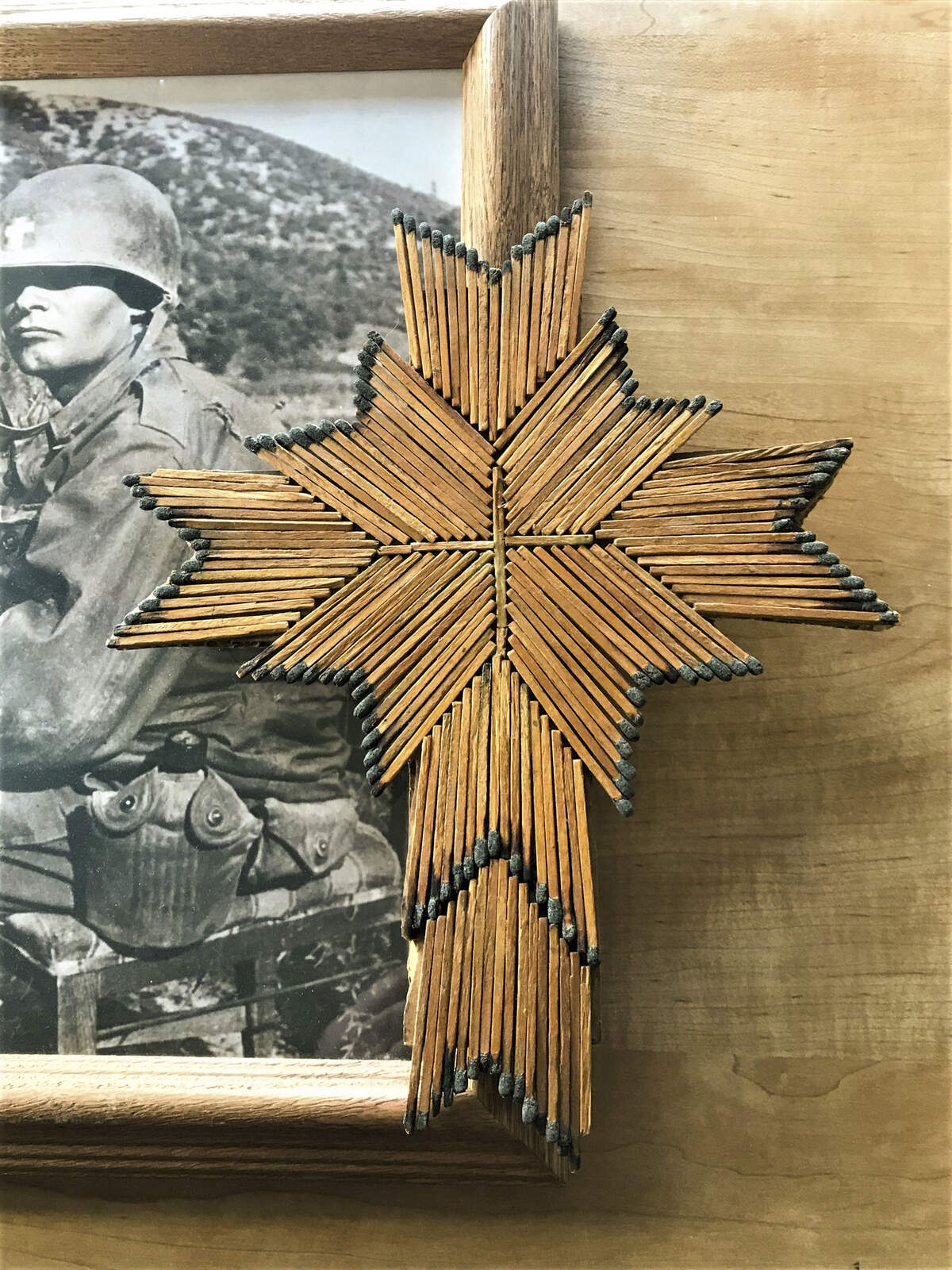
He reached in the cabinet and took out the Medal of Honor, encased in its wood frame. This was one Father Kapaun artifact that the people of Pilsen still had in their possession.
Later that month Ray and Lee Kapaun flew to Honolulu.
At the base at Pearl Harbor, Johnie Webb welcomed him. Dr. Jin met him in the lab, told him about her grandfather and his gratitude.
They took him to Kapaun’s remains.
Ray laid the Medal of Honor on the table with him.
He began to talk to him.
He explained that he would take the medal home when he left Hawaii in a few days. But he had brought other items — “to keep you company until we come back for you in September, when we take you home.
“I’m giving them to you now so that you won’t feel alone anymore. You’ve been alone long enough.”
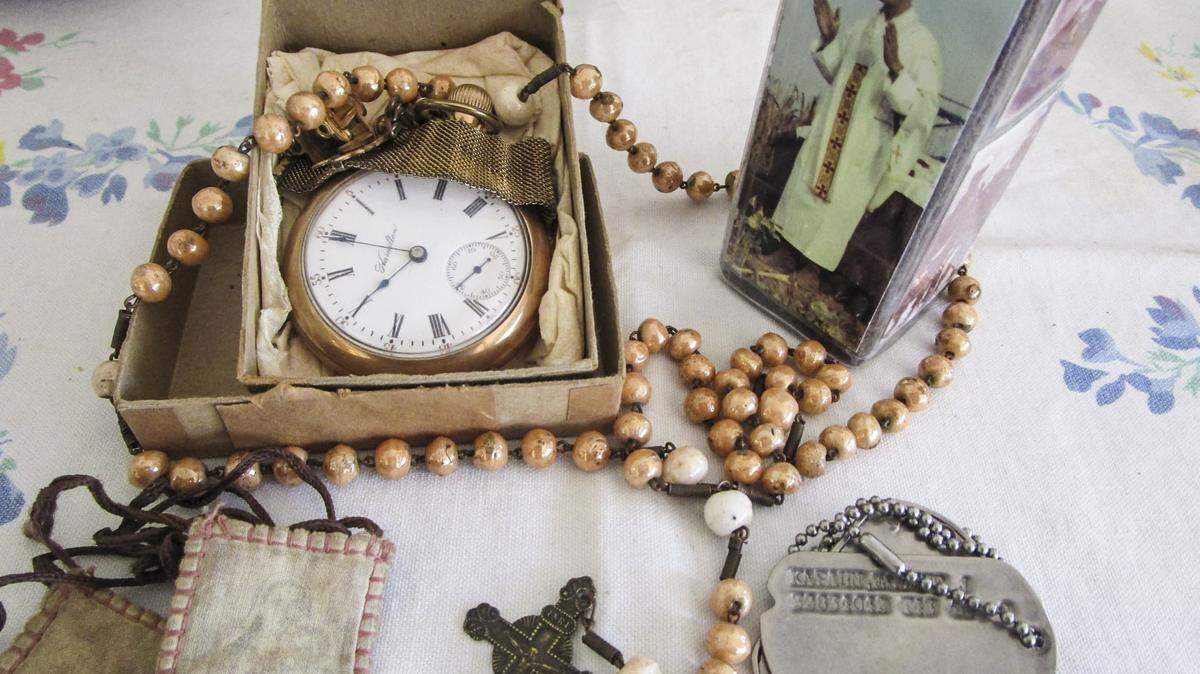
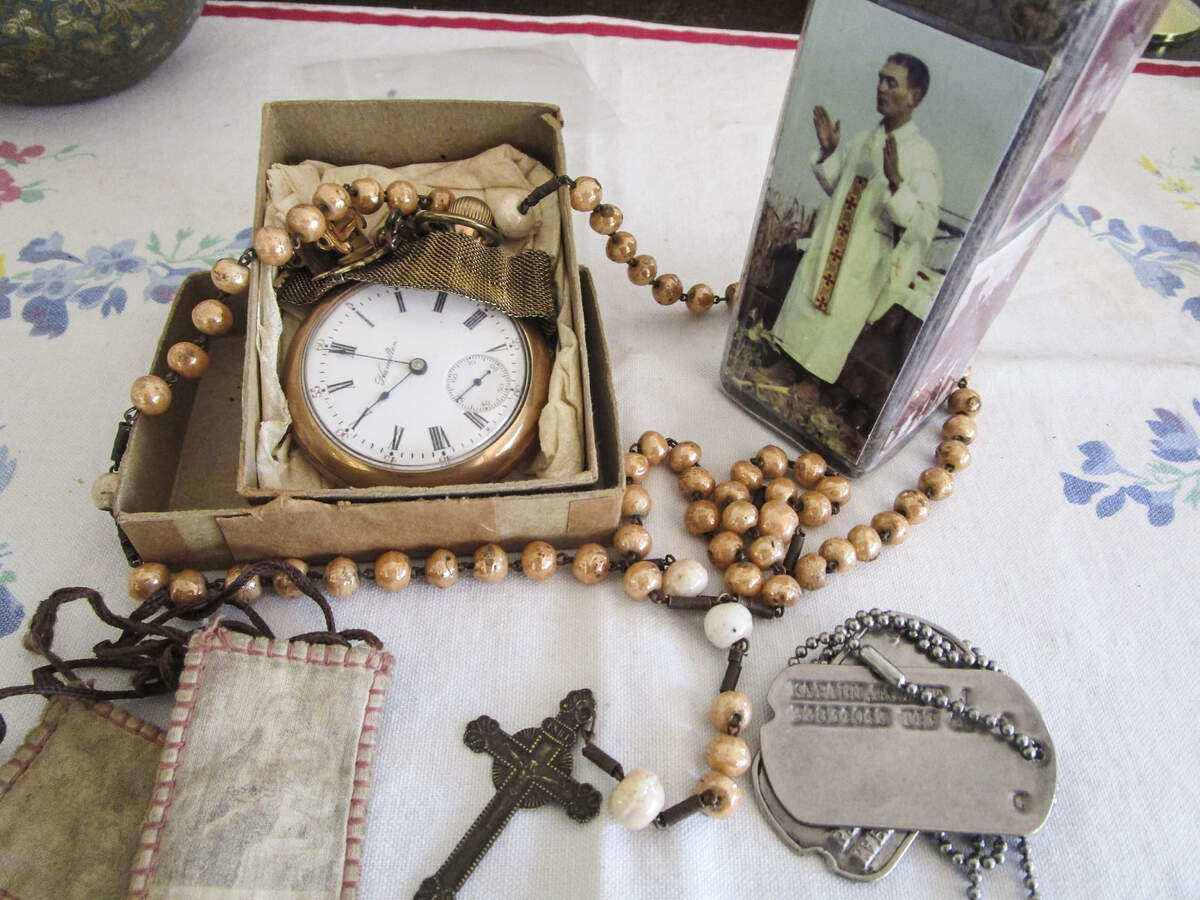
On the table beside Emil Kapaun, Ray lay down items that had once belonged to the priest’s parents.
Ray placed Enos Kapaun’s pocket watch on the table, the watch back scratched and worn from decades of resting in Enos’ pocket.
He placed Bessie Kapaun’s prayer rosary there. He placed a small container of Kansas prairie dirt — Harriet Bina had driven 3 miles outside Pilsen to the now empty Kapaun farmstead, where she scraped up soil.
One last thing Ray placed is a secret.
Ray had asked Dowe to send him something to take to Kapaun: a welcome-home gift.
Some Camp Five prisoners had taken small items when the Chinese let them leave the prison camp in 1953. Bob Wood had taken home his camp spoon; Dowe had taken his food bowl.
What Dowe sent with Ray was another of those items, and Dowe decided the rest of the world deserved a mystery rather than an answer telling what it was.
“Don’t tell anyone what it is,” Dowe asked Ray. “But Father will know what it is.”
At Kapaun’s side now, Ray asked the lab searchers a question:
“Could I touch him?”
“Yes.”
He touched Emil Kapaun’s bones. He said:
“It is good to finally meet you.”
This story was originally published September 26, 2021 at 1:28 PM.