
These two knapweeds are new to Kansas Noxious Weed List. Here’s what that means
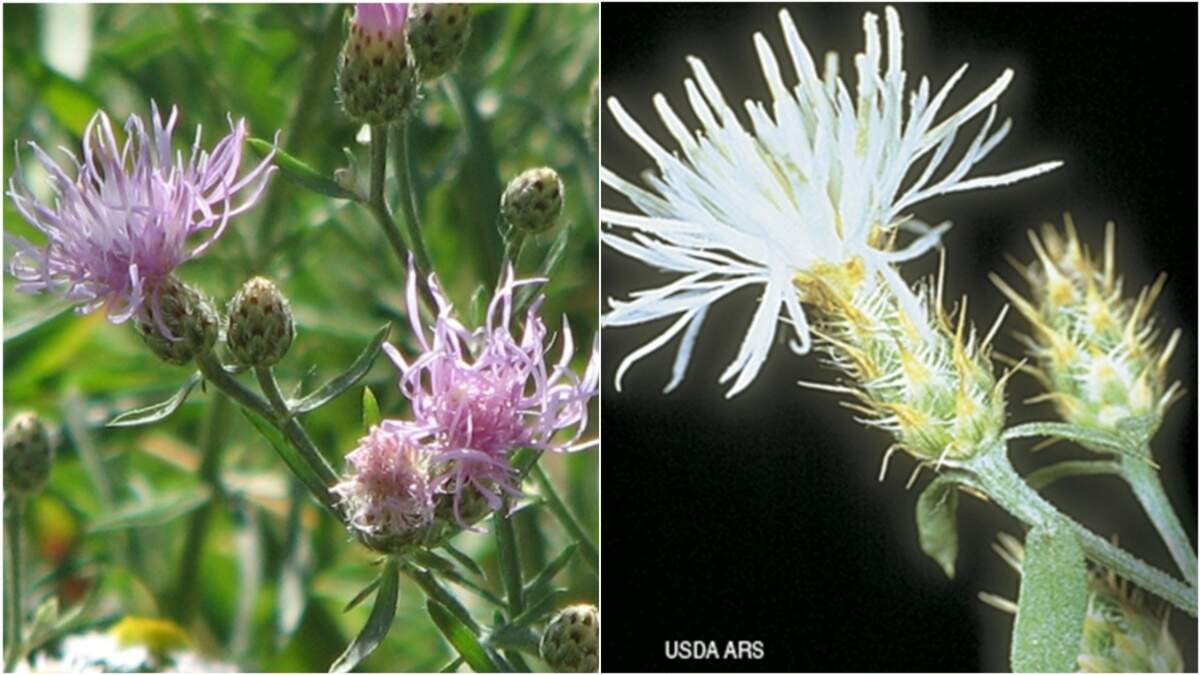
Two knapweeds were recently added to the Kansas Noxious Weed List, making landowners legally responsible for controlling the spread of and eradicating the weeds from their property.
“Noxious weeds are one of the greatest threats to the Kansas environment because they displace native plant species, interfere with the production of agricultural crops, increase erosion, destroy wildlife habitat and decrease property values,” according to the Kansas Department of Agriculture.
The two knapweeds — the spotted knapweed and diffuse knapweed — were added as Category A noxious weeds, meaning they are “generally not found in the state or are found limited in distribution throughout the state.”
Weeds may be designated as Category A to protect the state from a weed invasion.
There are now 16 weeds on the Kansas Noxious Weed List, seven of which are Category A.
Spotted knapweed
Spotted knapweed is a plant that can grow up to 3-feet tall with a deep taproot. It has many branched stems that end with a “head-like inflorescence.” Those heads contain two flowers that can be pink, purple or sometimes white.
This weed flowers from July until the first frost, and it fruits from August until the frost.
.png "download (3).png")
To control spotted knapweed, officials say you must destroy the roots and the flowers. Approved methods of control include grazing, pulling out the root systems, mowing when they are in the bud stage and treating with herbicides. You may also use biological pest control, which involves using pests to control the weeds.
Approved herbicides include 2,4-D, aminopyralid and clopyralid. Approved pests include sulphur knapweed moth, broad-nosed seed head weevil and knapweed root weevil.
Diffuse knapweed
Diffuse knapweed also has a deep taproot and can grow up to 3-feet tall. Similar to the spotted knapweed, its heads produce two flowers, though they are generally white. They may sometimes be pink or lavender.
This weed also flowers from July until the first frost and starts fruiting in August.
.png "download (4).png")
Controlling diffuse knapweed can be done using several methods, including grazing, pulling out the root systems, mowing when they are in the bud stage and treating with herbicides. You may also use biological pest control.