
After harrowing 48-year journey, a historic Wichita theater sign has a new home
A glowing piece of Wichita theater history that’s been on quite a journey since it was displaced in the late 1970s now has a new home.
Robin Macy, who has owned Belle Plaine’s 18-acre Bartlett Arboretum since 1997, has become the latest owner of one of the twin 17-feet-long by 4-feet-tall neon signs that once marked Wichita’s Victory Theater, open at 607 E. Douglas from 1939 until it was torn down in 1977 to make way for Naftzger Park.
Macy got the sign from well-known Wichita architectural preservationist Grant Rine, who recently moved his Old Town Architectural Salvage from 134 N. St. Francis to 2020 E. Douglas. When a member of the arboretum’s regular group of volunteers, dubbed the “soil sisters,” spotted the weathered and tattered sign at Rine’s shop earlier this year, she contacted Macy — who has an affinity not only for all things vintage but also for the word “victory.”
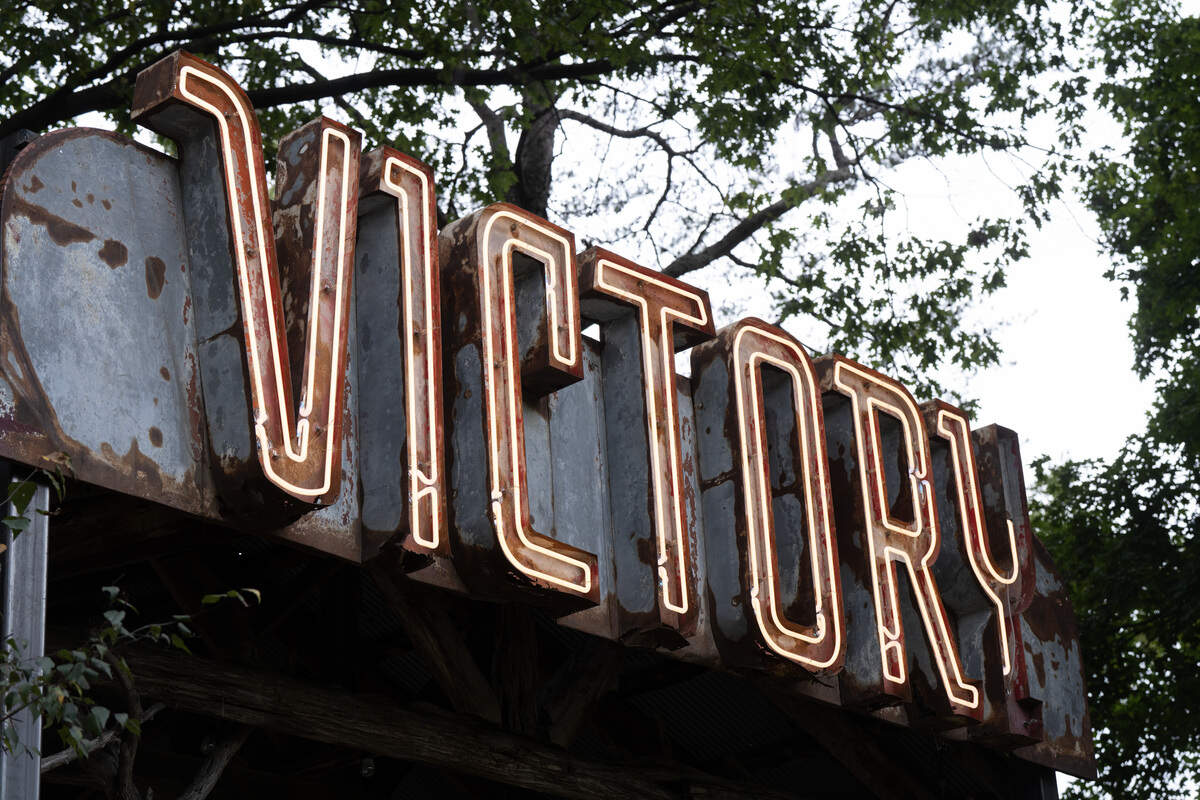
“I knew the second I saw it that if I could acquire it, I wanted it,” said Macy, who has over the years decorated the arboretum with vintage pieces she picked up from Rine’s shop: Victorian fencing, old streetlamps, antique bricks and various pieces of antique furniture.
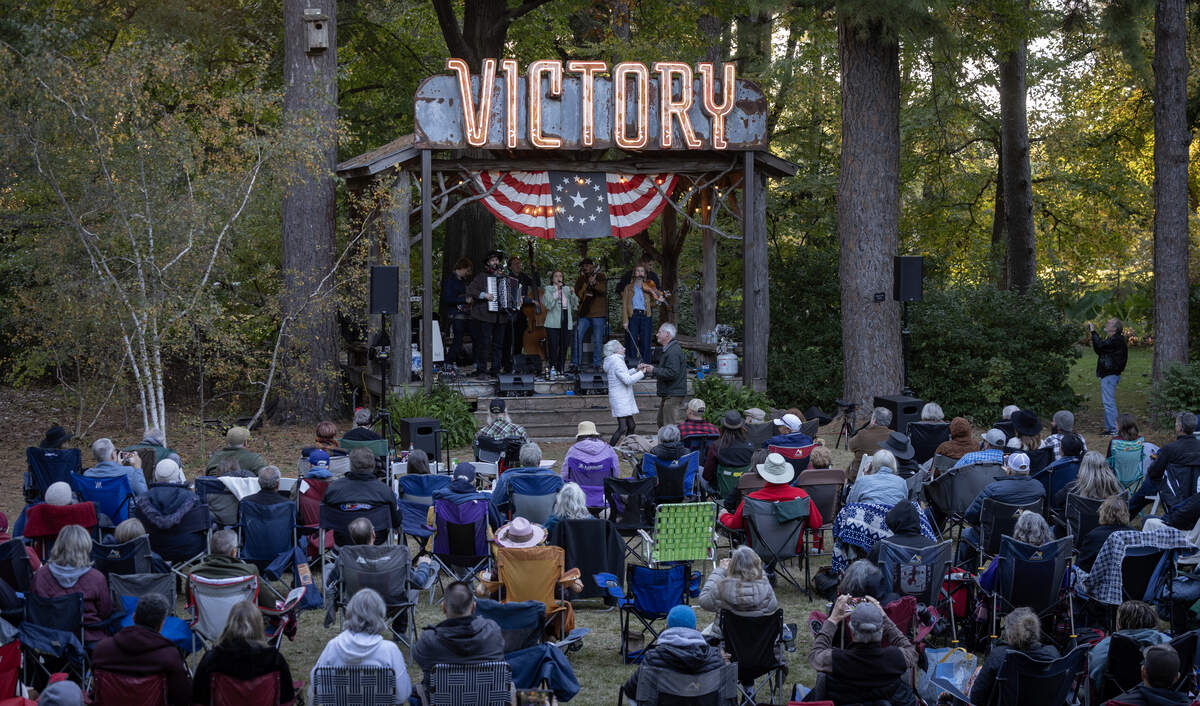
The sign the volunteer scouted was, in fact, not for sale. But Macy is the persuasive sort, and Rine agreed to part with it. Macy then paid to have the neon replaced, and in mid-October, she watched as it was raised by a crane and installed above the outdoor stage where she puts on the arboretum’s many concerts. The decades-old Victory sign now casts a warm glow on audience members watching bluegrass bands pick their banjos and pluck their mandolins.
Macy wanted the sign not only because she, like Rine and the people who had the sign before Rine acquired it, loves old stuff — especially old stuff with historic significance. She also wanted it because the world “victory” has long had special meaning for her.
A decade ago, she established some raised beds on part of the arboretum’s footprint that were intended to honor veterans and “people that tend the land and defend the land.” Macy named them the Victory Gardens as an ode to the victory gardens that families and communities planted during World Wars I and II. She also had a wrought-iron sign that read “victory” fabricated and hung above the garden’s entrance.
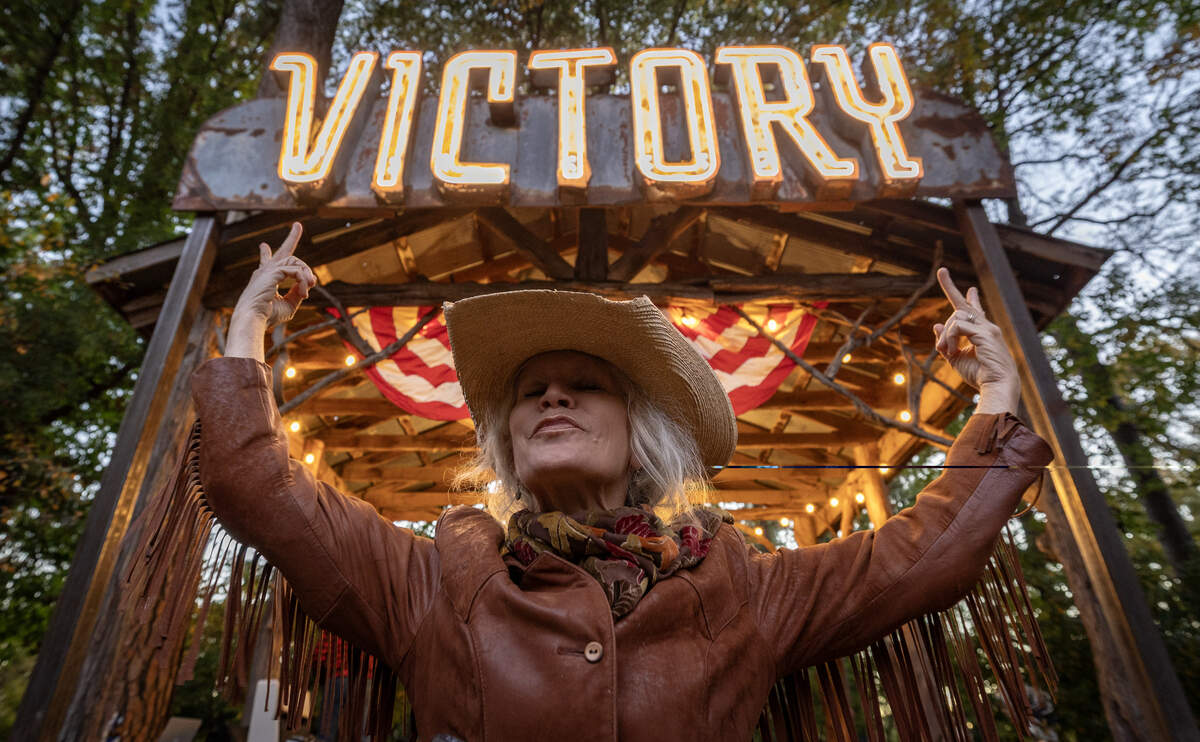
“I love the word ‘victory,’” Macy said, describing it as a “crazy-positive cheerlead-y” noun that brings to mind success, triumph and overcoming. “I think we’re living in a time where we are facing great odds. So I feel like it’s a word that is kind of an instant prod to keep going, to push that rock up the hill.”
Macy would also learn that the historic sign was itself a survivor. It didn’t get the same post-theater pampering that its twin did and spent years exposed to the elements.
It was even once abducted.
Early days of The Victory
The Victory was a 672-seat movie theater that opened on May 28, 1939, and was owned by Joplin, Missouri, transplants Harold Gibbons and George Gottchick.
In Joplin, the two had operated the Electric Theatre, but they moved to Wichita to build a new movie house that would be fully air-conditioned and have “every modern convenience for patrons’ comfort,” said a photo caption printed in The Wichita Eagle on the Victory’s opening day.
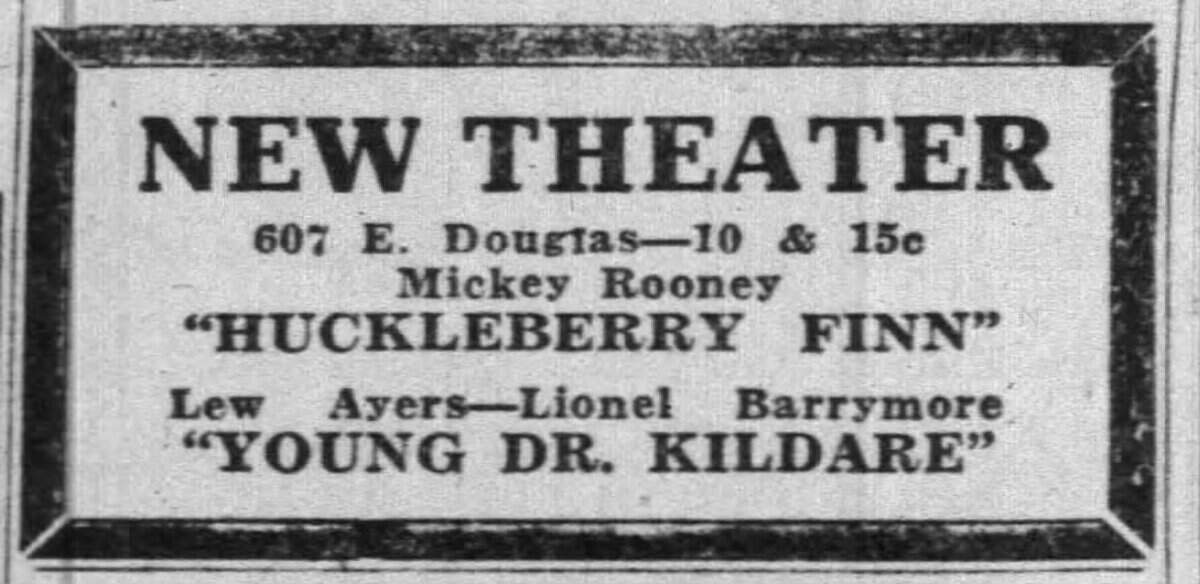
The theater was not initially called the Victory. At first, it was dubbed, simply, New Theater, but the name was changed in the early 1940s.
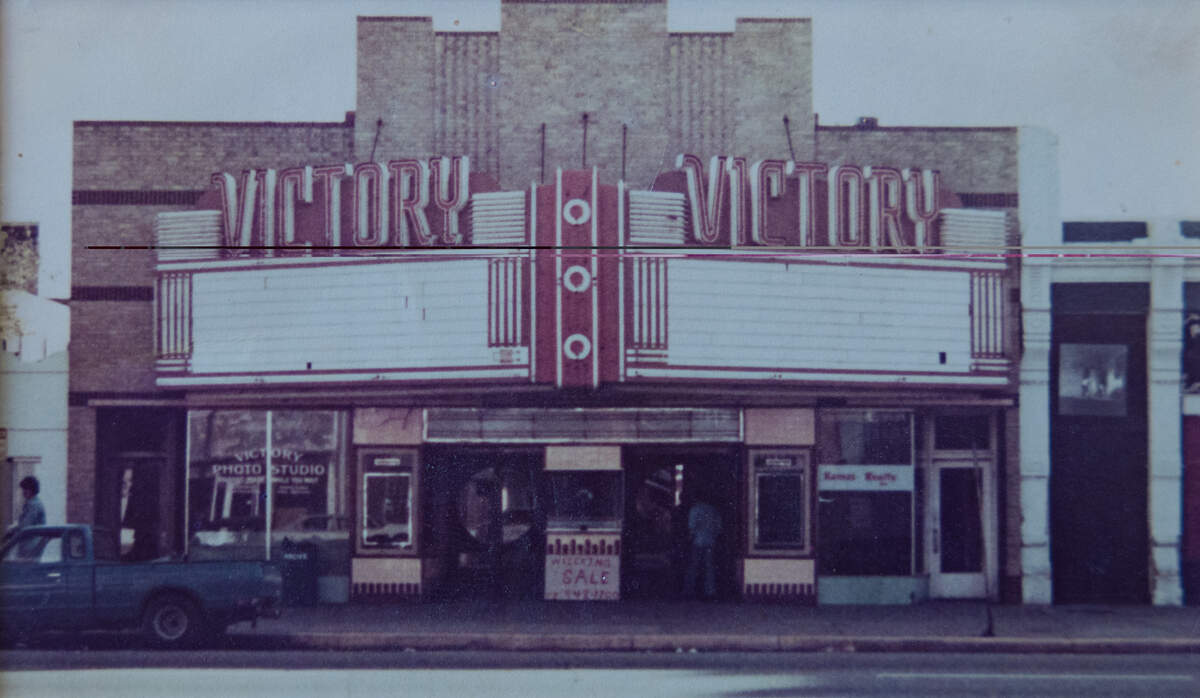
The Victory didn’t have a balcony, but it did have the latest-and-greatest Simplex 4-Star Sound system, and “a note of luxury is added by in-laid carpets,” said an article in The Eagle. It also contained a new theater innovation: a baby’s crying room with sound-proof glass, where mothers could take their infants and still hear and see the movie without disturbing other patrons.
The Victory was finished with art deco plush seats, an acoustical ceiling painted with sunflowers, and a giant mural that showed Wichita’s evolution into an aviation hub. The building was also “entirely fire proof,” and the marquee featured two identical neon signs that each read “Victory.” One faced northeast, and one faced northwest.
The Victory’s contemporaries were the Orpheum Theatre, the Miller Theater and the Uptown Theatre, but the Victory showed second-run films at lower prices. Tickets when the theater opened were 15 cents.
In the late 1960s and early 1970s, the adult movie industry was on the rise, and many older theaters across the country that were struggling financially began airing X-rated films. The Victory was one of them: In 1967, it became known as The Victory Art Cinema and began running movies with titles like “Boxcar Bertha” and “Bunny O’Hare.” Among the other local theaters that did the same: the Vogue Art Theater at 417 E. Douglas, the Nomar Theater at 2141 N. Market, even The Orpheum at 200 N. Broadway.
In 1976, Wichita’s Urban Renewal Agency spent $625,000 to buy nine parcels in the 600 block of East Douglas — which had become rough and rundown over the years — and announced it would tear them down to build a new downtown park, eventually named Naftzger Memorial Park. The Victory Theater was on the list of buildings that would meet the wrecking ball as were several of its neighbors: Watkins Sundries, Girls Shoe Shine Parlor, Club Bar and the old Salvation Army building.
.jpg "42-0111A (1).jpg")
The Victory closed in June 1977, but it wasn’t torn down before a grand farewell. In October, a group of young artists planned a nine-day wake for the theater and a few of its neighbors and called it “The Last Rites for These Demised Premises.” Among the events staged at the Victory: a one woman show by Karla Burns (a future Tony Award nominee who was then a Wichita State University student), a performance by a mime troupe, a show featuring African cultural dancers and drummers, and a performance by the WSU Jazz Ensemble.
Dorothy Gibbons, the wife of theater co-founder Harold Gibbons, told The Eagle she planned to attend the performances.
“Oh, I’m so enthused,” she said.
Victory v. the wrecking ball
In late November 1977, M & M Wrecking Co. was hired to demolish the Victory. Pieces of the theater began to appear in the “for sale” section of The Eagle classifieds — including the sunflower ceiling, sinks, fire doors, I-beams and bar joists.
Some of the key pieces were salvaged by people like Jimmy Lytton, a local contractor and architectural preservationist who had helped John and Mary Wright restore Old Mill Tasty Shop and had been a builder on businesses like The Looking Glass, Larkspur and River City Brewing Co. Lytton salvaged the theater’s front doors and its projectionist’s seat.
He also got the twin Victory signs.
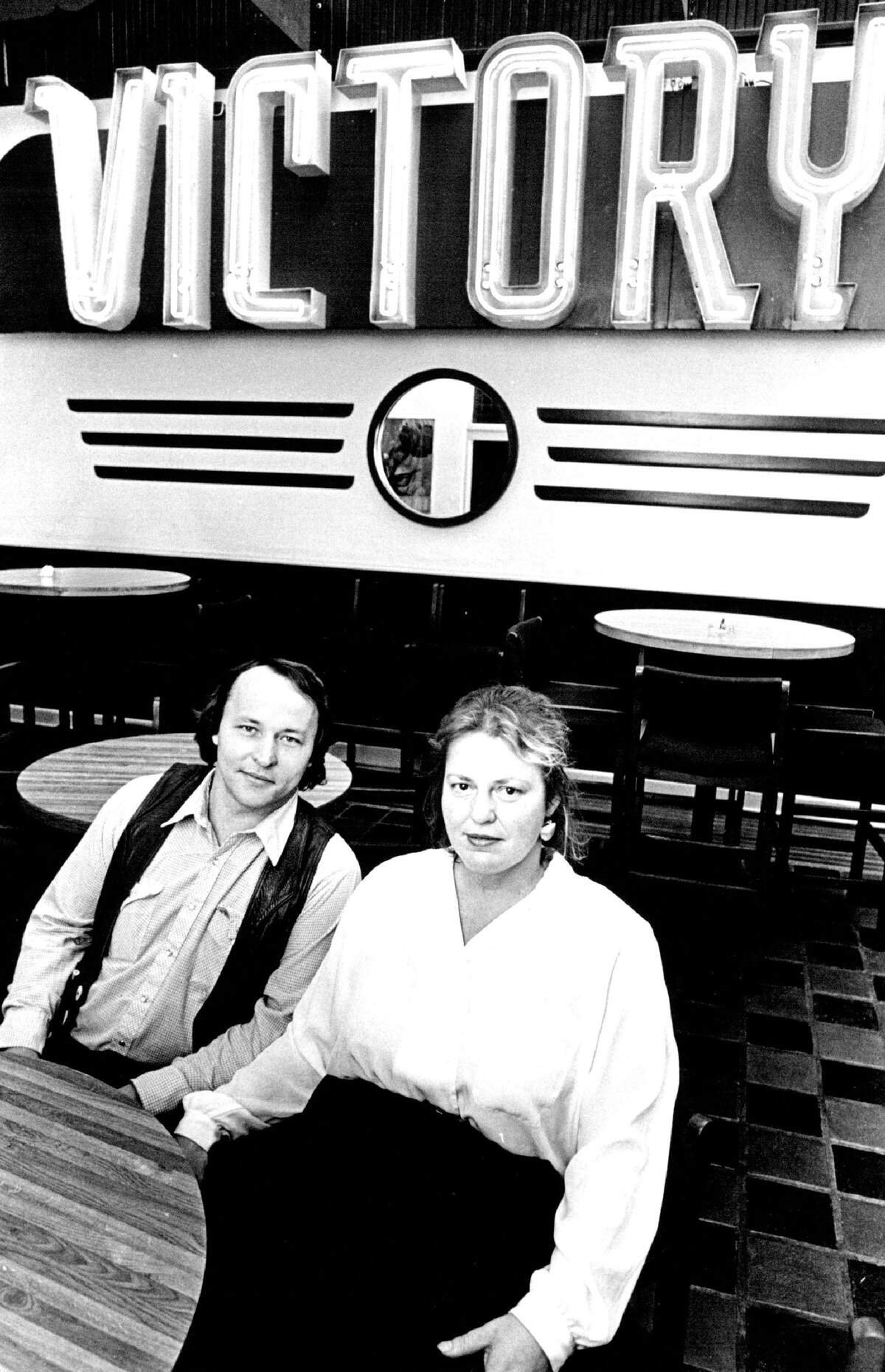
One of the two neon signs was renovated and restored, and in 1986, it was used as decor in a restaurant called Victory Bar-n-Grill, which the Wrights, owners of Old Mill Tasty Shop, operated in the Occidental Building (now the Baltimore Apartments) at 300 N. Main.
“We originally were going to put it in the Old Mill but Mary wouldn’t let me,” John Wright told the Eagle at the time.
When the Wrights closed Victory Bar-n-Grill in 1989, they sold the refurbished theater sign to Gary Streepy, the founder of several Wichita restaurants, including Pasta Mill. In 1991, Streepy was opening a new Old Town sports bar called Heroes at 117 N. Mosley, and he installed the sign inside. The glowing red neon Victory sign remained one of the most recognizable pieces of Heroes decor through many years and multiple owners. The sports bar has been closed since April 2022, but the realtor who has the building listed for lease recently said that the Victory sign is still hanging on the wall, where it’s been for decades.
The other Victory sign wasn’t quite as coddled.
Lytton, who’d salvaged the sign from the theater, at the time owned the old Lily Lake School House at 9010 SW River Valley Road in Augusta. He used the building as his workshop and as a place to store his treasures. Lytton placed the other Victory sign in front of the school house, where he was known to throw music-filled parties, and it would greet people as they approached.
It stayed there, exposed to the weather, for decades. But about 10 years ago, Lytton decided he was ready to start downsizing.
Architectural Salvage owner Rine had always loved the Victory sign, and in 2016, Lytton finally agreed to sell it to him along with lots of other large items. It took several days, Rine remembers, to load everything, including the Victory sign, onto a trailer that Lytton owned so that Rine could transport it to his shop.
But before Rine could retrieve the trailer, there was an “ill-fated situation,” he remembers.
“Thieves came and just took the trailer, the Victory sign and all the stuff, and they absconded with it,” Rine said. “And I thought, ‘Oh criminy.’”
Rine called a local television station and asked it to “put out an APB” on the historic sign. Two days later, he said, the Victory sign turned up in a ravine near El Dorado.
“They didn’t want the stuff,” Rine said. “They just wanted the trailer. Jimmy never got his trailer back, but I got all my stuff back.”
Rine took the sign to his shop on St. Francis, where it remained for years. When he moved his business to East Douglas, he took The Victory sign, which was not for sale, Rine said. He loved it and planned to keep it and instructed his employees to tell anyone who asked about it that he wasn’t interested in selling.
Then Macy called.
“Antiquities of that nature, to a guy like me, need to have the right home, or they don’t go,” Rine said. “She was the right fit for the sign. And I just said, ‘I’m going to give her a crazy price.’ And she said, ‘Okay.’ And I thought, ‘Holy cow, I did not expect that.’”
Victorious in the end
The price, Macy recently said, was not that crazy.
Macy’s beloved mother, Frances, died last November at age 93, and Macy inherited a bit of money. She decided to use it to purchase the Victory sign.
“Frances Macy paid for that sign,” Macy said. “She would have wanted the Bartlett Arboretum to have that sign. Nobody lived a more victorious essence than Frances Macy. Every morning, she couldn’t wait for the day to unfold and see what wonderful things were going to happen.”
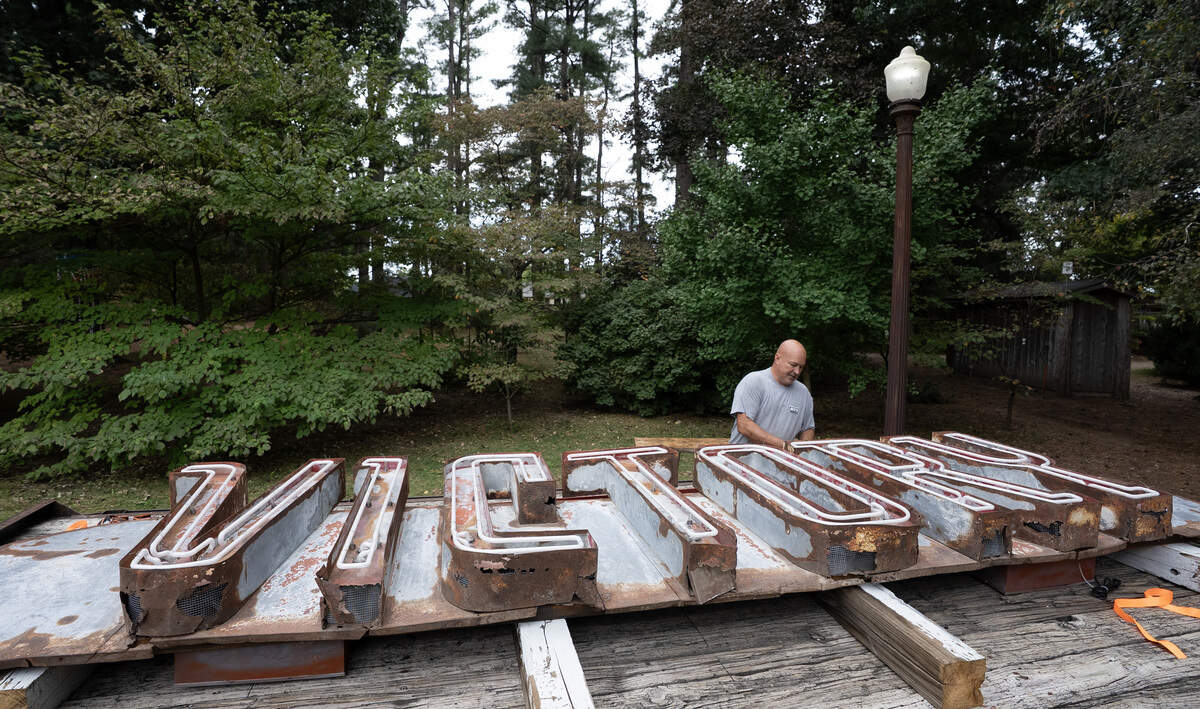
After paying Rine, Macy then had to find someone to repair the neon on the sign. She met Mike Martin, who is part owner of Wichita’s Nu-Line Signs. He was excited about the project.
When he got the sign, Martin said, he stripped everything out of it, including its broken glass housings and the old ceramic bushings that once held its wiring. He installed new wiring, transformers and electrical boxes. He then hand-drew a pattern of the glass tubing he’d need for each of the sign’s letters then bent the glass tubing to fit. The whole process took him about 40 hours, he said.
Martin is a member of a few Facebook groups that are devoted to old signs, and when he posted pictures of the Victory sign, commenters begged him not to put modern LED lighting into it, he said.
But there was no chance he would, he said. The Victory sign deserved to have its soft neon glow restored.
“I’ve never been a history buff as far as school and stuff,” Martin said. “But just getting to bring a little bit of life back into this . . . I think there’s always going to be a place for neon, and even with the LED and everything that’s coming out, there will always be a spot for neon.”
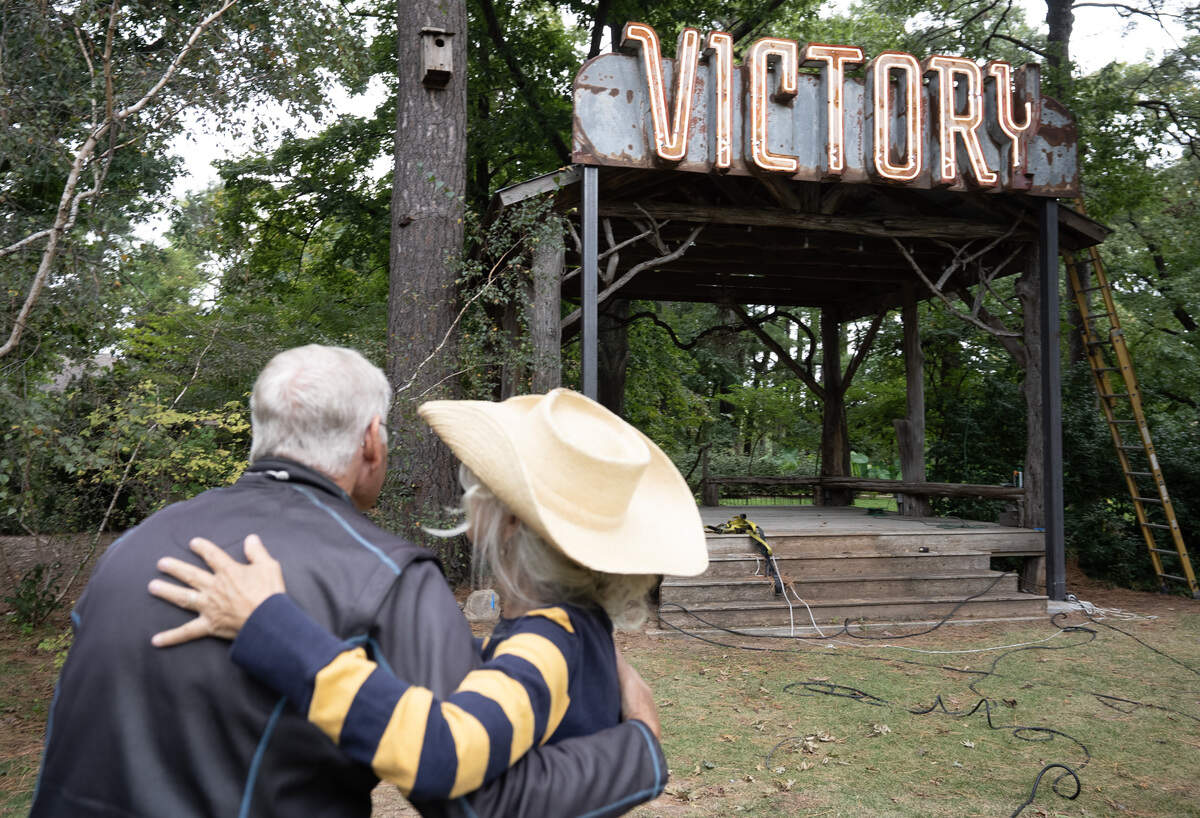
On a Monday morning in October, Martin and his son, Carter, loaded the restored Victory sign onto a trailer and hauled it to the Bartlett Arboretum. As they prepared to lift the 1,000-pound sign into place above the Loblolly stage, Macy blasted marching band music over a loudspeaker.
As she watched, Martin climbed a ladder onto the roof that covers the stage, and Carter controlled a crane that slowly lifted the sign. Martin grabbed it and secured it to two vertical poles that he’d installed 10 days earlier. He then welded the sign into place.
When it was finally time to switch the lights on, Macy turned the marching band music back on. She positioned herself in front of the sign and playfully marched in place to the beat of the music. When Miller hit the switch, Macy’s arms flew into the air, forming the shape of a V.
It was morning, so the neon’s soft glow would not be fully appreciated until crowds showed up at the Arboretum for an outdoor concert by the Hayde Bluegrass Orchestra a few weeks later. The Daylight Savings Time sun set during the show, and the Victory sign emitted a pale pink glow over the audience.
But on installation day, as she watched the sign go up, Macy clutched in her hand a photo of her mother as a younger woman.
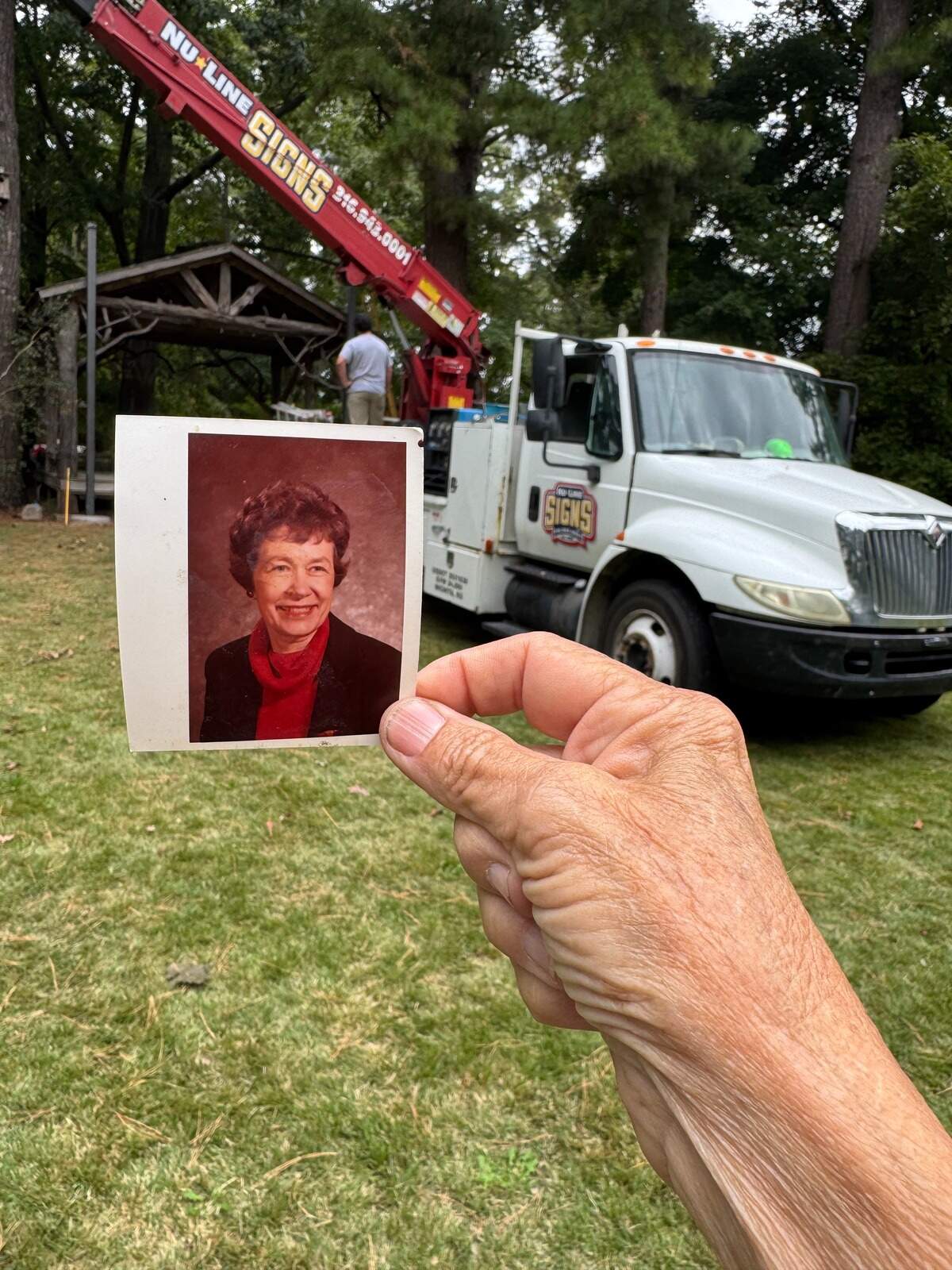
Frances would have loved the Victory sign, Macy said. And she would have loved knowing that the luminous piece of Wichita history ended up victorious.
“This is a gift to the world from Frances Miller Macy,” she said, “who was the most victorious person I ever knew.”
There’s one more chance this weekend to see the newly installed Victory sign before the Bartlett Arboretum closes for the season. The venue, at 301 N. Line Street in Belle Plaine, will be open for picnickers and fall foliage fanatics from 9 a.m. to 5 p.m. Saturday and Sunday. Admission is $10 for adults, free for children.
This story was originally published November 14, 2025 at 5:05 AM.
.jpg)