
As Wichita’s Orpheum Theatre celebrates 100 years, complete restoration may be in sight
Ever since 1980, when a group of Wichitans managed to get the Orpheum Theatre, at 200 N. Broadway, on the National Register of Historic Places and essentially save the historic venue from threat of demolition, the city has been hearing a familiar refrain.
The Orpheum will be restored to its former glory. It won’t be long now. All that’s needed is a few million dollars.
Back in 1986, when the economy was suffering and donors were tapped out, Orpheum boosters landed a big grant, and board members said complete restoration was likely only five years away.
Those in charge of the theater in 2004 also gave a five-year prediction. Then in 2015, a new group of leaders said the theater would be completely restored by its centennial celebration in 2022.
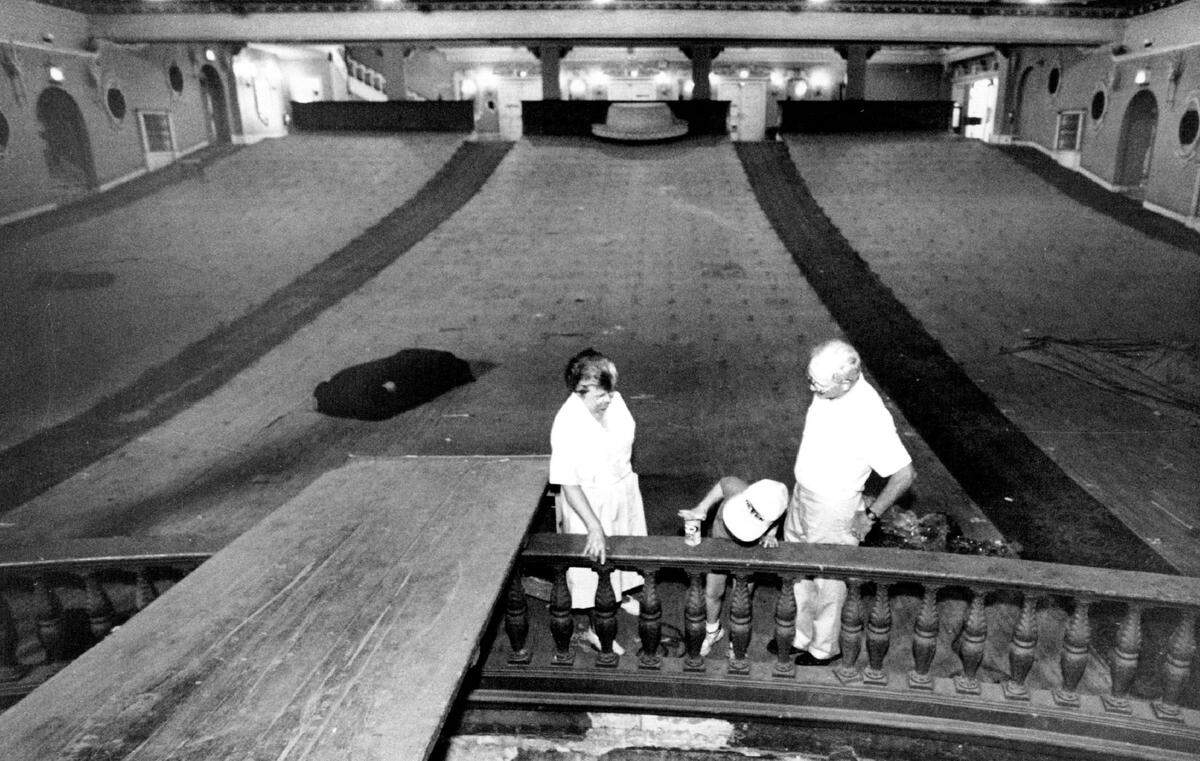
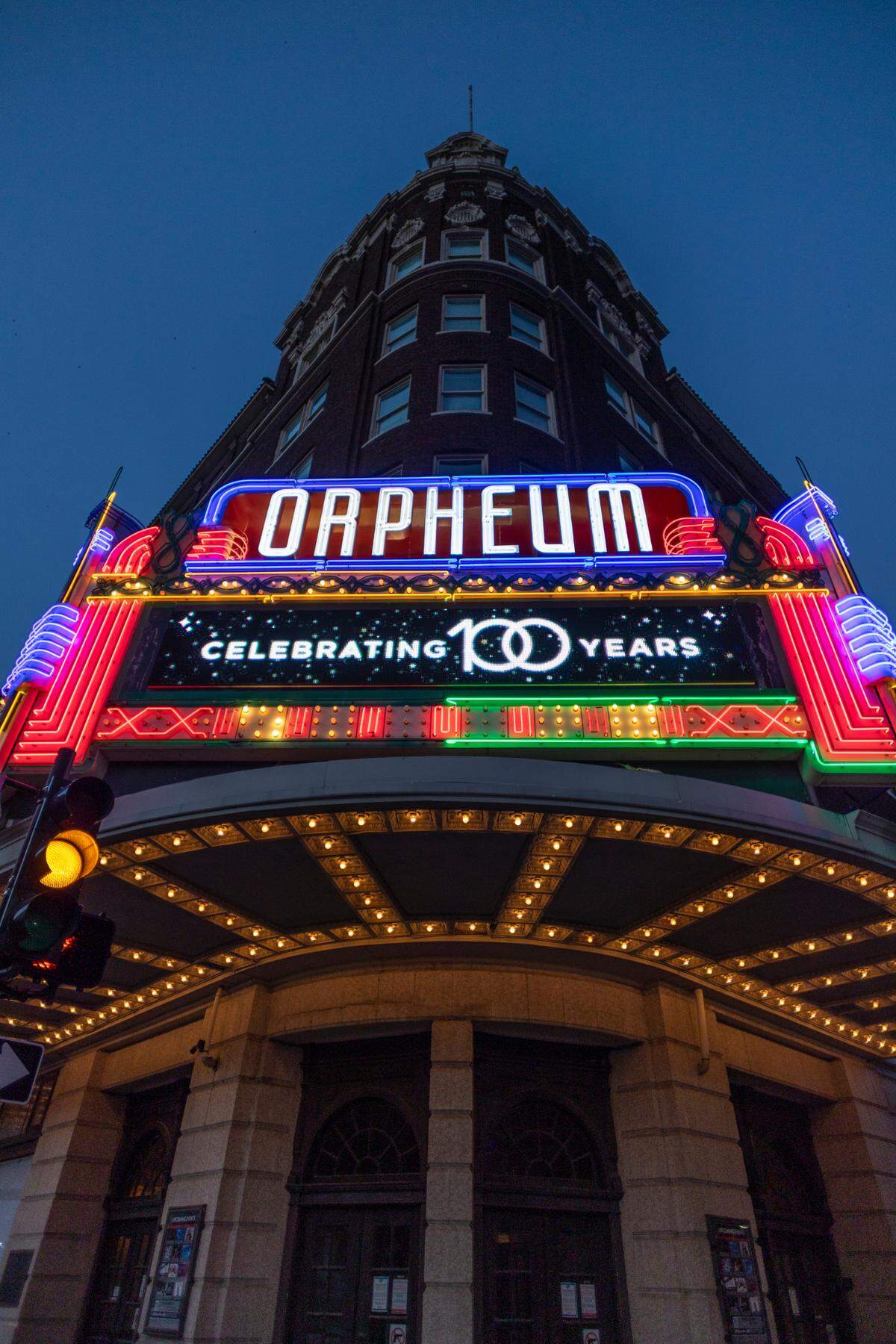
Now, the centennial has arrived. The Orpheum — the last survivor of the grand Wichita theaters built in the 1910s, 1920s and 1930s — celebrated its 100th birthday earlier this month, and the restoration is still not complete. Though many big projects have been tackled — including the restoration of the lobby and concession area, the addition of a new marquee and the installation of new restrooms — the auditorium itself still has peeling paint, a rickety and uneven floor and uncomfortable 1970s-era seats torn out of a Towne East Square movie theater and installed decades ago.
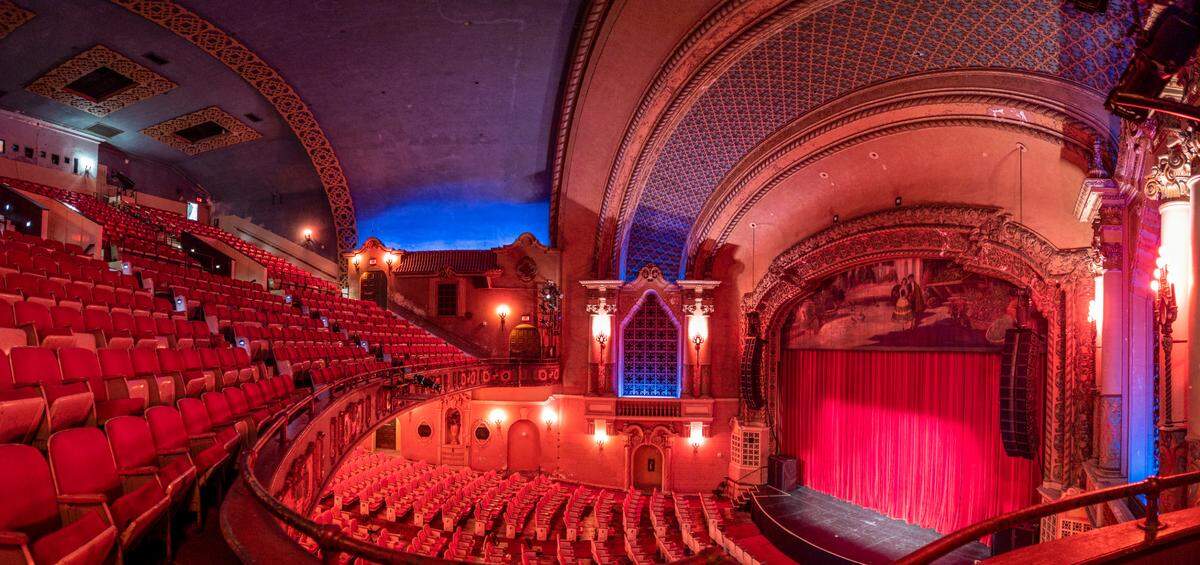
Now, the staff in charge of The Orpheum — led by an energetic duo who have been on the job for about a year — have something familiar to say: The Orpheum will be completely restored to its former glory, and it won’t be long now: five years at the most. All that’s needed is between $9 and $12 million.
But the refrain sounds different this time.
The two women leading the charge — executive director Rachel Banning and development director Stacee Olden — say they have a plan that’s less lofty than their predecessors’ and more achievable.
They also have the benefit of aiming for complete restoration at a time when the building has already been saved: Just over $3.5 million has been spent on restoring it since 1996, and even with its less-than-comfortable seating and peeling paint, The Orpheum has grown over the past two decades into one of Wichita’s most successful entertainment venues, alongside major players along like Intrust Bank Arena, The Cotillion, Century II and Hartman Arena and Wave. Pre-pandemic, yearly attendance at the 1,300-seat theater had grown to between 60,000 and 65,000 people and is on track to rebound to those numbers this year.
Now, all that’s standing between The Orpheum and the complete restoration its supporters have dreamed about since the doors closed in 1976 is securing funding, and the staff has a plan for that, too. They’re in the early stages of developing it and likely won’t have more specific details to share for at least a year. But it will be done, they say. And soon.
.JPG "080311orpheum_fs4.jpg (1).JPG")
“In my head, it’s already done, as though all I need to do now is call a contractor,” Banning said. “I can already see it. I’m very impatient, but I want to make sure we do it the right way. We can’t just put a band-aid on it and think it’s not going to have repercussions later.”
Vaudeville beginnings
The Orpheum Theatre opened for the first time on Sept. 4, 1922 — Labor Day. It was designed as a vaudeville house with an “atmospheric” interior design intended to resemble a Spanish courtyard. The theater was filled with intricate plasterwork flourishes throughout, the ceiling twinkled with lights meant to look like stars, and a special projector would simulate moving clouds. It cost $750,000 to build it.
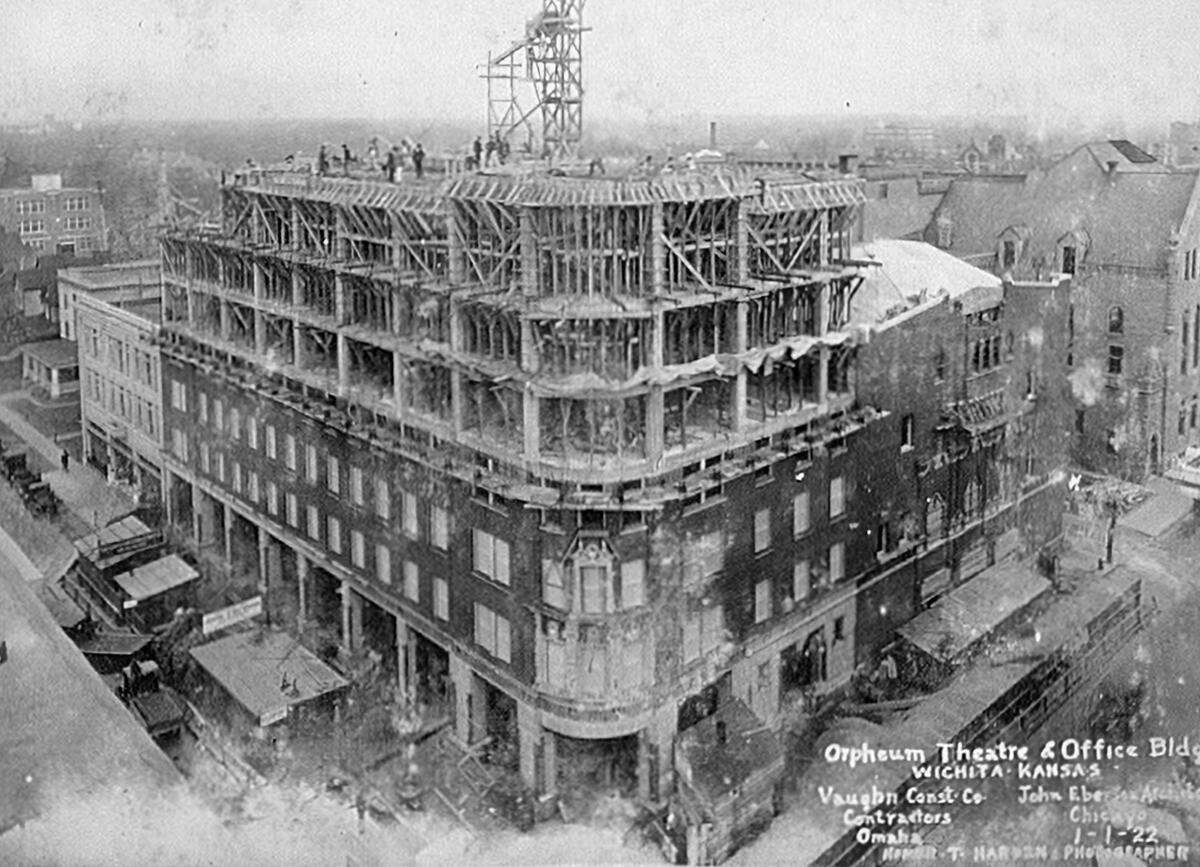
“Every seat has a clear, unobstructed view of the stage,” an advertisement that ran in The Wichita Beacon ahead of the opening said. “The acoustics are perfect.” Balcony seats for evening shows cost 25 cents. Box seats cost 75 cents.
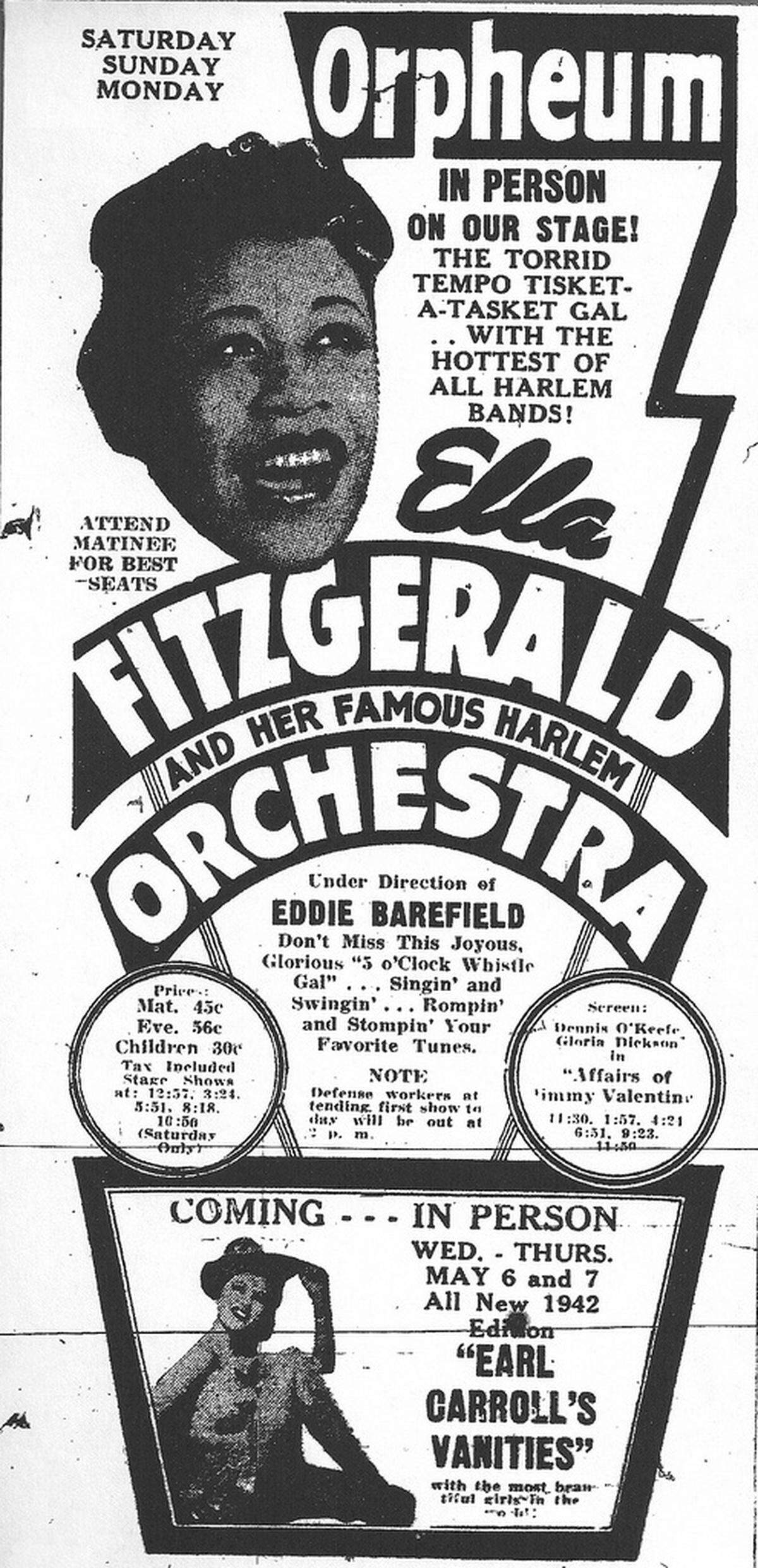
The theater was part of the Chicago-based Orpheum vaudeville circuit that had theaters all over the country and would book performers to travel around and play to them. In its early days, Wichita’s Orpheum attracted stars like George Burns and Gracie Allen and Harry Houdini. Even after demand for vaudeville slowed and the theater was wired for sound and started showing talking movies in 1929, well-known performers would still frequently grace the stage. In 1942, Ella Fitzgerald was paid $2,000 for 13 performances. Louis Armstrong performed on the Orpheum stage in December 1943.
By the 1950s, The Orpheum was operating mostly as a movie house and would show films like “A Streetcar Named Desire” and Elvis Presley’s “Love Me Tender.” Many older Wichitans have fond memories of hopping on the bus as kids, riding downtown to see a movie, and riding the bus home.
But in the late 1960s and early 1970s, as downtown became more congested and parking became scarce, crowds stopped coming to The Orpheum. Before it closed in 1976, it was owned by the Mann Theatres chain out of California and was showing mostly Kung-Fu movies or X-rated films with titles like “Flesh Gordon.”
“Many of us who were in the city at the time felt like it was a slow death because they attempted to show things that they thought would generate revenue,” said Delmar Klocke, an 89-year-old local Orpheum historian and member of the Orpheum board. “But it was tough. First of all, there were other theaters in the suburbs that had free parking, and downtown Wichita did not have free parking. And so it was just a headache to come downtown, try to find a parking place, pay for a parking place, and then go to a theater that maybe didn’t have first-run movies. And it just collapsed.”
Still, when it closed its doors in 1976, The Orpheum had outlasted many of its contemporaries, including The Palace Theatre at 309 E. Douglas, bulldozed in 1967 to create space for more downtown parking, and the beloved Miller Theatre at 115 N. Broadway, which was razed in 1972 to make way for the Fourth National Bank and Trust Co’s parking garage.
Mann Theatres eventually put The Orpheum on the market for $100,000, but there weren’t any takers. The seats were stripped out of the building and it was being prepared for demolition when some concerned citizens crusaded to get The Orpheum added to the National Register of Historic Places. They succeeded in 1980, making The Orpheum eligible for tax breaks and federal grants and ensuring that any renovations would have to retain the original design of the building.
The theater finally got a buyer that year, too. Over the next several years, it would pass through many hands, and one of the owners would face a foreclosure lawsuit.
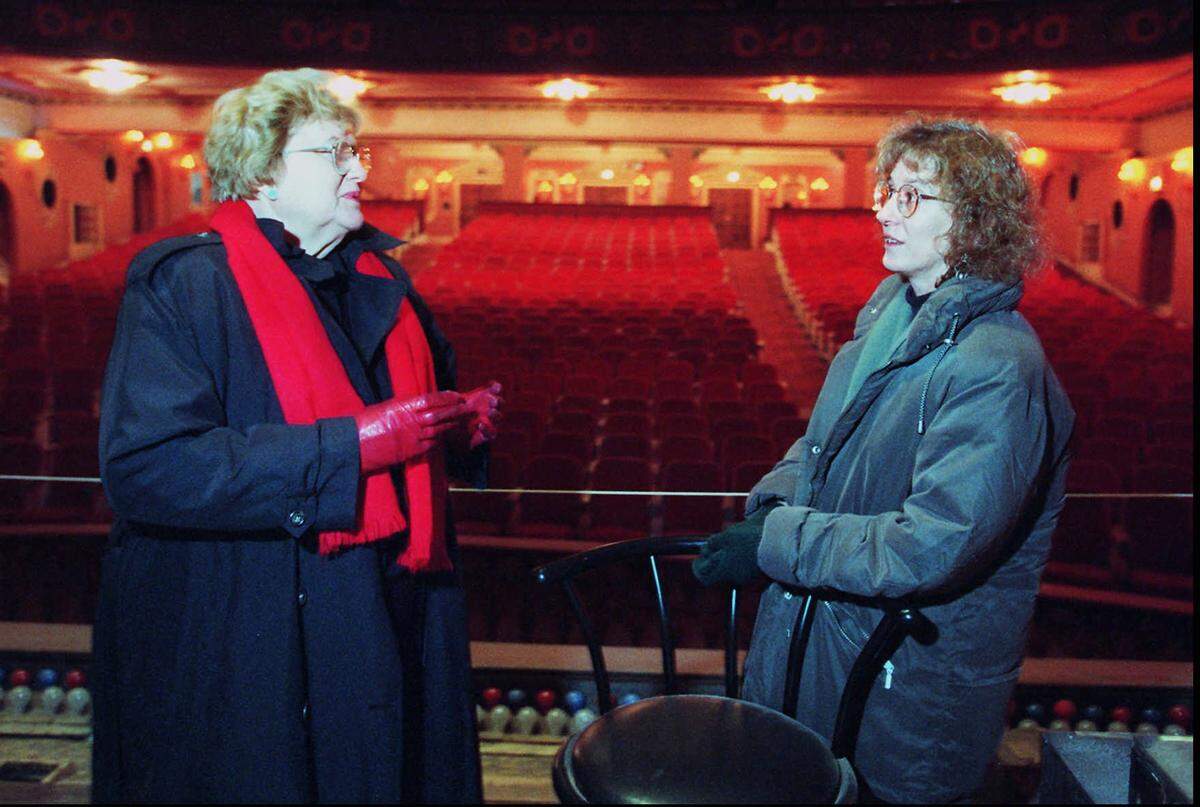
In December 1985, Orpheum owner Stan Wisdom donated the theater to the Orpheum Theatre Performing Arts Centre Ltd., a nonprofit group whose leaders — including Marge Setter and Meredith Hill — were the first to get serious about plans for a total theater restoration. In 1991, after two years of legal drama over the foreclosure, the Orpheum board got uncontested ownership of the theater and started raising money toward its restoration.
But it was a big job.
“There was a hole in the roof. We had urban campers. Pigeons. No running water,” said Barney Byard, the Orpheum’s theatre director who has worked at the theater off and on since 1999. “The first volunteers that came in to help out — it was hazmat duty, and they are truly the unsung heroes of the earliest pieces of the Orpheum being a viable performing arts center again.”

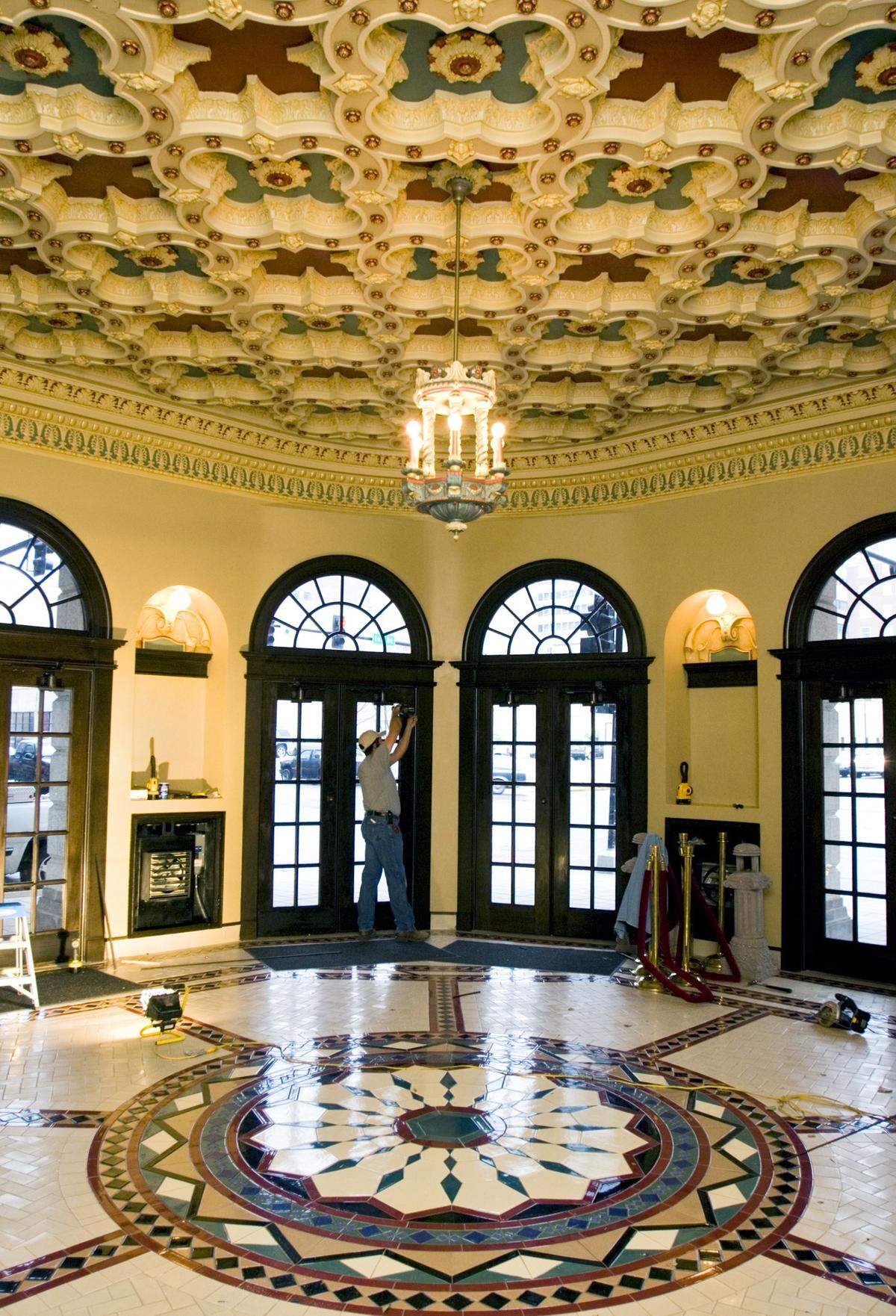
Over the next decade, private money was raised and grants were secured to pay for improvements that would protect the theater from the elements, including the installation of a new roof and a new heating and air conditioning system. A new marquee was put up in 2001 — a replica of the 1940’s original that was taken down in 1984 — and new restrooms were added in 2002. The lobby, vestibule and box office were restored to their original splendor in 2006 followed by the concession stand in 2007.
In the late 1990s, the theater began regularly booking shows and concerts again, and patrons became accustomed to the “shabby chic” condition of the auditorium itself. Attendance picked up every year, and in 2013, the then-leaders of The Orpheum announced the start of a $30 million capital campaign that would finance a six-stage project that would totally restore the theater and expand it into a modern-day performing arts center.
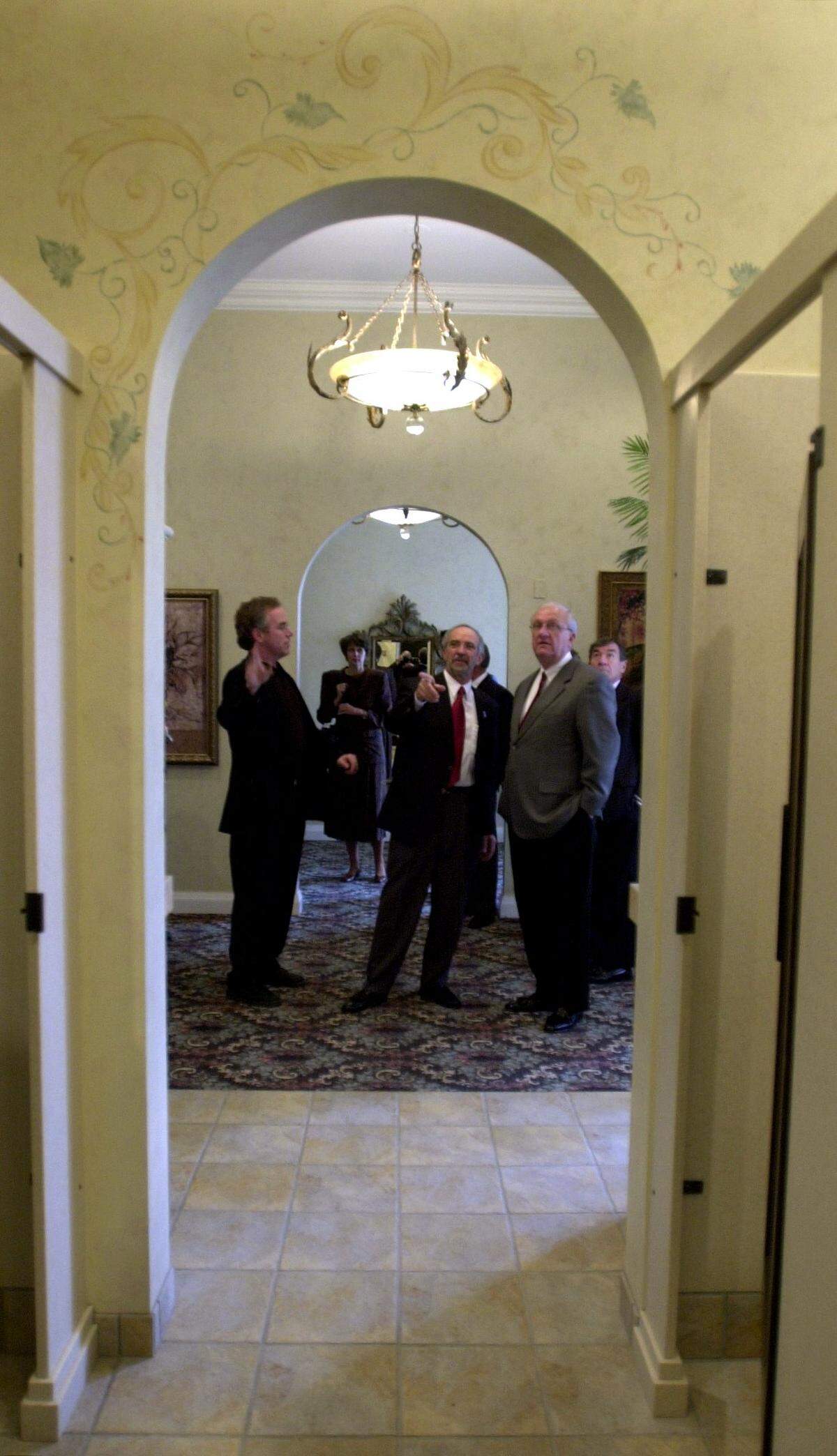
In 2015, the theater’s rear lobby was restored along with the east stairwell — but nothing much happened after that, though the theater continued to attract national touring shows and growing audiences.
New leaders took over. And eventually, a global pandemic shut down The Orpheum — along with theaters across the world — for more than a year.
By September 2021, the theater reopened to full capacity, and despite years of optimism, projects and promises, it was still the only one of the 17 remaining operational Orpheum theaters in the country that had yet to be fully restored.
“We’ve been focusing so hard on proving that we have what it takes to make it as a theater and a venue in Wichita that we just haven’t been concentrating on the actual restoration,” Banning said.
‘Bring it home’
During the COVID-19 pandemic, the Orpheum board performed a feasibility study to determine how the theater was seen by the community and what would need to happen for it to move forward.
Then, it brought on two new people in key positions: Banning started as interim executive director in June of 2021 then took the job over permanently in September of that year, and Olden came on board in August 2021. After that, the staff brought in a consultant and developed a new plan.
“We have been doing a lot of research,” Banning said. “During the pandemic, we were shuttered and had a lot of time to do those cost estimates and start pulling together a team that could take ownership of this and bring it to completion.”
Instead of the “lofty” $30 million overhaul that was suggested in 2013, they decided, the staff needed to focus just on the projects needed to get the auditorium itself restored.
“It’s very tangible,” Olden said. “And it’s much more tangible when you look at, ‘What do you need to do to just get to complete restoration?’”
The answer, she said, is to focus on what the community sees, namely floors, chairs, walls and ceilings.
The auditorium restoration needs to be done in a particular order, too, Banning said. First, the theater needs a heating and air conditioning system for the stage and for the balcony. Then, the ceiling needs to be restored — its twinkling stars relighted.
Next would come the new floors. Then the new chairs.
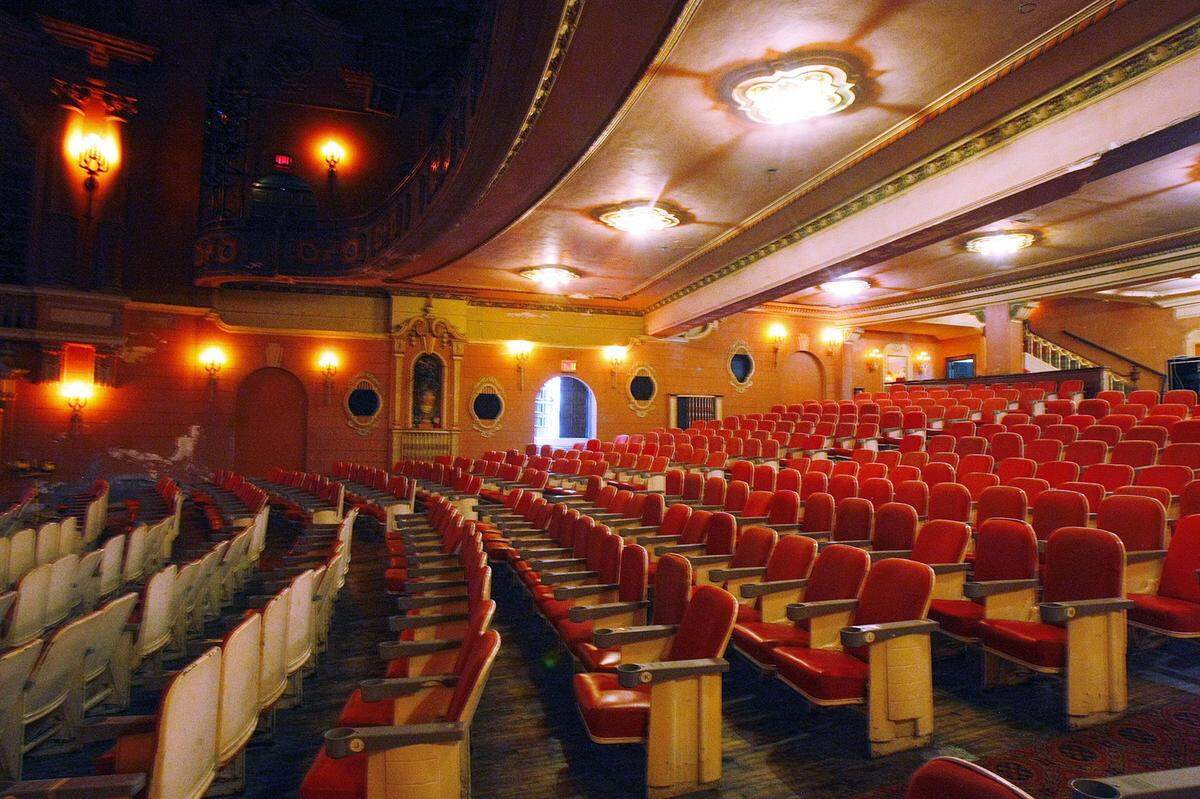
“Everybody’s ready for the seats, but economically, it really needs to be done in a particular order so we don’t have to go back and fix things over and over,” Banning said.
The cost, she estimates, would land between $9 and $12 million. Once the money is raised, the theater would have to go dark for an estimated 18 months, so some of that money would go toward keeping staff employed. Some would also be used for booking shows a year out so that the theater can pick up where it left off when it’s ready to reopen.
The Orpheum already has some money in the bank and it has some pledged, but the rest will have to be raised. The non-profit 501c3 that manages the Orpheum and employs Banning and Olden already relies on grants and donations. The theatre’s annual revenue usually covers about 70% of the theatre’s operating costs, but the remaining 30% — plus any building maintenance and restoration funding — has to be covered by fundraising.
But Banning said it can be done, especially with the momentum building around the theater’s centennial celebration.
The theater has not always done the best job of telling its story, she said, and that will have to change. And though she’d love to have financial help from the city or county, she’s not counting on it.
“We would love to have city, state and local support, but ultimately this theater was built for the community, and we feel very strongly that the dollars should come from the community as well,” she said.
Sharon Feary, who is the Orpheum board chair and has served on the board for seven years, said that she feels like the theater finally has the right pieces — and team — in place to “bring it home” and get the restoration done.
A longtime fan of the theater, Feary said that Wichita does not have a great track record at saving its historical gems, but The Orpheum can’t be part of that story.
Part of the fundraising will likely include asking local government bodies for help.
“There are so many needs in a community, but there are some grants out there that are going to want to know what local government is doing,” she said. “This place is such an economic driver. I think we’re just going to have to continue to work on telling our story to the electeds on the 13th floor at the city and see what we can do to get this done.
“The city needs this theater. It’s a crown jewel for all of us.”

This story was originally published September 22, 2022 at 4:11 AM.
.jpg)