New CDC study offers best look at how many people got sick at Kansas park last year
READ MORE
Are Wichita-area splash parks safe?
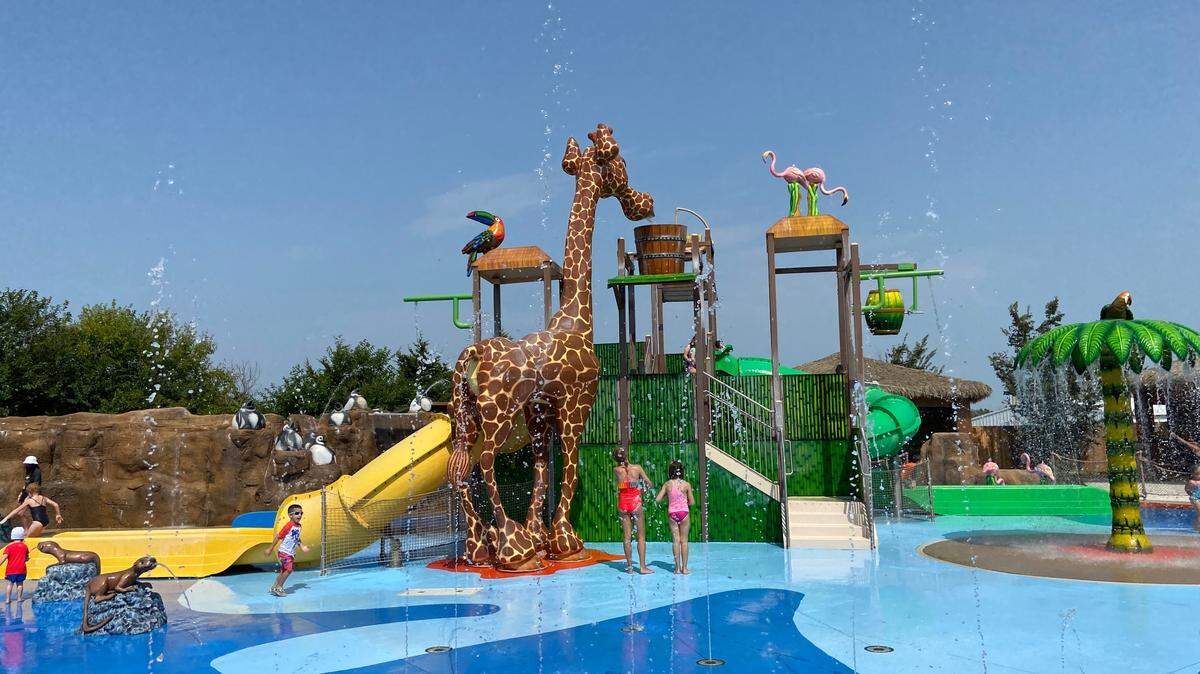
An incident at Tanganyika Falls Splash Park west of Wichita in the summer of 2021 raised questions about sanitation and oversight in the maintenance of splash pads throughout Sedgwick County.
Expand All
The June 2021 bacterial and viral outbreak linked to Tanganyika Wildlife Park is now a Centers for Disease Control and Prevention case study.
The CDC’s study is based on survey responses submitted by 404 people who visited Tanganyika last year between May 28 and June 19. The study provides a closer look at what happened, including more concrete figures on the number of people who got sick.
The park reopened in July 2021 after implementing the CDC’s Model Aquatic Health Code. Sedgwick County’s top health official said he is “satisfied that all requirements (of reopening) are met and that there is no risk of infection.”
Still, the park is dealing with the fallout from the outbreaks.
Three lawsuits were filed against Tanganyika, including one involving dozens of people who complained about their children or them getting violently ill and even hospitalized. Two lawsuits are ongoing.
When asked in an email to comment about the study, park director Matt Fouts replied: “I believe you are better off letting it be. Have you read the full report? It doesn’t add to the narrative and isn’t relevant.”
After The Eagle’s story published online, Fouts sent another email saying that wasn’t supposed to be taken as a comment. Fouts said he’s “all for analyzing data to learn from the past,” but he didn’t find the study useful.
‘It offered little advice for other splash parks besides ensuring you have signage that states “don’t swallow the water” and offered no additional insight into the investigation,”’ he said. “Regardless, it did affirm that there have been no additional incidents because we took the situation seriously and found ways to enhance our system and processes so that the Splash Park is safer than ever.”
But the study did offer more concrete numbers and point to exactly what went wrong.
The last number given in a news release from Sedgwick County said that eight people tested positive for Shigella, a bacteria that spreads from person-to-person through exposure to contaminated feces.
The CDC study says 21 people got Shigella.
That figure was based on respondents having diarrhea (defined as three or more times in 24 hours) within 12-73 hours of visiting the park on June 11. Between the ages of 1-70, the median age of infected people was 11 and 67% of the people who got sick were female. Three people went to the hospital for an average of three days.
Twenty-nine percent of the surveyed people who reported going to the park on June 11 got Shigella.
Also new from the study is the number of people who got the norovirus. That number had never been reported.
The CDC study says six people contracted it. The figure was based on people who reported vomiting or diarrhea within 12-56 hours of visiting the park on June 18. One person was hospitalized for one day.
The number of people who got norovirus represents 22% of survey respondents who said they visited that day.
The norovirus can spread through contaminated food or water. The CDC says people can also get the norovirus by “accidentally getting tiny particles of feces (poop) or vomit from an infected person in your mouth.”
“Getting splash pad water in the mouth was associated with illness on both days,” the study says.
Additionally, the study says, 36 people reported acute gastrointestinal illness within 12-73 hours of visiting the park on June 12-17 and June 19, but none of them had “clinical laboratory evidence supporting detection of the same pathogen.”
The report says one person who went to the splash pad on June 11 had evidence they got Shigella but did not participate in the study and the same goes for two people who went to the splash pad on June 18 and got norovirus.
Other new details in the study also show what went wrong:
Water stood in the splash pad’s collection tank overnight instead of being “continuously recirculated, filtered, and chlorinated,” the study says. Water drains into the tank after spraying people in the splash pad and before it is filtered, disinfected and resprayed.
The splash pad did not have an “automated controller to measure and help maintain the free chlorine concentration needed to prevent pathogen transmission,” the study says, and “no staff member had documentation of having completed standardized operator training.”
Additionally, the study says, water samples were taken June 19 from four sand filters, seven pumps and a collection tank. The samples were tested for Shigella and fecal bacteria. Coliform, a bacteria found in human and animal waste, was found in three of the seven pumps that go to the splash pad and E. coli was found in one of those pumps.
“Outbreak contributing factors included inadequate disinfection, equipment, and training,” the study says.
The study says the outbreaks were not caused by animal pathogens, which The Eagle previously found after an open records request for emails between the park and Sedgwick County.
“In 1997, the first reported splash pad–associated outbreak also occurred near animals,” the study says. “Although neither the investigation of the 1997 outbreak nor this shigellosis outbreak found evidence of waterborne zoonotic pathogen transmission, they highlight the potential for such transmission.”
The study says that the first people who got sick visited the park on June 11 and got sick within about three days of visiting.
The park first announced the closing of its splash pad on June 19 because of filtration system problems that they were “working diligently to remedy the issue.” The park found out the day before about visitors getting sick.
“The splash park is a new adventure for us animal people, and it was an issue we could not foresee,” the park said on Facebook, never mentioning anything about people getting sick.
It reopened about a month later after testing and the results of a July 16 inspection by the health department, an independent pool inspector and the CDC.
“The Splash Park is safe for visitors,” Health Department Director Adrienne Byrne said in a release. “Tanganyika began making enhancements to their facility as soon as they were was notified of the illnesses. The Sedgwick County Health Department encourages all water facilities in Sedgwick County to follow the MAHC.”
Three lawsuits were filed after the incident. A lawyer who represented people in two of the cases said one of the cases was settled and the other was ongoing. He would not say which was which. Both cases involve a minor getting sick after going to the water park. Those suits ask for more than $75,000.
An attorney in the third case, which represents dozens of people, said the case is ongoing. The park’s attorney did not immediately respond to a call for comment.
This story was originally published August 5, 2022 at 5:20 PM.