How the Sedgwick County Zoo grew from an empty field to 115 acres of animals and fun
READ MORE
Sedgwick County Zoo celebrates 50 years
We take a closer look at Kansas’ No. 1 outdoor tourist attraction: how it came to be and where it’s going.
Expand All
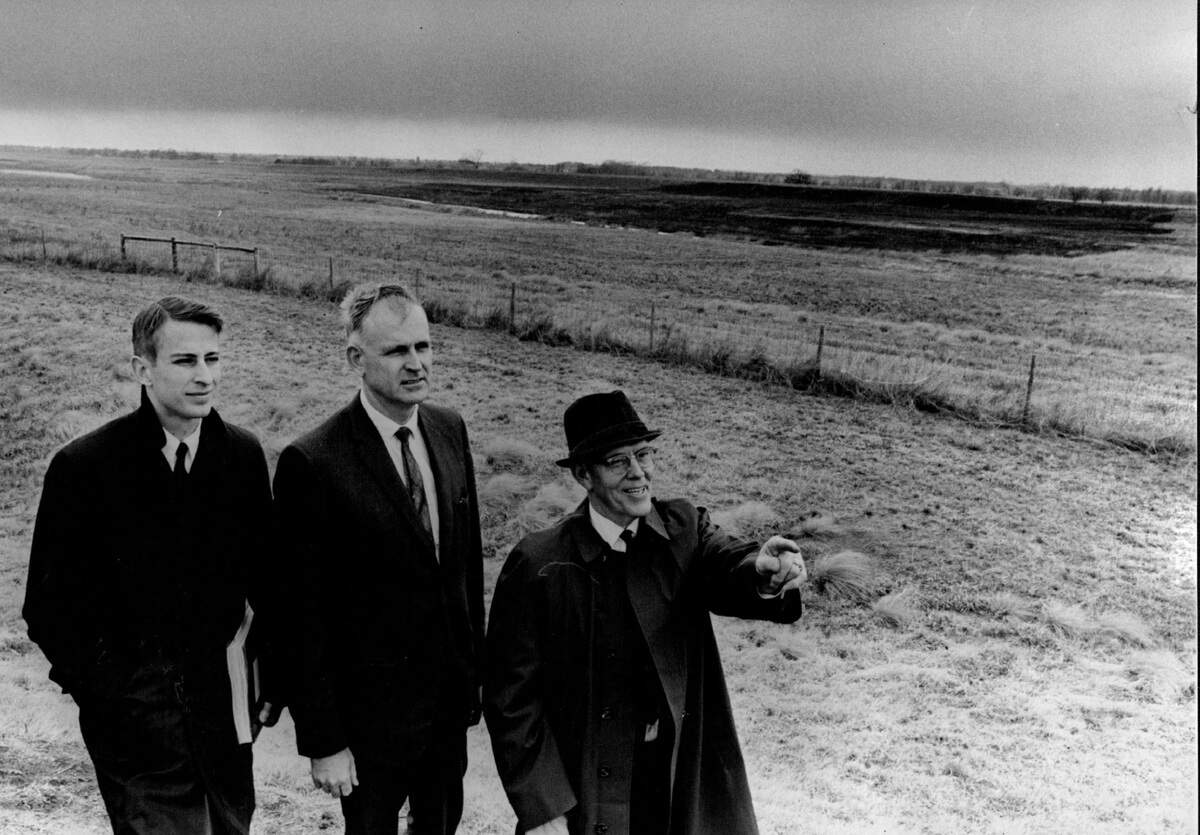
It a was drizzly, uncomfortably chilly day in October 1969, and the one-time milo field that would soon be home to the Sedgwick County Zoo was a muddy, mucky mess.
A little over 50 years later, though, all Barb Hoppins remembers is the cold, the dirt and her mother’s instructions: “Get Mr. Blakely’s autograph.”
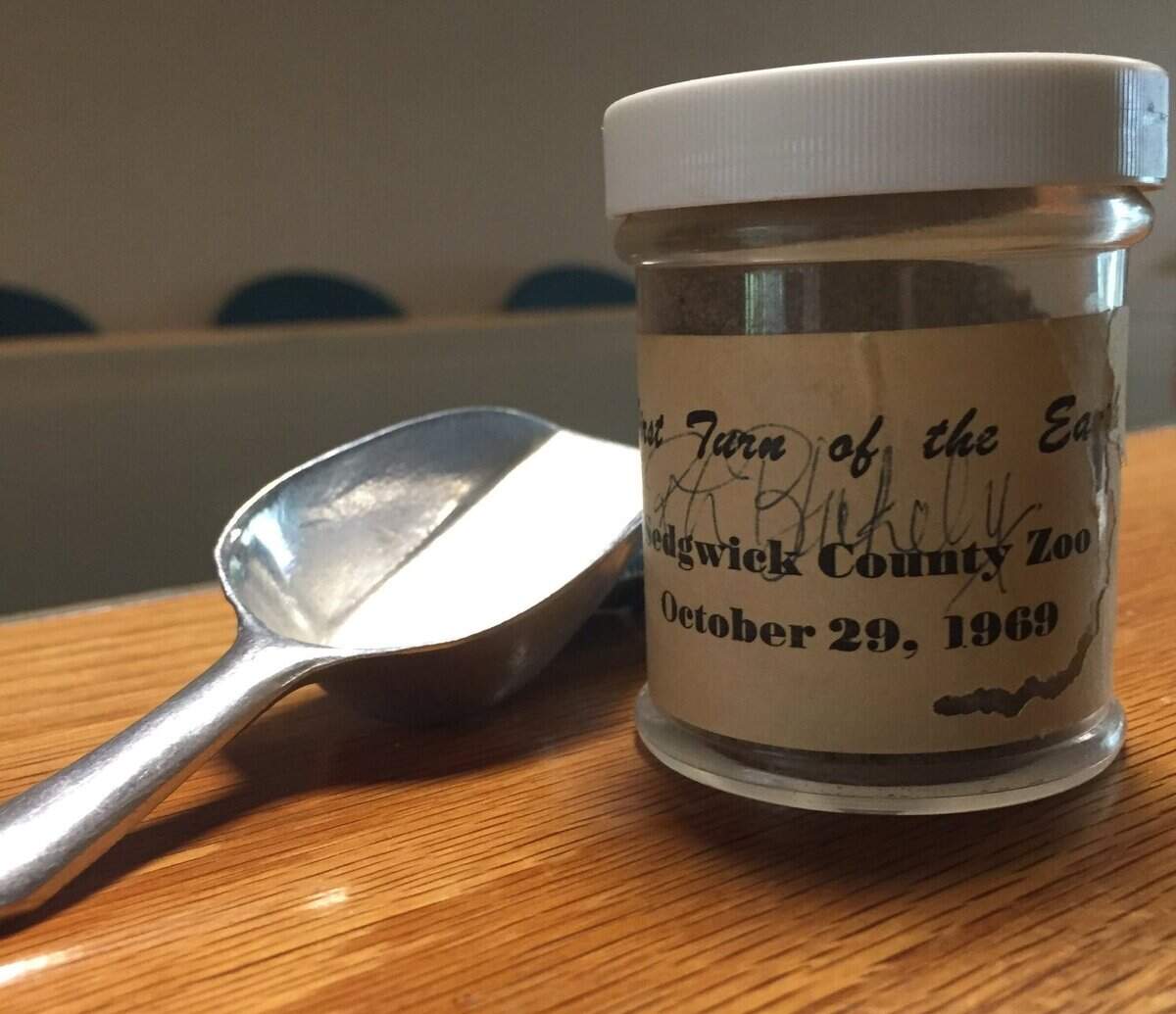
Hoppins, then a fourth-grader at Peterson Elementary School, was one of about 75 schoolchildren chosen to serve as ambassadors at the “Commencement of Work” ceremony on the Wichita site of the future zoo, which would open almost two years later. All the kids present that day got small glass jars and tiny silver scoops and were invited to fill their containers with dirt from the site. When Hoppins got hers, she did what her mother requested, asking zoo director Richard Blakely — a bona fide local celebrity by then — to sign the jar.
Hoppins, who developed a lifelong passion for the zoo that resulted in jobs there through much of her life, held on to that jar for the next 40 years, dragging it to college with her and proudly displaying it on her desk when she worked in the zoo’s veterinary clinic.
Now, as the Sedgwick County Zoo celebrates its 50th birthday — the official day is Wednesday — she can’t help but think back to that groundbreaking and marvel at how far the zoo has come. Though she doesn’t remember much, other than the miserable weather, Hoppins said she’ll never forget how enormous, how expansive the site felt. There were no trees, just flat prairie as far as she could see.
“It was wide open, just lots and lots of space,” she said. “Now it’s hard to imagine that when I’m trying to explain to people how to get to the gorillas. I couldn’t even imagine then what it’s become.”
What the Sedgwick County Zoo has become over the past five decades is the state’s No. 1 outdoor tourist attraction — a 115-acre spread that’s home to 4,000 animals, has an annual operating budget of $12 million, draws half a million visitors a year and has an estimated $43 million impact on the Wichita economy.
But the zoo is more than just those impressive statistics. Since opening day, when the zoo had just two buildings ready for visitors, the attraction has enjoyed unwavering public support. Everyone loves the zoo, and it’s perhaps the place residents are most proud of — the place where they drag out-of-town relatives when they visit.
Its success, say those who’ve been affiliated with the zoo over the years, can be traced to the forethought of the founders to design a unique public/private partnership that would finance the zoo (almost) hiccup-free through the decades, a setup that’s served as a model to many other zoos across the country. The zoo has also been helped by its sheer size, and it’s one of the few big zoos in the country that has the acreage to continue to grow, another perk that can be traced to the thoughtful founders.
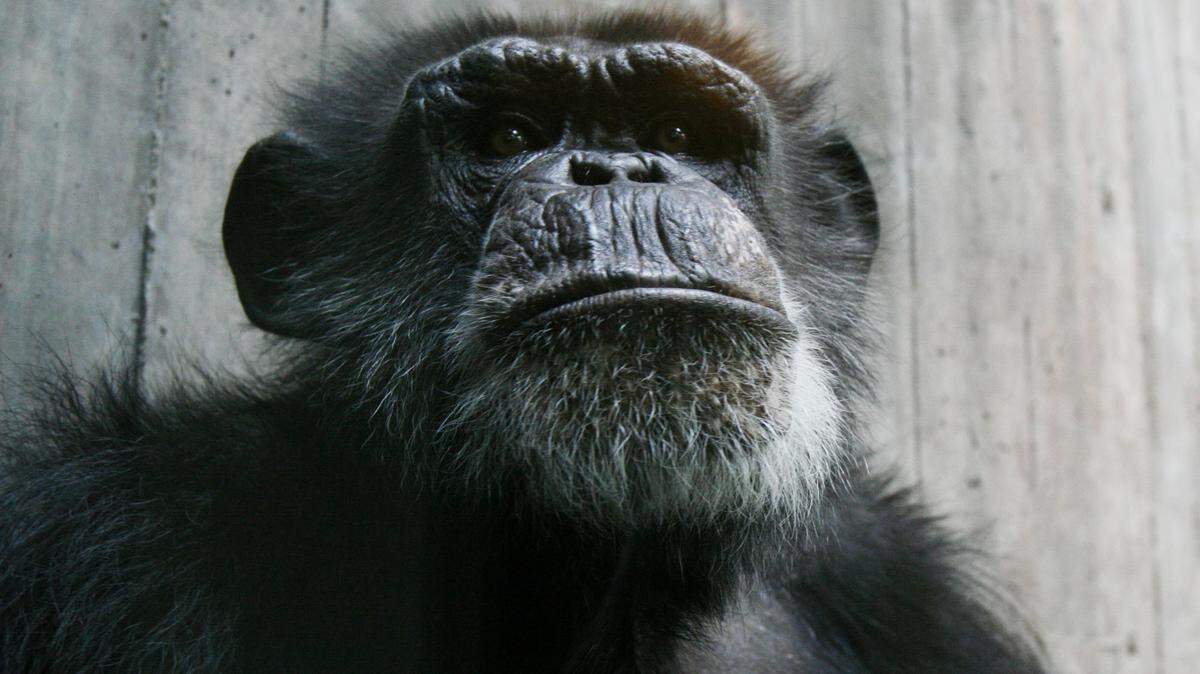
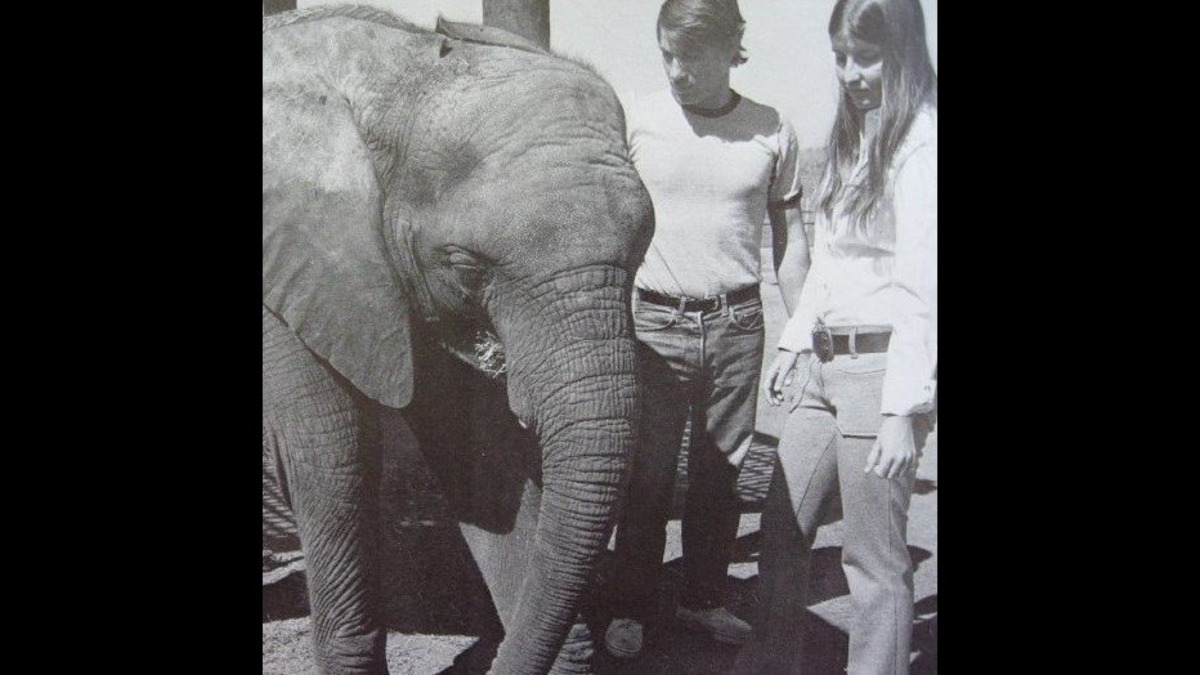
And it doesn’t hurt, of course, that the zoo’s residents over the years have stolen hearts and gripped imaginations, from Marbles, the lady charmer of a chimp who lived at the zoo from 1972 until his death in 2014, to Stephanie, the orphaned elephant who showed up in 1973, learned to paint with her trunk and now rules as the matriarch of the zoo’s elephant herd.
Sheryl Wohlford, chair of the Zoological Society board, said it’s strange to think back to Aug. 25, 1971, when the zoo had two buildings, 2 acres, 115 animals and lots of big dreams.
But, she said, she can’t imagine that even the most optimistic zoo-goer that day could have imagined what would come.
“When I look back at the pictures from 50 years ago, I think, ‘Oh, wow. We sure have come a long way,’ ” she said. “It’s just a great evolution. We’re very lucky, because we have the acreage to be able to enhance and expand, which allows you to really be thoughtful in how you plan and allows you to dream really big.”
Opening day
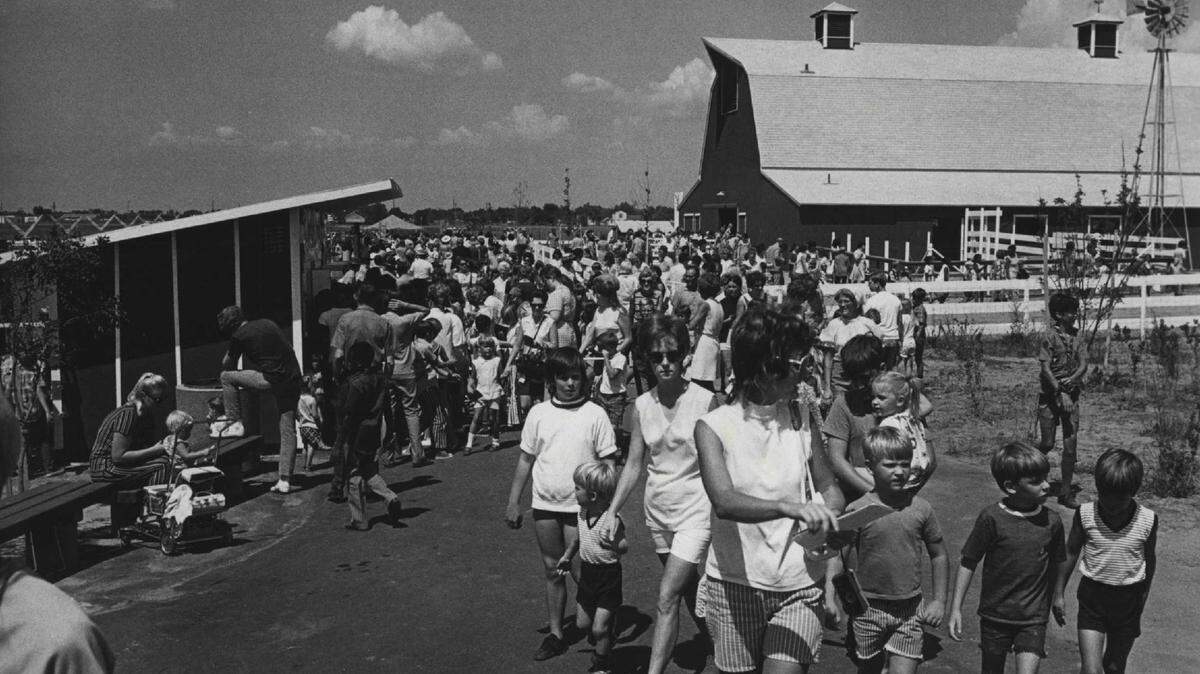
It was 2 p.m. on Aug. 25, 1971 — a hot Wednesday afternoon. The temperature was about to reach a high of 92 degrees, but hundreds of sweaty Wichita children, enjoying their last day of freedom before school started, joined parents and city bigwigs crowded into an area the size of a city block on the northwest edge of town.
They were all there for opening day of the Sedgwick County Zoo — a day the city had dreamed of and worked toward for eight years and had financed by passing a $3.65 million bond referendum — and now it was finally time for director Blakely and 250 child helpers to cut the ribbon and introduce Wichitans to their new animal friends.
Blakely, who came to the zoo from Chicago in 1967 as its first director, was the last to speak at the ceremony, and he urged members of the crowd to wander inside the American Barn — one of only two buildings completed on opening day — and pet the naughty Nubian goats he’d dubbed “Get Down,” “Get Out” and “Stop It.”
“We hope it makes you happy, because if it makes you happy and makes the goat happy, then it makes us happy,” he said.
At the time, Blakely couldn’t know how much happiness the zoo he helped design would bring to Wichita over the next five decades. But the Sedgwick County Zoo has since that sweaty day in 1971 outpaced even its better-known regional counterparts in terms of size — compare it to St. Louis’s 90 acres, Tulsa’s 85 and Denver’s 80. And, most importantly, said the zoo’s current director, Jeff Ettling, it has room to grow. The Sedgwick County Zoo has 100 more undeveloped acres, a luxury many big-city zoos would love to have.
Often dubbed a hidden gem by zoo experts who visit and leave stunned that a relatively small population area like Wichita has such a robust, developed zoo, the Sedgwick County Zoo has enjoyed a pretty smooth ride to 50, Ettling admits. It’s had its challenges — most notably last year’s COVID-19 pandemic and the eight-week shutdown that came with it, as well as a few uncertain years in the mid-2010s when a belt-tightening Sedgwick County Commission seemed poised to cut its funding.
But the zoo has been a Wichita favorite since Day 1, Ettling said, boosted by a steady stream of big exhibit openings that have come each decade: the African veldt and jungle in the 1970s; the Australian Outback and the Apes & Man building in the 1980s; the North American Prairie, home to black bears and river otters, in the 1990s; and the Pride of the Plains lion habitat in the early 2000s.
Over the past 20 years, the zoo has also added a gorilla forest, a penguin cove and an expansive new elephant exhibit. Just last month, it debuted a massive entry complex with new ticket booths, a new gift shop, a two-story administration building and an 80-foot expanse that gives the front of the zoo a parklike atmosphere.
It’s also been bolstered by a unique public-private partnership that splits the financial burden of operating the zoo between Sedgwick County and the Zoological Society that founded it. That partnership, set up from the start by the zoo’s visionary founders, helps guard against some of the financial uncertainty other zoos face.
And at age 50, the zoo isn’t close to complete, Ettling said. Its short-term plans include the September opening of a new leopard exhibit that will add snow leopards to the population and the 2022 addition of an electric train that will transport visitors 1.3 miles around the zoo’s perimeter.
And the 25-year master plan, unveiled in 2018, includes adding an aquarium with a 55,000-gallon shark tank, a sky ride and an African-themed exhibit in the vein of Disney’s Animal Kingdom. It would take up the back 40 acres of the zoo property and would be home not only to an indoor water park but also to a 200-300-room hotel overlooking a grassy area meant to re-create an African savanna.
It’s a vision that people who have been with the zoo since its start still have a bit of trouble grasping.
Hoppins, the fourth-grader who was at the zoo’s groundbreaking, said she’s watched over the past 50 years as the zoo and its residents cast a spell over the city. And she gets it: She felt a personal connection to the charming Marbles the chimp, and she knows she wasn’t the only zoo attendee who felt that way.
At that groundbreaking in 1969, she became one of the many Wichita children who would develop a lifelong passion for the zoo. When she was in high school, she worked as a keeper’s aide, as a summer school teacher and as a naturalist. As an adult, she got a job as a receptionist in the zoo’s veterinary hospital, where she worked for a dozen years before retiring two years ago. She still volunteers at the zoo.
Hoppins kept her jar of dirt for almost 40 years. On the day she retired, she finally “bequeathed” the jar to the zoo.
“It’s magnificent,” Hoppins said of the zoo. “And I love the fact that the community loves it as much as it loves the community.”
‘Boo Hoo, We Need a New Zoo’
In the early 1960s, Wichita’s only zoo was a tiny wildlife exhibit in Central Riverside Park. Built in 1894, it was small, with 225 birds and about 50 animals, but its wire cages were aging.
Wichita needed a new zoo, determined an energetic group of citizens, and they got to work trying to make it happen. In February 1963, the Wichita Zoological Society was formed, and its members started pushing their ideas. But they met with resistance.
Charter member Doug Malone, a zoo buff who took his son to the Riverside collection and found it depressing, told the Wichita Eagle in the early 1990s that when the society first formed, it had no political “moxie.” The group brought its ideas to the city park board, but no one was interested. They next tried the county, which challenged the group to find a way to prove a new zoo was needed and to then come back.
So the society, which also included Junior League members Mary Lynn Priest, Jane Persons and Jaycee Robert Israel, decided to collect that proof from the zoo’s target audience: kids. They started taking questionnaires to the Riverside Park zoo, asking parents to fill them out. Then they spent a summer conducting surveys at area shopping centers.
In 1965, Malone was appointed to a committee that would study the feasibility of building a new zoo — a committee that included society members as well as county and city officials. A consultant was hired, and a program dubbed Operation Noah’s Ark was launched. It asked schoolchildren and other pro-zoo Wichitans to collect product labels that could be given to companies that would donate money for the zoo. That program eventually collected 3 million labels, enough to pay for 53 animals.
The Wichita Eagle and Beacon launched a persuasive awareness campaign with the catchy phrase “Boo Hoo, We Need a New Zoo.” The yellow-and-rust-colored logo featured a drawing of a tearful giraffe, and in the logo, the double O’s in “boo” and “hoo” were both drawn as crying eyes.
With public interest piqued, the group launched the next phase of its plan: developing a concept for a new zoo. In September 1966, the city and county commissioners chose a potential site: a 648-acre field bounded by 21st Street, Ridge Road, 13th Street and Zoo Boulevard, which was then called Bickel. Two months later — in November 1966 — Sedgwick County voters approved a plan to issue $3.65 million in county general obligation bonds to purchase the land as a public park and recreation area and build a zoo. That money was supplemented by more than $1 million in federal grants and from other sources.
The zoo recruited Blakely, the director of the Brookfield Zoo in Chicago, to lead the project. His visionary master plan, which included a two-phase build, was approved in 1969. It promised farm exhibits, a jungle, an ape exhibit, a herpetarium, a boat ride and more.
But even Blakely — whose ashes were spread in the zoo’s wolf exhibit after his death at age 69 in 2001 — would have been surprised by the success that has followed, say those who knew him.
What went right
The Sedgwick County Zoo has had a pretty charmed half-century, admits Ettling, who took over as zoo director in 2017, only the third person to hold the job. Blakely, who retired in 1991, was succeeded by his protege, Mark Reed, who led the zoo until he retired in 2017, handing the reins over to his former reptile curator Ettling.
Though the three directors led the zoo through three very different phases, they shared the same overall vision, Ettling said. They knew each other well, and they agreed on the direction the zoo should take.
“What typically happens at most zoos is when they get new leadership, things go in a completely different direction, and they want to put their stamp on it,” he said. “But we still are adhering to the same principles and concepts that Mr. Blakely put in place at the very beginning.”
The zoo, which even at 50 is relatively young, has also benefited from two other decisions its founders made before it was built, he said.
One was to run the zoo as a public/private partnership in which both the county and the Zoological Society would share the responsibility of managing and paying for the zoo. It’s a system that has worked well over the years, Ettling said, and one that other zoos — many of which are owned by the cities where they are located — have been trying to move toward.
At the Sedgwick County Zoo, the Zoological Society — made up of a 32-member board of trustees — is responsible for the day-to-day operations of the zoo and covering the operating budget. The zoo’s chief financial officer, development director and marketing and business operations staffs are employed by the society.
But 85% of the zoo’s 206 employees work for the county, including the people responsible for such core zoo operations as animal care, maintenance and horticulture. In addition to paying those salaries and benefits, the county covers half of the zoo’s capital improvement budget each year.
The setup, which Ettling describes as a “real healthy place to be,” allows the society to focus on facilities, animal care and capital campaigns while the county keeps staffing costs down. More and more zoos across the country are starting to see the benefits of such an arrangement, and Ettling says he frequently fields calls from other zoo directors asking for the blueprint. The Topeka Zoo, for example, just this spring transitioned to a public/private partnership model, a process that took 10 years.
Tim Kaufman, Sedgwick County’s deputy county manager for public services, is Ettling’s county supervisor and has worked with the zoo for the past five and a half years. He’s one of the Zoological Society’s board trustees as well.
The partnership the zoo’s founders set up has served both bodies well, Kaufman said.
“I think that it’s a model in terms of public/private partnerships,” he said. “The model that we have in place at the zoo is somewhat unique but incredibly successful with how it’s been configured.”
There’s been only one hiccup in the agreement, Ettling said, which happened in 2015, a couple of years before he took over as director. A County Commission majority expressed interest in reviewing the funding and operating agreements the zoo had made with the county two years earlier and that had allowed for multiple yearly increases. The commission also forwarded a proposal to boost its role on the zoo board and set up guidelines regarding the zoo director’s public statements.
Two years later, after an election changed the makeup of the commission, it concluded months of negotiations with the zoo board by approving a new funding agreement in which the county would continue to pay for its employees at the zoo and would split infrastructure improvement costs 50-50 each year with the zoo board. The agreement runs until the end of next year.
“That was the only little blip in 50 years,” Ettling said. “People look at our model and say, ‘It works so well. Can you send it to us?’ ”
The other thing zoo founders did right 50 years ago, local zoo observers agree, was acquiring so much land.
Since opening day, when exhibits were set up on only two acres, the zoo has grown to 115 developed acres — and it still has 100 acres to work with. Meanwhile, many big-city zoos are landlocked and out of options for growth.
“It’s interesting, but a majority of our AZA (Association of Zoos and Aquariums) colleagues have never been here, and when they come here for the first time, they’re always blown away and say, ‘I had no idea you were this big.’ It’s a giant zoo,” Ettling said.
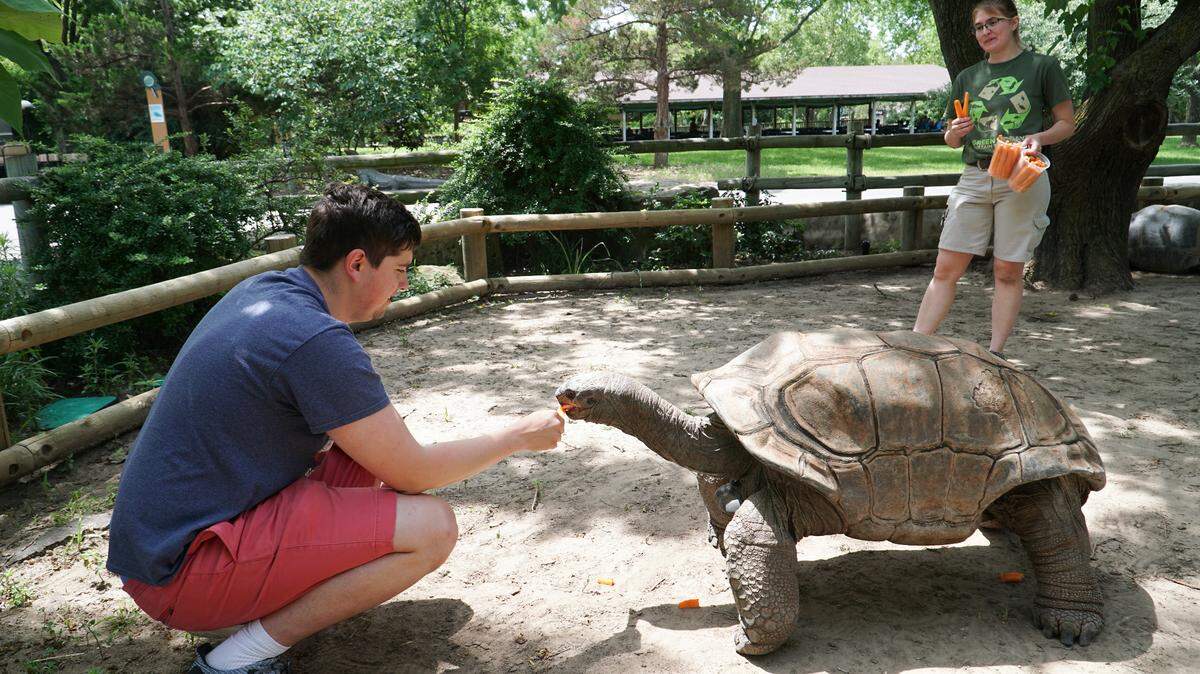
The space not only gives the zoo room for big dreams, it also allows it to improve life for its existing residents by offering them more room. A good example was the $10.6 million Reed Family Elephants of the Zambezi River Valley Exhibit that opened in 2016 as the nation’s third largest elephant exhibit. Because of all the zoo’s acreage, it was able to build the 10-acre habitat with room for six new elephants to join matriarch Stephanie, a resident at the zoo since 1973.
“People like to see animals in large habitats,” said Charles Hoessle, director emeritus of the St. Louis Zoo, where he worked for 40 years. “People like to feel that the animals are happy and that they’re in their natural environment, and that’s what zoos are trying very hard to do: not just to make the animals feel more comfortable but also to make the visitors more comfortable.”
Hoessle, who knew Blakely and Reed and worked with Ettling, said that the elephant exhibit, whose opening he attended, helped raise the Sedgwick County Zoo’s profile.
“The Sedgwick County Zoo has a great reputation nationally, and I think with the elephants, it got even more exposure,” he said.
The next 50
On opening day in 1971, Sedgwick County Zoo attendees were giddy, even though what they were seeing was just a tiny preview of what was to come.
Kids held guinea pigs and rabbits and petted baby llamas in the American Barn. At the Asian Farm, they met an Aebu and gazed at a pair of karakul sheep.
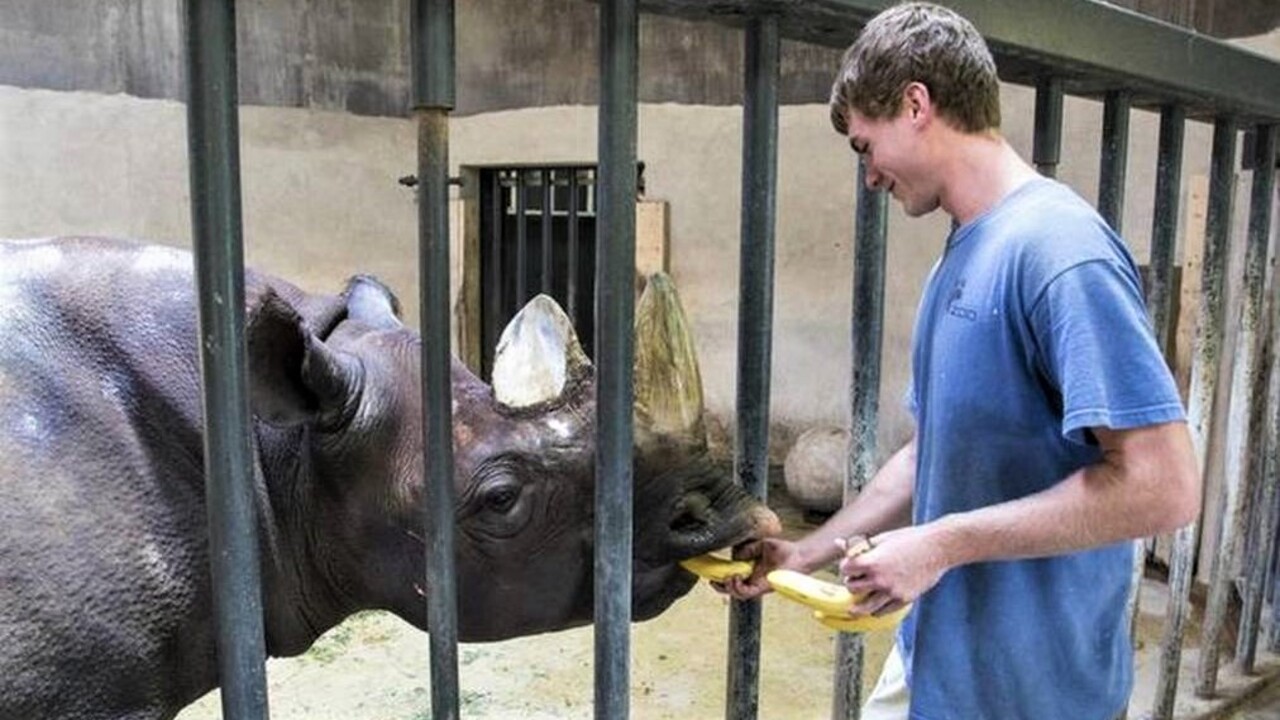
Visitors that day didn’t get to see the rhinos and chimps they’d dreamed about during those years of label collecting and boo-hooing, but they would soon, Blakely promised. And he delivered. The African veldt exhibit opened the following year with rhinos and chimps plus lions and a baboon. And it just kept growing, even as kids who were there on opening day became parents and then grandparents.
Though the zoo has faced hard moments, from the uncertainty in 2015 to occasional protests from animal rights groups — like the one that sued over the transfer of elephants from Africa to Wichita in 2016 — it’s gotten through them all, and its public popularity has only continued to grow year after year, along with its attendance. Before the COVID-19 pandemic, the zoo was drawing half a million visitors a year. The year the elephant exhibit opened, that number was a record-setting 700,000. And that’s in a metro area with a population of about 645,000, Ettling said, describing the attendance figures as “pretty tremendous.”
The single biggest challenge the zoo has faced over its 50 years, he said, was the COVID-19 pandemic. Though the zoo didn’t have to lay off any staff — it kept county employees busy with animal care, repair work and cosmetic updates during the eight weeks it was closed in 2020 and used PPP loans to pay its Zoological Society staff — the lack of attendance will likely end up costing the zoo half a million dollars, Ettling said.
Still, it fared far better than many of its counterparts, and once the weather warmed up and vaccines started becoming more widespread, attendance shot right back up, he said.
“When you look at what other zoos had to go through, I think all things considered, we came out pretty good,” he said. “And we’re doing better now. ... Our attendance levels have been really, really good this summer, and I think that even despite some of the warm days we’ve had, the numbers are probably better than what we did in 2019.”
As the zoo turns 50, Ettling said it’s poised to keep growing, and some of that growth will appear right away.
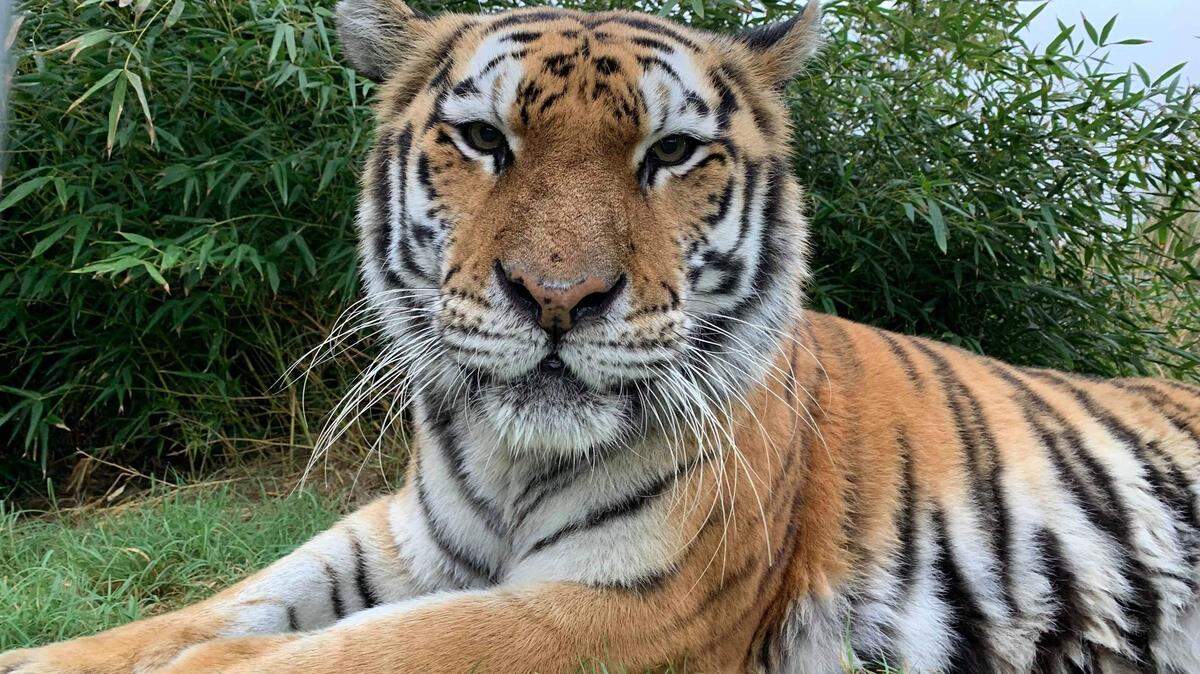
The Slawson Family Asian Big Cat Trek will be open in a couple of months, doubling the size of the previous Tiger Trek and bringing all the zoo’s Asian cats into one area. By this time next year, the train should be chugging around the perimeter of the zoo. And a stingray cove, where visitors will be able to touch and feed both stingrays and small sharks, is set to open in April. All will provide the zoo with new streams of revenue.
But the coming years won’t be all about growth, even though Ettling says he’s as excited as anyone about the African savanna project. The zoo is also committed to expanding and improving habitats for the residents it already has, and its conservation efforts will also be a focus.
When the zoo opened, Blakely’s stated mission was “interpreting nature for the layman.” But in 2021, zoos across the country are more focused on inspiring respect for wildlife and wild places, letting the animals serve as ambassadors for their counterparts in the wild. The Sedgwick County Zoo donates 25 cents of every general admission ticket to conservation groups; it also donates a percentage of its operating budget each year.
Another focus in the zoo’s next act, Ettling said, will be continuing the strong bond the attraction has built with the community, a bond that started back on that hot opening day in 1971.
“We have tremendous community support,” he said. “Most zoos would love to have the level of community support we have here, where we are that beloved treasure, and it’s been that way since the beginning. We want to do everything we can do to foster that relationship.”
This story was originally published August 22, 2021 at 4:58 AM.
.jpg)