
Kansas Senate to consider flat tax, cut on food sales tax
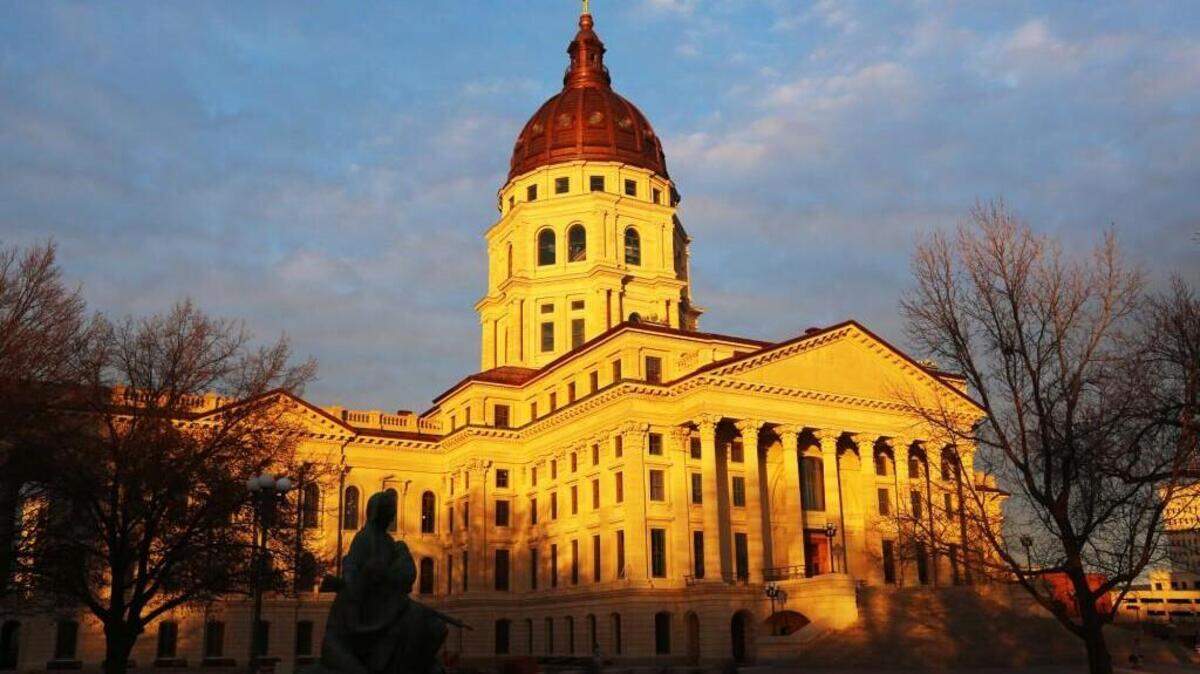
Kansans would pay a flat income tax of 4.6 percent under a proposal the Senate will consider Thursday – a plan Gov. Sam Brownback says he is willing to support.
SB 214 also would lower the state sales tax on food from 6.5 percent to 5.5 percent on July 1, 2018.
And it would repeal a tax exemption for certain business owners. The exemption, a key part of tax cuts that Brownback and the Legislature shepherded into law in 2012, has become a target for lawmakers on both sides of the aisle amid the state’s fiscal woes.
It would create a single, uniform tax bracket. The state now has income tax brackets of 2.7 percent and 4.6 percent.
Brownback met with Senate Republican leaders Wednesday and released a statement saying a flat tax would encourage economic growth and make “taxes fair for everyone.”
“The Senate’s flat tax legislation creates a single low tax rate for Kansans, solving today’s budget challenges without unnecessarily harming economic growth in Kansas,” Brownback said in his statement, which Sen. President Susan Wagle read aloud from her phone to caucus members. “If the legislature sends a bill to my desk similar in nature to SB 214, I will sign it.”
Democrats called the bill an attack on the middle class.
Wagle said she thought it was appropriate for the Senate to consider the bill this week, before lawmakers break until early May.
How much plan would raise
The plan is projected to raise $295.4 million in the 2018 fiscal year and $356.7 million in the 2019 fiscal year, according to estimates. The state faces a projected shortfall of more than $1 billion through June 2019.
Wagle said legislative leaders were focusing on crafting a plan that could draw 63 votes in the House and 21 votes in the Senate – simple majorities rather than the two-thirds needed to override a governor’s veto.
In February, Brownback vetoed an income tax increase bill that would have created a third tax bracket. It also would have eliminated the business exemption and made some changes retroactive to Jan. 1. An effort to override his veto passed the House but fell short in the Senate.
“I don’t think the Senate wants a retroactive tax at this time,” Wagle said.
Sen. Caryn Tyson, R-Parker, said the Senate’s tax committee, which she chairs, spent about an hour and a half crafting the bill.
“It was truly a committee bill,” Tyson said. “They (Democrats) did have input into the bill.”
“It is a tax increase on some people. I don’t like that, especially the businesses,” she added. “It’s a tax increase, but it’s about fairness.”
Senate Majority Leader Jim Denning, R-Overland Park, added that the governor was willing to support a two-tier system if it included consumption tax increases on cigarettes and liquor taxes.
‘Going backwards’
Some moderate Republicans said they were skeptical of the flat tax plan.
“I think it hits middle-income Kansans the hardest,” said Sen. Vicki Schmidt, R-Topeka.
Senate Democrats also panned the bill.
“It doesn’t raise enough money,” said Sen. Marci Francisco, D-Lawrence. “I think that this is an attack on the middle class.”
Senate Minority Leader Anthony Hensley, D-Topeka, said he was encouraged that the governor was open to eliminating the business exemption.
But Hensley said the bill was “woefully inadequate” for the state’s current fiscal problems. He noted that the 2012 tax cuts had brought the state down from three income tax brackets to two.
“I hardly call that progress,” Hensley said of a single tax bracket. “That’s going backwards.”
“He caused the problem and now he thinks he can come in and solve it.”
Contributing: Hunter Woodall of the Kansas City Star
Daniel Salazar: 316-269-6791, @imdanielsalazar
This story was originally published April 5, 2017 at 5:23 PM with the headline "Kansas Senate to consider flat tax, cut on food sales tax."