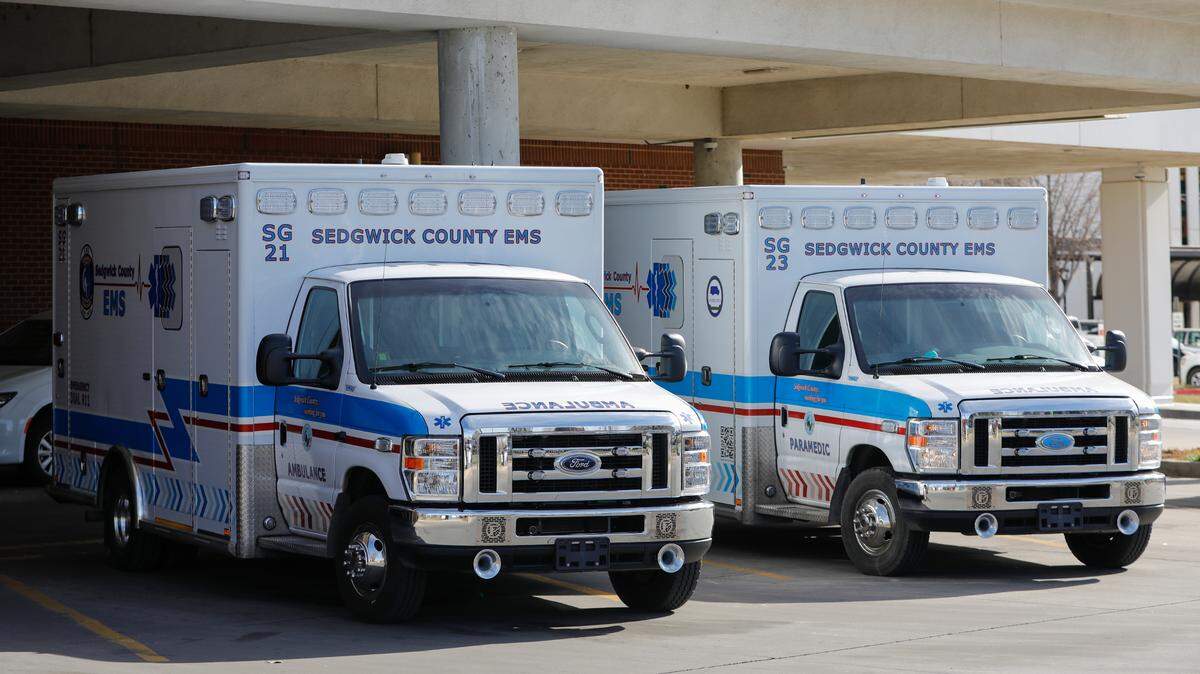
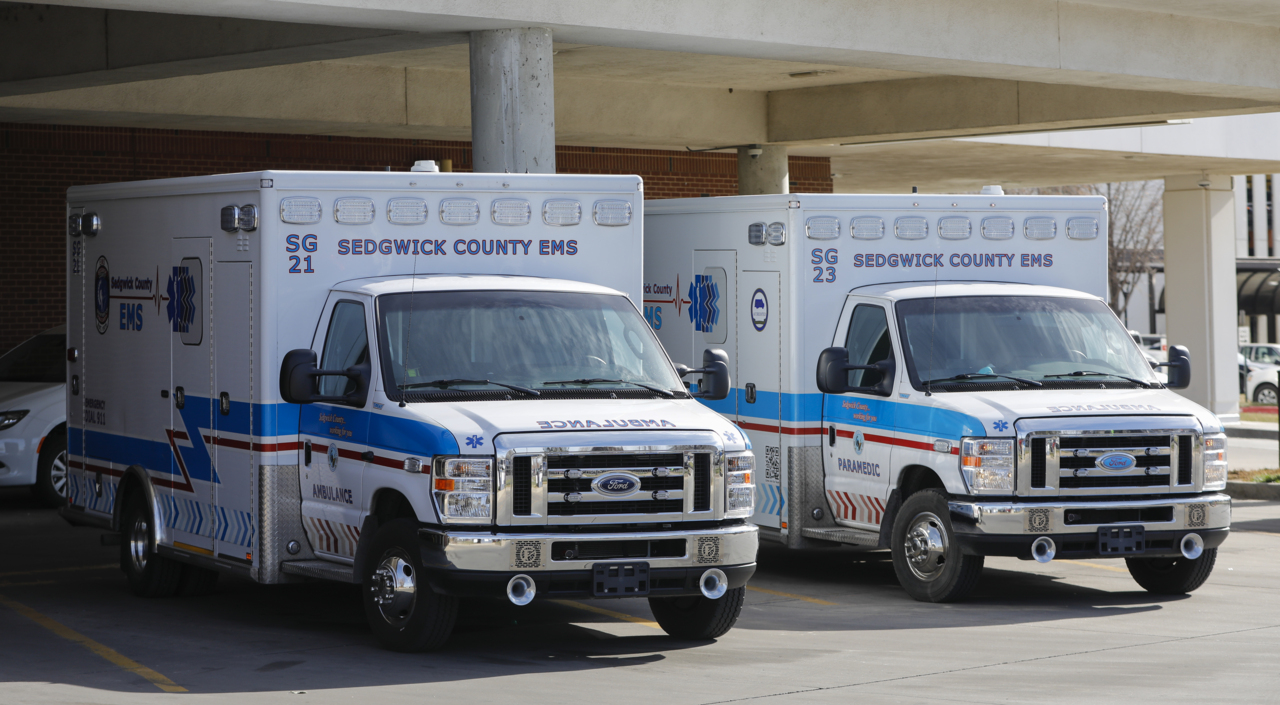
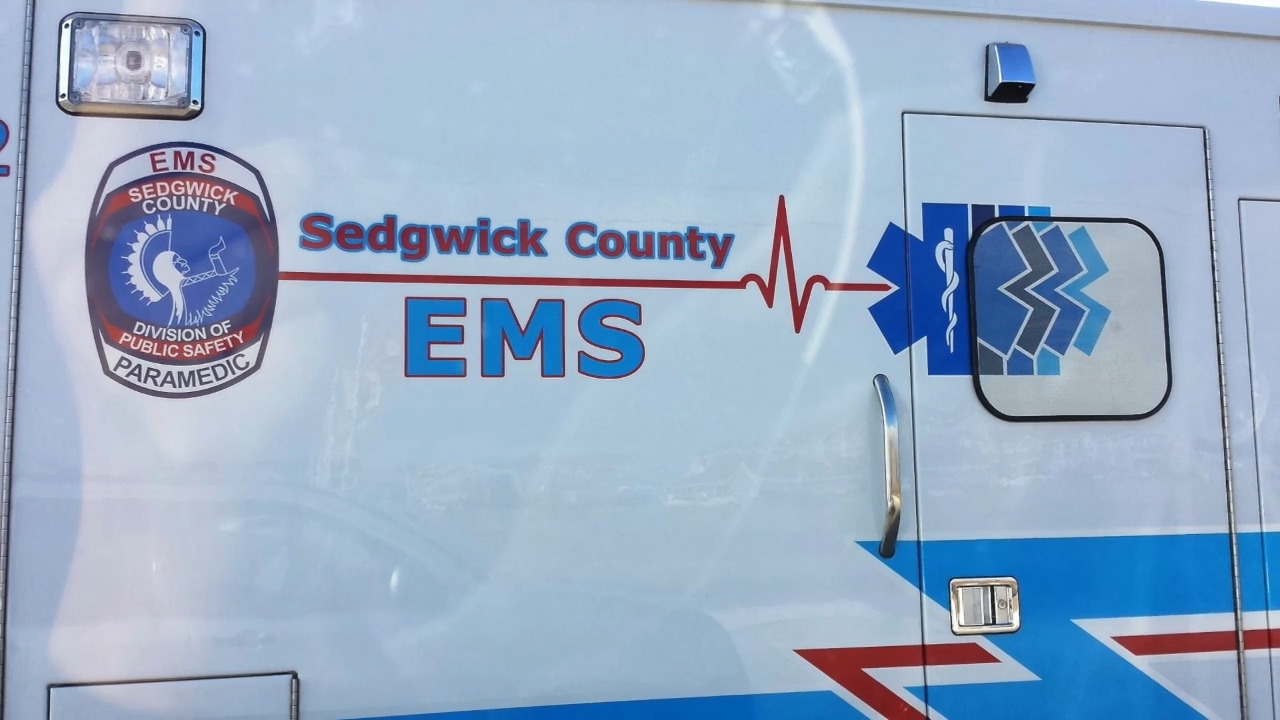
Sedgwick County EMS faces a potential new threat as it rebuilds after a crisis
READ MORE
Crisis at Sedgwick County EMS
An Eagle investigation revealed a broken emergency medical system. Read our investigative series on the crisis at Sedgwick County EMS.
Expand All
Wichita-area residents with life-threatening medical emergencies are still at risk of an ambulance showing up late.
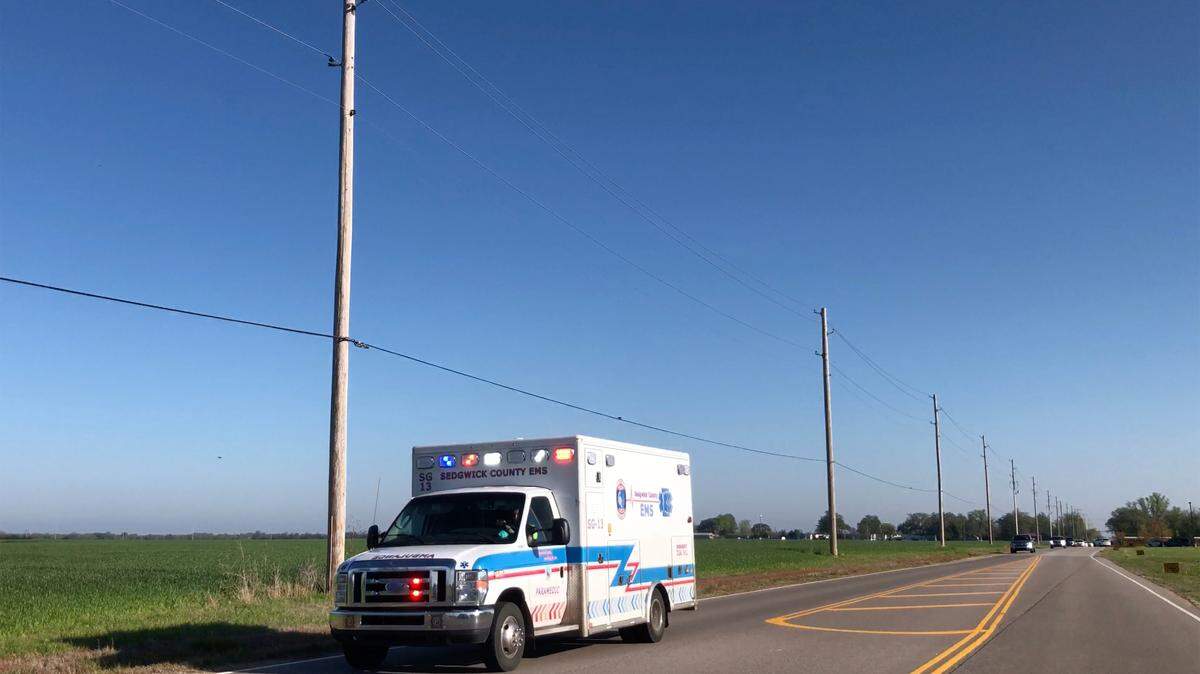
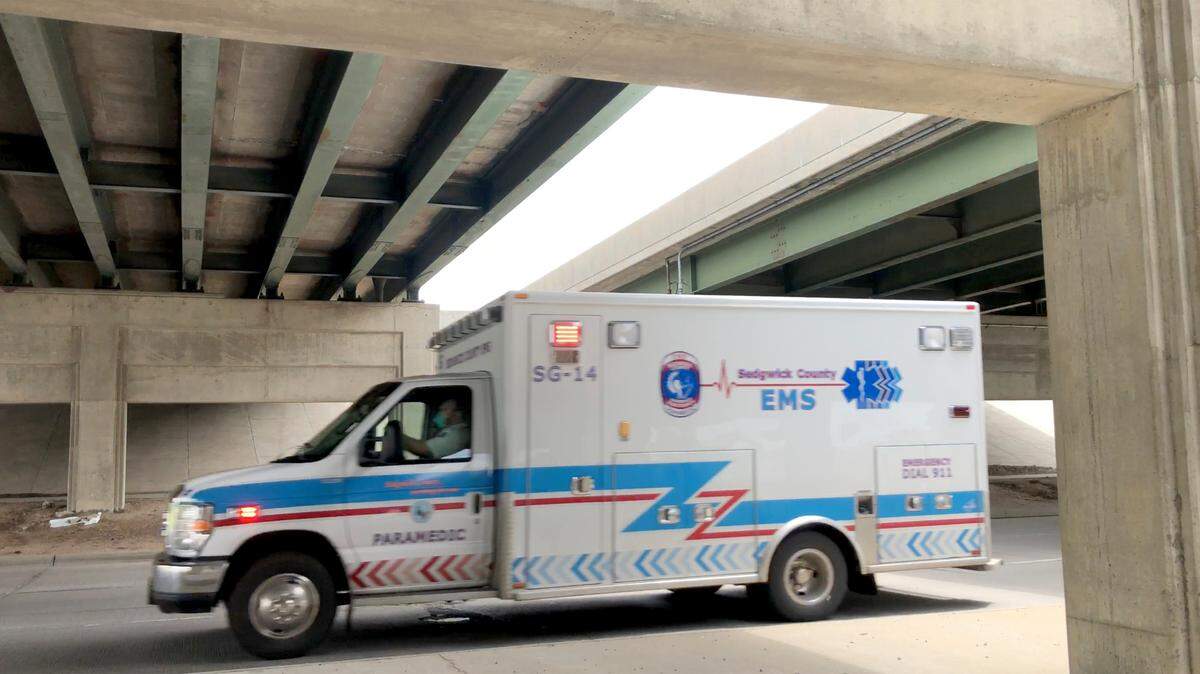
Response times and staffing levels at Sedgwick County EMS have begun to slowly improve since a Wichita Eagle investigation in July found an EMS crisis that put the community at risk.
But they remain far worse than they were two years ago, and officials say it could take several years to rebuild EMS after a failed consolidation led to a massive staff revolt and removal of its director.
The Eagle investigation – which found a pattern of inaction by county leaders in the face of rapidly worsening response times and a staffing shortage – led to sweeping changes by the county.
Now, new fallout threatens to stall what little progress has been made.
EMS could lose its largest customer – and potentially 10% of its revenue – if Wesley Medical Center follows through on plans to switch to a private ambulance service to transport patients between campuses. The move comes after the county proposed hiking Wesley’s rates by nearly a third.
That could mean more costly county ambulance rides or further cuts for EMS as it tries to rebuild staff after losing 92 workers in two years.
The department could also face significant fines, sanctions or censure from a state board for its handling of a patient with a fatal gunshot wound in 2019. The state has already moved to discipline individual county employees involved in the incident. This month, it widened its investigation to the entire department.
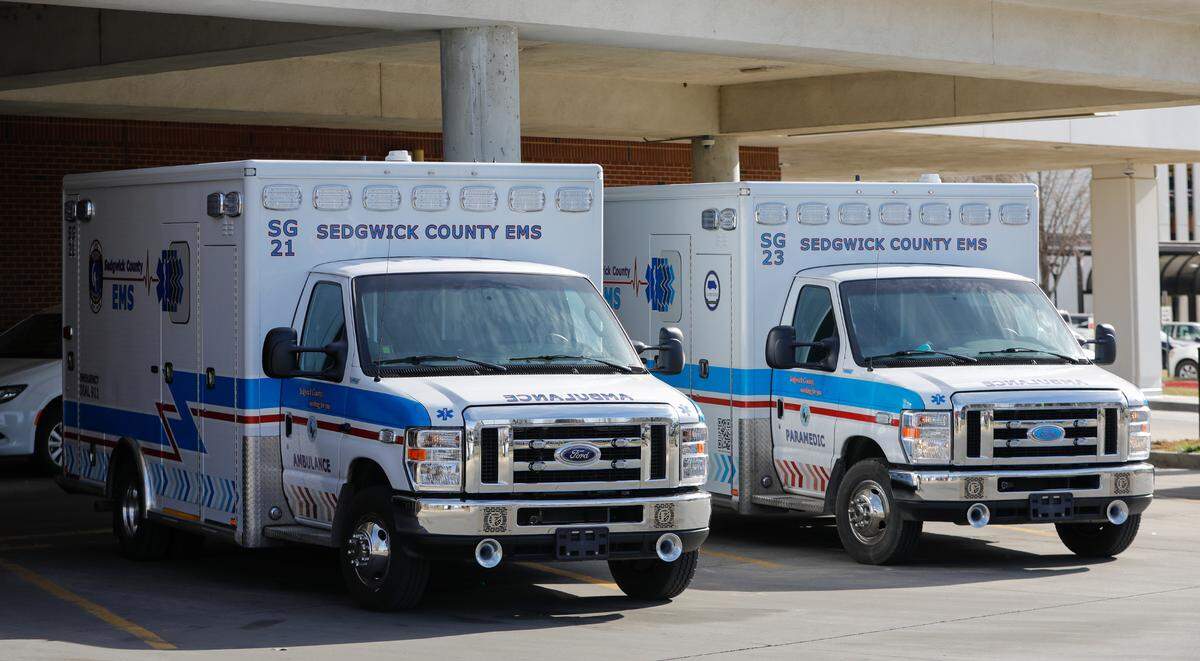
Small improvements
Since July, Sedgwick County EMS has shown up on time more frequently to the most serious emergencies, The Eagle found.
But the county’s response times continue to fail to meet national accreditation standards, missing the 9-minute mark on two-thirds of life-threatening emergencies.
The odds of EMS reaching a patient within the industry standard 9 minutes have dropped by more than 10 percentage points since 2019.
Through October, EMS had reached 33.6% of Priority 1 calls within 9 minutes. Those calls are considered the most time-sensitive emergencies and include life-threatening conditions such as heart attacks, cardiac arrest, strokes and seizures.
That’s a small improvement from the 32.9% of calls EMS reached on time as of July. It does not improve the year-over-year slide of response times in the past five years:
2017: 49.5%
2018: 49.1%
2019: 44.1%
2020: 43.9%
2021: 33.6% (1.7% increase since July)
Sedgwick County EMS’s national accreditation requires the department to respond to 90% of Priority 1 calls within 9 minutes.
Sedgwick County EMS’s formula for calculating response time largely ignores the perspective of the patient. It measures its response from the time 911 dispatches an ambulance to when it pulls up at a scene. That leaves out the time it takes to dispatch an ambulance and the time it takes an ambulance crew to contact a patient.
Using that partial formula, EMS has hit its goal in 76.5% of life-threatening emergency calls so far this year, down from 88.6% in 2017 and up from 74.6% through July.
But the Commission on Accreditation of Ambulance Services, which accredits Sedgwick County EMS, is moving to standardize response times to include the full duration a patient waits for care after calling 911. Sedgwick County EMS has hit that mark on just 33.6% of calls this year.
The county’s next accreditation review is in 2023.
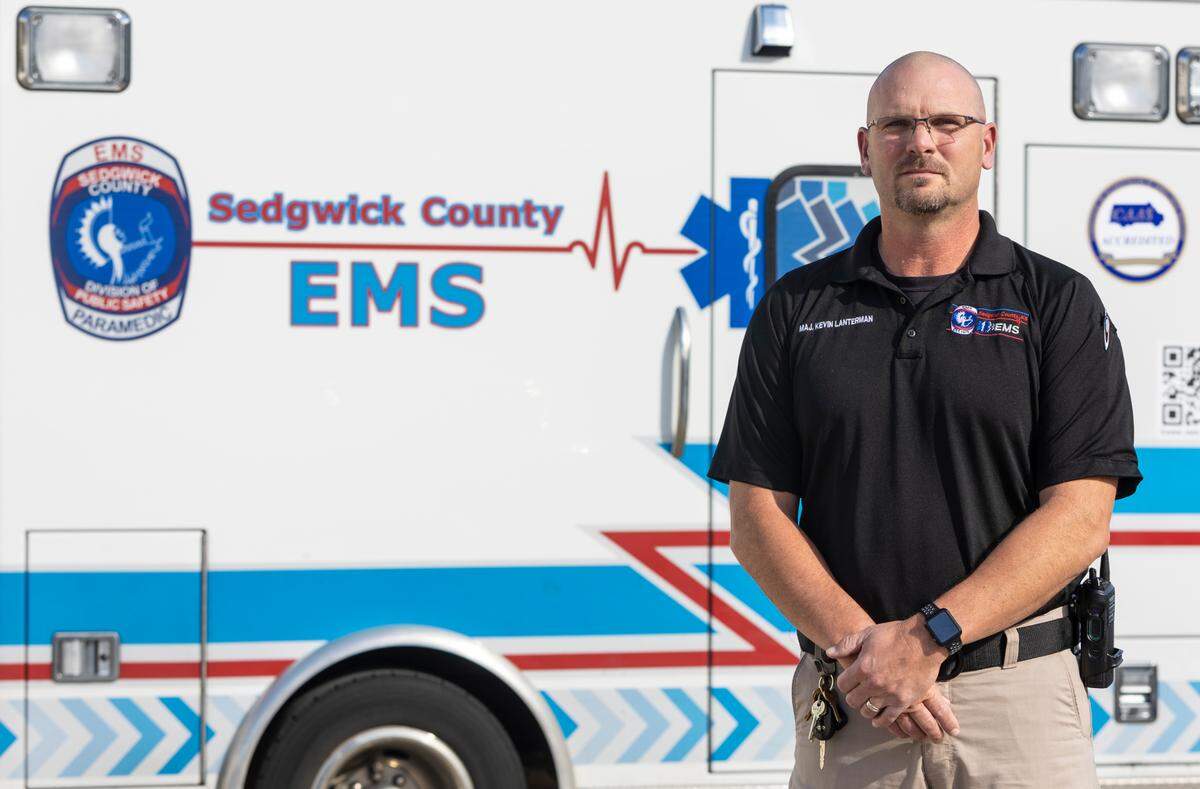
Interim EMS director Kevin Lanterman said the numbers won’t improve until the department fills all of its paramedic openings, which he said could likely take several years.
“They’re maintaining,” Lanterman said. “July, August, September and October — those were some of our busiest call-volume months in the history of EMS.”
Rusty Leeds, the assistant county manager who oversees EMS, also said response times will be tied to how many paramedics the department can hire.
“The EMS goal is to improve response times to events for which response times are clinically relevant,” Leeds said in a written response to The Eagle’s questions. “A 90th percentile, 9 minute response time may be a goal to strive for again as staffing improves. The time frame for consistency depends on the market availability of trained paramedics, success recruiting and retention, the success of the EMT to paramedic program, call volumes and other variables.”
The county has also made strides in reporting its response time data after two years of keeping the public in the dark.
In 2019, EMS stopped posting ambulance response data online. The move corresponded with rapidly slowing response times that went largely unnoticed because the information was not easily accessible to the public.
The county has created an EMS dashboard in recent months, but it does not include data for 2021.
Lowered expectations
Sedgwick County officials say the EMS rebuilding effort could take years because of a nationwide paramedic shortage.
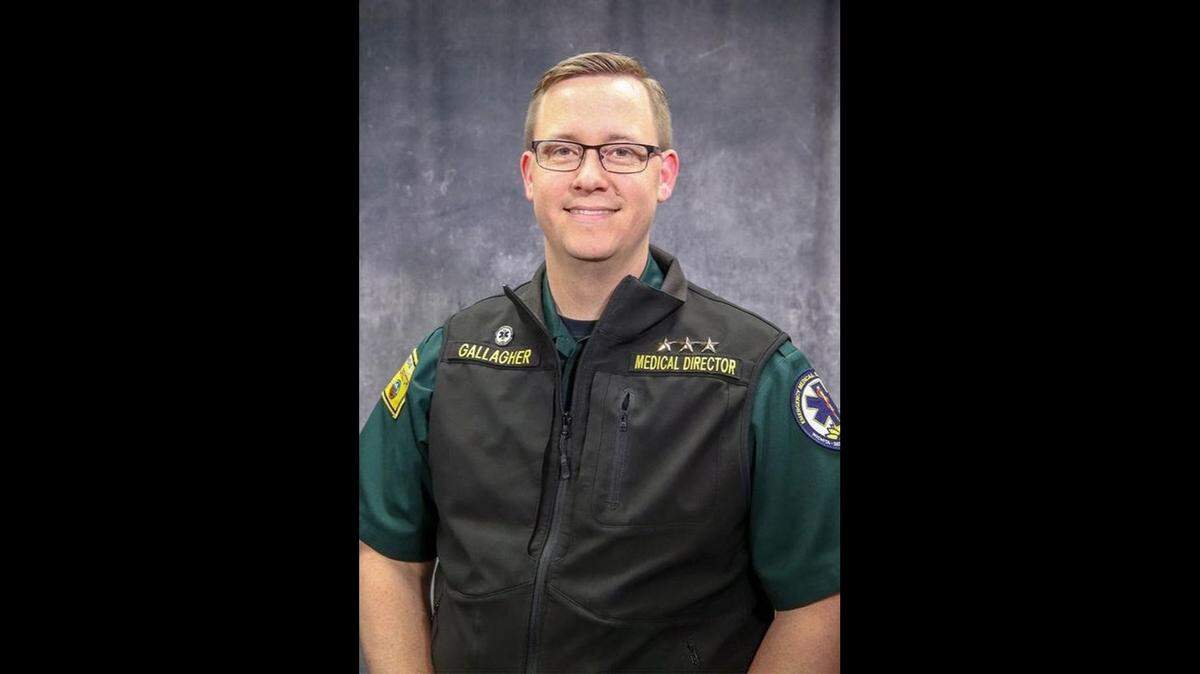
Under Dr. John Gallagher, the EMS director who was removed in July, more than 50 paramedics quit.
Gallagher, who was hired as medical director in 2015, was promoted to EMS director through a consolidation of EMS and the office of the medical director in 2019. The promotion came against the wishes of a large group of EMS employees whose concerns about his leadership were largely disregarded for two years.
Since he was removed from his post, EMS has hired more paramedics than have left — including four former employees. But the county has 15 open paramedic positions, down from 24 in August.
“We are in a deep hole,” said Caleb Yoder, a Sedgwick County paramedic. “We lost a lot of really experienced and skilled paramedics, and we can’t find equivalent folks to replace them.”
The Sedgwick County Commission has approved $2,500 paramedic signing bonuses and a program that pays for EMTs to study to become paramedics. The education program for emergency medical technicians could add another nine paramedics by the end of 2022.
Commissioner Jim Howell said he worries the county isn’t being aggressive enough about improving the county’s ambulance service.
“We are not dramatically better than we were six months ago,” he said. “We’re just not.”
Howell said the county should consider substantial pay raises for paramedics and hire more part-time and temporary workers until more full-time paramedics are available.
“To me, having trucks absent off the street, in my opinion, is still leftover negative consequences of where we were before, and I think we’ve had enough time now to solve this.”
One ambulance has been removed from service. Others are taken off the street depending on staffing levels and expected call volume on any given day, officials said.
Howell said he worries the latest changes are too little, too late. He requested an audit of EMS in December 2020, but the request was denied by County Manager Tom Stolz. Six months later, the county ordered an audit of EMS leadership after Howell helped facilitate a town hall meeting between Stolz and EMS employees.
“If we would have changed this six months earlier, it would be night-and-day different right now,” Howell said. “Six months of delay was devastating. It may take us years to fix what was caused by a six-month delay.”
Leeds said Sedgwick County EMS has lowered its target level of paramedics.
“The current target is 112 paramedics,” he wrote. “Historically, the number was 140. Twenty eight positions still classified as paramedic are currently under-filled with EMTs.”
Paramedics require an associate’s degree and significantly more training than EMTs.
Paring down the number of paramedics was by design and part of a cost-cutting maneuver started by Gallagher. His plan called for eliminating 35 paramedic positions by 2021 and replacing them with lower-paid EMTs, saving the county $287,735 to $411,145 a year. Gallagher wrote at the time that the change “would be expected to have no effect, or perhaps a positive effect, on patient care within our county.”
It’s unknown whether response times will improve with the lower target number of paramedics. The county has not yet been able to hire enough paramedics to meet the lower staffing goal.
Improved morale
Sedgwick County EMS employees say they’re more hopeful about the future of the department. But they haven’t forgotten what happened last time the county hired a director.
The Eagle’s July investigation found that Sedgwick County leaders bungled attempts to reconcile conflicts within the department, disregarded employees’ warnings about Gallagher and allowed an interdepartmental squabble to turn into a public health crisis.
EMS workers asked the county to hire someone with field experience as a paramedic and a track record of leading an EMS department. They warned against hiring Gallagher, saying he didn’t have the leadership traits or experience they desired.
But county leaders sided with the Medical Society of Sedgwick County, which had lobbied for a physician-led EMS service.
When paramedics turned over a petition signed by nearly half the department outlining their concerns, Commission Chair Pete Meitzner threw it in the trash, multiple witnesses told The Eagle. Meitzner said he doesn’t recall doing that.
“If you hand me something, I’m not a guy that goes — I don’t do that,” he told The Eagle.
This time, Stolz has promised to “involve the medical and public safety community, as well as EMS employees” in the hiring of a director.
EMS employees were able to meet the two finalists for the director position Dec. 13. They are Dave Johnston, EMS chief in neighboring Reno County, and Dudley Wait, EMS director for the city of Schertz, Texas.
Sedgwick County EMS Advocates, a Facebook page created by paramedics to communicate directly to the public, issued a statement earlier that day saying it was “disappointing that the EMS employee rank and file have still not been given the names of the remaining finalists by county management.”
“We remain hopeful that Sedgwick County management will allow EMS employees adequate time in the weeks ahead to thoroughly research the candidates and understand their work history and professional accomplishments,” the statement says. “Our hope is that management will only move forward with a candidate that has been fully vetted by all parties and has a broad base of support among EMS employees.”
Several EMS employees said they believe Stolz’s recent decisions show he is committed to improving EMS. The most important decision, they said, was removing Gallagher.
“It is great that he is gone,” said Sedgwick County paramedic Chad Izzo. “Morale is a little bit better. People are staying. We are not having a mass exodus of people leaving.”
“Things are looking better,” he said. “We can see a light at the end of the tunnel.”
Col. Andrea Maurer, a 24-year veteran of the department, recently took leave of absence after she began having panic attacks she said were caused by a hostile work environment under Gallagher and former deputy medical director Dr. Carolina Pereira, who resigned in July and has since been hired as the chief medical officer of Lee County EMS in Cape Coral, Florida.
“I’ve never been treated the way those two treated me in the past,” Maurer said. “I feel relieved that we are done and over with that part of our world and we are back on track to being a really great service again.”
Yoder said recent moves by county and EMS leadership have helped the department.
“Morale has improved, in the aspect that leadership has improved. We have more confidence in what Kevin Lanterman is doing, and I feel like our administration is really trying to find solutions to our paramedic staffing crisis.”
Under investigation
Central to the recent discord within Sedgwick County EMS is a 2019 decision by Gallagher to not give a 31-year-old man with a self-inflicted gunshot wound a ride to the hospital, even though the man had a pulse and was breathing.
Paramedics and EMTs criticized the decision, saying it turned their department into a national embarrassment.
Sedgwick County EMS protocols call for paramedics to transport patients who have a pulse and are breathing to an emergency room. Instead, Gallagher determined the man was “unsalvageable” and ordered EMS and Wichita Fire Department first responders to stand down and wait for him to die,according to an order issued by the Kansas Board of EMS.
The man was left on the floor of his downtown Wichita apartment for five hours. During that time, Gallagher approved two maximum doses of ketamine, a painkiller, in part to quiet the man, the order said.
The man died in hospice 10 hours and 39 minutes after the initial 911 call.
Sedgwick County EMS’s handling of the call is now under investigation by the Kansas Board of EMS.
The state board has already investigated the first responders on the call, citing them for patient abuse, falsifying information, disregard for patient well-being and dignity, failing to provide patient care, unprofessional conduct and failure to follow protocols. It seeks to discipline four employees on the EMS crew and four Wichita firefighters. The county and city are appealing.
Depending on the outcome, the county EMS could lose two more experienced paramedics. The state board seeks to revoke the licenses of Timothy Popp, EMS team leader on the initial response, and Malachi Winters, a paramedic who later took control of the scene, seeking the second dose of ketamine and covering the man’s head with a white sheet while he was still alive.
The state investigation could result in significant fines for Sedgwick County EMS or additional sanctions or censure. The state EMS board has also asked the Kansas Board of Healing Arts to investigate Gallagher, but it’s unclear whether that has happened. State law prohibits the Board of Healing Arts from disclosing an investigation unless it finds wrongdoing.
The city and county’s lawyer has argued that the first responders should not be disciplined because they were following Gallagher’s orders, which the Medical Society of Sedgwick County found were appropriate.
Commissioner Howell said he’s frustrated that the county does not appear to have any information on what was considered in investigations by the Medical Society of Sedgwick County and the Kansas Board of Healing Arts.
Lanterman said the investigation does not affect the day-to-day operations of the organization.
“Our goal has not changed,” he said in an interview on Dec. 3, the day after the state EMS board announced its investigation into Sedgwick County.
“We’re still looking forward. We’re still trying to recruit, get more paramedics in here and build our service. And that hasn’t changed since yesterday.”
Leeds, assistant county manager said the county has cooperated “and will continue to cooperate” in the investigation.
Private competitor
The week after the state board opened its investigation into Sedgwick County EMS, a private ambulance service that has been trying to break into the local market for years began posting job openings in Wichita.
American Medical Response, one of the largest private ambulance services in the nation, is advertising full- and part-time EMT and paramedic job openings in Wichita.
And it’s offering more money than Sedgwick County.
Paramedics start out making $17.82 an hour at the county. At AMR, an entry-level paramedic would make $22.54 an hour, according to a job post. That’s almost as much as a mid-career crew leader at Sedgwick County.
“AMR will provide interfacility transports at Wesley Medical Center and we are looking for caregivers to join our team,” a job posting reads.
It’s unclear whether the move is allowed under an agreement with the city of Wichita that makes Sedgwick County EMS the exclusive provider of all ambulance services in the city limits.
AMR unsuccessfully lobbied the Wichita City Council in 2016 and 2017 to cancel the contract with the county. That contract is scheduled to automatically renew in 2023, although either party can cancel it.
A separate agreement between Sedgwick County and Wesley Medical Center has expired, a spokesperson for Wesley said.
That agreement held that when a patient needed to be moved from one medical facility to another, Wesley would call Sedgwick County EMS first.
“I can confirm that we have been exploring options for internal transport, since the agreement with Sedgwick County has expired,” Wesley’s Dave Stewart said in a written statement. “This includes only internal transfers between Wesley Healthcare facilities, and thus represents only a very small fraction of overall transport volume. We have been transparent with the county regarding our plans.”
Stolz, the county manager, indicated Wesley had not mentioned using a private ambulance service.
“Wesley has the right to stand up their own inter-facility transport system (which they have been transparent about with us),” Stolz said in an email. “It is unknown if their agreement with AMR fits this guideline under the current agreement between the city and the county. That is what is being currently discussed and researched legally.”
Wesley accounts for 77% of interfacility hospital transfers (4,873 in 2020) done by EMS.
It’s unclear how many of those would go to a private company.
Potential budget blow
Wesley’s decision to look elsewhere for ambulance service comes after Gallagher proposed increasing how much the county charges Wichita’s two largest hospital systems to transport patients between facilities — by 31% for Wesley and 17% for Ascension Via Christi.
In a May budget meeting, county commissioners gave their staff the green light to seek the higher rates, which Gallagher said would be necessary to equalize charges among hospitals and cover the county’s cost of providing the services.
The move was expected to increase Sedgwick County EMS revenue by $797,195 a year, but the hospitals have not agreed to pay the higher prices.
Instead, the situation has jeopardized the income the county gets from Wesley for transports. That amount was projected to be $2.3 million after the increase.
Wesley is the county’s largest ambulance customer and its transports provided 7.8% of last year’s EMS income. The proposed increase would push that up to more than 10% of EMS revenue.
A reduction in the EMS budget could complicate the county’s plan to hire more paramedics, and a private competitor could heighten concerns EMS employees have already raised about privatization.
AMR’s presence in Wichita would present a challenge Sedgwick County EMS hasn’t faced in decades. It has been the sole emergency ambulance service in Wichita since 1975 and the exclusive non-emergency medical transportation service since 1985.
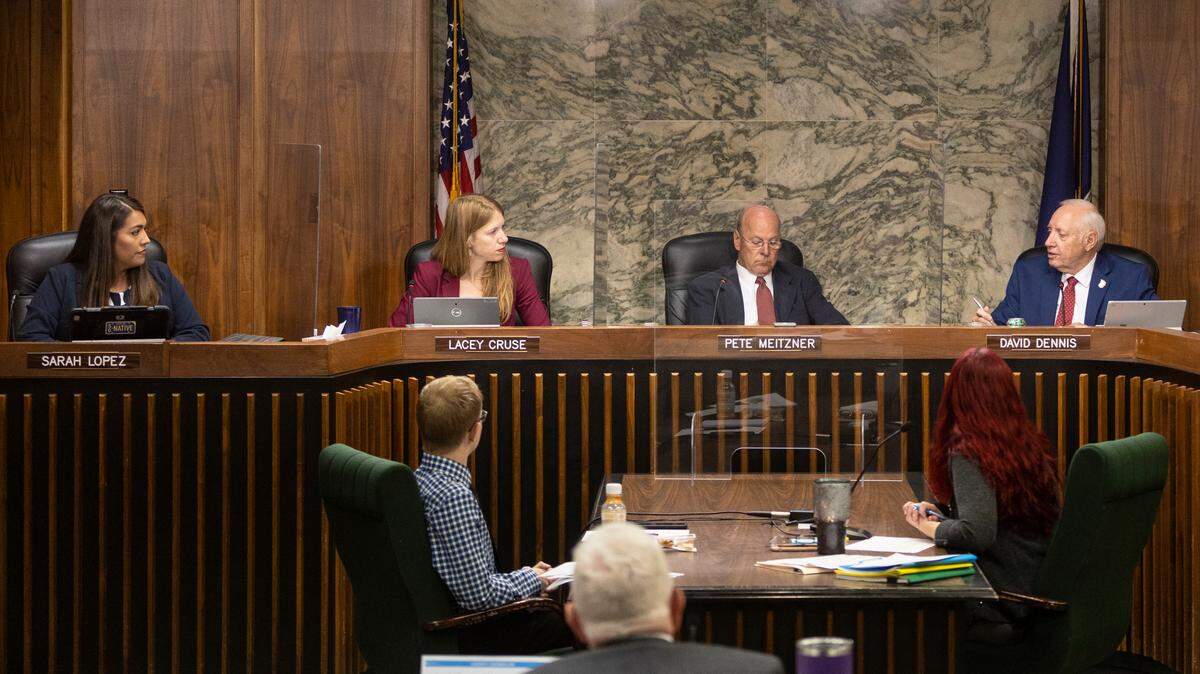
Two county commissioners — Pete Meitzner and David Dennis — have floated privatization as an alternative to the county-run model if Sedgwick County EMS does not show marked improvement.
Meitzner and Stolz held a teleconference with representatives from Global Medical Response, parent company of AMR, in April. They said the meeting was informational and did not involve any negotiations.
“There is no discussion of privatization,” Leeds said in a written statement.
What’s ahead?
County leaders say they want to hire a permanent director before undertaking further changes.
That could happen as early as Jan. 1.
“Our department’s been through a lot of change, and we haven’t wanted to put them through even more change,” Lanterman said. “They’re busy enough the way they are. And that’s what I’m focused on. They’re still running a lot of calls. They’re still busy, but they are doing a great job of taking care of patients. That’s the most important thing.”
When Stolz removed Gallagher as EMS director in July, he announced several short-term and long-term changes he planned to implement to get EMS back on track. Almost all of those promises have been kept, including separating EMS and the office of the medical director, naming interim directors for each, and approving a policy for employees to submit complaints.
But Stolz also said the county would “immediately stand up a citizen review and advisory board for EMS services” that would include health professionals and residents. That has not been done.
“County management and EMS management have discussed the purpose, scope and make-up of an advisory board without conclusion,” Leeds said in a written statement.
Capt. Ryan Kilby, an advanced-practice paramedic with 11 years at Sedgwick County, said the groundwork has been laid for the department to make a recovery.
“We stopped the hemorrhage of people without a doubt.”
“Feeling like your input matters, feeling valued, has been such a huge help in improving morale,” Kilby said. “I’ve seen a huge change since day one, when it was released that Dr. Gallagher was no longer going to be the director. I could physically see the change.”
But he said the public should be patient.
“The organization wasn’t torn apart in a day and it doesn’t get rebuilt in a day, either.”
This story was originally published December 19, 2021 at 4:53 AM.
CORRECTION: A previous version of this story misspelled Dave Johnston’s last name. He is the EMS chief in Reno County.
The story has been updated to clarify details of Sedgwick County’s actions aimed at changing rates for ambulance transport of patients between area hospital facilities.