
Earthquakes a new reality
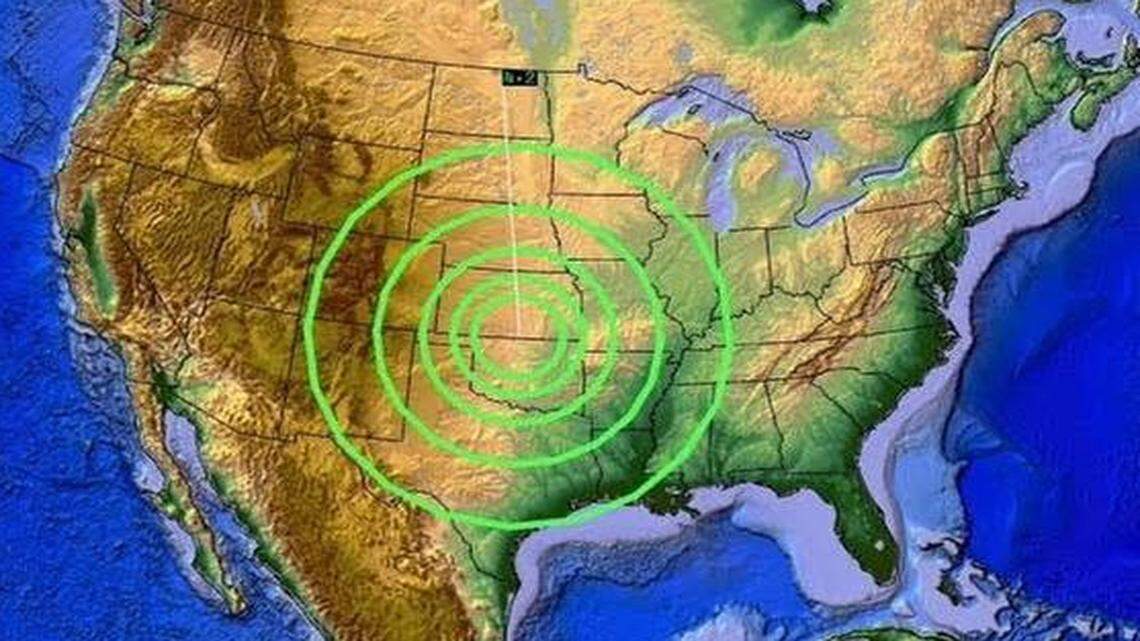
The earthquakes that had been a fun curiosity turned serious for many at precisely 3:40 p.m. Nov. 12, when a magnitude-4.8 quake centered near Conway Springs gave the Wichita area a major shaking.
And that was only one of more than 150 earthquakes in Oklahoma and southern Kansas over the past month, including a magnitude-3.0 quake near Conway Springs early Tuesday morning.
So Gov. Sam Brownback’s appropriate initial responses to this unsettling phenomenon, including a task force and better monitoring, should lead to more attention and perhaps action at the Statehouse but also regionally.
Though damage on Nov. 12 was limited to tiny Milan in Sumner County, that 10- to 20-second quake made it possible to imagine bigger ones – if not “the big one” – and realize how ill-prepared south-central Kansas is for such a natural disaster.
Kansans are used to tornadoes, floods and snow and ice storms. But an earthquake that chews up roads and other infrastructure while toppling buildings and triggering explosions and fires? That would be a new and scary emergency situation for Kansas, which averaged just five small quakes annually in the 35 years leading up to 2013.
Brownback recently announced that $85,000 would be spent on six Kansas Geological Survey seismic monitoring stations in Harper, Sumner and Barber counties to be operational early next year. As he said, the portable units should further research on the size and nature of the quakes and enable more planning.
The Kansas Seismic Action Plan released Sept. 1 by his task force also called for a permanent monitoring network, which would cost $200,000 to install and $80,000 to operate annually – something that seems like an essential investment after Nov. 12.
Though the task force reported it had found no evidence that the quakes were the result of fracking – the use of high-pressure fluids to fracture underground rock and free trapped oil and gas – it allowed for the possibility that the injection of waste fluids into disposal wells might be a factor.
If the research is inconclusive, public opinion on the quakes isn’t holding back. “We all know good and well what is causing them. Let’s face the facts about the fracking process,” concluded one contributor to The Eagle’s Opinion Line.
But state or local leaders are unlikely to do anything to curb a practice that has been a boon to a $4.3 billion Kansas industry employing 118,000, nor should they without more evidence.
Meanwhile, though, south-central Kansans should start making allowances for this new seismic activity. There could be new costs, such as for earthquake insurance and sturdier structural design. Emergency response systems need to adapt, too.
Though not welcome, earthquakes appear to be part of the new reality in south-central Kansas.
For the editorial board, Rhonda Holman
This story was originally published December 2, 2014 at 6:07 PM with the headline "Earthquakes a new reality."