
Preparing for earthquakes: Kansas can take tips from California
Well, Kansas, you didn’t move to earthquake country; earthquake country moved to you.
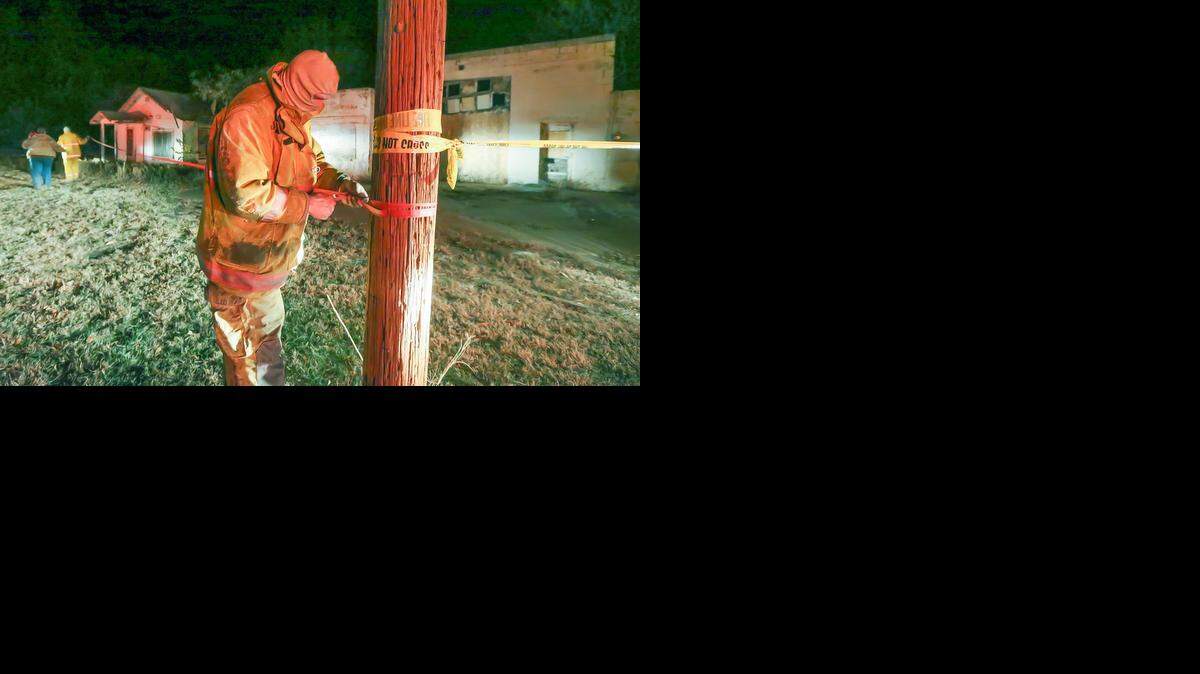
With a record-setting 132 earthquakes so far this year – including a magnitude-4.8 shaker that banged up the tiny town of Milan and was strongly felt in Wichita – you’ve got another worry to go along with your perennial concern over tornadoes.
Some of the preparations you make for tornado season will serve you well in an earthquake scenario – things like stocking up three or more days’ worth of bottled water and food, flashlights, batteries, radio, etc.
But ground shakes that come without warning mean you need to develop some new reflexes, make some changes around the homestead and get familiar with some quake-mitigating products that you may not have even heard of.
The good news is “earthquakes are survivable, especially if you know what to do and do it,” said Greg Renick of the California Governor’s Office of Emergency Services, the epicenter of quake preparedness for the always-shaky Golden State.
Unlike California, where decades of quakes weeded out weaker buildings that were replaced with stronger ones, Kansas isn’t built to withstand a major temblor.
Unreinforced brick construction – as common as wheat in Kansas – stands up well to wind and weather, but earthquakes are another story.
Brick walls that aren’t braced for earthquakes crack, crumble and lose strength when the ground shakes underneath. That’s a lesson learned from decades of California quakes, and a main reason California homes tend to be made of wood and stucco plaster, materials that have more “give” in them.
But while you maybe can’t replace your house, you can take some steps to minimize damage from the kind of small-to-moderate quakes we’re seeing now.
Getting stronger
Going back in history, Kansas has had some substantial earthquakes.
An 1867 shaker is believed to be the biggest ever, causing building damage and injuries in the Manhattan-Wamego area and reported two-foot waves in the Kansas River. They didn’t have seismographs then, but based on contemporary reports of property damage and how far away it was felt, scientists estimate the quake had a magnitude of about 5.1.
Actual seismograph recording of earthquakes didn’t begin in Kansas until 1977.
From then until 2012, the state averaged about five recorded quakes a year, most of them quite small.
Last year, the number of quakes jumped to 32. This year, Kansas has had 132 quakes through the last official update on Nov. 13.
Earthquakes are not only becoming more frequent in Kansas, they’re getting stronger.
In the 35 years from 1977 to 2012, Kansas experienced 13 earthquakes between 3 and 4 magnitude – and none bigger than a 4.
In the past year, we’ve cracked the 4 magnitude barrier five times.
That’s a big deal, and to understand why, you need to know a little bit about how earthquakes are measured.
Magnitude is actually a way of measuring ground movement.
Each point on the scale represents 10 times the ground movement of the next lowest point.
For example, a 4 is 10 times as big as a 3. A 5 is 10 times as big as a 4 and 100 times as big as a 3. And so on.
All that ground movement releases a lot of energy, which is what knocks down buildings, topples big-screen TVs and sends dishes flying out of cabinets.
And while each point of magnitude is 10 times the ground movement, the energy release rises by almost 32 percent for each point on the scale.
The biggest quake recorded between 1977 and 2012, on June 8, 1989, measured a magnitude of 4. Milan’s earthquake this month clocked in at 4.8.
So how does that compare?
Using the “How Much Bigger …” online calculator at the U.S. Geological Survey’s website, Milan’s quake was 6.3 times bigger in movement and 15.8 times stronger in energy release than the 1989 quake.
The increased earthquake activity correlates in both time and location to an increase in the use of nontraditional methods of extracting oil and gas. Most of the quakes have been concentrated in areas where the oil and gas industry uses horizontal “fracking,” a process of injecting high-pressure water and chemicals deep underground to fracture rock strata and release oil and gas trapped between the layers.
State geologists say they don’t think the fracking is directly responsible for the quakes, although underground injection of wastewater from oil and gas drilling could play a role.
A task force appointed by Gov. Sam Brownback to investigate increased seismic activity in the state said in a report earlier this fall that there is insufficient research available to say what has caused the increase in the number of quakes. The group asked for more monitoring stations to gather more information.
The state has agreed to spend about $85,000 to buy a six-station portable seismic network to monitor increased quake activity in Harper, Sumner and Barber counties. Those will be operational next year.
No warning
Until and unless someone figures out why it’s happening and what, if anything, can be done about it, you’re just going to have to suck it up and deal with it.
The good news is California has lots of experience and advice for living on shaky ground.
Most injuries and deaths from earthquakes come because something heavy falls on someone’s head, Renick said.
Current advice for what to do when the shaking starts is, if possible, take shelter under a sturdy table or desk. Hold the furniture with one hand and use your other arm to shield your head and neck. If you’re outside when it hits, try to get to a space where you won’t risk getting hit by falling building debris or electric lines.
But good preparation starts before a quake, which unlike a tornado gives no warning of its approach.
Renick recommends that you survey your house for hazards and weak spots and take some steps to mitigate them. Benefits can range from saving great-grandma’s antique vase to saving your life.
The following are some of the common trouble points and how to deal with them:
▪ Pictures hanging over the bed – This is a big no-no. A framed picture can easy jump off its hook and fall on your head. Glass in the frame can break and cause severe cuts. The best practice is just not to hang pictures over a bed. If your design scheme demands it, secure the picture to the wall with screws into the wall studs, not the drywall. Or use special quake-resistant fasteners you can buy online.
▪ Chimneys – Unreinforced masonry chimneys can fall like the proverbial ton of bricks, which is essentially what they are. A chimney that falls toward the house will go right through the roof and the ceiling and mash anything underneath it. If you have one, Renick suggests having a contractor look it over to see if it can be strengthened. If you’re anywhere near the fireplace when an earthquake hits, seek shelter in a safer room until it’s over.
▪ Natural gas connections – In California, building codes require flexible lines for gas hookups and that water heaters be strapped to the building. In Kansas, large gas appliances are usually plumbed in with rigid pipe that can break at the connections, causing gas leaks. Best practice would be to replace those lines with flex lines and strap the equipment in place.
If you don’t, check your gas appliances immediately after a quake and if you smell, hear or see a gas leak, evacuate the building immediately, without turning on any lights, making a landline or cellphone call or doing anything else that could spark an explosion. Kansas Gas Service and Black Hills Energy, the two companies that serve Wichita, recommend evacuating to a safe distance and then calling 911 or your gas company for further instructions.
▪ Tall bookshelves – They’re top-heavy and can easily tip over in a quake, making a mess at the least and injuring or killing someone at worst. Renick recommends bolting or strapping standing shelves to the wall studs.
▪ Electronic equipment – Big-screen TVs, computer monitors and the like can easily fall over in a quake, wrecking the equipment and potentially injuring someone nearby. In the Milan quake, Scott Spinks, the fire chief in nearby Argonia, said he managed to catch the fire station’s TV just before it toppled off its stand. Renick recommends tying the equipment to the table or stand with nylon straps.
▪ Knick-knacks and heirlooms – A lot of people in Milan lost some of their most prized possessions because they fell off shelves and tabletops when the quake hit. If you have special or valuable items on display in your home, consider sticking them to the shelves. There are special wax-like adhesives, known as museum putty, made for just that purpose. They’re reusable if you rearrange your collection, and they won’t leave a hard-to-remove mark on the furniture like regular adhesive. Museum putty is marketed under trade names like QuakeHold and Quake Secure. While it’s not widely stocked in Kansas stores, you can order it online, or a hardware or building-supply store can get it for you.
▪ Pantry shelves – After the Milan earthquake, a lot of residents spent a lot of time picking up canned goods and cleaning up food that spilled from their pantry shelves. To mitigate that problem, run a secured wire across the front of pantry shelves to keep the food in place. With wooden shelves, you can screw a board across the front to create a lip that will prevent food from falling.
▪ Cabinets and hutches – Unsecured cabinet doors tend to fly open, and dishes, glasses and wedding china wind up in a pile of shattered shards on the floor. Fortunately, a variety of “child-safe” cabinet locks are readily available and easy to install to prevent this kind of damage.
▪ Shoes – Keep an old pair of sturdy-soled shoes under the edge of your bed. After an earthquake, you may have to walk out over broken glass or other debris on the floor.
More tips on earthquake safety and preparedness are available online from the Federal Emergency Management Agency at www.ready.gov and from the California Office of Emergency Services, www.calema.ca.gov/.
Reach Dion Lefler at 316-268-6527 or dlefler@wichitaeagle.com.
This story was originally published November 22, 2014 at 2:43 PM with the headline "Preparing for earthquakes: Kansas can take tips from California."