
How did a Kansas state record 200-inch whitetail buck stay secret for nearly 30 years?
After years of online detective work by a 23-year-old Kansas bowhunter, the Sunflower State appears to have a new record typical whitetail buck for the first time in 50 years.
But the story behind the potential new record typical buck — the first to score 200 inches in Kansas — is anything but typical, and it’s sure to raise questions among an always-skeptical, ultra-competitive class of trophy hunters and collectors.
Bowhunter Albert J. Daniels, 67, in his first ever interview about the deer, told The Wichita Eagle he shot the 200-inch giant in Franklin County in 1995. Daniels said he had no desire to enter the deer in any record books — not Boone and Crockett, Pope & Young, or the Kansas Department of Wildlife and Parks. He said he didn’t even take a photograph with the buck after he shot it.
The Daniels buck is one of 20 known typical racks to reach 200 inches, according to Boone and Crockett. Typical antlers follow a standard pattern for the species and are scored on size and symmetry, while non-typical racks are scored on sheer size. Kansas has a history of producing some of the largest whitetail deer — especially non-typicals — in the world.
So how did the Daniels buck end up in the Boone and Crockett Club’s record book decades later, displacing one of the longest-standing state-record typical bucks in the country?
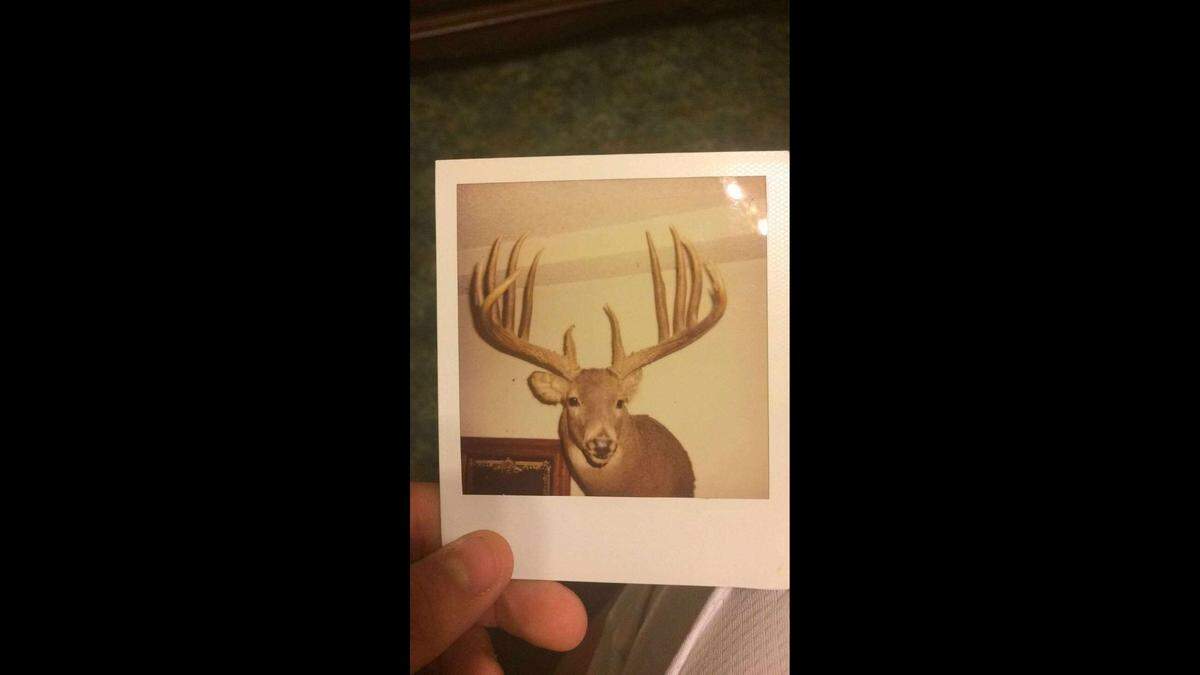
It started with a Polaroid, a curious son and an online scavenger hunt.
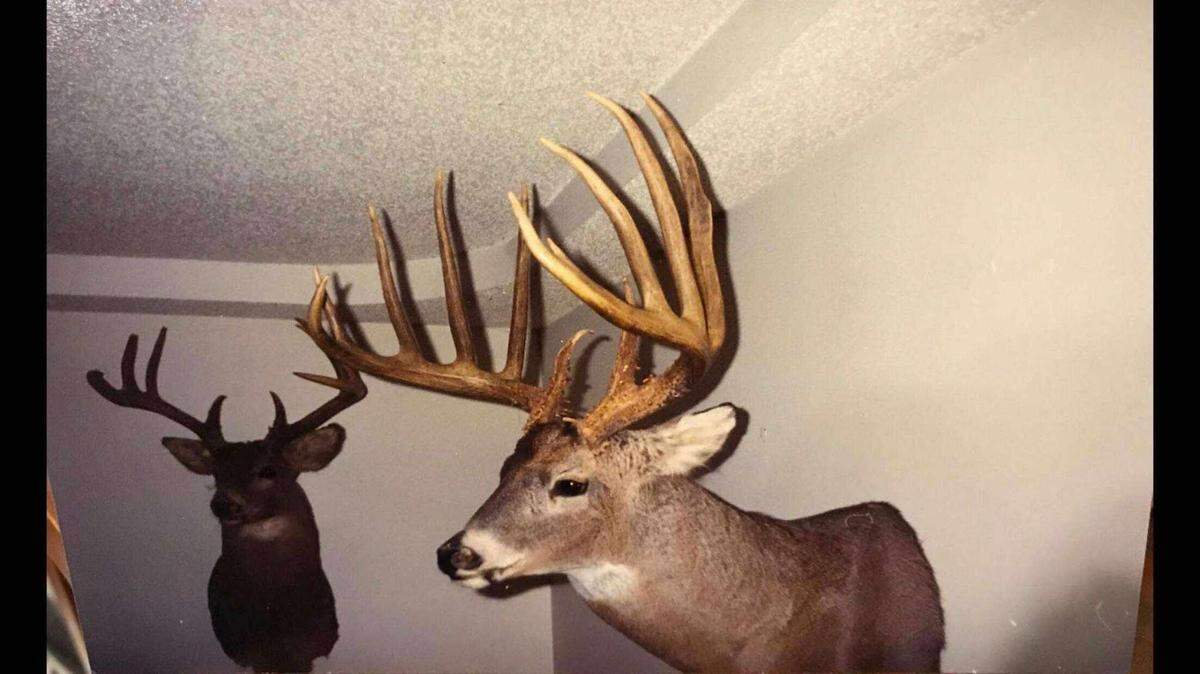
Daniels no longer has the antlers. All he has to show for it are a couple of photographs of a shoulder mount that used to hang on his wall, where the record buck likely would have stayed — out of the public eye and out of the record books — had he not sold it to a trophy collector through a friend when he needed money in the early 2000s.
From there, Daniels’ trophy antlers bounced around from collector to collector until as recently as 2017.
Enter Matthew Daniels, Albert’s son, himself an avid bowhunter, who saw a photograph of the deer and began asking his father questions.
The elder Daniels told his son someone had scored the large whitetail around 200 inches back after he killed the deer. The number meant little to Albert Daniels, who was more of a meat hunter than an antler hunter.
The son knew if the buck’s antlers actually measured 200 inches, it would be a state record, surpassing the longstanding typical record set by Dennis Finger in 1974 at 198 2/8 inches.
“When he told me 200, I was like, ‘No freaking way,’” Matthew Daniels said.
Kansas is known for its big deer: Stories of the Top 10 killed in the Sunflower State
Meat hunting
Albert Daniels was not a trophy hunter or particularly picky when it came to deer hunting. He started out as a small-game hunter when he was a teen before turning to a bow and arrow.
Before killing the 200-inch deer, he had shot a button buck — a young buck with antlers less than an inch on each side — and several does.
He had been bow hunting just a few years when it was finally “my turn” to get a good deer, he said.
He didn’t set out for a monster.
“Just hunting for meat, really,” he said. “After you kill them, what you got left?”
Daniels’ friend had rented a home on a property that had been repossessed. Daniels got permission through the banker to hunt the 160 acres.
On a warmer October evening, Daniels climbed onto the limb of a cedar tree with about 10 yards of opening in front of him.
As a rule, he kept his bow on his lap. That, instead of hanging it up like many hunters do, is the only reason Daniels said he got a shot off.
“They don’t give you a second chance,” he said. “It was a quick shot. … I never really got to take a good look at him. All I know is it was really quick. … I never thought anything about it.”
He knew the shot was a little far back, likely liver. With around 45 minutes left of sunlight, and not finding any blood, he backed out and decided to come first thing in the morning.
He found the buck a couple hundred yards away from where he shot him, tucked under a cedar tree. The coyotes had gotten to him.
He had the deer mounted but sold it in the early 2000s when he fell on hard times.
The search begins
Matthew Daniels had a harder time tracking down the buck than his father did.
There was no blood trail. All he had to work with was a 20-year-old Polaroid of a whitetail buck hanging on a wall.
Daniels posted the photo online in October 2017 in the Kansas Hunting and Fishing Facebook group, asking for help finding his father’s deer.
Shortly after making the Facebook post, Matthew received a tip that his father’s deer was in the possession of a trophy collector in Maine named Harvey Libby.
He wrote a letter to Libby, who is the curator of a private collection called Maine Antler Shed, and sent the Polaroid. Libby confirmed it was the same mount and offered to sell it back to the younger Daniels.
In a November 2017 letter, Libby said that the “rightful place/home is with the hunter who harvested it.” Libby said he was willing to sell it but to “be prepared” that the price would be “substantial due to what I had to pay to acquire it originally.”
Libby’s asking price was $39,500.
Matthew Daniels tried to raise money for the mount through GoFundMe, but it was clear he wouldn’t get close to the amount needed to buy back his dad’s trophy. The donated money was refunded.
Libby, in a phone interview, said he believed he had bought the Daniels buck through a Pennsylvania collector, the late Brad Gsell. He said he later sold it to Ohio collector Keith Snider. Matthew Daniels said he didn’t have any luck trying to get replica antlers from Libby or Snider.
“Any rack that qualifies as 200 inches typical is a tremendous rack from any state, any province,” Libby said. “I think it was a tremendous rack. It wasn’t overly wide, but it had long tines … kind of a handsome rack.”
Libby said he couldn’t get Albert Daniels to sign the paperwork to get it certified with Boone and Crockett Club before he sold it to Snider.
In 2019, Matthew Daniels found out his father’s deer had been entered in the Boone and Crockett Club’s list of record whitetails — the largest known typical whitetail in Kansas history. The rack had been entered in the record books by its new owner: Bass Pro Shops.
Albert Daniels told The Eagle he had no interest in being recognized. He only talked with The Eagle because his son asked him to. The Danielses said they didn’t believe they signed any paperwork related to the official entry in the Boone and Crockett Club record books.
Bass Pro Shops and Boone and Crockett did not respond to questions for this story.
But Bass Pro Shops did contact the younger Daniels in September, telling him he could purchase a replica of his father’s deer rack from Antlers by Klaus, an artist and taxidermist who has a massive collection of antler reproductions.
Matthew Daniels said he plans to use a cape — the portion of a deer hide used in a shoulder mount — from a deer he shoots this year and the replica antlers from his father’s trophy to recreate the wall mount Albert Daniels sold nearly 20 years ago.
‘It’s not about the horns’
While working to get recognition for his father’s buck, Matthew Daniels has also worked the last couple of years to get his father back hunting after a decade-plus hiatus because of health issues.
With his son helping scout and get him to the spot, Albert Daniels shot an eight-point buck with a crossbow last year. The goal this year was to get one more buck with a compound bow. Instead he shot another eight-pointer with a crossbow.
“Just being there with my son and realizing the effort he put in to make sure I was successful, I’m really proud of him,” Daniels said.
Daniels said those two deer are more meaningful trophies than the 200-inch 12-point buck he shot nearly 30 years ago.
“The record and all of that doesn’t mean anything to me at all,” Daniels said. “The bucks that I’ve gotten the last two years with my son … means way more. It’s not about the horns.”
Rewriting history
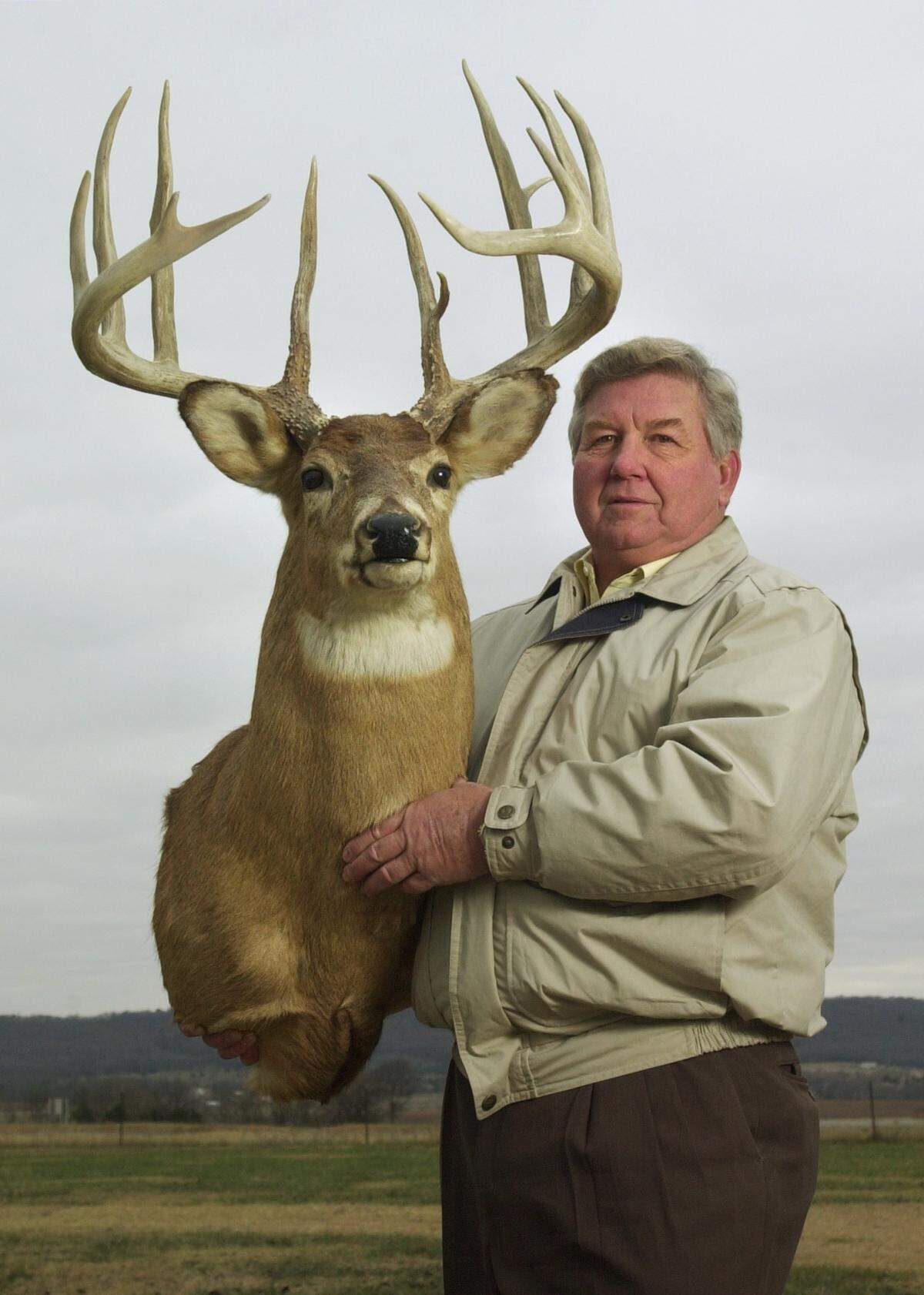
Denny Finger, 82, shot a 198 2/8-inch buck in Nemaha County in 1974. It remains listed by the Kansas Department of Wildlife and Parks as the largest typical whitetail ever shot in the state, although Matthew Daniels said he plans to file the proper paperwork with the state to have his father’s record buck listed in its records.
Finger’s record has stood for nearly 50 years as the largest typical whitetail buck taken by any weapon in the state of Kansas (Finger shot his buck with a rifle and continues to hold the largest gun-killed typical whitetail record in Kansas).
Daniels’ buck shatters the existing bowhunting record whitetail typical — Brad Henry’s 193 7/8 inch buck killed in 2001 in Wabaunsee County — by more than 6 inches.
If Daniels had entered his buck when it was first harvested, Henry would have never held the record. And two other controversies would have likely gotten less attention, a check of past news coverage shows.
Since 1995, at least two potential state record bucks that could have scored higher than Finger’s buck were shot in Kansas. Neither one would have surpassed Daniels’ record.
In 1999, a typical buck that scored 199 ⅞ was shot by a rifle hunter in western Kansas, but the antlers were confiscated by the state when investigators found out the non-resident hunter had used a relative’s resident permit to tag it.
In 2011, a Kansas poacher broke almost every game law imaginable to shoot a 198 ⅞ inch buck. He shot it out of rifle season with an illegal caliber outside of legal shooting time from a vehicle using an illegal spotlight on private property he did not have permission to hunt.
The poacher later brought the antlers to a trophy show convention and claimed he had shot the deer in Nemaha County, where Finger had shot the state record. His story began to unravel when trail camera footage surfaced of the buck in Osage County, more than 70 miles south of Nemaha.
Finger said he has been somewhat surprised no other hunter had bagged a bigger buck than his, which he said was 3 1/2 years old at the time he shot it back in ‘74.
“In the beginning, I used to get a call two or thee times every fall from someone saying, well, they got a deer that’s better than yours,” Finger said. “And I’d say, well, they’ve got to someday. That’s fine with me. And, sure enough, it would be close but it wasn’t bigger. And then when they did get one that was bigger, it turned out to be illegal.
“I’ve enjoyed having the number one because a lot of people — they still ask questions about it,” Finger said.
Like Daniels, Finger said he was not picky about the bucks he shot.
“When I started hunting, if I didn’t shoot the first buck I saw, I wouldn’t have gotten one,” Finger said. “So if he had horns, I shot him. And I was never a trophy hunter. If I saw one the first day, that was the end of my hunt. I didn’t go out again.”
And, like Daniels, Finger’s record buck is not his favorite. About 20 years and half a mile down the road from where he shot his 198 2/8 inch whitetail, Finger shot a deer with a much bigger body and an impressive rack that he said likely shares the same genetics as his record deer.
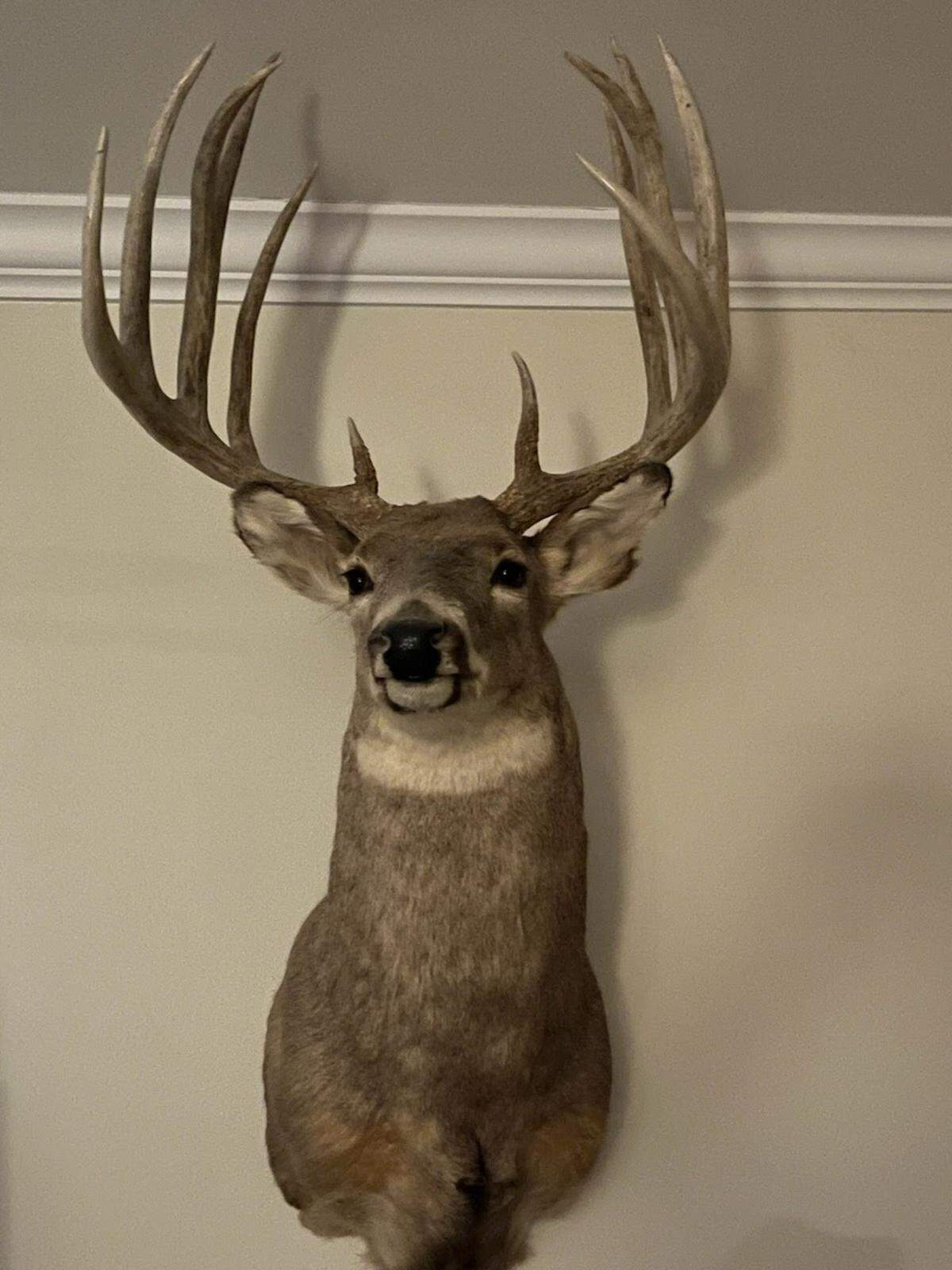
“When I first got him, I was almost convinced that he was a better buck and a bigger buck and would score better,” Finger said. “I just like him — I still like him a whole lot better. He didn’t have the brow tines. He had like 3 1/2 and 4 1/2 inch brow tines. If he’d have had those 16 inches or whatever the other one had, he would have been way up in there around 210 or something like that. But he ended up being about 190 with some deductions.”
Finger said he has no special advice to offer hunters when it comes to bagging trophy deer, other than finding a good spot that produces large deer.
“There’s no question about it, it’s 100% luck for me,” Finger said. “I don’t know. There might be people that have some kind of a procedure they go through when they go hunting every year to maybe pick at bigger ones that way. I don’t know. Mine’s all luck. I just went out there and shot the first deer I saw.”
Andover man arrows giant non-typical that turns out to be largest ever taken in Kansas
‘We knew that we really had a world-class buck.’ KS hunter kills local legend ‘Grandpa’
‘We need to go out and hunt’: How a Kansas girl ended up with record for biggest buck
This story was originally published December 6, 2024 at 1:35 PM.