
‘Nothing can stop them’: The inspirational tales of blind baseball players in Wichita
When his promising football career was forced to end in his teenage years after losing his eye sight in a fluke accident, Ira Mills was heartbroken because he thought his athletic career was over.
Then he discovered beep baseball, an adaptive form of baseball designed to allow people who are visually impaired to compete.
Mills was introduced to a whole new world, which he says changed his life.
“It almost feels like I was given a second chance because (the accident) took something away from me that I could have done well in and now it’s given me something else to focus on,” said Mills, who helped create the Wichita Association of Blind Athletes. “Being around these men and women who have zero sight to begin with, it makes you appreciative for what you still have. They’re so inspirational to be around because you see how they don’t let anything stop them.”
So how do people with visual impairment play beep baseball?
With the National Beep Baseball Association World Series in Wichita week, the highest level of the mixed-gender sport can be seen through Sunday in games played at South Lakes Soccer Complex.
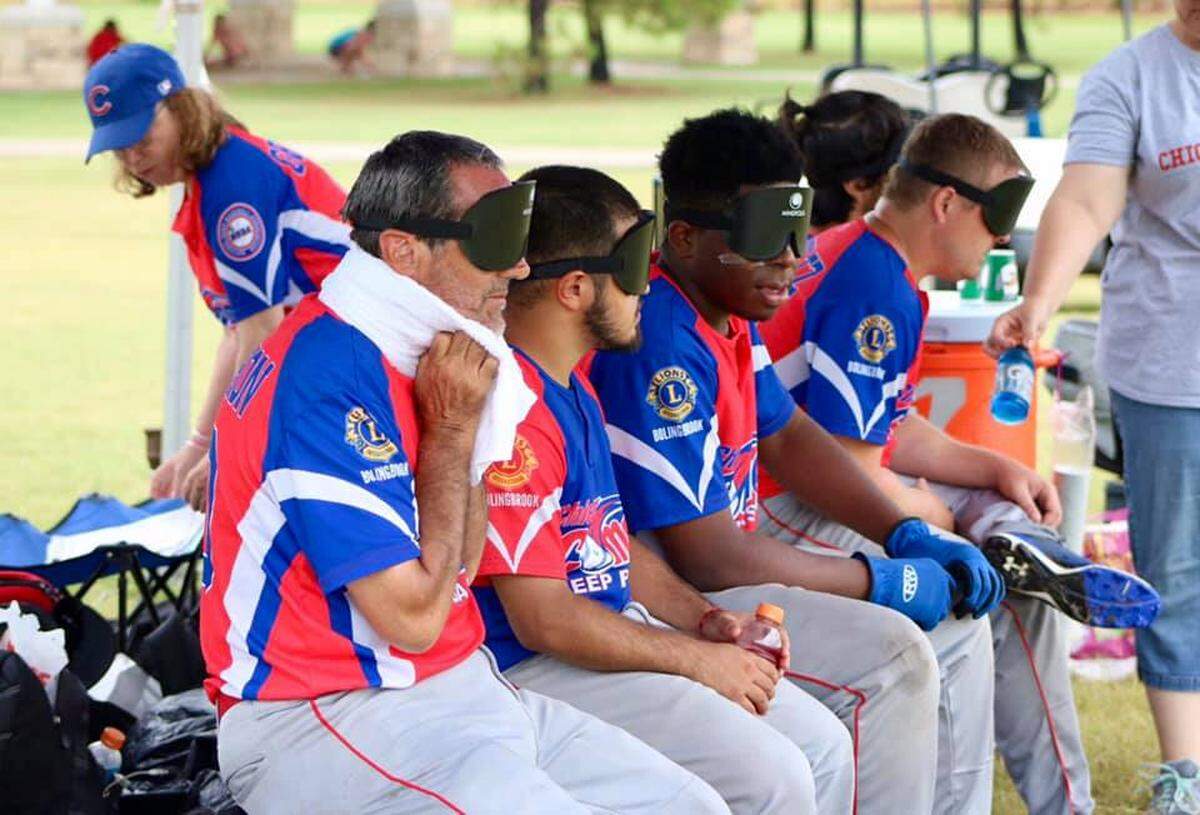
While some players have no sight, others still have limited sight capabilities, which is why everyone in the game wears blindfolds to even the playing field. The game is played with an oversized, 16-inch softball that contains a noise-making beep to better allow hitters to track the ball in the air.
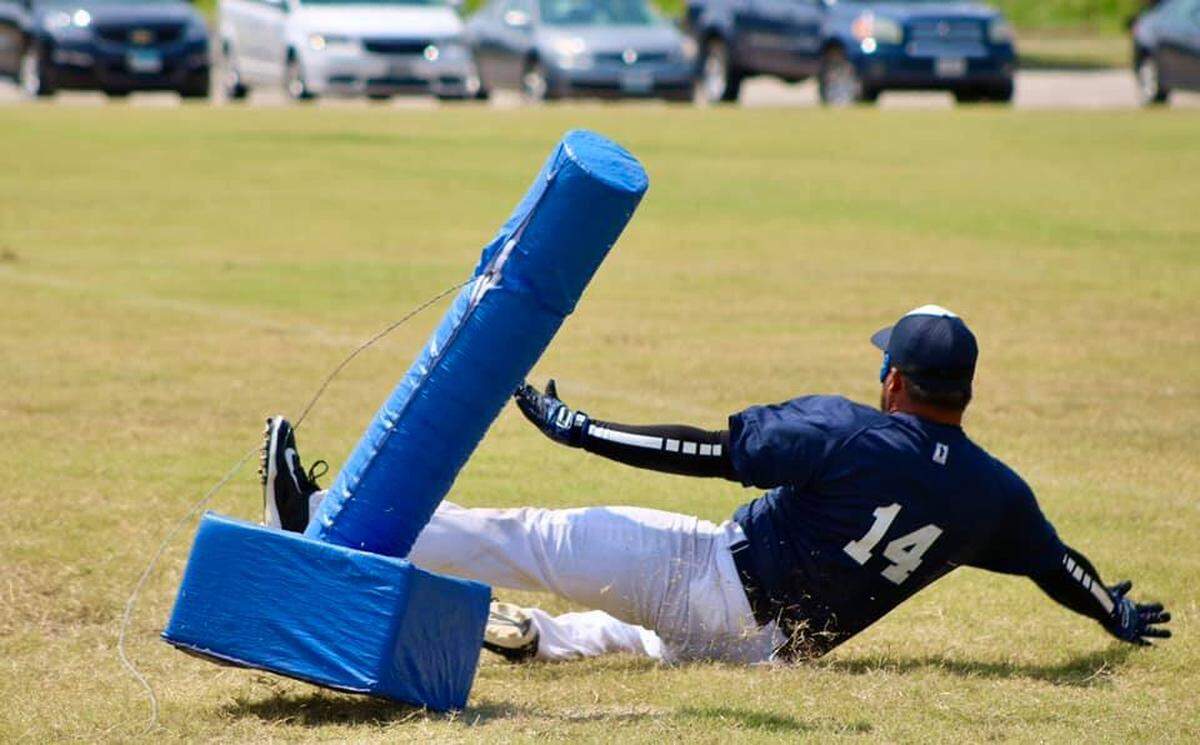
The ball is thrown by their own teammates, typically by a sighted person, in an under-hand toss from 20 feet away. When the hitter makes contact, they can run 100 feet down either line to what would first or third base, which in this game is a four-foot padded cylinder with speakers that gives off a continuous buzzing noise when the ball is put into play. Meanwhile, the defense scrambles to track down the buzzing ball in play. If the runner can touch base before the defense corrals the ball, then a run is scored.
“It really is off the chain to watch these guys compete the way they do,” said Carlton Bell Jr., a sighted pitcher for the Wichita Falcons. “It’s amazing to watch blind people when they’re on defense and when the ball comes to them to be able to move around and find it. It brings me so much joy because this is powerful stuff. Nothing can stop them.”
J.T. Herzog, head coach of the Chicago Comets, said one of the biggest misconceptions about blind people is that they are not competitive in sports.
“Whether they’re completely blind or visually impaired, the fact is they’re still athletes,” Herzog said. “A lot of people right away think because they have a handicap that they can’t do certain things. We’ve proven in this sport that with some adaptive rules that they can come out here and show their athletic ability and prowess just like anyone else.”
Umpire John Harper Jr. laughs when asked about the competitiveness in beep baseball. He says he has been officiating beep baseball games for the past seven years and has been left in awe of the athletic feats and the camaraderie he has seen on the fields.
And as Harper Jr. will tell you, umpires are not safe in beep baseball, either.
“I get a kick out of when there’s a really close play in the field and you make an out call, they’ll start yelling at you that the runner was safe,” Harper Jr. said, laughing. “Keep in mind, they’re all legally blind with blindfolds on. They’re just as competitive, though. I get a real kick out of it.”
Just like in baseball games, there is chatter in the dugout and on the field. Defensive players call out numbers on the field to identify which zone they are in to their teammates and the more chatty teams, like Herzog’s Chicago club, will even go as far as some friendly ribbing when the opposing batter takes a ball — calling out “Boring!” in unison.
“They’ll talk some smack, for sure,” Herzog said, laughing. “But the good thing about beep baseball is that it’s competitive out here on the field, but if you watch them off the field you can’t tell who’s on what team. We’re all one big family is what it boils down to. But just like in a family, you’re going to have those sibling rivalries. Beep ball is no different.”
Tina Hidalgo, the head coach of the Lonestar Roadrunners, said beep baseball is capable of changing anyone’s life if given a chance.
She says she routinely has sighted people come to her team’s practices in Fort Worth and put on a blindfold and try to hit the ball and they all are humbled quickly. There’s a newfound respect for what the beep baseball athletes can do after trying to do what they do.
From her experience, Hidalgo says that sense of pride has improved the quality of life for all of her players.
“It’s incredible to see how this game can change people’s lives,” Hidalgo said. “The confidence they gain from playing this sport carries over to their everyday lives. It’s amazing to see the confidence it’s built in my players. Seeing them go out and do other things on their own and be independent and form a family with the people who are going through similar things. It’s so inspiring.”
There are still a handful of the 20 teams still alive for Sunday’s World Series championship game and Herzog’s Chicago team is one of them.
After raising a blind son, Herzog said he’s been fully aware of the possibilities of blind athletes for years. He’s just happy they’re starting to receive the recognition he feels they deserve.
“I treated my son just like I would have any other son and that’s the way I treat these guys,” Herzog said. “I treat them like the athletes that they are. One of the things they have to be able to do not just in this sport, but in life is to adapt. There’s a lot of things they have to figure out a different way of doing things. Nothing can stop them.”
This story was originally published July 29, 2021 at 7:00 AM.
.jpg)