
Four-year journey leads Wichita State’s Dexter Dennis to AAC Defender of the Year award

When his time at Wichita State is done, Dexter Dennis will have left a legacy of sacrifice.
For four years, he sacrificed shooting the ball on offense, his body on defense and his ego for the betterment of the team. And he did so without complaining about his role because the only thing that mattered to him was helping his team win.
After excelling in the shadows, embracing the dirty work and details that don’t show up in box scores, Dennis finally took center stage for his craft on Wednesday morning when American Athletic Conference coaches voted him the Defensive Player of the Year for the 2021-22 season.
The award has always gone to a player who puts up gaudy counting stats in steals or blocks. Dennis is the first player in the nine-year history of the award to not average at least one steal or one block per game, which can be taken as the ultimate sign of respect from opposing coaches for his on-ball defense for a team that was in the middle of the standings.
“I think if you look at any good defender in the NBA or in college, they have a different persona, a different kind of toughness,” Dennis said earlier this season. “It’s hard to dedicate yourself to doing things that are not going to show up in the stat sheet all the time.
“Everybody wants to score. Everybody wants to be the guy. But who is going to be the guy who is dedicated to stopping the guy on the other team? That’s what I want to do.”
For a player who has sacrificed so much and been overlooked at times, the recognition means everything to Dennis and his family from Baker, Louisiana. He became the fourth Shocker to win a Defensive Player of the Year award, joining Dwayne Praylow (1989), Jamar Howard (2003) and Tekele Cotton (2014, 2015).
“I don’t feel like he ever gets the credit he deserves,” said Dawn McQuirter, his mother. “He’s willing to take minimal shots on offense and go out every game and do the dirty work that no one else wants to do. I know Dexter is more than just a defensive player, but he’s willing to fulfill that role for his team because that’s what they need him to be and he wants to be a team player. I know winning that award would mean a lot to him because defense is the one thing he really takes pride in.”
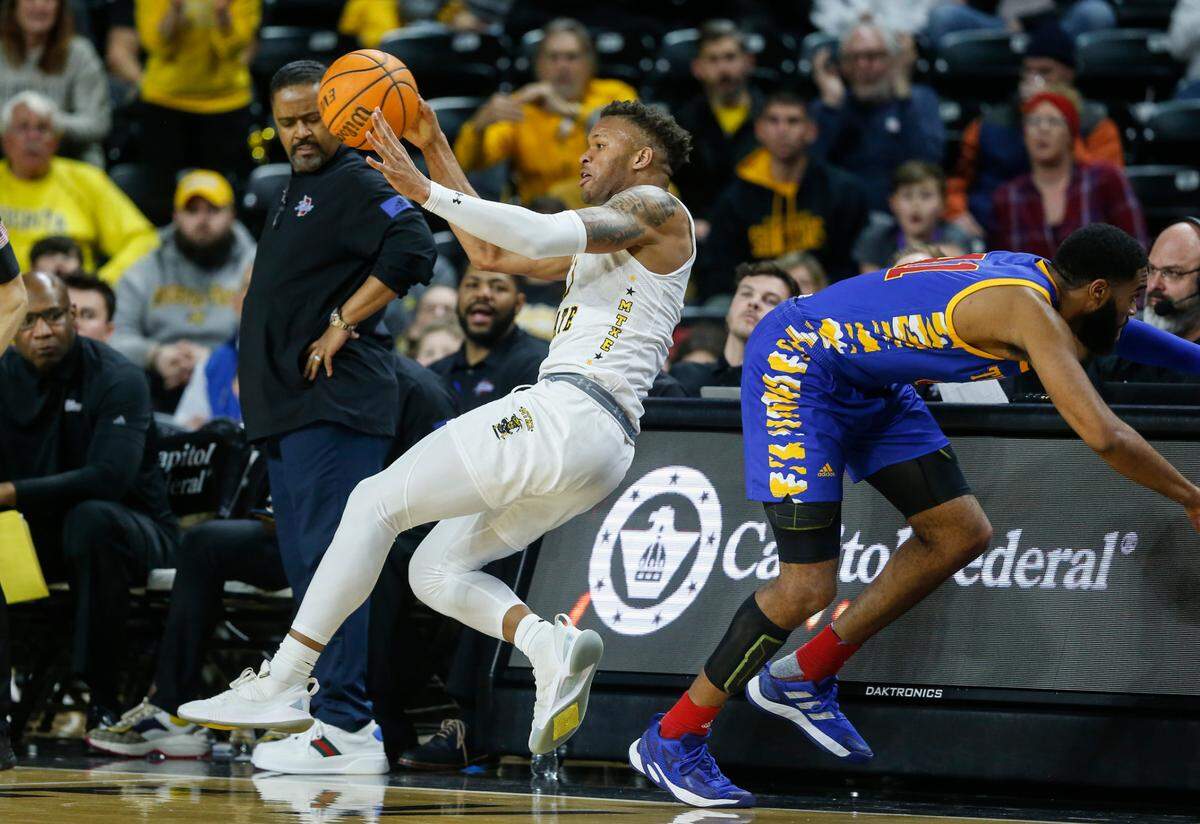
‘That instilled this tenacity in him’
It’s hard to believe after four years serving as Wichita State’s defensive stopper, but Dennis was not a heralded defensive player growing up.
When he was in high school, Dennis used his 6-foot-5 frame and athleticism to feed his scoring prowess. When he attacked the rim, no one seemed to be able to stop him and his outside shot was rapidly improving. He averaged 23.4 points his senior year at Baker High School and led his team to the state quarterfinals, but he was still so raw that no Division I scholarship offers rolled in.
He decided to give his recruitment one more year and enrolled at Believe Sports Academy in Athens, Tennessee, coached by Tyson Waterman, a former Gregg Marshall player who gave his mentor the scoop on who he believed was a diamond in the rough. A month after Dennis signed to play for the Shockers, Waterman followed him to Wichita by joining Marshall’s staff as an assistant.
That first season being coached by Marshall on a team that had been essentially overhauled from the previous year molded Dennis.
“Gregg Marshall would always talk about Fred VanVleet just refusing to be screened,” Dennis recalled. “We heard that since the day we came in trying to earn minutes as freshmen. I wasn’t focused on scoring when I was a freshman, so I completely bought into defense, rebounding and trying to be a good teammate. That’s where it all started. We just drilled it every day in practice.”
Under Marshall’s tutelage, Dennis embraced defensive work for the first time in his career.
Instead of using his length and athleticism to chase baskets, Dennis started using that combination to terrorize opponents who were trying to do those things. He figured he would be just another guy if he tried to be a scorer first; he could truly stand out if he focused his effort on the defensive end.
“Dexter was always a great scorer growing up and I think he had the ability to be a good defensive player, but playing for Gregg Marshall brought that out of him,” said Page Dennis, his father. “That instilled this tenacity in him. Once he got to college, man, it went to another level.”
The strategy worked: Dexter earned the trust from the coaching staff that started with Marshall and has only grown since Isaac Brown took over the program last season.
Dexter is slated to make his 94th career start in Thursday’s 2 p.m. game against Tulsa in the opening round of the AAC Tournament in Fort Worth, Texas, which would move him into 12th place in program history. He is also on pace to move into the top-15 in program history in career minutes played.

That’s a list reserved for some of WSU’s greatest scorers: Toure’ Murry, Jason Perez, Ron Baker, Fred VanVleet, Xavier McDaniel and P.J. Couisnard. Dennis, who has never averaged double-digits in scoring during his career, is an outlier, a testament to how good defensively he has been over the last four seasons.
“He’s an NBA defender,” Brown said. “He’s long, he’s athletic and he does a great job with our scouting reports. He understands being in the right spot. He’s always in the right spot.”
It’s hard to argue when you dissect Dennis’ work from the past four seasons.
As a true freshman, he locked up an all-Big Ten senior power forward during WSU’s run to the NIT semifinals. He’s guarded everyone from Cincinnati’s 6-foot-5 wrecking ball Jarron Cumberland to NBA-bound sharpshooter Quentin Grimes of Houston to the lightning-quick Kendric Davis of SMU.
Whether the other team’s best player is a dynamic point guard, an athletic wing or a physical post player, Dennis has taken on the responsibility for the Shockers and often shut those players down. In maybe his finest performance of this season, Dennis clamped up Davis, who was voted the AAC Player of the Year, to hold the SMU superstar to his worst performance of the season: eight points on 1-of-7 shooting with four turnovers in a 15-point WSU win on Feb. 5.
Dennis possesses the speed, quickness, athleticism, length, strength, discipline and leaping ability to bother just about any player he comes across. He is studious when it comes to watching film, critiquing his own work and also scouting his upcoming assignments.
But the thing that trumps all of those attributes? He has the desire, the craving to be great on defense. Sometimes, that’s all that matters.
“I could score zero points, I could really couldn’t care less,” Dennis said. “If I’m playing good defense on the other team’s best player, making it difficult for them, and we win, then that’s all that matters to me.”
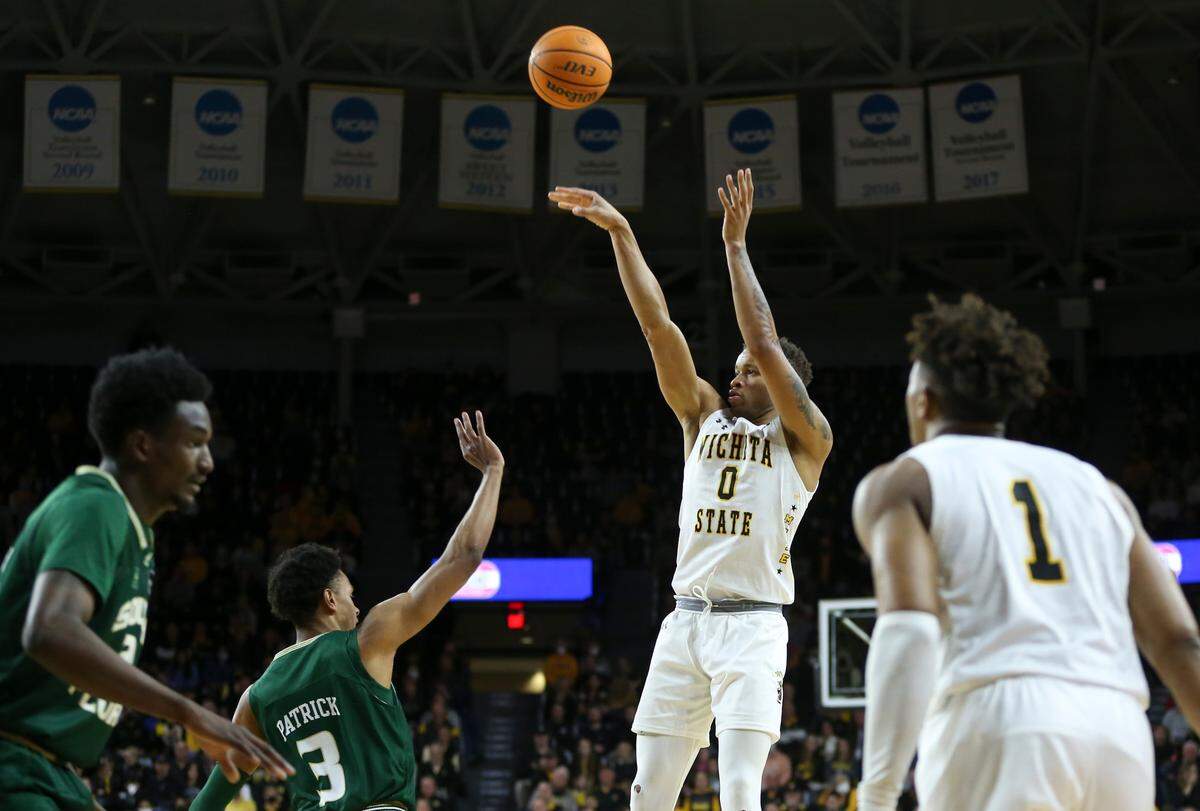
‘When you want to be good at something so bad’
Dennis has a hate-love relationship with the game of basketball.
He loves it because it brings him more joy than anything else in the world while playing the sport. He hates it because he is always searching for the perfect performance and always coming up short.
Even in his finest moments as a Shocker — the game-winning three-pointer at Tulane his freshman year, the career-high 25-point explosion to lead a historic 24-point comeback at SMU in 2020 — he never cracked a smile. There’s a reason for that.
“If you go back and look at some of my best games, I probably smiled like once the whole time I was on the floor,” Dennis said. “It’s like this weird, constant cycle where I feel like I’m always trying to prove myself… to the game of basketball.”
Dennis considers his love for the sport an obsession. During the season, almost his entire day is dedicated to finding ways to improve. An extra film session here, a tweak to his shooting motion there. A trip to the Koch Arena gymnasium at 11 p.m. to put up extra shots.
He loves the grind, loves the preparation, loves the process. And that’s what makes him hate it so much when the results don’t match up with his work ethic.
He is resigned to never understanding why he was never a more consistent shooter with the Shockers after drilling 40% of his three-pointers as a freshman. The most likely explanation is that WSU required him to do so much of the heavy lifting on defense, it affected his offensive development. Still, Dennis is tortured by the fact that he has been a 32.5% three-point shooter for the past three seasons, including a career-worst 30.1% three-point shooter this season.
“It’s really hard, I’m not going to lie to you,” Dennis said. “When you put so much time into something and you want to be good at something so bad, it’s hard to just brush off a bad game. There’s a lot of nights where you’re off and you really can’t explain why. It’s like, ‘Man, I’ve done everything right in my pregame routine, my preparation.’”
He has tried everything to find the consistency he enjoyed for so much of his high school career. He’s tried tweaking his form, adjusting his launch point, changing his landing zone. He’s even had WSU’s coaches cut up film of his made shots followed by 30 seconds of a blank screen, giving him time to play the shot back in his mind and visualize the shot going through the net again.
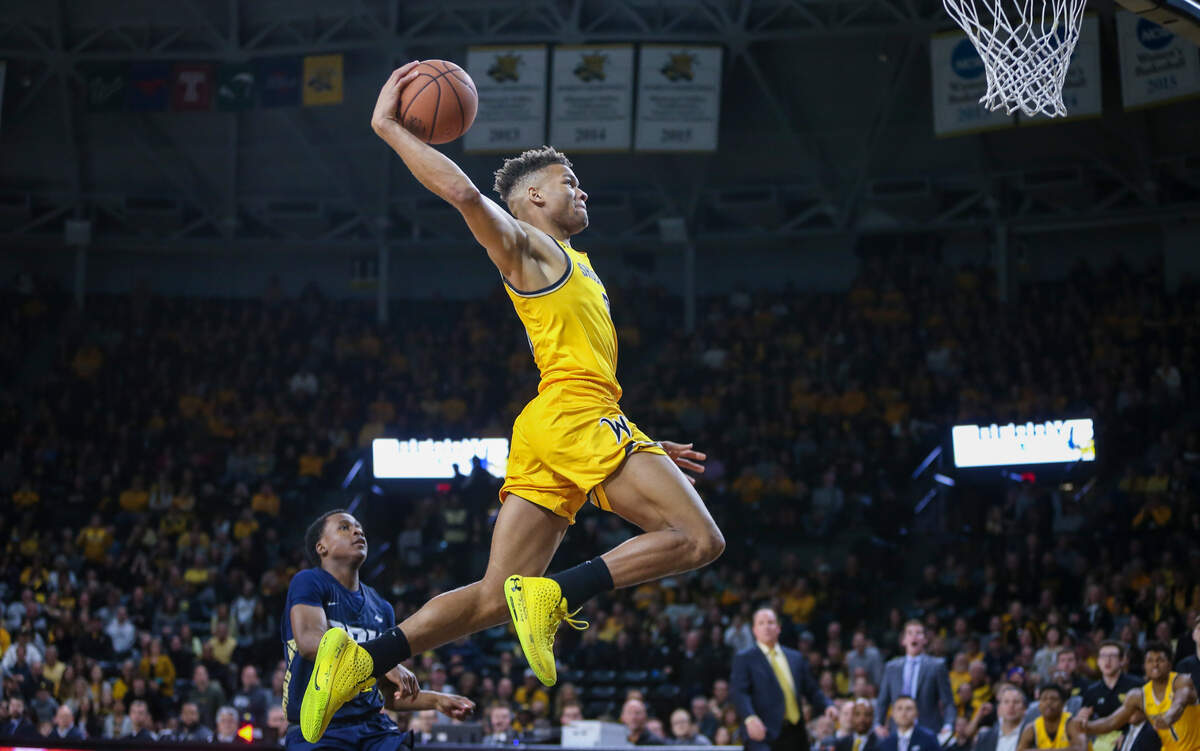
Nothing has led to sustained scoring success, a frustration that is very much alive inside of Dennis but an emotion he never lets spill over onto the other side of the ball. He bottles up the rage and takes it out on the shooting gun late at night and sometimes in late-night conversations with his father.
“It’s so frustrating because you know when you shoot, the shots should be falling,” Page Dennis said. “He’ll call me sometimes late at night in the gym and he’ll be shooting by himself. He works on it so much. But even when they’re not falling, he never takes a possession off on defense. I know it’s frustrating for him, but he’s such a team guy that he’s always going to give it his all to guard the best guy on the other team.”
He’s still in pursuit of that perfect game with the knowledge that he’ll never feel satisfied. It is his gift and his curse.
He is never content with his performance, even though he is the most-trusted player on the roster by the coaching staff and an indispensable part of the roster because of his defense.
That is why, near the conclusion of Year 4, Dennis still fights through every screen and lunges to contest every shot. He still feels like that hungry 19-year-old desperate to earn his respect.
“It’s just that constant cycle of trying to prove something,” Dennis said. “I know I’m probably never going to play the perfect game. I know I’m going to mess up and I hate that, but at the same time I love it because this game teaches you how to overcome challenges.”

‘I wouldn’t change anything about my story’
To the outside world, Dennis has carved his place as one of the best defensive players to come through Wichita State in program history. The Defensive Player of the Year award sealed that.
But to those inside the program, Dennis’ impact has been so much more than any statistic, award or accolade could capture.
He was thrust into a leadership role at a young age and he has become the heart and soul of the program. He has been the glue that has kept the teams from the past two seasons together through their own batch of adversity. He is the team leader who walks the line between being a jokester and being serious enough where players feel comfortable coming to and who coaches seek out advice from.
He was one of the first student-athletes at Wichita State to speak out about mental health. He was the lone basketball player on WSU’s Diversity and Inclusion Council. When a recruit visits campus, Dennis is almost always the host. He was one of the players camped out in the front row of the student section this past summer for AfterShocks games. No player loves to interact more with the fans, especially younger ones, than Dennis, who is always happy to chat on the sidelines after games and sign autographs.

And it’s because for as good of a basketball player as he has become, those who know him best will tell you he’s an even better person.
“I’m glad he stuck through it, all of the ups and the downs, because I know I wouldn’t be in this situation, having this opportunity to be the head coach at Wichita State if it wasn’t for Dexter Dennis,” Brown said. “He’s the leader in the locker room and on the floor. He’s just one of those guys that the other players look up to because of how hard he works in practice. That’s why you just want to root for a kid like that.”
Dennis knows the details of his career will fade. Fans will forget about his chase-down block in this game or that game where he shut down an all-conference player.
He hopes he has made a lasting impact.
“Honestly, I want to be known for being a great teammate, a role model and a great citizen,” Dennis said. “I want to be remembered as someone who gave 100% every time he stepped out on the floor, as a player who loved the game, loved the city of Wichita and loved the fans.”
Dennis’ four years in Wichita have coincided with four of the most eventful and turbulent years in recent program history.
As a freshman, Dennis helped WSU rally from a 1-6 start in conference to finish 10-8, make a run in the NIT and play in Madison Square Garden. As a sophomore, Dennis saw the Shockers falter after a 15-1 start, then recover enough to possibly reach the NCAA tournament — a fate that will never be known because COVID-19 abruptly ended the season.
And if living through a pandemic wasn’t enough, Dennis saw the coach he came to Wichita to play for resign a week before the start of his junior season amid abuse allegations. Dennis helped WSU navigate through an avalanche of adversity to pull off one of the most remarkable seasons in program history, winning the program’s first AAC championship with an interim coach.
And now, in his fourth year, Dennis has dealt with an entirely different level of adversity with WSU struggling to meet expectations with a 15-12 regular season.
Dennis hopes there is a special run left in the Shockers this weekend in Fort Worth. Regardless of what happens this week in Texas — he plans to sit down with his family after the season to decide if he will play a fifth season at WSU — he says he feels a great sense of pride in his time in Wichita.
“The last three or four years have been some of the rockiest times of my life, but also some of the best times of my life,” Dennis said. “Everything is not always pretty. During some of my worst times, you learn a lot about yourself and about the people around you and you learn about life. Life is not fair all the time. It’s not going to always go the way you want it to go. But I’m thankful for everything that’s happened to me and I wouldn’t change anything about my story. And my story is not finished. I still got some time to finish it.”
.jpg)