
Dad bowfishing with son breaks Kansas’ record for longnose gar. How big was it?
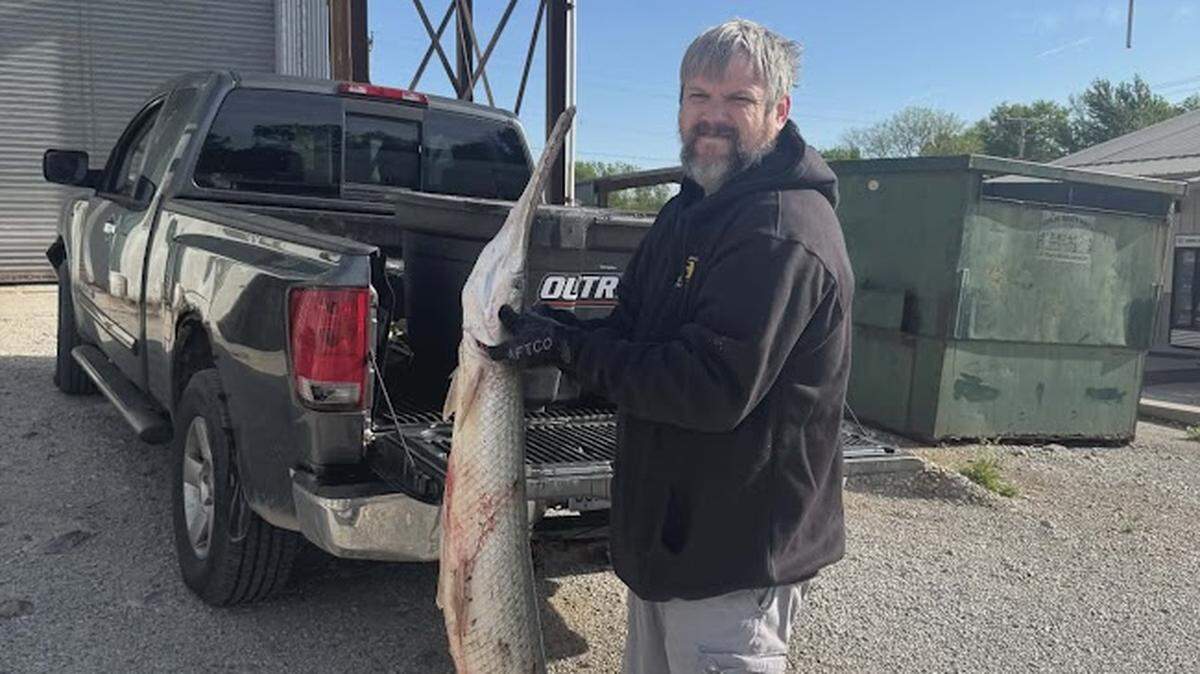
Michael Barnett was bowfishing with his son when he snagged a fish so big that he wasn’t sure one arrow would be enough to reel it in.
“When I saw it come out of the water, I knew it was big,” Barnett told the Kansas Department of Wildlife and Parks.
To be sure the big catch didn’t get away, the Baxter Springs man recalled having his son shoot it with a second arrow.
They would soon learn that this fish was about to break a state record for biggest longnose gar caught in Kansas, according to a May 29 news release. That record had stood for over 50 years.
How big was the longnose gar?
“We weighed it, looked up the state record, and realized it weighed a bit more,” Barnett, of Baxter Springs, told wildlife officials.
His fish — caught April 18 from the Spring River in southeast Kansas — weighed 33.6 pounds and measured 63 inches long.
The previous Kansas state record longnose gar weighed 31.5 pounds, caught by Ray Schroeder, of Topeka, in 1974 at Perry Reservoir. Schroeder had used a rod and reel, along with a yellow beetle lure.
“It’s not every day you get to verify a fish that breaks a state record that has stood for more than 50 years,” District Fisheries Biologist Connor Ossowskii said in the release. “This was an impressive fish and a great example of the opportunities anglers have in Kansas waters.”
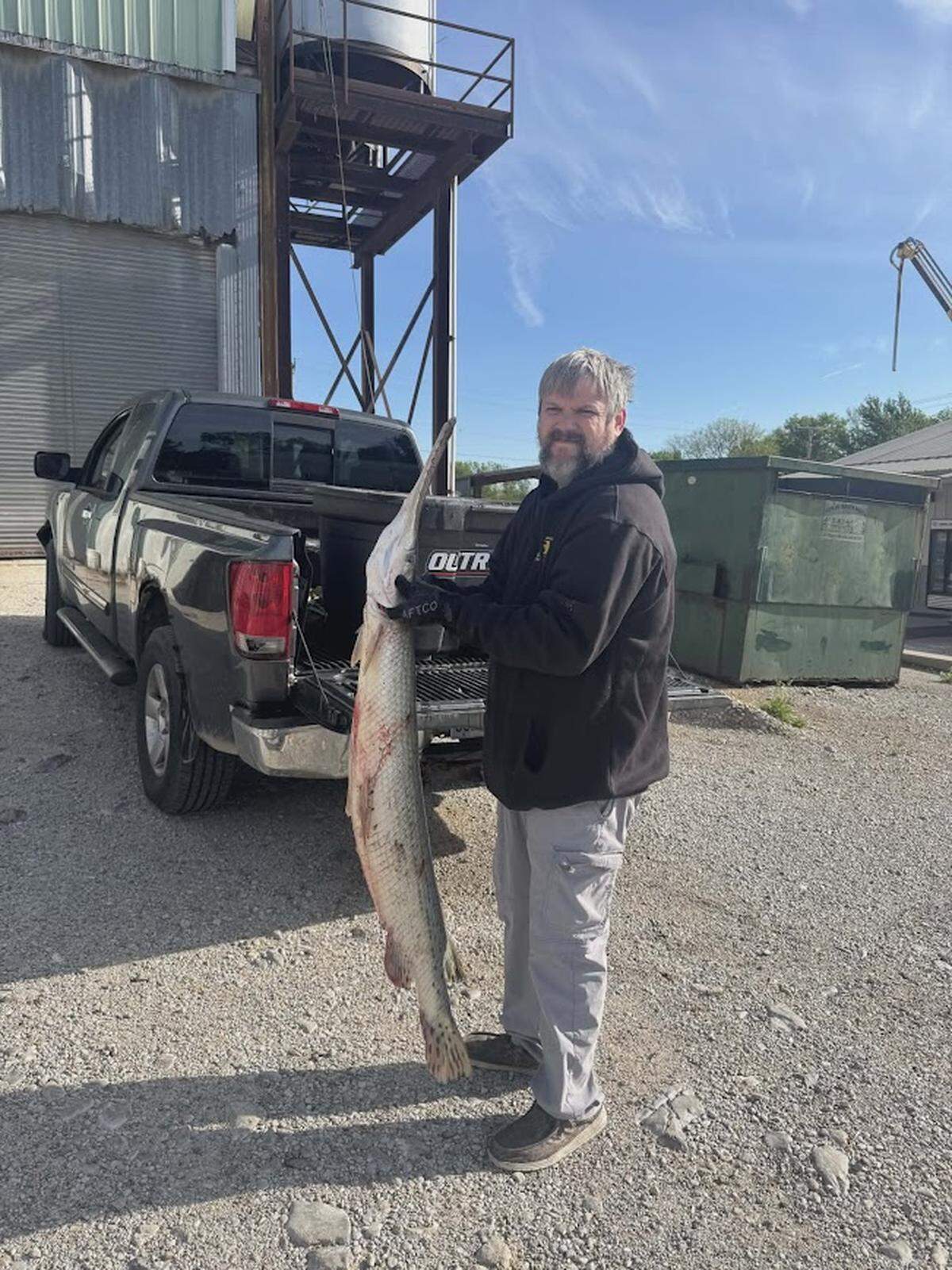
What is a longnose gar?
“Longnose gar are one of Kansas’ most unique native fish species, known for their long, narrow snouts filled with sharp teeth,” state wildlife officials said. “While gar can grow large in Kansas waters, fish of this size are rarely seen.”
They are usually found in quiet fresh water, including lakes, streams and large creeks, according to the U.S. Fish and Wildlife Service. They eat other fish and small crustaceans.
How are state fish records set?
In Kansas, all potential state record fish must have been legally caught by a licensed angler. The catch must then be identified by a KDWP district fisheries biologist or regional fisheries supervisor.
The catch must be weighed on a certified scale before being frozen, and it must have been photographed in color.
If the fish meets the criteria, a state record application should be submitted. The angler must then wait the mandatory 30-day waiting period.
Only some species are recognized on the list of Kansas state record fish. For a complete list, visit ksoutdoors.gov/record-fish.