
The top 5 state parks to explore in Kansas, according to AllTrails
With 28 state parks to explore in Kansas, there is no shortage of places to get outside and hike, camp, fish or relax.
A few of Kansas’ state parks have preserved natural areas, many have trails for hikers, bikers or horseback riders and most offer camping and reservoirs, according to the Kansas Department of Wildlife and Parks, which manages all but two of the state parks.
But how do you choose which of the Sunflower State’s parks to wander next?
You might be looking for the closest state parks — from Wichita, that’d be Cheney State Park or El Dorado State Park, both a short drive away. From other parts of the state, you can visit this map of Kansas state parks.
Or, you might be looking for the top-rated state parks.
Kansas state parks have nearly 75,000 user reviews as of May 20 on popular hiking and outdoor recreation app AllTrails, which ranked the top parks in Kansas. Here’s a look at the top five.
What are the top state parks in Kansas?
1. Kanopolis State Park
Kansas’ No. 1 state park, according to AllTrails, is Kanopolis State Park near Marquette, about 90 miles northwest of Wichita.
Kanopolis State Park is actually the first state park in Kansas and offers over 30 miles of open trails, including 15 miles in the Smoky Hill Wildlife Area. The park also includes a 3,500-acre lake and 12,500-acre wildlife area.
“From the towering Dakota sandstone bluffs to the caves and crevices of Horsethief Canyon, the park and surrounding area offer rugged beauty and stunning vistas,” according to the Kansas Department of Wildlife and Parks.
2. Clinton State Park
Next up is Clinton State Park, located just west of Lawrence and about 160 miles northeast of Wichita.
The park’s offerings include 25 miles of hiking and biking trails, a disc golf course, a swimming beach and a children’s fishing pond.
Visitors can reserve campsites, rent kayaks and enjoy a mountain bike skills course all within the state park.
3. Little Jerusalem Badlands State Park
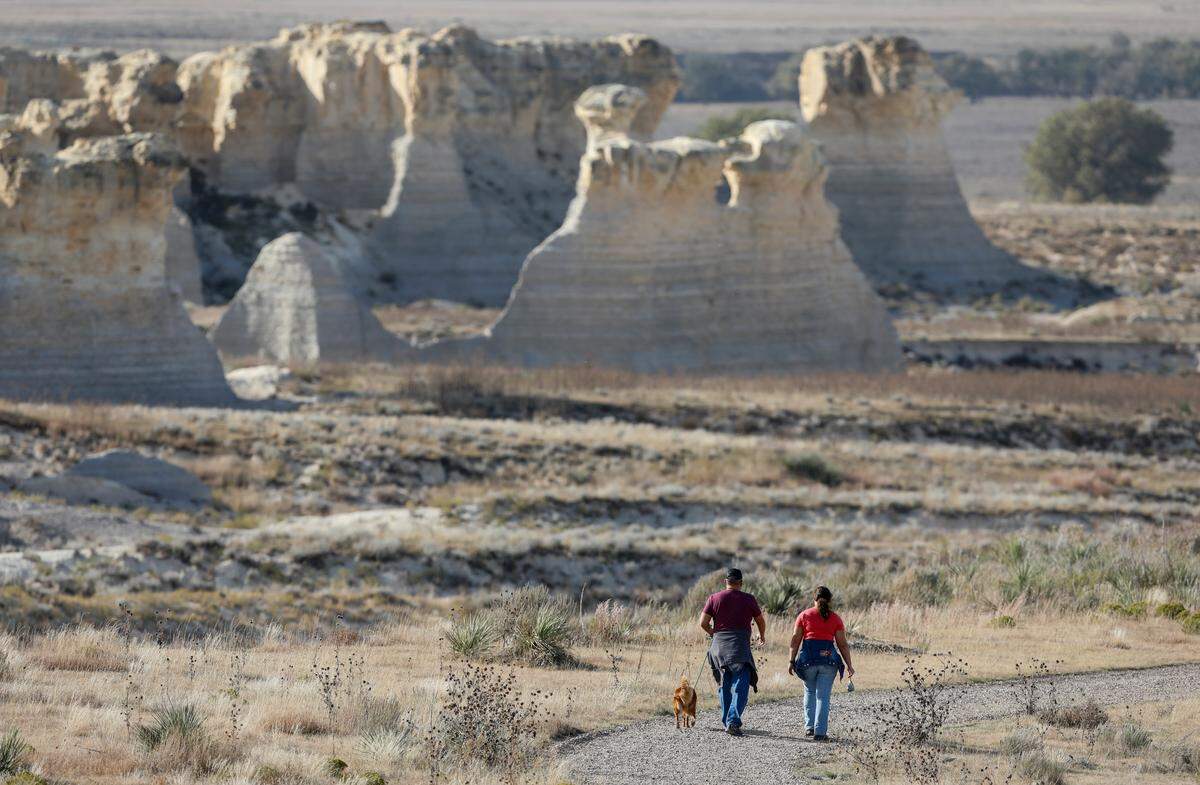
AllTrails ranked Little Jerusalem Badlands State Park as the third top state park in Kansas, which first opened to visitors in 2019. The 332-acre park, about 265 miles northwest of Wichita, includes 220 acres of fragile and “ruggedly spectacular geologic formations.”
“Little Jerusalem Badlands State Park showcases a mile-long stretch of 100-foot-tall spires and cliffs of eroded Niobrara Chalk, a layer of rock deposited about 85 million years ago,” according to state park officials. “Niobrara Chalk was formed by sediment that settled at the bottom of an inland ocean called the Western Interior Seaway which covered most of central North America roughly 140 to 70 million years ago.
“The sediment became compressed over time, and the seaway floor was lifted by the same tectonic shifting that formed the Rocky Mountains.”
4. Kaw River State Park
Kaw River State Park — just outside of Topeka, about a 140-mile drive from Wichita — is the fourth top park in Kansas, according to AllTrails.
“Forested trails and access to the Kansas (Kaw) River sets Kaw River State Park apart from other state parks,” state park officials said. “Hiking and mountain-biking trails wind through an extensive oak-hickory forest on steep slopes with good views.”
Also special to Kaw River State Park, this is the only state park in Kansas that guests can visit for free.
5. Elk City State Park
Rounding out the top five is Elk City State Park, just north of Independence and about 120 miles southeast of Wichita.
“Dense oak and hickory woodlands meet rolling meadows of big bluestem and Indian grass at this striking 857-acre park,” state park officials said.
Here, you’ll find open prairie, wooded hills and limestone bluffs — along with nature trails, hiking trails and a mountain bike trail.
How much does it cost to visit a Kansas state park?
The daily vehicle entrance fee for a Kansas state park is $5, with a discounted rate available for seniors and people with disabilities.
The state also sells annual vehicle permits for $25, or $13.75 for seniors and people with disabilities.
For more information on rates and camping fees, visit Kansas Department of Wildlife and Parks.
This story was originally published May 20, 2026 at 12:16 PM.