
Wichita officials poised to OK about $100M in property tax breaks for Boeing, others
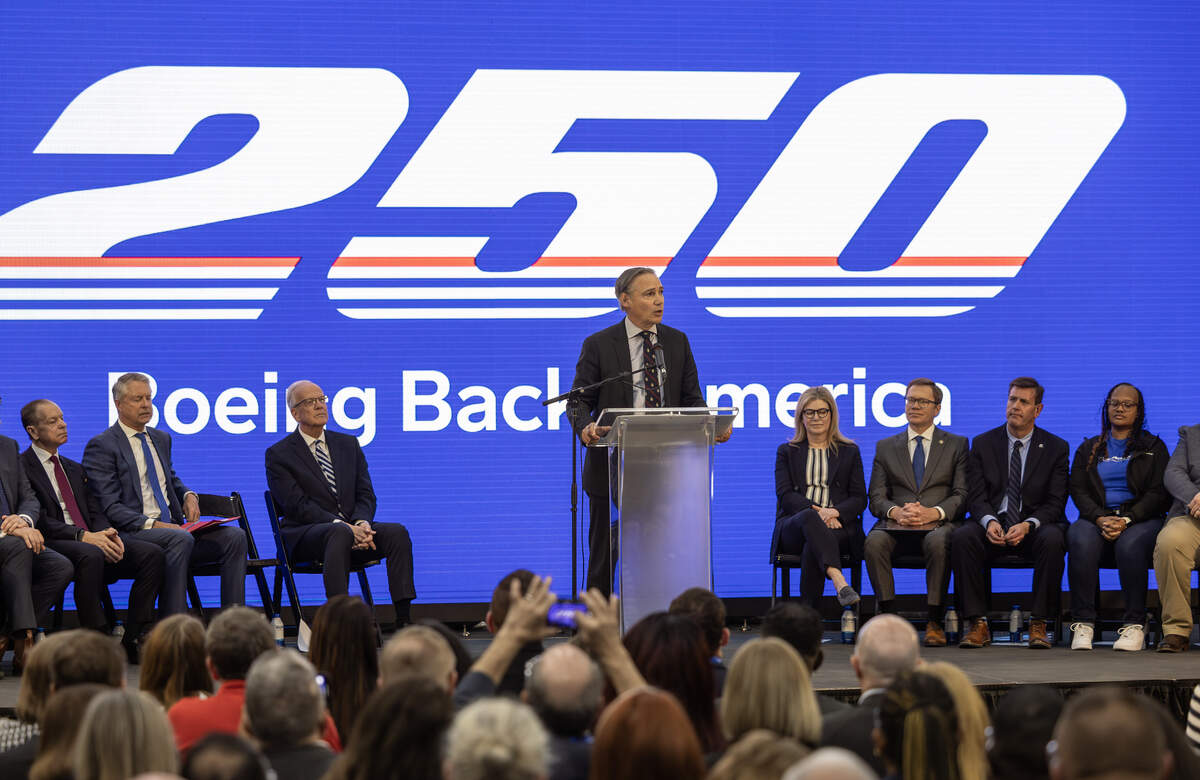
Wichita-area officials are poised to approve around $100 million in corporate property tax breaks — mostly to Boeing Wichita — this week.
The decision comes as local governments wrestle with how to balance increasing costs to provide government services and skyrocketing residential property valuations. There’s also the need to compete with other cities willing to offer similar tax breaks to lure away large companies.
“Wichita is experiencing momentum we haven’t seen in decades,” Wichita Mayor Lily Wu said. “Our city is finally back on the map, attracting investment, jobs, and growth. We should be careful not to jeopardize that momentum.”
If approved, Boeing Wichita — formerly Spirit Aerosystems, the metropolitan area’s largest employer with a massive business campus in south Wichita — would pay nothing in Sedgwick County property taxes for the next 10 years. That’s more than $50 million in forgone property tax revenue for the county, according to the city’s estimates. Boeing would also receive tax breaks worth more than $40 million over 10 years in property taxes that otherwise would have gone to Derby Public Schools. Those annual tax abatements are likely to increase when the capital projects are complete, as the value of the property increases.
Air Capital Flight Line, located on the Boeing campus and leased to Wichita State’s National Institute for Aviation Research, would also receive a 100% property tax abatement, worth $111,343 a year for 10 years and $271,185 in total sales tax exemptions.
Boeing and Air Capital Flight Line are exempt from paying city property taxes as part of an agreement that has been in place for decades and was last approved in 2021.
McAsey Investments, which leases space to local aerospace and defense manufacturer Wichita Machine Products, would receive a 90% property tax abatement, worth more than $43,000 a year. It would also get more than $80,000 in sales tax exemptions.
The City Council will vote on the addition tax abatements on Tuesday and the County Commission will follow suit on Wednesday. Under state law, the Derby School Board does not get a say in whether to approve the tax exemptions but the city of Wichita does because it’s issuing the bonds.
Neither group of elected officials discussed the incentives at their agenda reviews on Friday. Several council members did not respond to questions for this story on Friday. Commission Chairman Jeff Blubaugh signaled his general support for the proposal, and Commissioner Ryan Baty said he has questions. Other commissioners did not respond.
“I am excited that Boeing has decided to re-enter our market and commit to making such a large investment,” Blubaugh said. “I look forward to studying this project in its entirety and will do my due diligence, as always.”
Blubaugh said property taxes will be top of mind while making his decision on the incentives.
“In regards to property taxes, we need more residential housing built in Sedgwick County, if this project provides more jobs both direct and indirect, which would result in a broader tax base, I would make that my top consideration. The return on investment is extremely important to me. And I will rely on the experts to provide that to us.”
Baty, who has spent his first term in office lobbying for property tax reform at the local level to offer relief for homeowners, said he has not decided whether to support the new tax breaks.
“Decisions of this magnitude deserve public discussion and a presentation from Boeing to the County Commission,” Baty said in an email response to questions. “I have a lot of questions pertaining to benefit vs. cost for our taxpayers, the county budget impact, and the level of commitment being made by Boeing in exchange for incentives,” he said. “We deeply appreciate our partnership with Boeing and the investments they make into our workforce and local economy, but I am withholding judgment until my questions have more clarity and while we await a final decision from the City of Wichita.”
‘A one-sided love affair’?
Chase Billingham, an associate professor of sociology at Wichita State University, has closely monitored the city’s incentives deals with businesses and their impact on the region. It’s a major focus of his recent book — “All-American City: Bluster, Boom, and Bust in Wichita” — where he writes that the relationship between local government and businesses such as Boeing have increasingly become “a one-sided love affair” that ultimately benefits businesses at the expense of residential taxpayers.
“Economic development is a very tricky thing,” he said in a phone interview, “and you need to strike a balance in terms of wanting to appeal to companies that are going to provide employment and other benefits to your community while also not giving away the store and undermining the fiscal stability of your community in order to do it.”
Proponents of corporate tax breaks often point to the downstream effects, saying they result in a net positive for local and state tax rolls because they create jobs and expand the tax base.
But Boeing’s newest incentives package includes no jobs requirements. That’s a departure from the city’s last round of industrial revenue bonds, or IRBs, for Spirit Aerosystems in 2016. Spirit promised to create 349 jobs in five years, bringing employment to 11,049 by 2021. It fell more than 2,200 jobs short, but the city extended the tax break anyway. Boeing bought Spirit for $4.7 billion last December, two decades after it left Wichita.
As of Feb. 17, Boeing Wichita employed approximately 12,730 people in Sedgwick County, according to the city’s letter of intent to issue the IRBs. The massive aerospace company estimates it may hire 150 new employees over the next 5 years.
“However, the Tenant (Boeing Wichita) cannot make guarantees in that regard as it is dependent on many factors not within the Tenant’s control, including general economic conditions and the overall demand for aircraft,” the city’s draft IRB letter of intent says.
Boeing did not respond to questions on Friday. Last month, company officials announced they planned to invest $1 billion in Wichita over the next three years to upgrade facilities, improve production systems and expand employee training.
Wu, Wichita’s mayor, emphasized the importance of the aviation industry for Wichita’s economy. But she said she understands concerns about the tax breaks.
“I understand why residents have concerns anytime large incentive packages are proposed, especially when property tax relief remains important to homeowners,” she said in a written statement. “Those concerns are valid and deserve transparency, accountability, and serious scrutiny from local government.”
Wu said it’s important to make a distinction between the aviation-related incentives and other projects the council has approved in the recent past.
“This is NOT another baseball stadium or speculative development project,” Wu said in the statement. “Aerospace is the foundation of Wichita’s economy and identity. Boeing jobs support thousands of additional jobs across our community and region, and growing our economic base ultimately strengthens the city’s long-term financial future.”
Under the proposed agreements, the city of Wichita would issue $450,000 in industrial revenue bonds to Boeing Wichita, $5 million to Air Capital Flight Line and $2 million to McAsey Investments.
IRBs are municipal debt securities issued by government agencies on behalf of private companies to fund capital investments such as manufacturing facilities and equipment. On top of the tax breaks, they’re attractive to companies because they offer cheaper borrowing costs compared to private financing. The government issuers are not responsible for repayment and simply act as a pass through between private investors and the company.
The city’s agenda report estimates the return on investment would be an additional $1.63 in tax revenue for every $1 in tax breaks for Sedgwick County over 10 years and an additional $3.89 in tax revenue for every $1 in tax breaks for Derby schools. The city does not include any supporting data for those estimates and Kansas open records exemptions shield against disclosure of the secret formula used to calculate it.
City Council member Joseph Shepard said he is undecided on Tuesday’s incentives deal. He said he will make his decision based on whether “the public’s investment produces a measurable return for taxpayers.”
“I also understand the concerns raised regarding forgone tax revenue and the effect on local governments, schools, and taxpayers,” Shepard said. “Those considerations deserve serious consideration as we look at how our education systems have been underfunded. As an elected official, I feel I have a responsibility to ensure that any incentive package is transparent, justified, and structured to deliver meaningful public value.”
Property tax burden on homeowners
In the Wichita area, homeowners pay more than 60% of property taxes while businesses pay less than 40%, according to data provided by Sedgwick County. And although property tax relief is available on a small scale for some homeowners, much larger tax breaks are awarded to companies on a near-weekly basis.
The full scope of corporate tax breaks, and its effect on homeowners and renters, in the Wichita area has not been tracked.
But Good Jobs First, a nonpartisan, nonprofit policy resource center that tracks economic development subsidies and corporate misconduct, has been tracking some of the more common business tax abatement programs such as industrial revenue bonds, economic development exemptions and community improvement districts.
That organization’s tracker shows Wichita, Sedgwick County and Wichita Public Schools have lost more than $159 million combined to corporate tax abatements in the past decade. The tracker does not include downstream taxes generated by employees or other potential community gains that are hard to measure accurately.
It also does not include other incentives programs such as tax increment finance, which the city uses frequently, or one of the largest corporate property tax breaks in Kansas history — a 2006 law backed by Democratic Gov. Kathleen Sebelius that exempted businesses from paying property taxes on industrial machinery and equipment, which had previously been assessed at 25% of its appraised value, like other commercial property.
Wu voiced support for property tax relief for residents.
“I remain committed to responsible budgeting and property tax relief for residents,” Wu said. “Last year, the Council lowered the mill levy, and I believe we must continue finding ways to reduce the burden on taxpayers while also protecting and growing the industries that drive Wichita’s economy.”
Shepard also suggested property tax relief and corporate tax breaks can co-exist.
“With respect to property tax relief for homeowners, I do not view economic development and property tax relief as mutually exclusive goals,” Shepard said.
Billingham said the pending tax breaks for businesses are nothing new for Wichita. He said they fit into a much larger recent trend — from a failed sales tax initiative that would have granted substantial property tax breaks for commercial property owners at the expense of consumers to the city’s plans to stand up a special taxing district on Tuesday to fund renovations at a restaurant.
“All of these things combined, what they reflect is an attempt to shift the burden for paying for the upkeep of our community away from the corporate sector and on to cash-strapped individual consumers,” Billingham said.