
Voters overwhelmingly reject sales tax. March election ‘a mistake,’ Mayor Wu says
Wichita voters overwhelmingly rejected a 1% sales tax by nearly 82% of the vote on Tuesday.
“It means taxpayers don’t trust our elected officials to have their best interests,” Vote No organizer Celeste Racette said. “That means city council and the mayor need to chart a new path where they’re demonstrating accountability, transparency and trust with how they’re spending our money.”
Jon Rolph with Wichita Forward, who advocated for the sales tax, shared the same sentiments.
“We knew that was an issue when we’re asking people to trust the local government,” Rolph said. “I don’t think this means that the city doesn’t want to move forward. I don’t think... it doesn’t mean that they think these are priorities that we need to solve for, but now we need to sit back, get creative, we know this solution is off the table, and try and figure out what to do next.”
The sales tax had been pitched to generate an estimated $850 million over seven years to fund numerous projects, including convention center upgrades, public safety capital improvement projects, homeless and housing programs and property tax relief.
Nearly 20% of Wichita voters showed up for the special election, exceeding the turnout from last year’s city and school general election. Just over 41,000 votes were cast opposing the sales tax, while 9,143 votes were cast in favor of it.
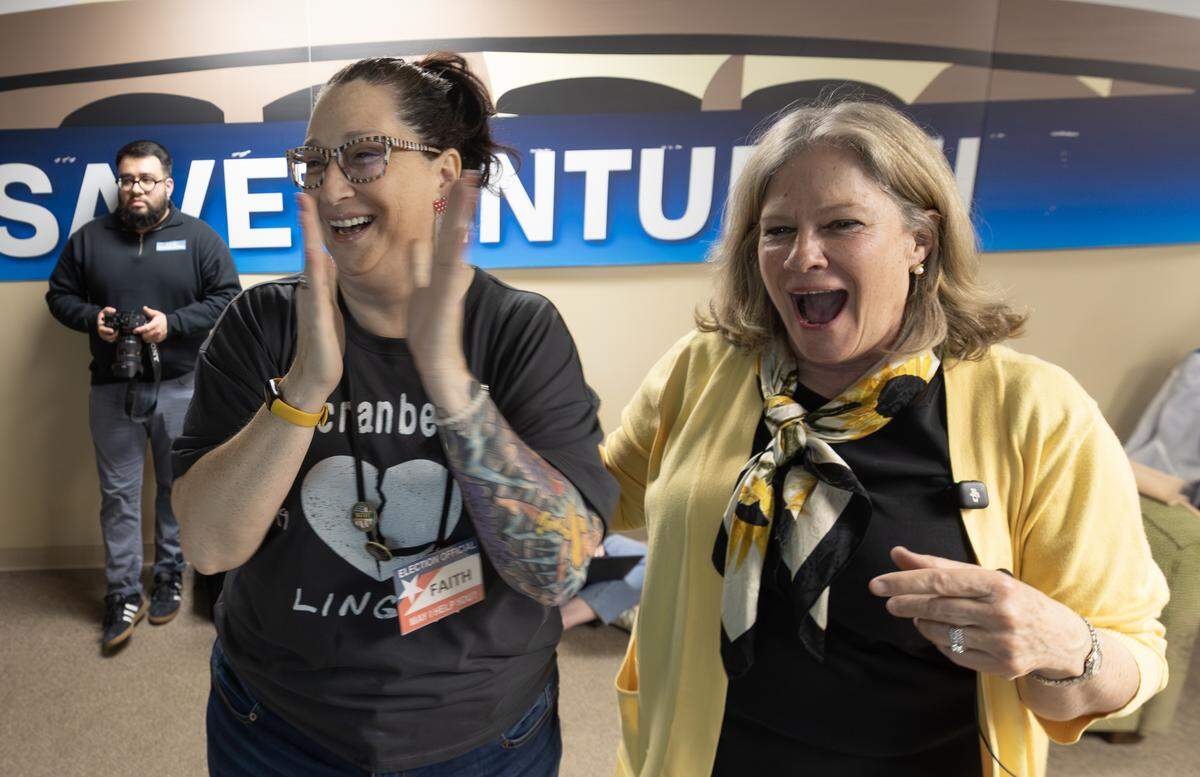
Organizers with the Vote No campaign said the tax was too rushed and too vague.
Some who opposed the tax had asked the City Council to delay the vote until a regular election in the fall. Wichita Forward made the proposal in November and the council voted in mid-December to put it on the March ballot. The city spent $170,000 to put the sales tax question on the March ballot.
Wichita Mayor Lily Wu, in a Facebook post, called the March sales tax election “a mistake” as voters were defeating the measure.
In a call, she said that’s why she worked to postpone the election until August and then to put guardrails in place on how potential sales tax money would be spent. But she said she still could sense the community lacked trust over the ballot measure.
“If I could take back one vote, it would be that vote in December,” she said. “The lesson learned here is we were asking for trust from this community, and we still need to restore that trust, to build that trust.
“We need to reflect on trust, on transparencies and on priorities.”
Wichita Forward faced several issues during the campaign, including sending out a mailer that had incorrect information on mail-in ballots and polling hours.
Rolph said it was too early to know what’s next for Wichita Forward, or if there will be another sales tax vote in the future.
“We have high belief in the city and what it can be,” he said, “and we just have a desire to give back and to really try and help it be all that it can be and we’ll try and find ways to continue to work with people and do that.”
Racette suggested after results came in that voters should be able to vote on each section of the sales tax initiative.
“There’s nothing wrong with putting them on the ballot,” she said, “but split them out so that they’re not all together. Give us blueprints, site plans, overhead costs, utility costs, so that taxpayers know where their money is going to go, and they can see that the money is being spent as they voted on for that particular initiative. It’s really just being accountable and transparent.”
Council member J.V. Johnston, who recently spoke to The Eagle for a story on trust and how it seems to be lost in Wichita, said that was the issue of the election.
Johnston said it’s time for the council to start rebuilding trust with the community through town halls and other forms of communication, and then it can learn what people want for Wichita.
“Are people happy with the status quo? If they are, fine.”
From what she’s heard, Wu said, the public is interested in core government functions, such as water, streets and sewer services.
“The proposal included initiatives our community has discussed for decades,” Wu said in the post. “But it was big, broad, and fast. It asked for a level of trust many Wichitans were not ready to extend. And we must take that lesson seriously.”
Council member Dalton Glasscock said it’s easy to litigate the past, but he said now is not the time for that.
“We need to figure out a process to move forward,” he said. “The challenges still exist, regardless of today’s vote.”
Council member Joseph Shepard agreed trust is the issue in Wichita.
"We have work to do," he said "It is so clear that people are hurt and that trusts with our institutions are at an all-time low, and that’s on us."
Shepard said he would like to request something of the community as well.
"Temperatures were very, very high," he said of the campaign over the vote. He said he'd like to see the temperature come down as a community so people can engage, learn and move forward.
"What we do know is there are pressing needs in our city."
This story was originally published March 3, 2026 at 7:22 PM.