
Wichita disregards internal report on critical gaps in fire stations and staffing
Wichita does not have enough fire stations or firefighters to meet national standards for fire protection in wide swaths of the city. Officials knew about the problems for years but failed to address them, a Wichita Eagle investigation has found.
The fire department misses the national standard four-minute response time on nearly half of its calls. There are entire neighborhoods — 37% of the city’s geographic area — that are impossible to reach within that time. And in some places there’s a one-in-three chance that the nearest fire station won’t have a truck or engine available to respond when a resident calls 911.
Why is response time important?
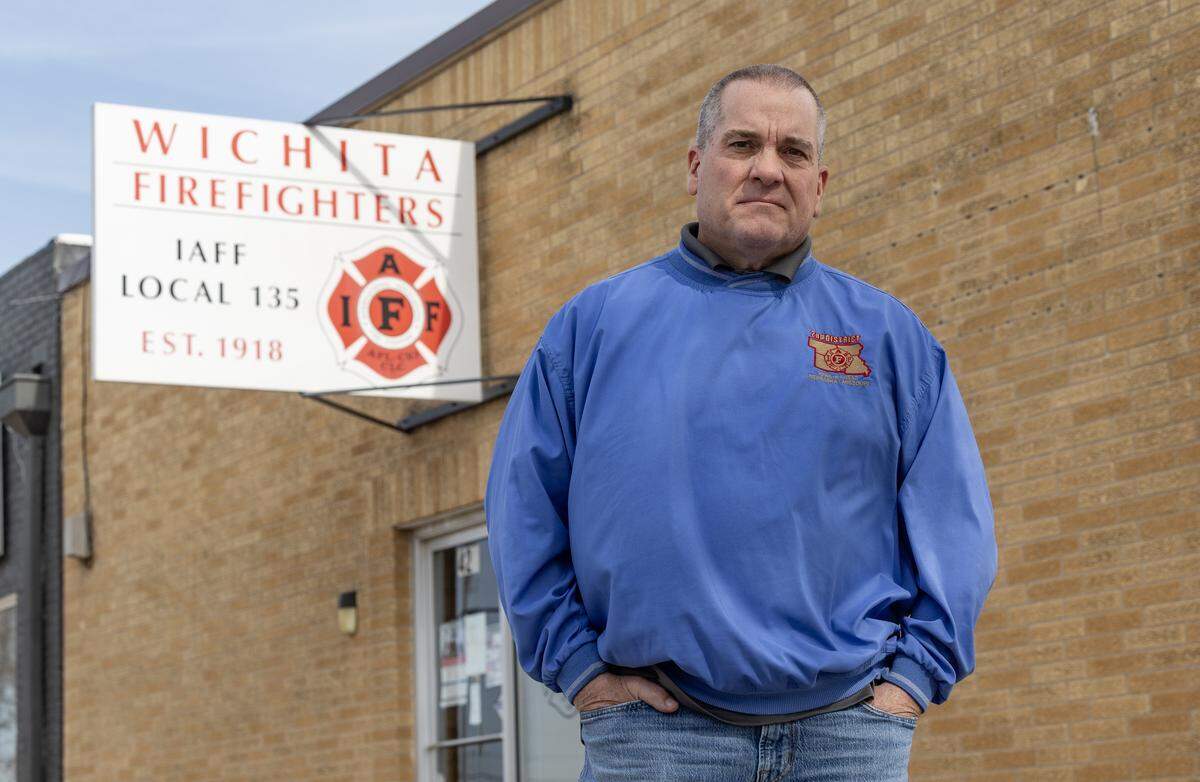
Ted Bush, retired Wichita firefighter and president of the Wichita Firefighters Union, summed it up recently at a town hall meeting: “After four minutes, a room and contents is not a room and contents anymore. A fire doubles every minute when you’re not there. That’s why it’s so important for us to get there. If a person is stuck in a house fire, and you’re out front in your front yard, trust me, every minute is an eternity when you’re watching your life burn up because we can’t get there.”
A Wichita Eagle investigation into fire responses in the state’s largest city found that City Hall has been documenting — sometimes secretly — a growing crisis in its fire protection capabilities and planning to fix it for more than a quarter-century.
But city leaders failed to follow through, leading to diminished response times, geographically exposed neighborhoods and a cycle of planning that outpaces execution.
Those exposed neighborhoods, which have been identified by the city but not addressed, have a higher concentration of property damage, fire-related injuries and death, The Eagle found. The city’s own internal report acknowledges the service gaps directly affect outcomes in three critical areas: civilian injury and death, firefighter injury and death, and property loss. But the city refuses to release the report.
A plan to use a portion of a proposed 1% sales tax — on the ballot March 3 — to boost fire department projects falls well short of the funding the department needs to address its significant service gaps. In fact, the City Council’s newly adopted guardrails would likely slow progress on building new stations and staffing them, as they prioritize maintenance on existing fire stations and prevent using any of the sales tax dollars to hire more firefighters or to pay their salaries.
“What we have seen throughout the years is that the commitment from the city has not matched the commitment from the firefighters, at all,” said Bush, an advocate for the sales tax who acknowledges it doesn’t address all the department’s needs.
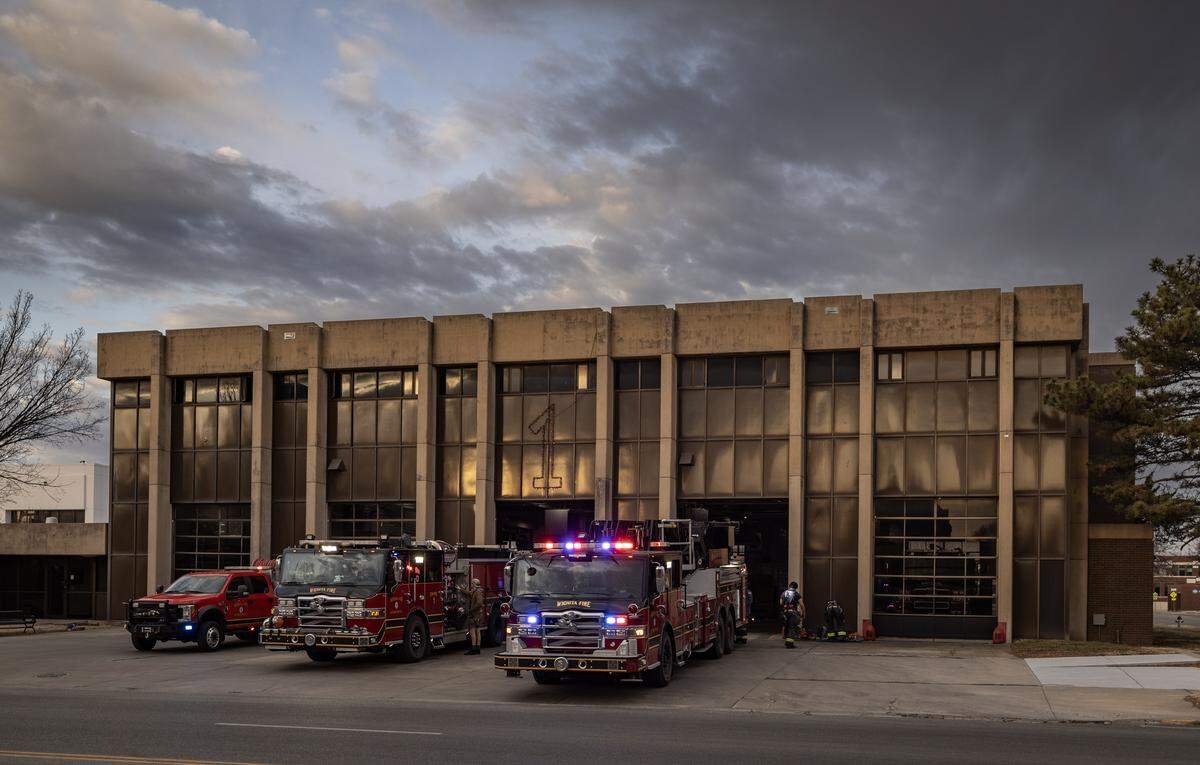
Wichita has 22 fire stations, and the city hasn’t built a new one since 2009. Likewise, firefighter staffing has not kept pace: The number of alarms grew nearly nine times faster than fire department staffing from 2010 to 2021.
Meanwhile, city officials kept the full extent of the city’s fire risks out of public view for at least the past four years, denying requests for a 2022 internal report that laid bare the city’s inadequate fire safety.
Even City Council members say they haven’t seen the complete report, preventing them from fully understanding and addressing the challenges.
The Wichita Eagle obtained a copy of the report from an anonymous source and independently verified its authenticity through multiple sources who are familiar with its contents.
The report — Wichita Fire Department Staffing, Station, and Deployment Analysis — was written by Wichita Fire Department leaders, including Chief Elizabeth Snow, to lay out dozens of short-term and long-term policy recommendations for city policymakers aimed at protecting the public:
- Hire 115 firefighters as soon as possible to adequately staff engines and trucks to comply with national standards
- Build 11 new stations, so firefighters can reach emergency calls within 4 minutes
- Move four existing stations
- Bolster the department’s administrative staff. Hire eight additional training and recruiting staff and seven continuing education and certification specialists
- Hire more firefighters as new stations are built, in addition to the 115 needed to staff existing stations
None of those recommendations have been fully implemented in the four years since the report.
City spokesperson Megan Lovely acknowledged in an email statement Thursday that the 2022 Staffing, Station, and Deployment Analysis was essentially discarded by City Hall leadership.
“The study you referenced was a draft document and was never finalized or operationalized,” Lovely wrote. “It was never used as a guide for staffing, station, or deployment analysis. Wichita Fire Department has for years instead relied on modern tools including CAD data, GIS and Levrum software to assist with making efficient decisions when considering appropriate staffing, station and deployment decisions.”
The 2022 report says that it was created using all of those tools, and more — including the National Fire Incident Reporting System, the National Fire Protection Administration’s Risk Assessment Tool & Vision 20/20 guide, Risk, Hazard and Value Evaluation (RHAVE) software, along with data from federal sources including the Census Bureau, Housing and Urban Development and Department of Transportation.
The Eagle requested an interview with Chief Snow but did not receive a response by Friday afternoon.
Response-time gaps
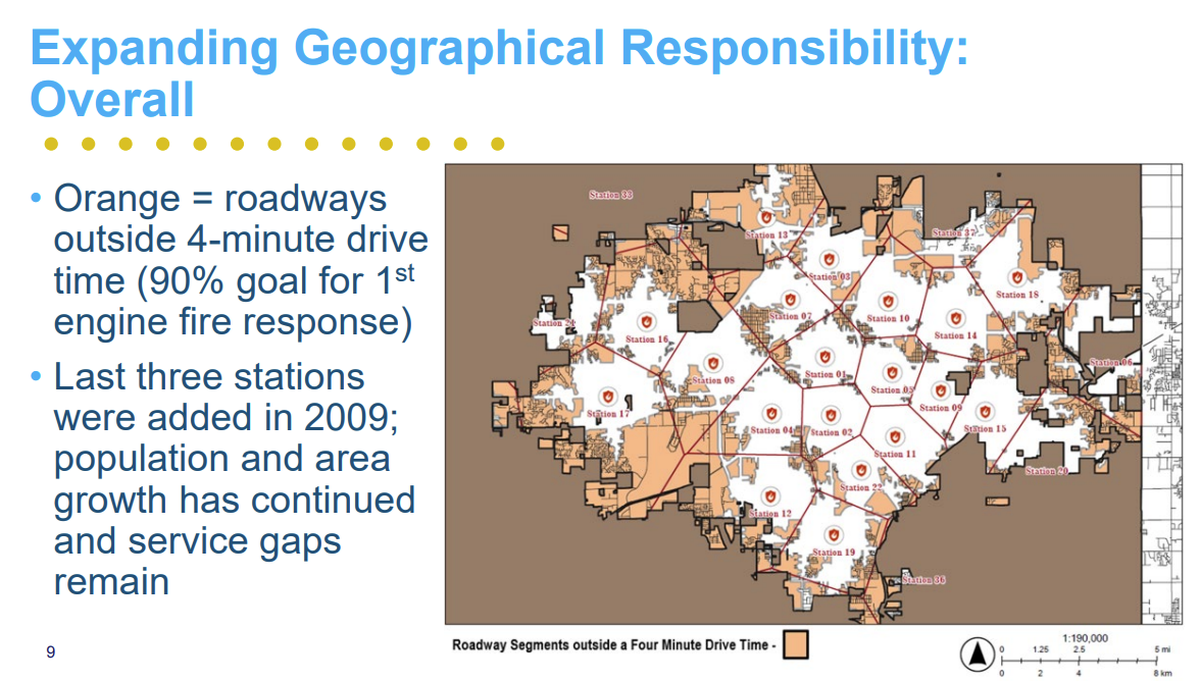
Based on fire station locations throughout the city, much of the Wichita is unreachable in 4 minutes.
Those response-time gaps include areas in the city’s core — South City, Indian Hills, Meadowview and Hilltop, to name a few — and areas near the expanding city limits.
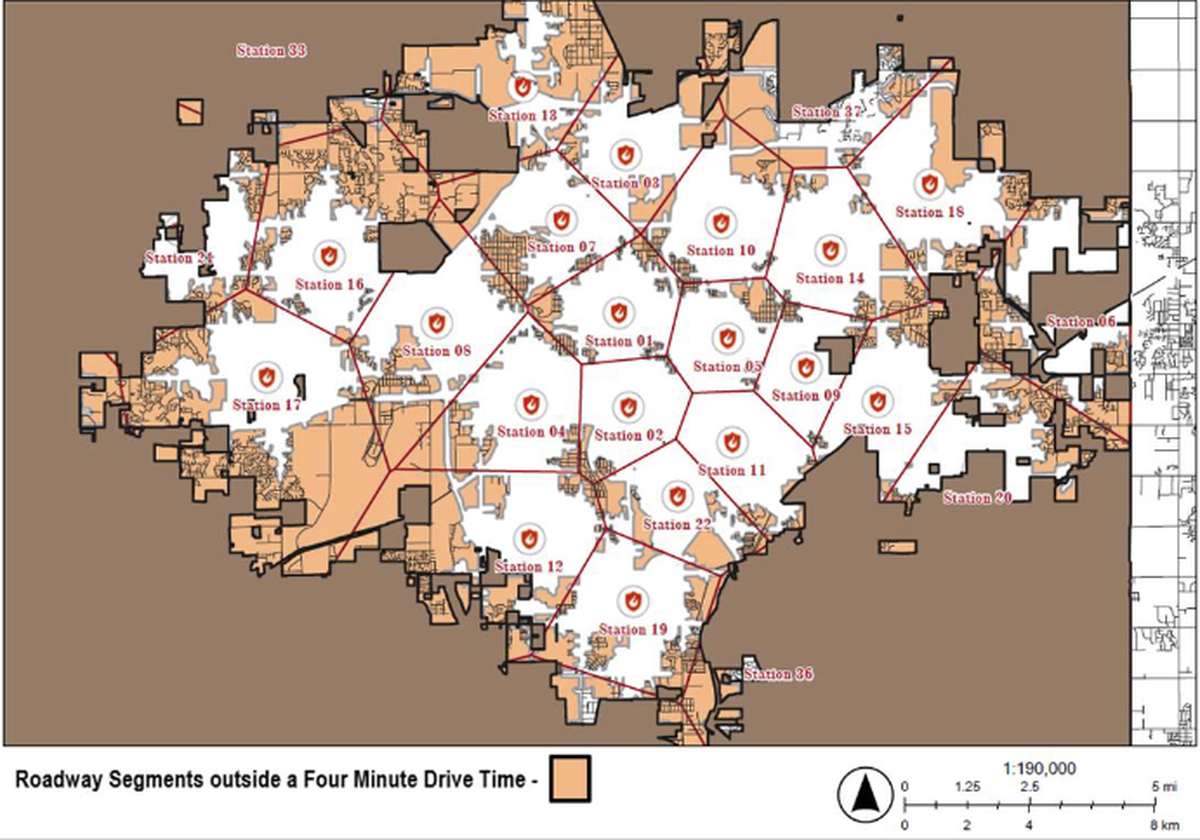
But a map of those areas fails to capture the full impact of the station shortage.
The lack of appropriate resources stresses the entire system, especially when more than one emergency happens at a time. That means as firefighters respond to one emergency call, it causes a ripple effect that degrades service across neighboring districts.
That leads to problems areas throughout the city when the Wichita Fire Department consistently shows up late to fire-related calls.
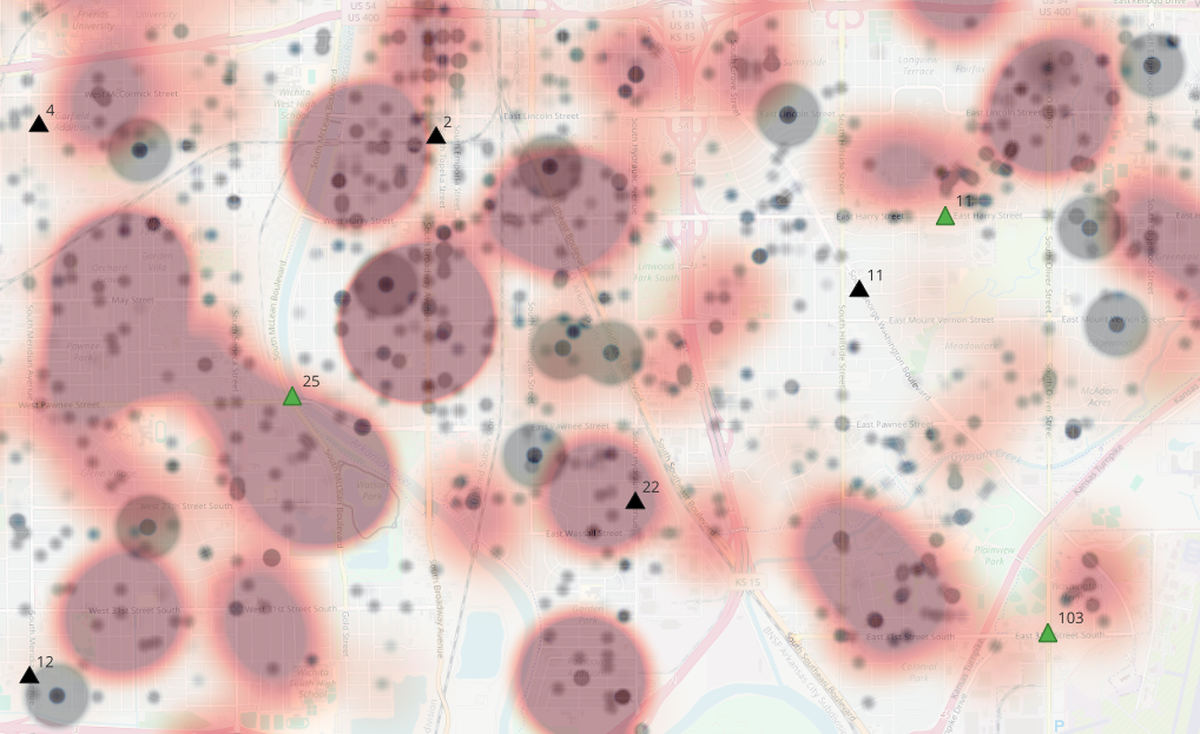
The Wichita Eagle collected 10 years of Wichita Fire Department response time data and created heatmaps to visualize the impacts across the city and how proposed new stations might address those problem areas.
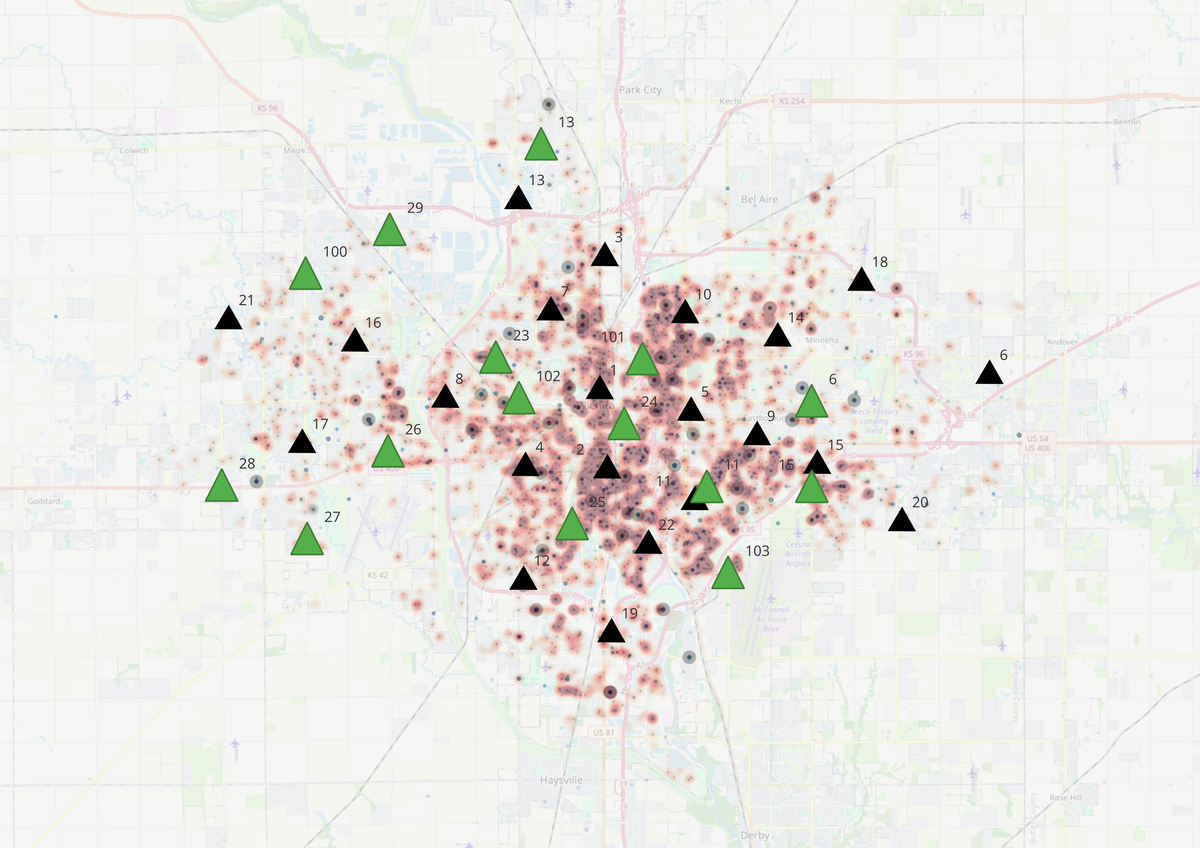
The Eagle’s analysis found that the highest concentrations of fire-related property loss, injuries and death in Wichita were within the areas where the department was most likely to show up late from 2015 to 2024. And they’re in areas where the 2022 report recommends building new stations.
For instance, the neighborhood east of I-135 to Oliver between generally between 17th and Murdock — in City Council District 1 — is situated between three fire stations: Station 10 at 21st and Hillside, Station 14 at 17th and Woodlawn and Station 5 at Second and Hillside. The area consistently sees slow responses on fire calls and has had dozens of injuries along with substantial property damage over the past 10 years.
Six of 43 fire-related civilian deaths during that time were in this problem area. The 2022 report calls for building a new station at 13th and Hydraulic to more quickly respond to those emergencies.
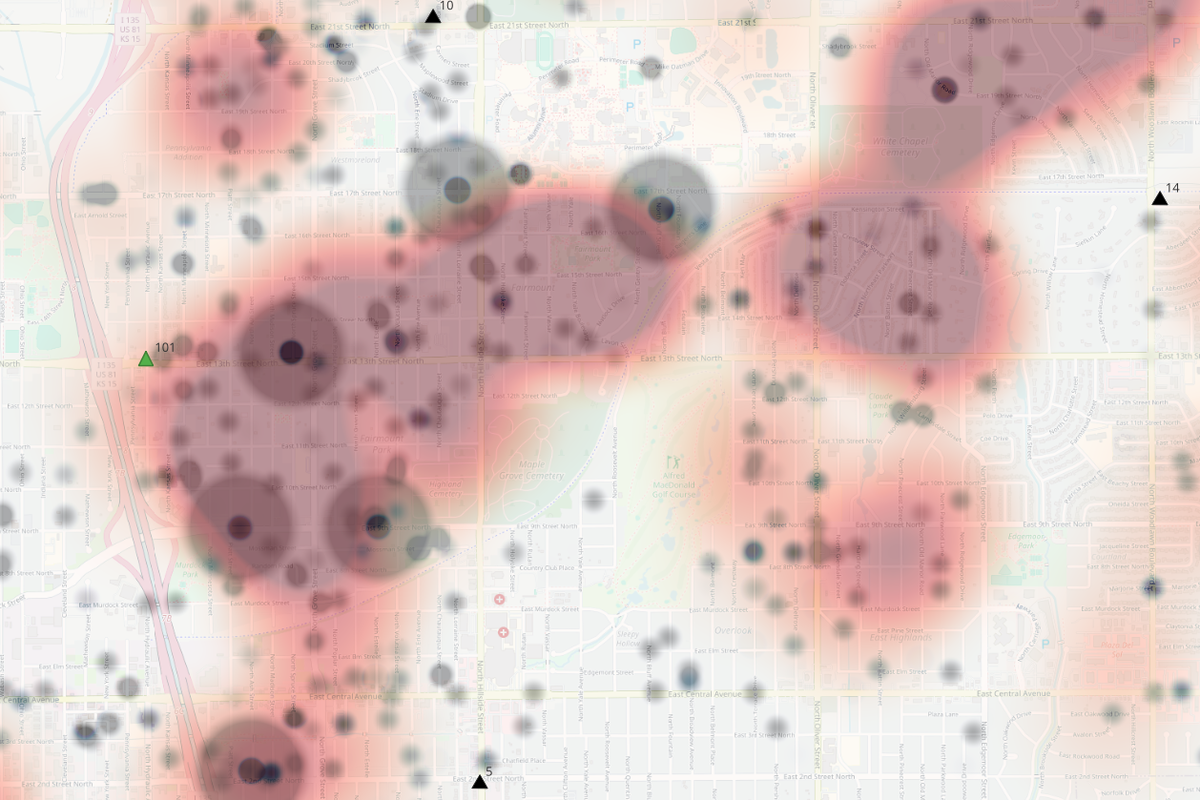
Pockets like that exist throughout Wichita, The Eagle found.
In northwest Wichita, the majority of injuries, major property loss and deaths have occurred in areas farther from existing fire stations. That includes neighborhoods near Central and Ridge and the Indian Hills neighborhood and parts of Delano.
The 2022 report recommends building stations at Maple and Ridge, Central and McLean and 13th and Sheridan to address these response time problems.
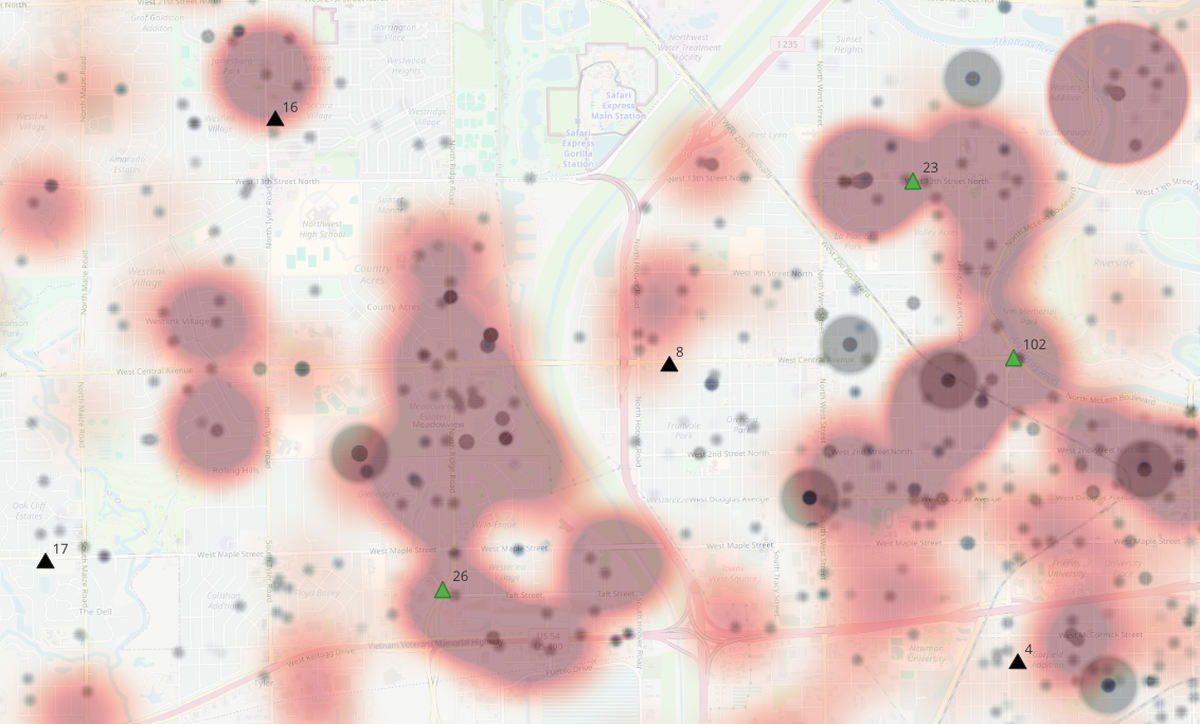
The area south of Kellogg from Meridian to Hillside has some of the highest population densities with response time problems. Nine fire-related deaths occurred in the area from 2015 to 2024 along with a high concentration of injuries and property damage.
The 2022 study calls for building two new stations in District 1 in north-central Wichita — one near 13th and Hydraulic and another near Douglas and Wabash — and potentially relocating Fire Station 14 to 13th and Woodlawn.
In District 2, in east Wichita, Station 6, near 13th and 143rd, would be moved closer to Central and Rock to address a 2.5-square-mile gap that can’t be reached by fire companies within 4 minutes. Station 15 would be moved from Lincoln and Rock to Harry and Rock to improve response times for high-density housing south and east of Kellogg.
District 3, in southeast Wichita, would get two new stations — one at 31st and Oliver on the campus of the Wichita Fire Department Regional Training Center and one at Pawnee and McLean — and another would be relocated from George Washington near Hillside to near Ascension Via Christi St. Joseph Hospital at Harry and Bluffview.
District 4, in southwest Wichita, would get three new stations — the one being built now at Pawnee and Maize, one at Eisenhower Airport Parkway and another at 135th and Kellogg.
District 5, in northwest Wichita, would get two new stations — one at 29th and Maize and another at 37th and Ridge.
District 6, in north-central and parts of northwest Wichita, would get two new stations — one at 13th and Sheridan and another at Central and McLean — and Station 13 would be relocated from 42nd to 53rd and Legion.
Hidden study
City Hall has actively blocked the public’s access to the 2022 study, and the City Council has declined to press the issue. When council members asked about it, they were told it’s not finished or given a completely different report.
Council members Mike Hoheisel and Maggie Ballard said they have seen portions that have informed their decisions to back several measures aimed at improving fire service, but they were not given the full report. Others have not seen even portions of the report.
“I understand the report is a draft and not a final report, thus I have not seen it,” council member JV Johnston said. “I hear a lot of issues raised in it have been addressed. The number of fire stations and firefighters is a department issue and I trust fire leadership decisions.”
The Wichita Firefighters Union - Local 135 has been pushing for the public release of the Staffing, Station, and Deployment Analysis report since 2023, when it sent an open letter to Wichita Mayor Brandon Whipple and the City Council.
“The study was originally completed in July 2022,” the letter says. “Unfortunately, it has since sat on the desk of the City Manager. It has not been shared with you or with the citizens who paid for it.”
City Council members who asked for a copy of the report were told it was not complete or only provided a portion of it.
“After I requested a copy of this study, I was provided a copy of the study for (District 6),” Ballard said. “I never received a full study for the entire city.”
The District 6 section is six pages out of the 237-page report.
Hoheisel said the public and the council deserve the full study their tax dollars paid for.
“I think the public should see it,” he said Thursday. “I’m always a fan of transparency. I think we should have a discussion as a community on how to get this fixed.”
Council member Dalton Glasscock also said he wants the full report.
“I believe Council should review the full report in its entirety and that it should be released to the public,” he said.
The Eagle requested the report after the union sent its letter in 2023, but the city denied the request. Former City Manager Robert Layton said at the time that the report was in draft form and was being updated to be presented to the City Council. He said it would be released eventually. He resigned at the end of 2025 without releasing the report.
In June 2023, the City Council received a PowerPoint presentation called the “Operational Needs Assessment” for the Wichita Fire Department from city staff and a fire department official. Almost all the recommendations from the larger study were omitted.
Instead, it included survey results of resident satisfaction with fire service from 2016 to 2022, showing residents in the western half of Wichita (Districts 4, 5 and 6) had the highest level of satisfaction while those in Districts 1, 2 and 3 had the lowest satisfaction.
The PowerPoint delivered a five-year plan that included an American Rescue Plan Act-funded medical response program that would hire civilians to lighten the workload on firefighters on medical calls. The city eventually discontinued that program before it got off the ground without council approval — city staff diverted the money to the Multi-Agency Center for homelessness services — and a plan to fund the construction of two stations on the west side.
It did not include any information about the department’s larger set of recommendations from 2022 or the sequencing that the report said was crucial to success.
It also failed to mention some of the more disturbing findings in the 2022 report related to deaths and injuries for both civilians and firefighters.
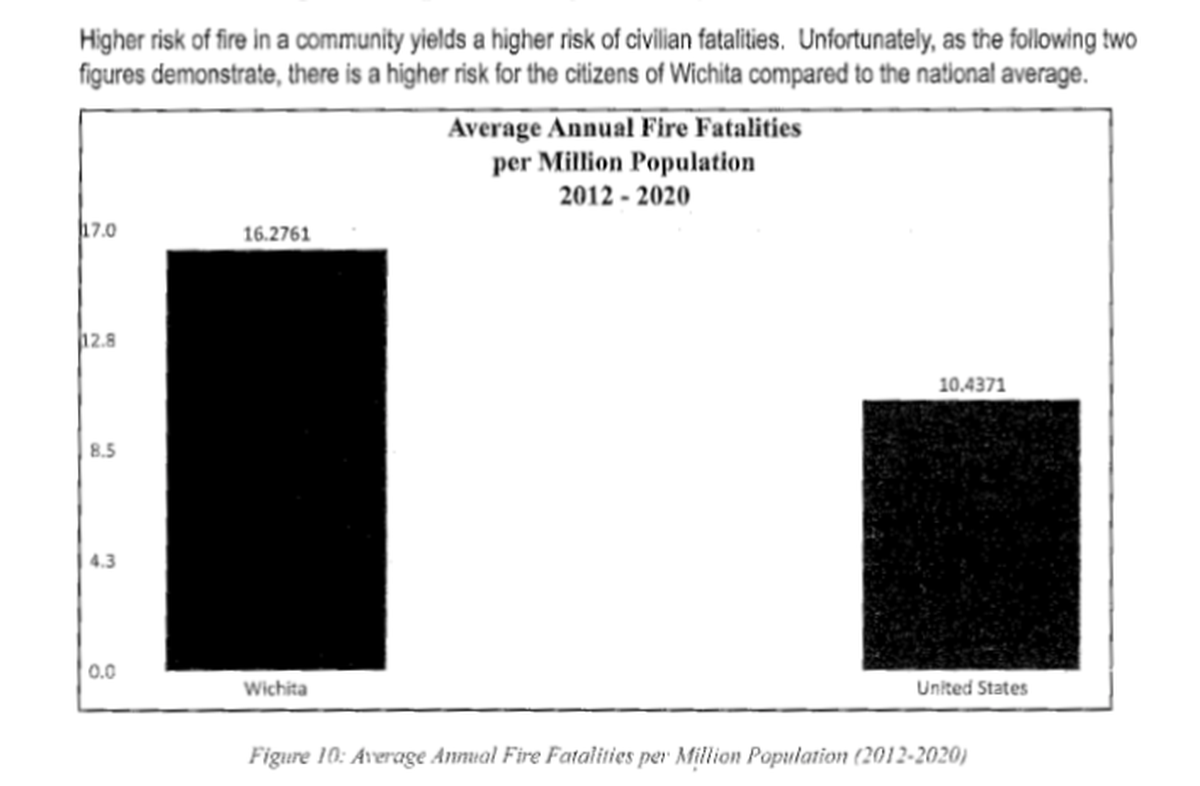
As a result of these service gaps, Wichitans are at higher risk of losing their home, getting injured or dying in a fire, the report suggests.
“Insufficient resources create hazards and undesirable results,” the report says. “Firefighters and civilians will be placed at greater risk if resources are deficient or arrive too late. The only way to create a safer conclusion for both firefighters and civilians is to aggressively attack any fire with a satisfactory number of resources arriving as early as possible.”
Still, the severely condensed presentation included a color-coded map that showed large segments of the city fall outside the fire department’s 4-minute drive time.
That five-year vision was enshrined into the city’s 10-year capital improvement plan.
In June 2024, The Eagle again requested the report after it had been mentioned by the union multiple times in open meetings of the City Council. The city again denied the request, saying it was being “discretionarily withheld from release” under an open records law exemption for a “draft which includes research data in the process of analysis, memorandum . . . or other record in which opinions are expressed or policies or actions are proposed.”
During City Council meetings on the budget in August 2024, IAFF 135 spokesperson Stephanie Yeager again pressed for public release of the report and for the council to demand to see it.
“I’ve spoken to each of you about the Levrum report, a program the council spent a million dollars on to tell you that this was a dangerous service,” Yeager said. “The public has never seen that report. It stays in draft form because it told you that you’re running a dangerous fire department.”
“Mayor Wu, please, ask for that Levrum report,” Yeager said. “We need transparency. The public deserves to know that it is not safe, and we have the ability to do better. I know we do. Everyone on this council, I know, cares about this. I don’t know why you’re not given the information that you need to make this better, but I know you care.”
Layton, the former city manager, said in response to questions from Wu that “there were multiple documents prepared as a result of that” Levrum software purchase.
“It’s meant to be a dynamic process, one that we can constantly look at existing conditions and look at needs and look at scenarios for addressing those needs,” Layton said. “For instance, we use that to come to you with the recommendations for the fire stations that are in the CIP.”
Mayor Lily Wu said she requested the report directly from Layton after that meeting. He instead provided her with a completely different report, a 21-page Wichita Fire Department Operational Needs Assessment that served as the basis for the PowerPoint presentation council members had received earlier that year.
“I received and reviewed the June 23, 2023 Operational Needs Assessment along with the City’s presentation of it but have not been provided a separate 2022 report,” Wu said in an email in response to Eagle questions.
Recent progress
Without the 2022 report, the city made limited progress on bolstering the fire department, but did not move as aggressively as the report suggests it should.
For instance, the report calls for new stations across the city to address response-time gaps. Officials have had advanced discussions about adding two new stations, both in west Wichita. Only one is under construction.
The latest capital improvement plan, a 10-year budget for building projects, allocates $62.45 million for fire station spending over the next 10 years. Less than a quarter of that money is budgeted for new stations. Aside from a station under construction at Pawnee and Maize no funding is included for entirely new stations until 2029. That project was originally projected to cost $4 million, but the department is expected to seek additional funding at the March 3 council meeting.
The city is also applying for a federal grant to temporarily cover the salaries of an unknown number of firefighter positions. It has not added the cost of additional firefighters at new stations into its budget forecasts for the next several years, director of finance Mark Manning confirmed at a recent council meeting. And the council has barred use of sales tax money for firefighter salaries.
Here’s the progress the city has made on the needs outlined in the 2022 report over the past four years:
- Hired 42 firefighters that were initially funded by a federal grant starting in 2022 but are now paid by the general fund. The number of funded operations positions has grown from 403 to 457
- Started building one new station in southwest Wichita
- Zero relocated stations
- The city would not say how many administrative, training and recruiting support positions had been added, if any
The 2022 report emphasizes that the city must follow through on the entirety of the department’s recommendations, in sequence.
For example, the report warns, the city should not add trucks and engines without addressing the city’s current low staffing levels. And it shouldn’t start building fire stations without adding support staff to recruit, train, hire and manage the required new firefighters to staff those stations.
If the city builds without adding the required support staff, “the new stations will be mismanaged, and the City’s resources will not be used efficiently,” the report says.
“When the City’s resources are not used efficiently, the public experiences negative consequences,” it continues. “When misaligned resources involve emergency services, consequences can be deadly.”
A problem for a quarter-century
The city had been warned before about the dangers of failing to build enough fire stations and hire more firefighters to keep up with the city’s expansion.
TriData, a company hired by the city to issue the 1999 report, gave the city a roadmap called the Fire Station Location Study that largely predicted the issues the city is now facing.
“While the services rendered by the Wichita Fire Department have been adequate throughout most of the City, there are problems of coverage along the periphery, and they are likely to get worse without some redeployment and additions of some resources,” the 1999 TriData study said.
The study outlined a 10-year strategy to build 10 fire stations and increase staffing by 44 firefighters and fully staffing heavy apparatus with four people, instead of three as the city had been doing.
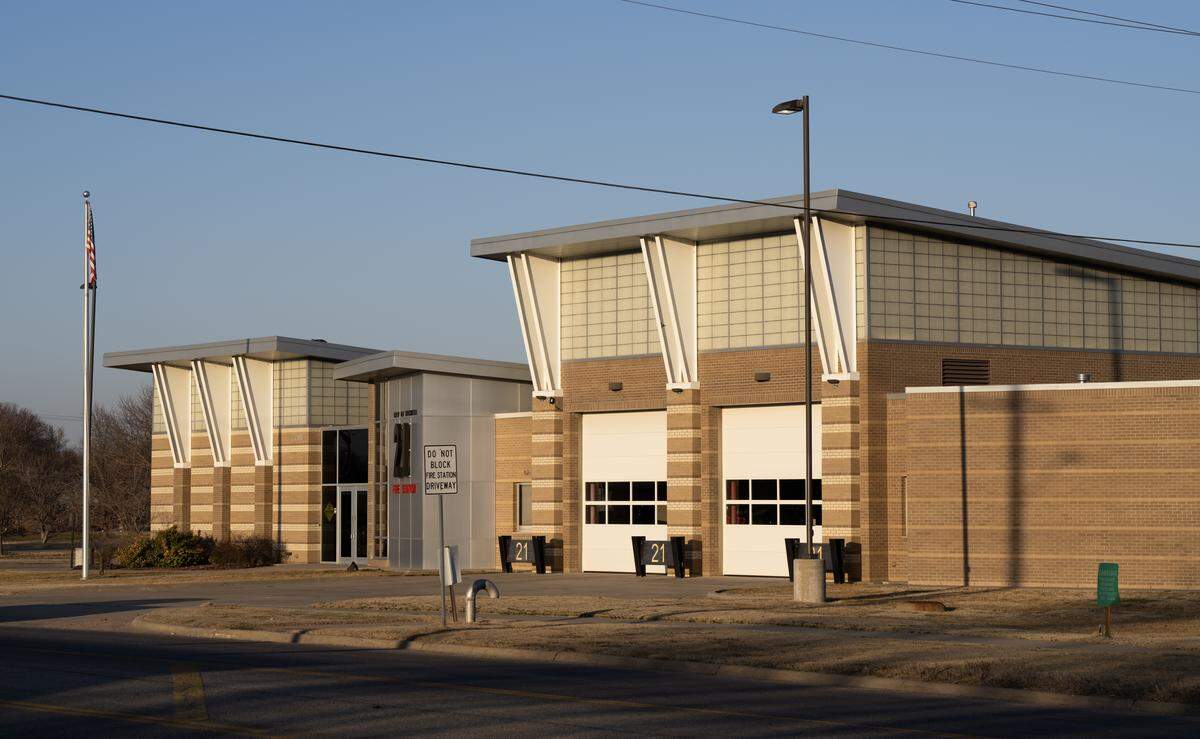
The city followed through with roughly half of the TriData study’s recommendations. It relocated half of the stations the study recommended and built one of the new stations — Station 21 at 21st and 135th — a full mile north of where the study said it should go, directly resulting in some of the service gaps and staffing challenges the department faces today in west Wichita.
The city’s failure to keep up with the 1999 study’s recommendations is most obvious in the department’s workload.
“While calls for service have nearly doubled, the current staffing model provides a negligible 6% increase in daily staffing levels compared to TriData recommendations,” the 2022 report noted, saying the TriData model suggests the city needs approximately 191 on-duty firefighters each day.
Bush, the union president, said the city departed from the plan by running fewer firefighters on more calls.
“They thinned the paint,” Bush said of city leaders. “I want you to paint this room, but you don’t have enough paint, so just add some water and call it painted. That’s what they did. And we ran like that for years, but now it’s starting to affect us. The service is not where it should be.”
Moving forward
A March 3 election will decide whether the fire department gets a portion of the $225 million that would be set aside for public safety projects.
The funds are restricted to capital improvements, equipment and facility needs for police and fire, meaning they can’t be used to fund firefighter positions. And the City Council voted on a resolution steering that money toward maintenance projects, rather than new stations that would fill service gaps.
Mayor Wu, who has not seen the larger 2022 study, cited the 2023 smaller study she was provided by Layton in her support of those guardrails. She emphasized that maintenance and replacement of existing fire stations remains a priority, especially in light of the discovery of mold at 20 of the city’s 22 stations.
“The sales tax guardrails were intentionally designed to prevent creating permanent salary obligations with a temporary revenue source, which protects the City and taxpayers from a future funding crisis,” Wu said in an email. “The 2023 Operational Needs Assessment doesn’t specify the need for more than 100 additional firefighters. Any meaningful staffing increases would require a sustainable, long-term funding source, not a temporary tax.”
Wu said funding the hires included in the 2022 report would require either a tax hike or a change in spending priorities for the city.
“The City is not in a financial position to add more than 100 firefighters without either a substantial tax increase, which I do not support, or a significant reprioritization of existing spending,” she said.
“Infrastructure maintenance and replacement remain priorities, but any decision to build additional stations should be based on updated data, geographic need, and long-term operating cost sustainability,” Wu said. “We should also evaluate deployment efficiencies and regional coordination to ensure we are delivering high-quality fire service in the most responsible way.”
Council members said they plan to invest heavily in the fire department with or without the sales tax.
“We’ve been making strides,” Hoheisel said. “It’s never going to be enough, but you’ve got to balance resources, and so we’ve just got to keep improving our processes and making it a priority, and I feel like we’ve done that the last couple of years. But we’ve got to keep our foot on the gas and do what we can for the safety of our community.”
Ballard said she has advocated for adding fire stations in her district, such as when the city set up a temporary station at 13th and West because of an Amidon Bridge construction project. She said she wanted to make that a permanent additional station but “could never get support from Chief Snow to keep this station open permanently in future budgets so it was unfortunately closed.”
Ballard said she doesn’t think the sales tax will “be a cure-all to the systemic underfunding of our fire department.”
“We’ve had a culture in Wichita for decades that achieving the lowest tax rate is the ultimate goal, but we are at a point that you can’t support public safety and austerity measures simultaneously,” Ballard said.
Johnston said he thinks the sales tax would go a long way toward solving the department’s problems.
“The fire department’s CIP budget has often been postponed,” he said. “The sales tax would guarantee they would receive what is in the CIP budget for the next 10 years and have millions more additional funds for other needs, which could be items from the report. By paying cash from the sales tax it would save the city $25-$26 million of interest payments. That money would be savings in the operating budget, which could be used for other projects or salaries, including fire.”
Glasscock said he was moved by a presentation on the department’s struggles by Bush, the union president, at a town hall in December at the Advanced Learning Library. He said his goals as a council member are to “modernize facilities, strengthen staffing sustainability, and build a fire system that keeps pace with where Wichita is going, not where we were 20 years ago.”
“Studies like these reinforce what many of us already know: Growth has outpaced infrastructure,” Glasscock said in an email. “That’s not about blame it’s about responsibility. We must correct it with deliberate, long-term action.”
This story was originally published February 21, 2026 at 6:05 AM.