
What 2022 fire study says Wichita needs, by council district
Wichita has major gaps across the city where the fire department can’t reach emergencies within the national standard 4 minutes.
The Wichita Fire Department Staffing, Station, and Deployment Analysis report — completed in 2022 — sets out recommendations for new fire stations and staffing to address those gaps.
The city has refused to release the report through the Kansas Open Records Act for years. Even City Council members have been blocked from viewing it and acting upon it.
The Wichita Eagle obtained a copy of the report from an anonymous source and verified its authenticity. The report contains recommendations for each Wichita City Council district.
See what the report says your district needs below.
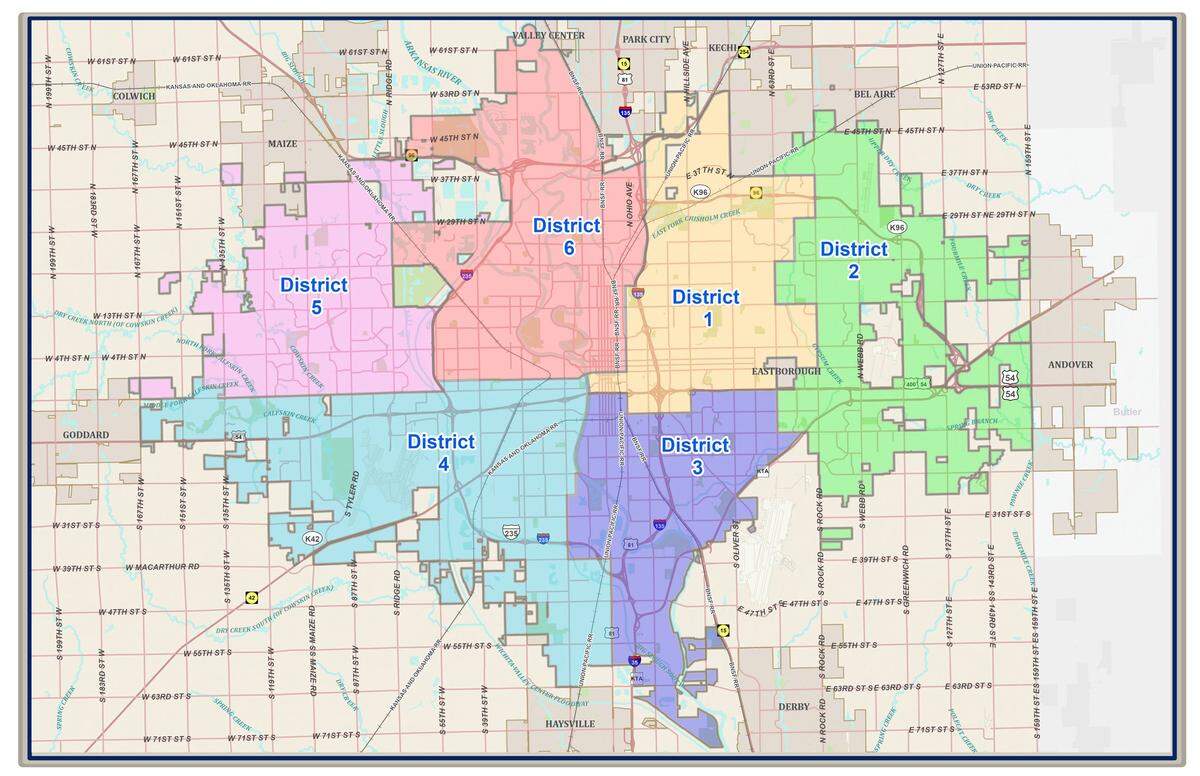
District 1, northeast and north-central Wichita
District 1 is identified as having the most schools, at-risk high-rise buildings and significant high-priority call volume alongside coverage gaps north and east of downtown.
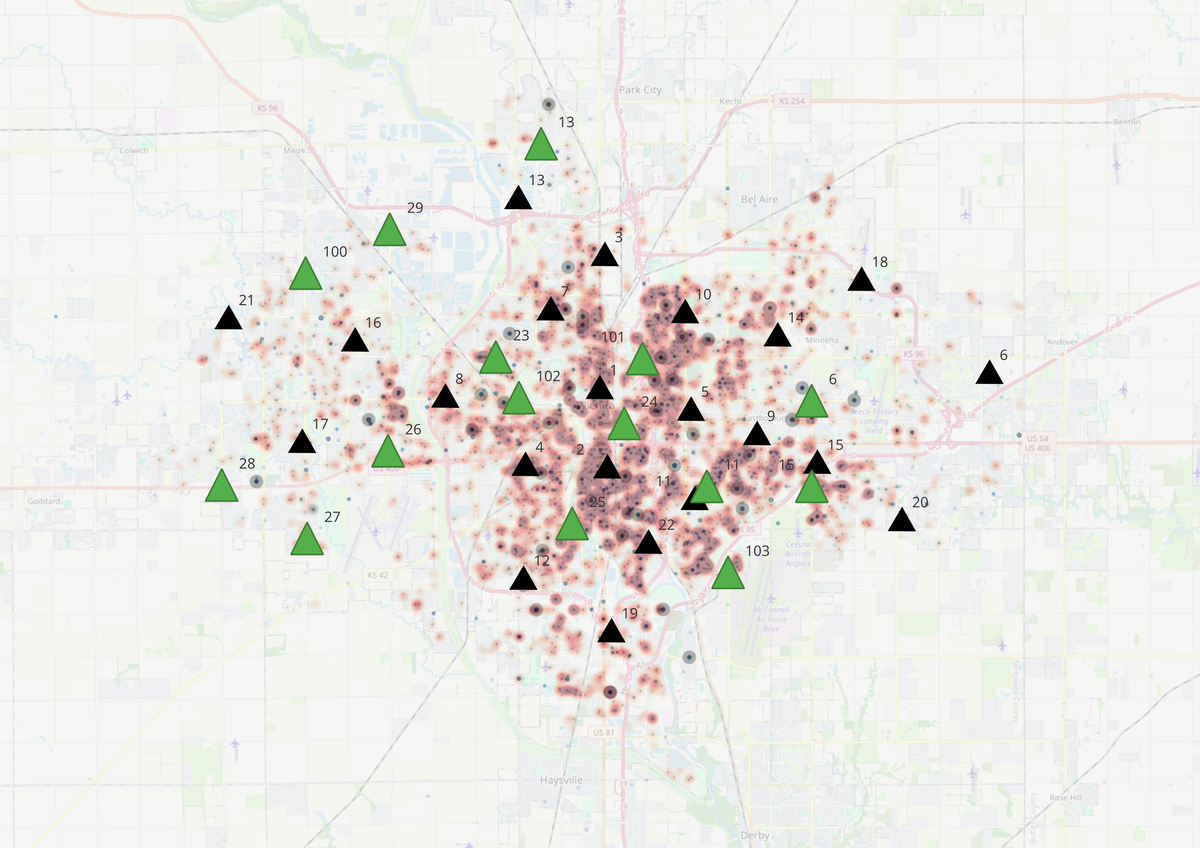
Under the 2022 plan, District 1 needs two new stations – one near 13th and Hydraulic and another near Douglas and Wabash – and enhancements such as an additional truck company at Station 10 near 21st and Hillside.
A new Station 101 would be constructed at 13th and Hydraulic to address a coverage gap in neighborhoods north and east of downtown that was created when the city moved Station 10 from 17th and Grove to 21st and Hillside in 2004. Rescue Company 2 – one of two rescue units in the department; it handles hazardous materials response citywide – would be moved from Station 10 to Station 101 to serve as the primary response unit from that station. The report calls for doubling staff for that company from three to six firefighters.
A new Station 24 at Douglas and Wabash with a single engine company would add emergency response and fire suppression capacity to downtown and to areas south and east of downtown, improving response times not just to those calls but for three other stations – 1, 5 and 10 – that cover that area.
The report also recommends addressing response-time problems near 45th and Hillside and 8th and Oliver and potentially relocating Fire Station 14 to 13th and Woodlawn and building a single-engine station at K-96 and Woodlawn in the long term.
District 2, east Wichita
District 2, the easternmost district, includes some of the busiest and fastest geographically expanding areas of Wichita. The plan calls for relocating aging stations to better handle high traffic and population density.
Station 6, near 13th and 143rd Street, would be moved closer to Central and Rock to address a 2.5-square-mile gap in that high-traffic area that can’t be reached by fire companies within 4 minutes. The plan would add a four-person engine company to Station 6’s existing staffing.
Station 15 would be relocated from Lincoln and Rock to Harry and Rock with an additional truck company to improve response times for high-density housing south and east of Kellogg, the area of District 2 with the slowest response times.
District 3, southeast Wichita
District 3, in southeast Wichita, has four fire stations and, along with District 1, received the highest number of high-priority dispatch calls in the city.
The district has large areas that fall outside the four-minute travel reach of fire companies and, as a result, suffers the greatest number of response-time failures of any district in the city.
The plan would add two new stations to the district and relocate another.
Station 103, a new station, would house a four-person engine company at 31st and Oliver on the campus of the Wichita Fire Department Regional Training Center. Its aim would be to improve coverage for Planeview, Spirit AeroSystems and the Turnpike corridor while providing additional personnel to assist with training.
Station 25, a new station, would be built at Pawnee and McLean to relieve pressure on Station 2 on South Broadway, which has a high demand for firefighter service. Station 2 is identified in the report as the station with the worst response performance because of an extremely high density of call demand, frequent overlapping incidents requiring multiple companies and the need to frequently respond outside its area to cover for neighboring stations’ coverage areas.
Station 11, which is on George Washington near Hillside, would be moved closer to Ascension Via Christi St. Joseph Hospital at Harry and Bluffview to address service gaps in the Hilltop neighborhood.
District 4, southwest Wichita
District 4 in southwest Wichita has the largest total of “target hazards,” including the airport. West Wichita is identified in the study as the fastest-growing area with the most degraded response capacity.
Fire department leaders recommend building three new stations and deploying an additional truck company to Station 4, at Meridian and Irving, to close gaps west of the Arkansas River in south Wichita.
The three new stations would be near Eisenhower Airport Parkway and Taft (Station 26), Maize and Pawnee and 135th and Kellogg (Station 28).
The station at Maize and Pawnee is currently under construction and will be the first new fire station built in Wichita since 2009. It will be known as Station 23, although it’s labeled Station 27 in the 2022 plan. It was needed to handle growth in the southwest sector of Wichita.
Station 26 would be a multi-apparatus station housing an additional engine and truck company near several restaurants and commercial buildings. It would have quick access to Kellogg and I-235 to allow for rapid response to emergencies.
Station 28 would house a single engine company to cover far west service gaps.
District 5, northwest Wichita
The plan calls for two new stations and a redeployment of a truck company from Station 16 on Tyler Road to Station 8 at Central and Elder to offer better coverage for service gaps in central Wichita. It also recommends adopting a long-term strategy for future service gaps near 13th and Maize.
A new Station 100 would be built near 29th and Maize to house an additional engine and truck company to improve response times in the northernmost parts of the city.
A new Station 29 would be built at 37th and Ridge with an additional engine and truck company to support northwest growth and potential partnerships with other firefighting agencies to the north.
District 6, north and northwest Wichita
District 6 includes the north-central region, Sedgwick County Zoo and parts of downtown and Old Town.
“The highest density of emergent response failures within the City of Wichita occurs in District 6 in the downtown and midtown areas of the city,” the report says. “Areas of high-density emergent response failures also exist in Delano and the area … around Sycamore Park.”
The plan recommends two new stations in District 6 and a relocation of Station 13 from 42nd Street to 53rd and Legion to improve efficiency and close service gaps.
A new Station 23 would be constructed at 13th and Sheridan to house a single-engine station to fix a gap created by relocating Station 7 in 2004.
A new Station 102 would house a single-apparatus response team at Central and McLean to reduce the number of “emergent response failures in downtown and Delano” and place it within reach of 80% of water rescue calls on the Arkansas and Little Arkansas Rivers.