What’s the story behind mold at fire stations as voters weigh Wichita sales tax?
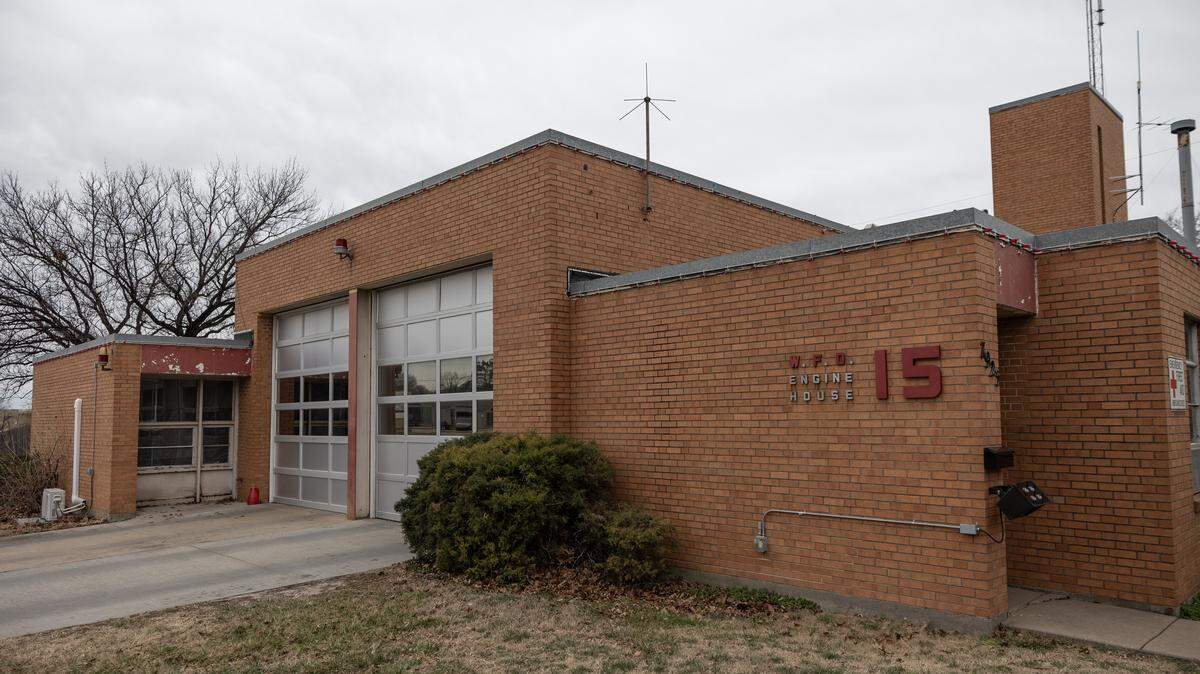
Wichita has shut down one fire station and city leaders are scrambling to address mold in nearly all the others after an inspection found contamination in 90% of the city’s firehouses.
The evacuation of Wichita Fire Station 15 comes as voters are deciding whether to approve a 1% citywide sales tax that would steer up to $225 million toward police and fire facilities.
A leader of the coalition opposing the sales tax questions the timing of this action, while a firefighter advocate says he’s been raising concerns about mold and unsafe health conditions in Wichita fire stations for years.
“This has been a problem for decades and decades,” said Wichita Firefighters IAFF Local 135 President Ted Bush. “... I know a lot of people are saying that timing is bad, but I take phone calls from sick firemen and I have to say something. I can’t just sit there and not be concerned about it because of the political climate.”
Why has the problem not been addressed? Two city officials had different responses about that, and City Council members said they had not been aware of it.
Discovering mold at Wichita fire stations
Bush said worries about mold and unhealthy fire station conditions have long been voiced by firefighters and often were met with short‑term cleanups rather than lasting fixes. The issue came into focus around September 2025 when an employee from outside the Wichita Fire Department took a training class at Wichita Fire Station 1.
The condition inside was so bad, Bush said, that she vowed not to return.
Her complaint, combined with years of internal warnings, triggered a months‑long review of mold and conditions in Wichita fire stations, Bush said.
“Station 15 was one of the worst ones in the city,” Bush said in an interview. “When they started doing the mitigation, the crews came in, and immediately it smelled really bad ... I had a member that was sick, but he just tried to sleep in the recliner in another room. It didn’t help.”
Vice Mayor and Wichita City Councilman Dalton Glasscock announced the closure of Station 15 and the discovery of mold in 20 of the city’s 22 firehouses on social media last weekend after receiving a copy of a mold report from a tipster. Services previously based at Fire Station 15 at Lincoln and Rock have been moved to Station 20 at Pawnee and Greenwich and Station 9 at Kellogg and Edgemoor. A city official said Tuesday it could take at least three weeks to modify the station’s duct system to prevent the reoccurrence of mold.
“This situation is deeply frustrating. Mold concerns at several stations, including Station 15, are not new. I have seen them with my own eyes,” Glasscock said. “... Our firefighters should never have to question whether their workplace is safe. Nor should residents have to worry about response impacts due to facility conditions that could have been addressed earlier.”
Mayor Lily Wu called the conditions unacceptable in a Facebook post over the weekend and asked for more information at the Feb. 17 City Council meeting.
In response, City Manager Dennis Marstall said that mold evaluations and environmental studies were conducted at each station in October. He said the city received the results from a third-party vendor in January and made a plan for mitigation. During remediation work at Fire Station 15, crews experienced burning in their eyes, noses, and throats while removing about 90 water‑stained ceiling tiles.
Gary Janzen, the city’s director of public works and utilities, said Station 15 is unique in that its ductwork is under the floor. That design increases the risk of mold and was identified as the likely source of the station’s mold readings. But he attributed the station’s evacuation to “a process issue in containing the stuff that’s above ceiling tiles,” like dust and insulation, rather than mold.
Bush said that issue wasn’t the only indication of improper remediation practices. He said the quality of the inspections and remediation work by city employees was not consistent across stations.
Why weren’t fire stations fixed sooner?
Mold in Wichita fire stations isn’t new, along with longstanding problems with roofs, windows, moisture and ventilation, Bush said.
“I think we’re just to the point — firemen don’t like to complain very much, sure, but to be honest with you, in my job as union president, I’m tired of not complaining because nothing is getting done.”
Mold and other unhealthy conditions have been cleaned up before, Bush said, but requests for broader, permanent fixes have repeatedly been put off.
Bush said requests for broader, more permanent fixes to mold and other unhealthy conditions have repeatedly been put off. When he has petitioned previous city councils, he said, he was told the facility requests were included in the city’s 10-year capital improvement plan and would eventually be dealt with. That still hasn’t happened.
“They can always say, ‘Well, it’s in the CIP, it’s in the plan,’” Bush said. “That’s a 10-year plan. If I have mold on year one, they don’t have to fix it for 10 years.
“It’s just a fake way of saying, ‘Yeah, we understand we need to get this stuff done. We just don’t know when we’re going to do it, but it’s in the plan.’”
City officials offered different reasons mold and facility concerns haven’t been addressed sooner.
During the council meeting Feb. 17, Wichita Fire Chief Elizabeth Snow seemed to imply the issues weren’t always reported. She said firefighters can submit work orders, which are then sent to public works, but if facility issues aren’t reported, it becomes “hard to fix something that you’re not aware of.”
Janzen said public works has had challenges with the lack of mold guidelines and regulations. But he also attributed the deterioration of city fire stations to a history of short-term repairs.
“We all know you get water on a ceiling tile, it’s going to stain. It doesn’t automatically mean mold but I think historically, the leak was fixed but maybe we didn’t always take the next step to make sure it was dried out, to make it was properly cleaned,” he said. “You could probably say this about anything — leaking toilets, leaking roofs, wherever water happens to come through.”
Glasscock said the council was not informed of these concerns and didn’t get the opportunity to be proactive. Wu said that even though she visited several stations, mold was not brought up, and City Council members did not receive copies of the January report.
“I am unaware of any single time that I knew that there was even an allegation of mold, that remediation work began, that we were able to because of that obtain bids for mold inspection,” Glasscock said at the council meeting. “... I don’t think I have been informed at any step along the way.”
In response, Snow said she will do a better job of informing the council. Janzen said his department would treat the situation as a learning opportunity, but added that it has also faced challenges because the staff has been preoccupied with several other recurring issues at some of the city’s more than 300 facilities.
Janzen told council members remediation will be the department’s top priority going forward. Workers will replace all water-stained ceiling tiles in Wichita fire stations, continue modifying the ducts at Station 15 and consult an environmental hygienist to further assess station safety for firefighters and to see which areas in fire stations are at the highest risk of mold.
Wu said concentrating tax dollars on local government public safety, as well as addressing deferred maintenance, could be a long-awaited solution for the fire department’s in-need facilities. “This is the result of years of deferred maintenance that must be addressed,” she wrote on Facebook.
Mold discussion comes just before Wichita’s sales tax vote
The conversation about the mold, the deferred maintenance and the question of who knew what and when is unfolding weeks ahead of the March 3 election on a proposed 1% sales tax.
If the sales tax is approved by voters, police and fire could receive up to $225 million over seven years to support public safety capital improvement projects, facility construction and maintenance, vehicles, gear and equipment.
“I totally understand that everybody’s concerned about new taxes, but I’m looking for a new system, and I think this is the way to hold the city accountable,” Bush said. “The current CIP system now ... it just doesn’t work ... I’m looking for a new way to do it and do it much faster. That sales tax speeds up these projects, it pays for all the CIP projects at a much faster rate, and that’s my concern.”
Wichitans who favor and oppose the sales tax have commented on social media about the timing of Station 15’s closure and the news of the fire department’s mold problem.
Save Taxpayers Vote No coalition leader Celeste Racette said it was suspicious that the decades-old issue became a priority immediately ahead of the sales tax election.
“I just find it so interesting that (former Mayor) Brandon Whipple never talked about this. (Former Mayor) Jeff Longwell never talked about this,” Racette said. “... This is a common problem, and to now make a big issue out of it, right as we’re getting ready to vote on the sales tax issue, come on.”
She emphasized that just because first responder facilities haven’t been prioritized like they should have, it shouldn’t distract from other instances where the city has shuffled money around or used reserve funding or to finance other projects.
”It’s just really funny how all of a sudden, things that should have been a priority all along have now hit the radar,” she said.
Regardless of the outcome of the March 3 election, Bush said firefighters deserve a place to eat, sleep, work and relax that won’t make them sick.
“A firefighter, no matter who it is, will risk their lives to save that person, their family and their property. ...” Bush said. “I want everybody to remember that.”