
How Wichita plans to fund homeless, housing programs with 1% sales tax
Much is at stake in Wichita’s upcoming 1% sales tax election.
That includes continued funding for the city’s only low-barrier homeless shelter, where current funding is set to expire in the fall.
“We’ve seen homelessness continue to grow year after year,” Second Light Executive Director Dan Clifford said. “This is a crisis that does not have an immediate solution.”
If the sales tax passes in March, $150 million would go toward homeless and housing initiatives, including setting up an endowment fund that could continue to fund the city’s shelter even after the sales tax is scheduled to end in seven years.
Some of the money would go toward developing affordable housing programs, landlord incentives, homeless outreach and case management.
The sales tax is estimated to collect $850 million over seven years, with other money going to public safety, Century II, an expanded convention center, a public-private performing arts center and property tax relief. The first $300 million generated by the tax would go to property tax relief, public safety and homeless and housing issues.
In 2025, the United Way’s annual point-in-time count identified 736 people as homeless, a 6% increase from the year before.
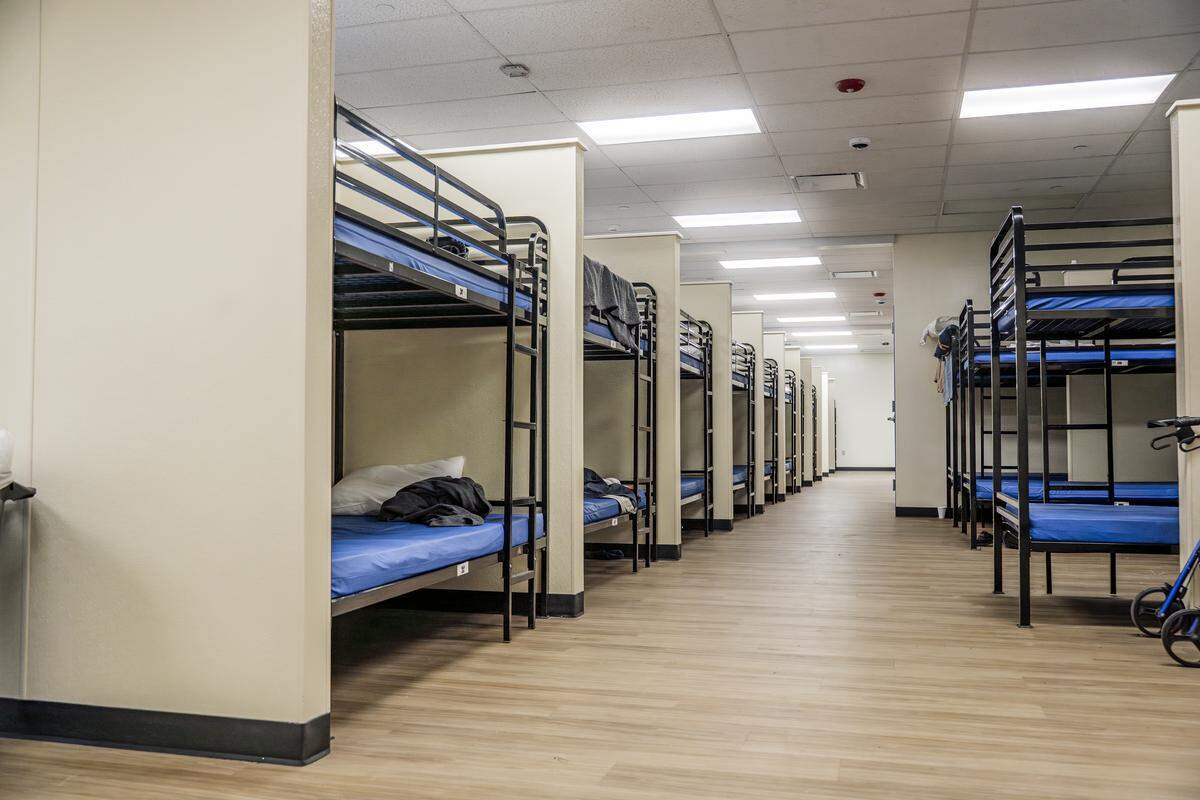
Second Light, formerly known as the multi-agency center, opened in late 2024. It has the capacity to temporarily shelter hundreds of men and women. It will also begin to soon provide medical care, mental health care, substance misuse support, housing support and other services for those who are homeless.
Construction is ongoing for 75 beds of individual permanent supportive housing space on campus.
Money has been allocated to begin these services and construction of the non-congregate housing space, but funding to help operate the homeless shelter is set to expire.
That’s because the city used federal American Rescue Plan Act dollars to begin operating the shelter. Those federal dollars must be spent by fall.
A 501(c)3, which Clifford now leads, has been set up to run the shelter full time.
If voters approve the sales tax, the city said, about $3.5 million a year would go toward the shelter’s operations. Second Light is also looking to private philanthropy to fill in about a million dollars each year.
“We know that operationally, it’s going to be hard to fund Second Life exclusively from private philanthropy,” Clifford said. “So we know that the sales tax dollars would be extremely helpful in helping get to that big chunk of that $4.5 million annual budget, and also, ideally a little room to grow so we can bring on some additional services that we know are needed.”
Both campaigns, for and against the sales tax, agree that the homeless shelter and other housing initiatives need to be funded.
But those with the Vote No campaign disagree with how the sales tax was brought forward to the public.
“It almost feels like they’ve held hostage the homeless community and the affordable home issue by bundling it in this package,” LaWanda DeShazer said at a Vote No news conference earlier this year. “If those two things are very important to the citizens, they should stand on their own, and we should be funding those projects by themselves.”
The city has not identified any funding sources for the shelter if the sales tax proposal were to fail.
Second Light warns if the sales tax is not passed, and additional funding to operate the shelter is not found, it would have to begin to cut services this year.
“Failure is not an option, but reducing services would be the first thing you’d have to [do],” Second Light Board Chair Steve Dixon said. “You have to start cutting costs. At the end of the day, people cost the most money.”
Those with Second Light believe that homelessness is a community-wide issue.
“We all need to band together,” Dixon said. “We all need to work on this, because if we’re all in it together, we will solve the problem. We’ll reach functional zero if the community agrees that, ‘Hey, we want to be part of this. We want to participate.’”
This story was originally published February 17, 2026 at 5:57 AM.