
What residents, businesses can expect this summer as Wichita continues to cope with drought
Wichita city officials acknowledge the optics aren’t great — asking residents to limit outdoor water use to one day a week while contractors dump tens of millions of gallons each day into the Big Ditch.
But both are necessary for the city’s future water supply, Gary Janzen, director of Wichita Public Works and Utilities, said.
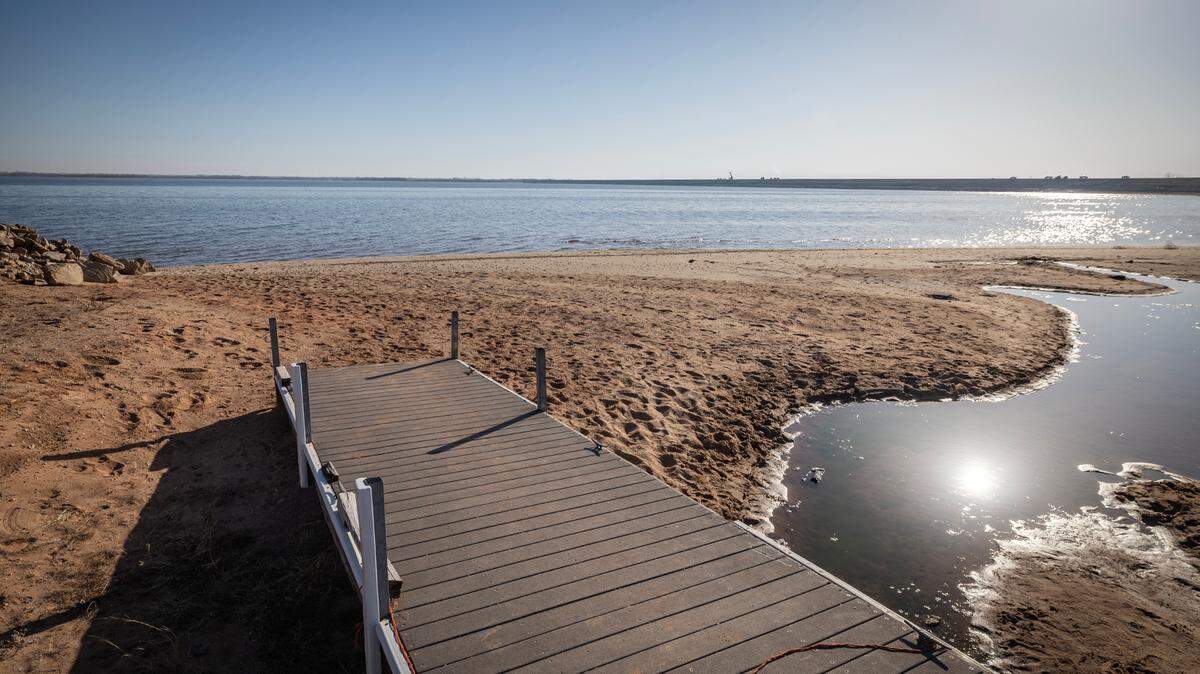
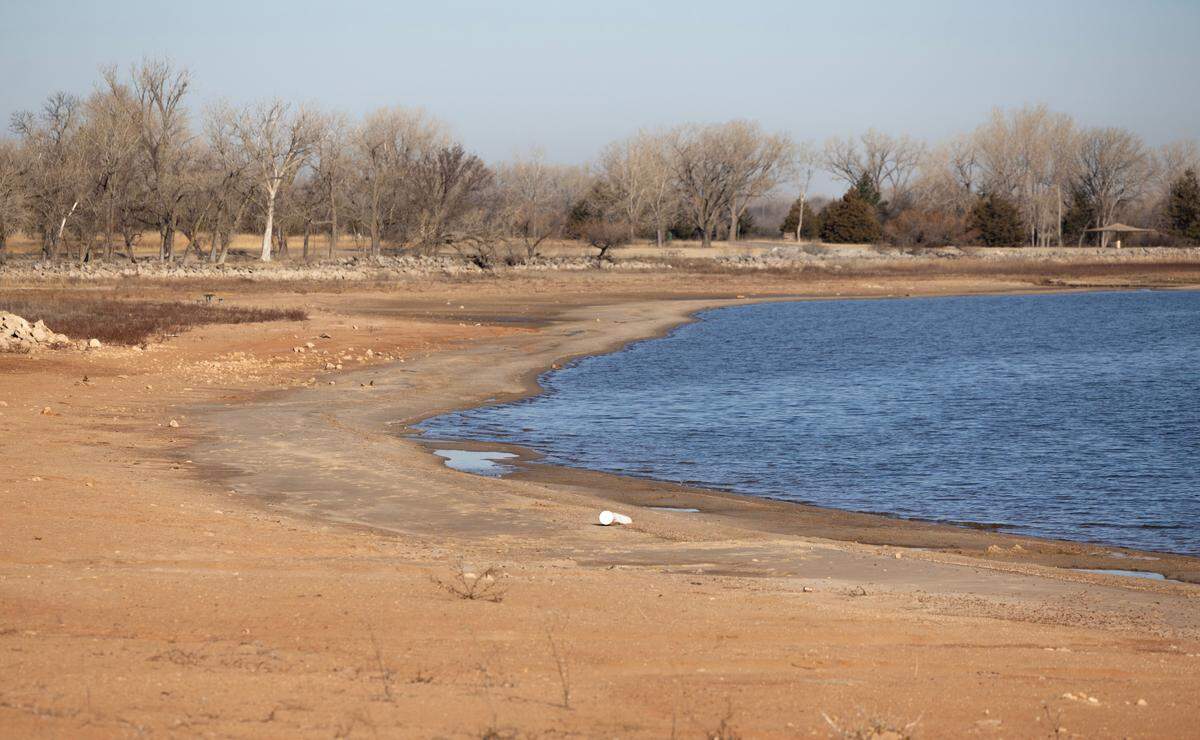
Wichita’s primary water source — Cheney Lake — is two feet lower than it was at this point last year. City officials are urging residents to resist the urge to buy a bunch of new plants and turn on their sprinklers this spring in order to avoid an outright ban on outdoor water use.
The only way out of the drought is rain — and lots of it — in and around Cheney Lake, Janzen said.
The city’s water conservation plan aims to stretch its supply long enough for rain to replenish the lake, which is 58% full.
As the city waits for rain, its new $573 million Wichita Water Works plant — designed to be less reliant on Cheney water and capable of treating 100% groundwater — is expected to relieve some of the stress when it is fully operational. But it could be several months before it is pumping water into the system.
Wichita has been under Stage 2 of the city’s drought response, which includes one-day-a-week outdoor-water restrictions, since last August. Those restrictions are likely to stay in effect for the rest of the year, Janzen said.
“The plan is working,” Janzen said. “We all hope that we get some spring rains and start to see some relief, but in the meantime, we’ve got to stay the course.”
If Wichita depletes Cheney too quickly, it could spell disaster for many in the state’s largest city.
“Our goal right now has to be to stay out of Stage 3, because that eliminates all outdoor watering,” Janzen said. “We, unfortunately, at that point, would be putting some people out of business. There’s no doubt about it. And that’s the last thing that we want to do.”
Under Stage 3, all outdoor watering would be prohibited. But the city won’t move to that stage until the 12-month-average water level at Cheney falls below 50%. It’s currently at 58% with a 12-month average of 62%. Those levels could drop quickly if the summer is hot and dry, due to a combination of water use and evaporation.
Timeline for Wichita’s new water plant
While Cheney Lake and its feeder streams and rivers struggle to fill, Wichita’s secondary water source has largely avoided drought-like conditions.
The Equus Beds, a groundwater aquifer, is 92% full, Janzen said.
But the city’s aging water plant can only treat so much groundwater; it requires about 55% surface water from Cheney Lake. The new plant will be capable of treating 100% groundwater, allowing the city to have more flexibility in how it responds to water levels at Cheney.
That prospect is months if not years away. The city plans to keep the old plant running along with the new plant until at least 2026.
“It’s going to take some time for us to get there,” Janzen said. “That’s not going to happen right away. It will. We will be in a better place to be able to take some stress off Cheney once we’re fully operational. It won’t even be this year, most likely, but we’ll get there.”
The Wichita Water Works project is being delivered more than 6 months late and tens of millions of dollars over its original forecast budget. Part of the delay has been because of the drought. Wichita Water Partners — a joint venture between Burns & McDonnell and Alberici — could not complete the project by a September deadline because its performance testing schedule conflicted with peak-use demand for water, so the city agreed to move the deadline to April 1.
The delay came with a cost. Wichita Water Partners charged the city an additional $5.75 million for the extra months of staffing, maintenance, training and extended warranties.
The new plant is now undergoing performance testing to make sure it can supply safe drinking water to more than 500,000 customers. That testing results in between 30 million gallons a day and 60 million gallons a day being disposed of in the Big Ditch floodway.
The city is scheduled to take possession of the plant on April 1. Then it will have to wait for a permit from the Kansas Department of Health and Environment, which Janzen said should take another 30 to 60 days.
“We’re going to have to keep this going,” Janzen said. “We can’t back off now because of the value this new plant brings online. We’ve got to get our old plant offline, be utilizing this new facility for its intended purpose and start working towards that flexibility of being able to use more groundwater, which is going to take some time.”
Janzen said he understands the frustrations residents have about that water going into the floodway while they’re under restrictions, but the test water hasn’t been a total waste.
“There is some benefit to the test water in the floodway,” Janzen said. “It’s recharging the groundwater in a lot of northwest Wichita.”
Janzen said the city is in discussions about potentially pumping some of that water to Botanica, Cowtown and Sim Park to offset water use at those locations. But it hasn’t finalized any of those plans.
“The test water in the floodway, it’s finding its way back into the groundwater, which is not bad,” he said. “But we can probably find even better use for some of this. We’ll know more on that probably in a couple weeks.”
Builders, landscaping, free water?
Stage 2 drought restrictions have a number of exemptions for businesses that rely on water to operate and for people who grow their own food.
Exempt businesses include golf courses, car washes and nurseries. Vegetable gardens may be watered by hand or with drip irrigation systems.
Anyone using well water on their lawns or gardens is also exempt.
The city discourages people from planting new trees or shrubs, a move nursery owners have called short-sighted and naive.
“It’s an unfortunate aspect of being in the drought, but obviously we have to conserve now,” city spokesperson Megan Lovely said. “We have to be mindful of those planting efforts because we don’t want to move to Stage 3, which will hurt those businesses even more.”
The city is asking residents and businesses to be prudent and to weigh the risks and benefits of adding new plants.
“If you have a food-producing garden, you’re allowed to hand-water that, which means we don’t want you turning on your irrigation system,” such as sprinkler heads, Janzen said. “Other than that, we are in Stage 2 drought restrictions. You can water once a week. People have to just keep that to the forefront more than anything. If they think they can plant something that can stay alive watering once a week, that’s fine. But our advice is to try to avoid it as much as possible.”
Janzen said the city is under enormous pressure from residents and businesses to make additional exceptions, but it is going to hold the line.
“We’ve heard from nurseries, we’ve heard from landscape companies that don’t have an alternate water source,” he said. “We’ve talked to builders who are trying to sell a new house that they can’t put sod down for. They all want an exemption. I’ve told them, no, we can’t open that door. And they’ve said, ‘Well, what’s our option?’ And I don’t know that we have a lot for them right now.”
Janzen said that could soon change. The city plans to start giving away up to a million gallons a day in free water from its Water Center at Herman Hill Park starting April 1.
That water comes from the Gilbert-Mosley and North Industrial Corridor groundwater contamination sites. It does not meet drinking water standards but could be used safely for watering plants. The city treats the polluted water and uses it for various tasks at city parks and to clean wastewater pipes while the majority is sent to the Arkansas River.
“Starting April 1, we’re going to allow landscape companies and contractors to be able to utilize that water, no charge.”
The water will not be available to the general public, in part because of rules in the city’s water discharge permit.
“We’re going to keep this commercial only and not allow the public to use it,” Janzen said. “There’s a variety of reasons for that, including the way our permit was structured and kind of the logistics on how you get the water. So we’re going to make it available to contractors only to start. And we’re working on that communication now, so we’ll see how that goes.”
Janzen said the free water could be a stop-gap for landscaping businesses that are struggling.
“Our hope in offering this up is that maybe there’s a possibility that it helps keep some landscape companies going. If they can, and they’ve got a water truck, they can fill it up. If they can find a way to — whatever it is that they’re marketing and selling and help keep that landscaping alive. The biggest deal is we cannot allow property owners to turn on the irrigation system (more than once a week) to keep landscaping alive. So maybe this is an alternate source; I don’t know.”
Overall, Janzen said he hopes the drought drives changes well into the future, such as abandoning plants that require regular watering in favor of native species and more drought-tolerant landscaping.
“We’ve got drought tolerant plants and shrubs you can put in that will survive on one day a week,” he said. “That’s really where this needs to go. We need to change the culture. We need to change our thoughts on where we’re going in the future, even when we come out of this drought, to help ourselves long term.”