
Wichita’s new water plant is millions over budget and delayed. What’s to blame?
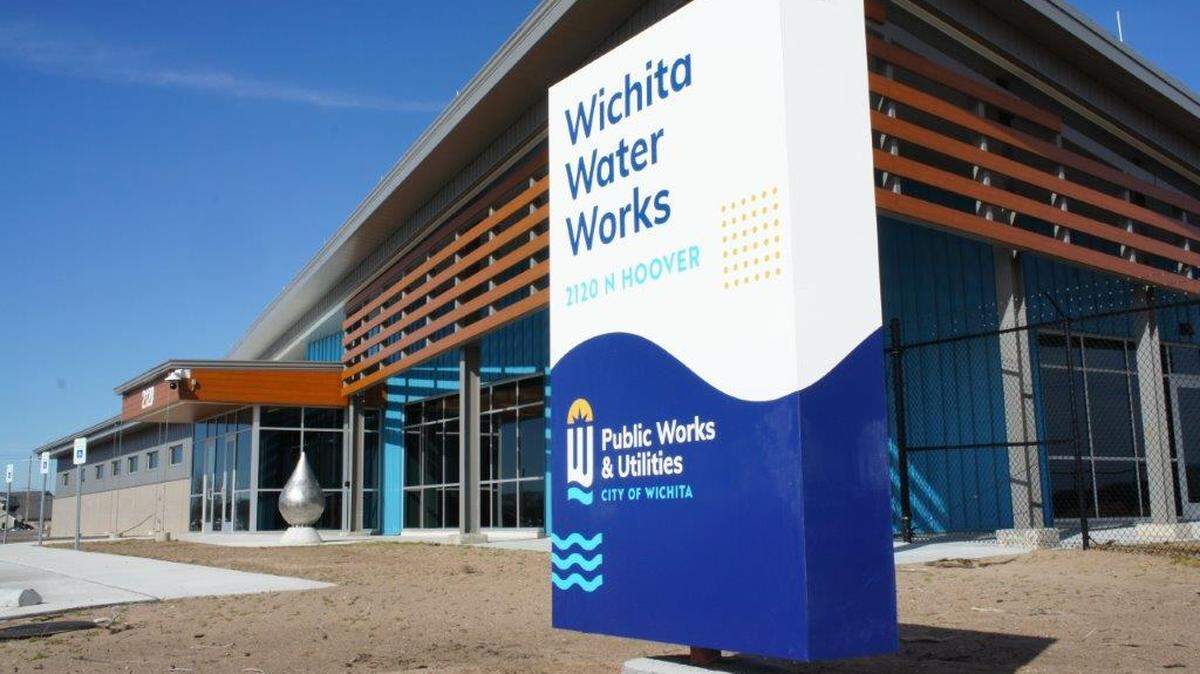
Wichita’s new water treatment plant is on track to be finished six months late and $20 million over the original budget — in part because of drought conditions in south-central Kansas.
The Northwest Water Treatment Facility was scheduled to be substantially complete on Tuesday, based on a contract signed by the city and Wichita Water Partners, a joint venture between Burns & McDonnell and Alberici, in 2019.
But Wichita Water Partners needs more time — and more water — to complete testing and ensure the plant is safe to deliver clean drinking water to more than 500,000 people. The contractors can’t test the plant until November at the earliest because Wichita is in a stage 2 drought and Cheney Reservoir’s water level continues to drop to some of the lowest levels in 50 years.
The Wichita City Council on Tuesday agreed to push back the schedule for completion to April 1 and approved more than $7 million in additional change orders to the city’s contract with Wichita Water Partners, which advertises that it has “zero cost or schedule overruns.”
The changes were expected, as the city council had voted earlier this year to increase the project budget.
Why is the water plant delayed?
The original plan called for testing the plant using 30 million gallons of water a day, a quarter of the plant’s 120 MGD capacity. But the city wants them to test the plant at 60 MGD — closer to peak usage — before accepting the plant as finished.
“The challenge with that, drought aside, is that we cannot provide that capacity of test water this time of year,” Gary Janzen, director of public works and utilities, said. “High-use months during the hotter seasons leads to moving everything, shifting everything into starting the testing in November through March. We see a lot less water use during those times.”
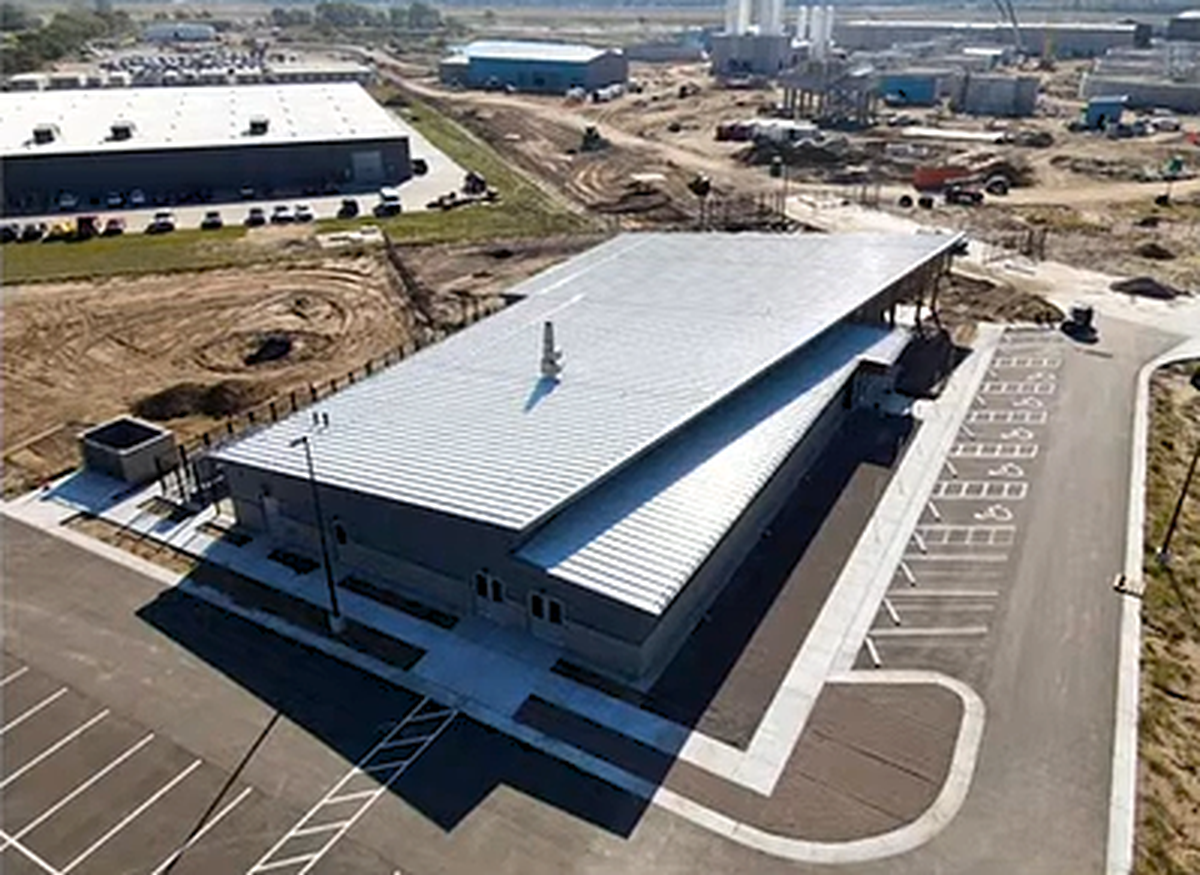
The new plant is expected to be tested at 60 MGD for five days, 45 MGD for about three weeks and 30 MGD for the rest of the 15-week testing period, Janzen said. After testing, the water will be released into the Big Ditch floodway that runs along the water treatment plant at 21st and Hoover.
Where does the water go?
City Council member Maggie Ballard, whose district includes the water plant and the floodway, suggested the city invite residents to come collect the water or play in the water as it’s discharged as a way to head off push back against using so much water while residents are under usage restrictions and can’t water their lawns more than once a week.
“So I think just being conscious and if there’s any opportunity for someone to fill their rain barrel or whatever they would like to do, if we could make a point to try to figure something out. . . . Can we, like, go canoeing and kayaking or tubing or something?” Ballard said.
“Even with what feels like a lot of water, it’s going to be pretty negligible compared to the size of the floodway,” Janzen said. “I don’t think most people would even notice.”
“I think that the push back is just going to be that we’re trying to encourage people to regulate when they’re using water and even though this is something that we have to do, just the optics of it are not the best,” Ballard said.
Janzen acknowledged that the timing is bad, but the new water treatment plant will allow the city to be less reliant on Cheney Reservoir and treat more water from the Equus Beds. The new plant will allow the city to treat 100% groundwater or 100% surface water. The existing plant is able to treat only surface water or a blend or surface water and groundwater that is majority surface water.
“Probably we couldn’t have any worse timing in that regards of trying to bring this new water treatment plant online,” Janzen said. “But I would just mention one more time, sorry to belabor this, but there’s so much value in our drought response plan of drought resiliency to have this plant up and running, so we’ve got to push through.”
Wichita charged millions for delay
Wichita Water Partners is charging the city $4 million for the delay — related to staffing, maintenance and training — and $1.75 million for an “extended warranties allowance.” An additional $1.2 million approved Tuesday will be spent to connect a 64-inch pipeline to a nearby storm and sewer line to allow for the line to be disinfected. The 64-inch line is being converted from a raw, untreated water line to a finished, drinking water line to cut costs.
The change orders bring the total cost of the project to nearly $573 million, compared with $553 million the city said the total project would cost in 2019. That does not count interest payments on the loans the city is taking out to pay for the plant, which is estimated at around $44.3 million. Water rates are scheduled to increase an additional 3-5% each year until 2039 to pay for the project.
The majority of the costs are in the city’s contract with Wichita Water Partners — the design-builder. The water plant was initially scheduled to be finished on Tuesday for a “guaranteed maximum price” of $500 million for both phases of design and construction completed by Wichita Water Partners. That number is now expected to be $509 million.
Other major costs for the project include $17.1 million the city is paying Garver, an engineering firm hired to oversee the project for the city; $12 million to build an Evergy substation to supply power to the plant; $7.2 million for land acquisition; $6.5 million for testing and commissioning chemicals; $4 million for startup and commissioning support by OTS; $2.2 million for miscellaneous expenses such as advertising, gas, office furniture, legal assistance, parts and staff costs; $1.25 million for “aesthetic elements” by NINE dot ARTS; $1.2 million in financing costs; and $233,073 for a testing plan by CDM Smith.
The city also paid Wildcat Construction, one of the subcontractors on the Wichita Water Partners team, nearly $12 million to add piping connecting the water treatment plant to the Hess Pump Station.
This story was originally published September 17, 2024 at 2:05 PM.