Judge: Jury should decide whether corrections officers are at fault for Lofton’s death

READ MORE
Death of Wichita teen at Sedgwick County facility
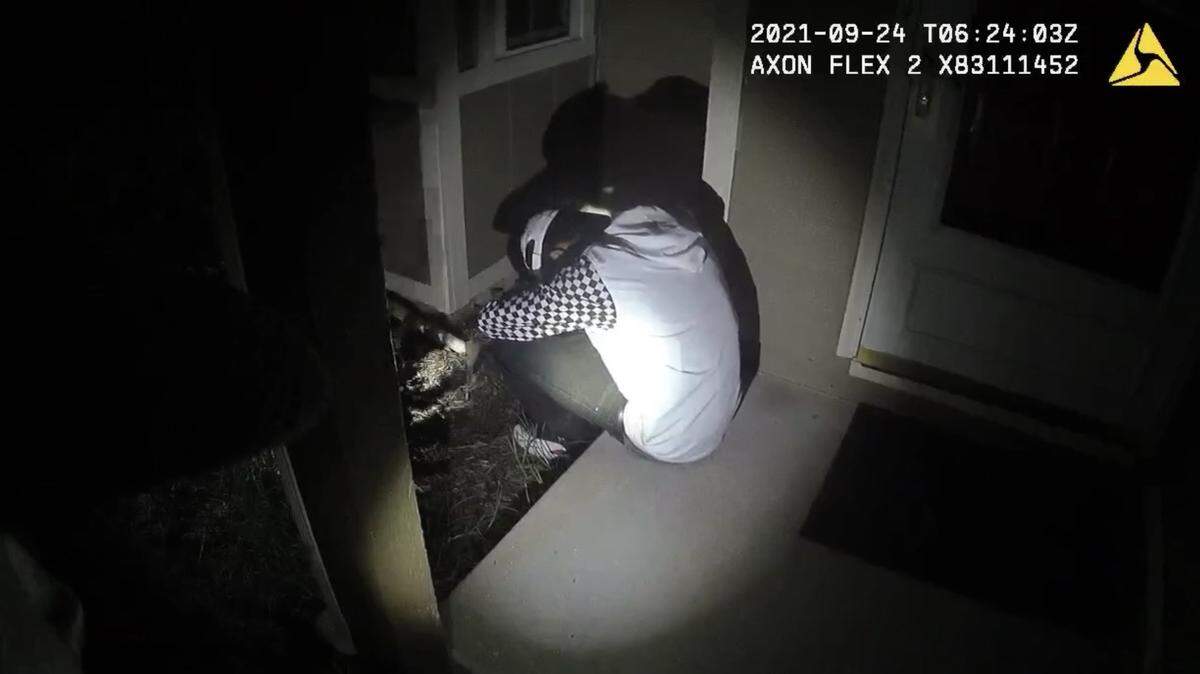
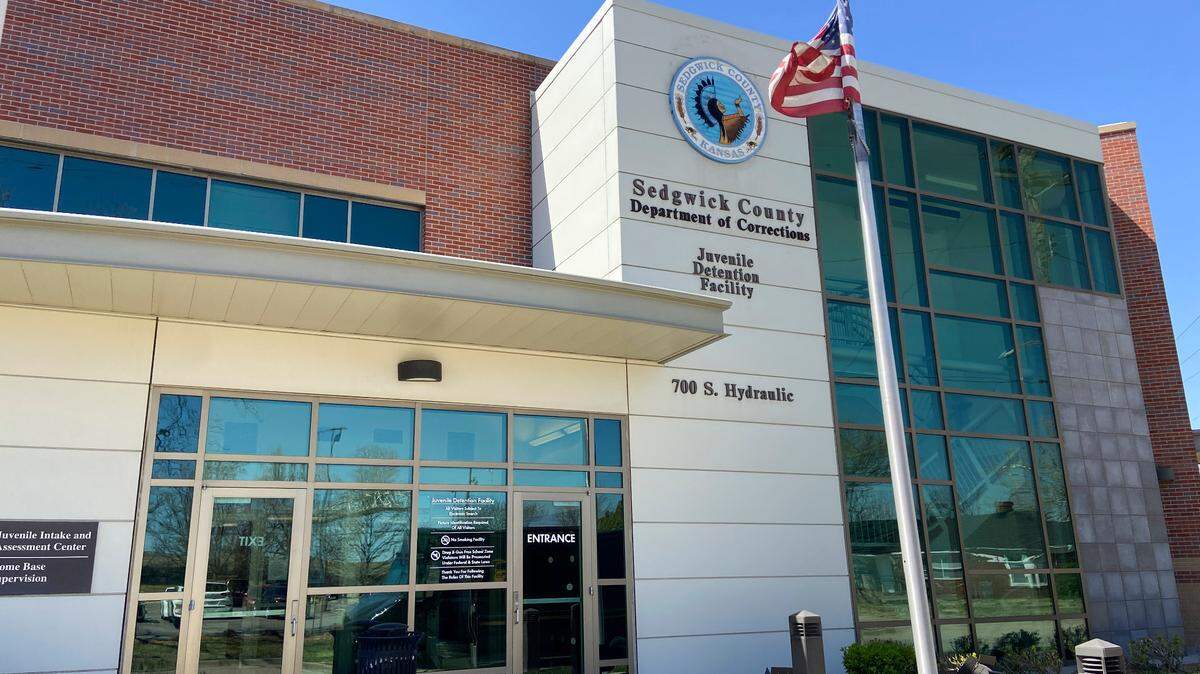
Cedric Lofton’s foster father called authorities in September 2021 seeking help because the 17-year-old was hallucinating and needed to go to a mental health facility. Instead, police took him to the Sedgwick County Juvenile Intake and Assessment Center, where he had to be resuscitated after he was held facedown for more than 30 minutes during an altercation. He died two days later.
Expand All
A federal civil rights lawsuit will move forward against the five Sedgwick County corrections officers who pinned 17-year-old Cedric Lofton to the floor of a holding cell until he went into cardiac arrest and died in September 2021.
Eric Melgren, chief judge of the U.S. District Court of Kansas, denied the officers’ petition to dismiss all claims against them, saying in an Oct. 3 ruling that a jury must decide who to believe about what happened inside a small cell at the Juvenile Intake and Assessment Center.
A video camera in the lobby captured the struggle, but the view of the officers and Lofton is obscured by the cell door and the angle of the camera. No audio was captured.
A jury trial is scheduled to begin Dec. 3 and is expected to last 10 to 15 days. An appeal of Melgren’s decision by the county officers could potentially change the schedule. Jeffrey Kuhlman, the officers’ lawyer, said he’s analyzing the orders and weighing his clients’ options.
The five juvenile corrections officers — William Buckner, Karen Conklin, Benito Mendoza, Brenton Newby and Jason Stepien — have said that they did not apply pressure to Lofton’s back or neck area as they held him down in the prone position for more than 40 minutes. They have said they continued to pin Lofton to the ground because they feared for their safety, and their lawyers argued that it was Lofton’s own resistance that caused his death.
Medical experts and Lofton’s legal team say video shows the officers had control of Lofton and that he stopped resisting within five minutes. Forensic evidence of blunt force trauma to Lofton’s back and neck area suggest the officers used “significant force” that cut off Lofton’s oxygen supply and ultimately killed him, court records show.
“Realistically, the truth likely lies somewhere in the middle,” Melgren wrote. “It seems obvious to the Court from the video footage that Lofton was not completely subdued after the five-minute mark. Yet, it is also clear that there are large gaps of time — even acknowledged by Defendants — during which no observable movement occurs. Specifically, Defendants lists various time stamps during which they claim Lofton’s resistance is visible on the footage. Notably, they do not note any resistance from timestamps 29:23 to 41:25, which constitutes a 12-minute period.”
Melgren denied the officers qualified immunity for excessive force charges, saying the question of whether the officers had “sufficient control over Lofton” to safely move him out of the prone position is “material to the question of whether continued use of the prone position constituted excessive force” and must be decided by a jury.
Melgren also said the video evidence of the officers pinning Lofton is inconclusive regarding pressure applied to his back.
“The Court cannot conclude that the officers’ conduct was extreme or outrageous without resolving the preliminary questions of whether the officers placed significant pressure on Lofton’s back and whether Lofton continually resisted restraint,” Melgren wrote.
Sedgwick County’s legal team argued the five employees were entitled to qualified immunity for their actions, claiming in court filings that they reasonably feared that the 17-year old posed an imminent threat to officers throughout the fatal incident.
Melgren did dismiss several claims, including negligence and deliberate indifference to serious medical needs. But he declined to issue summary judgment on whether or not the officers used excessive force against Lofton, intentionally inflicted emotional distress, engaged in extreme and outrageous conduct, battery, or failed to intervene and possibly save Lofton’s life.
“It wasn’t a complete win for us but it was a substantial win,” said Steven Hart, one of the attorneys representing Lofton’s brother, Marquan Teetz.
“It’s a near complete validation of our claims,” Hart said. “The judge really got it. He understood that there are issues in dispute and he recognized and endorsed our right to have this case tried to a jury of [Lofton’s] peers.”
The only remaining claims in the lawsuit are against the five county officers. Melgren previously dismissed from the case the Wichita police officers who brought Lofton to juvenile lockup, as well as Sedgwick County and the city of Wichita, which were originally named as defendants.
Since February 2022, the county has spent $733,307.87 on legal expenses fighting Teetz’s lawsuit, spokesperson Nicole Gibbs said. She declined to comment further on the active litigation.
Back and neck injuries
The Sedgwick County Medical Examiner’s autopsy report determined Lofton’s death was a homicide from “complications of cardiopulmonary arrest sustained after physical struggle while restrained in the prone positions.”
The report, completed by Chief Medical Examiner Timothy S. Gorrill, also noted several signs of blunt-force trauma on Lofton’s shoulders and back, including bruises and abrasions in the middle of his upper back and in the middle of his back when he examined the teen’s body on Sept. 27, three days after Lofton went into cardiac arrest and one day after his death in a Wichita hospital.
Jane Turner, a forensic pathologist hired by Lofton’s lawyers, viewed photographs and reviewed Gorrill’s findings. She also examined Lofton’s body on October 20, 2021, and found “extensive hemorrhages of his back and shoulders associated with cutaneous injuries documented in my and Dr. Gorrill’s examinations.” She found that the “most severe injuries are located at Cedric’s shoulders and back, with extensive acute hemorrhage.”
“The presence of injuries to Cedric’s face, head, neck, shoulders, and back is consistent with the JIAC/JDF officers having applied significant force to his body while he was in a prone position for an extended period,” Turner wrote in a report that has become part of the court file. “Based on my review of this incident, it is far more likely than not that the extensive hemorrhaging in Cedric’s back and shoulders was the result of such significant force applied by JIAC/JDF officers. It is my opinion within a reasonable degree of medical certainty that the cause of Cedric Lofton’s death is prone restraint with cardiac arrest.”
Those findings contradict the findings of Sedgwick County District Attorney Marc Bennett, who declined to pursue criminal charges against the officers in Lofton’s homicide.
Bennett wrote that he would not pursue involuntary manslaughter charges against the county employees because they said they didn’t lay on Lofton’s back or torso, even though video evidence was inconclusive.
“It does not appear that any of the [officers] laid directly on top of or placed their weight on Cedric’s back/torso,” Bennett wrote in a report on his decision not to file charges.
“Had anyone put their full weight on his back/chest for an extended period of time during this struggle, it is hard to imagine Cedric could have remained conscious and struggling for 35 minutes,” Bennett continued. “The lack of significant blunt force injuries located during the autopsy to his torso/back/chest and the presence only of minimal abrasions and contusions – further diminishes such an argument. Holding someone by the arms, and lower legs while the person struggles does not establish an ‘unjustifiable risk’ sufficient to prove reckless mens rea element under Kansas law.”
Melgren, the federal judge, said a jury should ultimately decide the question.
“The doctors conclude that these injuries were indicative of significant weight or pressure being applied to those areas of Lofton’s body,” Melgren wrote. “Specifically, the doctors opined that such pressure contributed to the development of Lofton’s cardiac arrest, which ultimately caused his death.”
By contrast, the defendants say that none of the officers applied their body weight or significant pressure to Lofton’s back or airways.
“Specifically, they claim that Newby’s and Buckner’s S.A.F.E. holds involved them [lying] to Lofton’s side without putting their bodyweight directly on him. Further, Defendants argue that as Conklin kneeled on the floor, she placed her hands on Lofton’s hips to prevent him from standing up but did not lay her weight across his back,” Melgren wrote.
The judge wrote that the dispute over how officers restrained Lofton “could influence the outcome of the lawsuit” and that because “a rational jury could find in Plaintiff’s favor on such evidence,” summary judgment dismissing the excessive force claims and other related claims would be inappropriate.
Melgren also denied defendants’ request to dismiss claims that they intentionally inflicted emotional distress on the teen. Attorneys representing the officers contended that because Lofton was already experiencing a mental health crisis, plaintiffs would need an expert witness to opine on how Lofton’s distress worsened at JIAC. Because the deadline for designating expert witnesses has passed, they argued, the claim should be dropped. Melgren disagreed.
“Frankly, the Court is uncertain that requiring an expert to testify on causation would help the jury reach a conclusion that it would otherwise be unable to reach,” he wrote. “It does not take a medical professional to understand that enduring the physical force of four adult officers to the point where the mind goes unconscious and heart stops beating would induce significant mental and emotional distress throughout the 40-minute process— regardless of a preexisting mental crisis.”
Previous coverage:
Judge drops Wichita police officers who arrested Cedric Lofton from civil lawsuit
Sedgwick County, Wichita did not violate Cedric Lofton’s civil rights, federal judge says
This story was originally published October 4, 2024 at 2:34 PM.