Sedgwick County closes facility that kept youth out of detention, cites staffing shortage
READ MORE
Death of Wichita teen at Sedgwick County facility
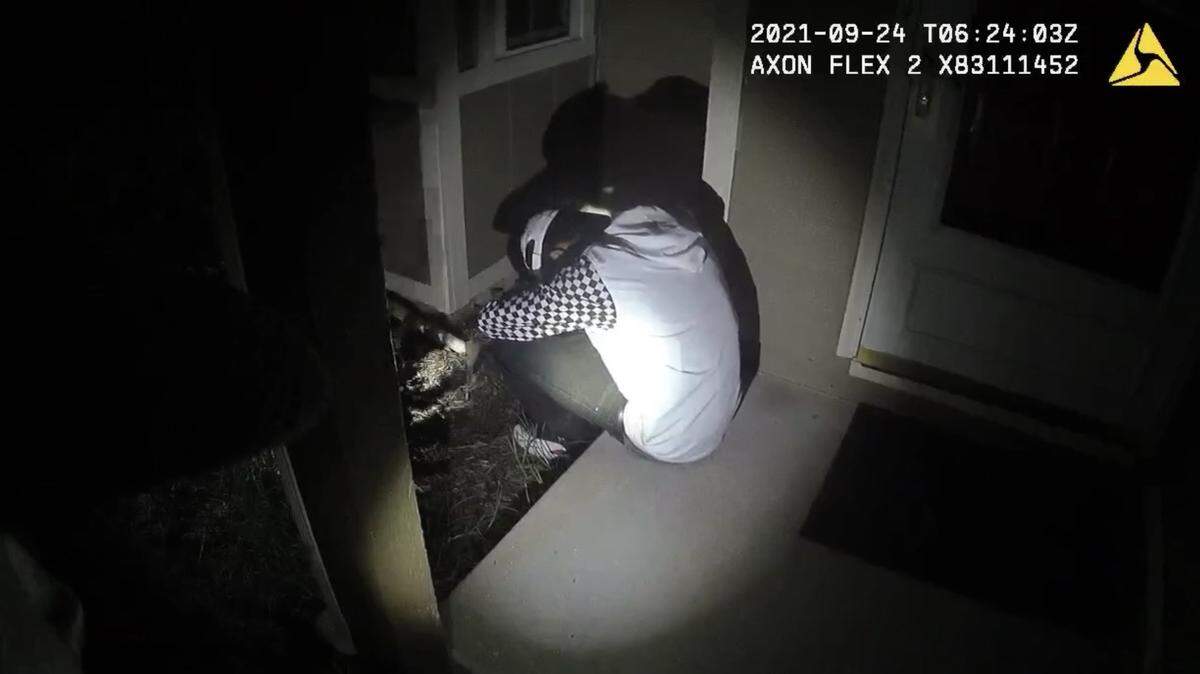
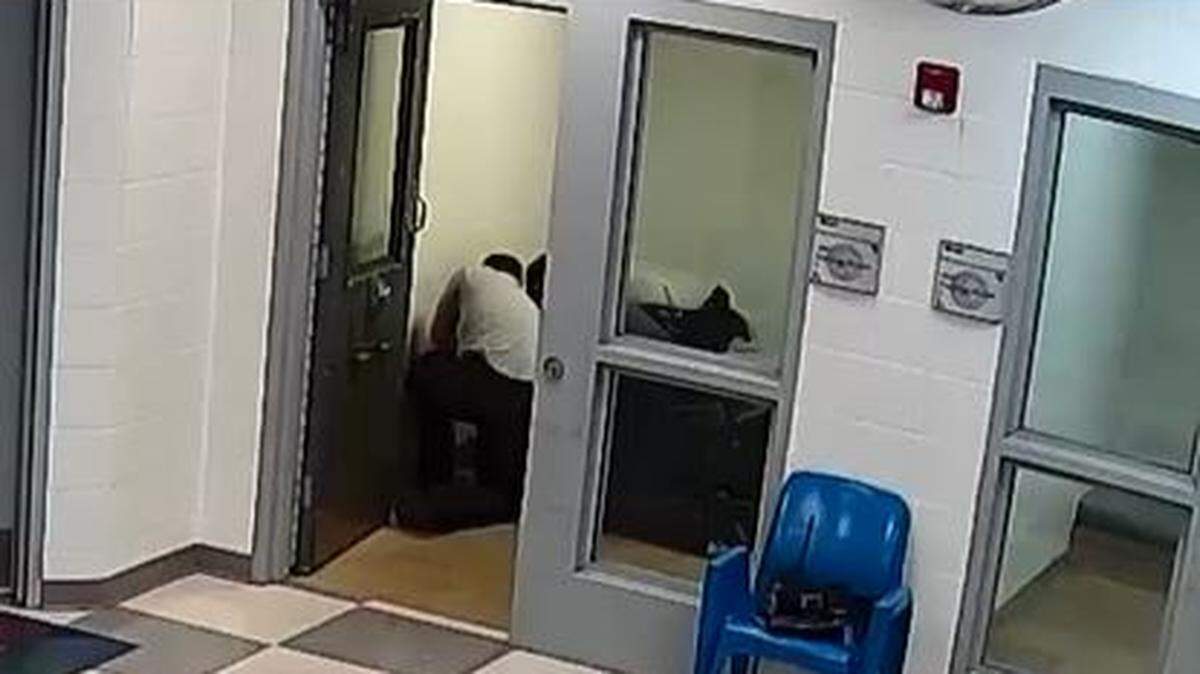
Cedric Lofton’s foster father called authorities in September 2021 seeking help because the 17-year-old was hallucinating and needed to go to a mental health facility. Instead, police took him to the Sedgwick County Juvenile Intake and Assessment Center, where he had to be resuscitated after he was held facedown for more than 30 minutes during an altercation. He died two days later.
Expand All
The Kansas Department for Children and Families has suspended operations of the Sedgwick County Juvenile Residential Facility, an alternative to detention for juvenile offenders and emergency shelter for foster children in the Wichita area.
Sedgwick County officials say they were forced to temporarily shut down the program because the county does not have enough employees to safely staff it. Reformers say the decision runs counter to statewide efforts to reduce juvenile incarceration and sets up children to re-offend.
The closure deals a blow to the local juvenile justice system as the county works to reform youth corrections after the in-custody death of 17-year-old Cedric Lofton, who was restrained in a prone position for more than 40 minutes by county employees at the Juvenile Intake and Assessment Center. A joint city-county task force recommended moving away from confinement and toward a more restorative justice system that seeks to heal instead of punish.
The JRF program allowed up to 24 juvenile offenders to take part in community-based services while completing their sentences. They could wear their own clothes, spend time with their families, be involved in co-ed activities, attend their base schools, do community service work and see their own doctor or therapist.
In the most recent “performance measures” report by Sedgwick County, 97% of juveniles in JRF reported feeling safe in the program and only 1% were arrested for new crimes over a five-year period from 2015 to 2019.
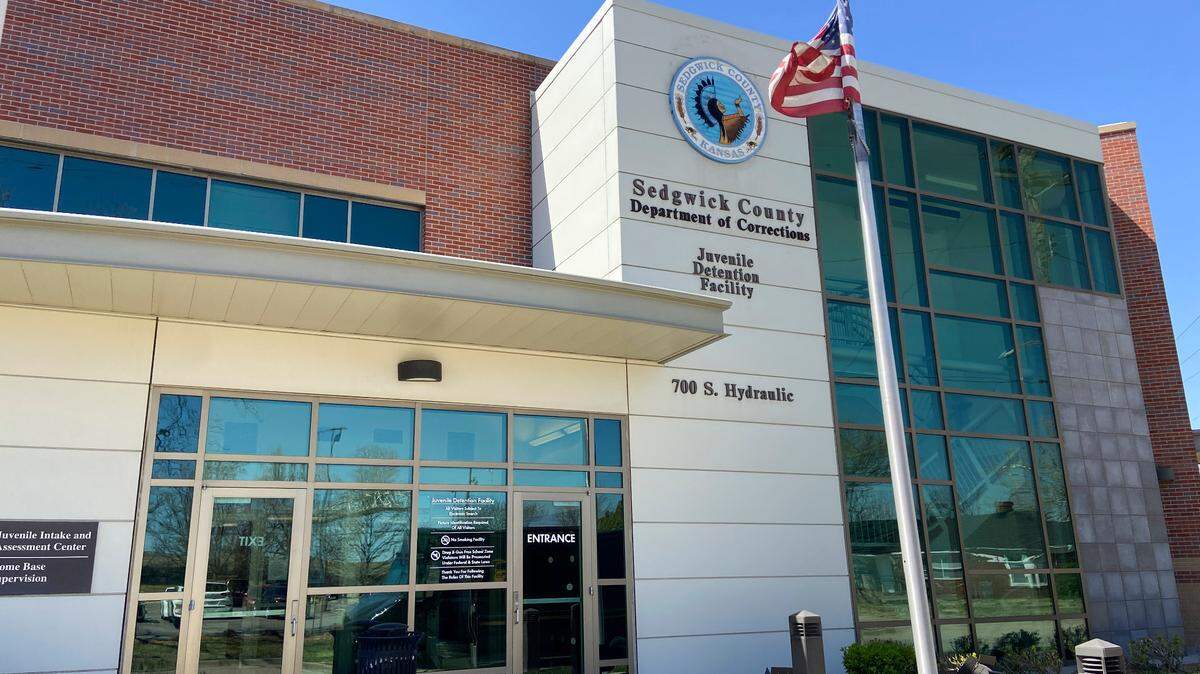
Now, 24 children and teens who would otherwise be eligible for the JRF program will be under lock and key at the Sedgwick County Juvenile Detention Facility.
“Last week, we disbanded JRF, and the kids put their jumpsuits on and became JDF residents,” said Steve Stonehouse, deputy director for juvenile services for the county’s corrections department.
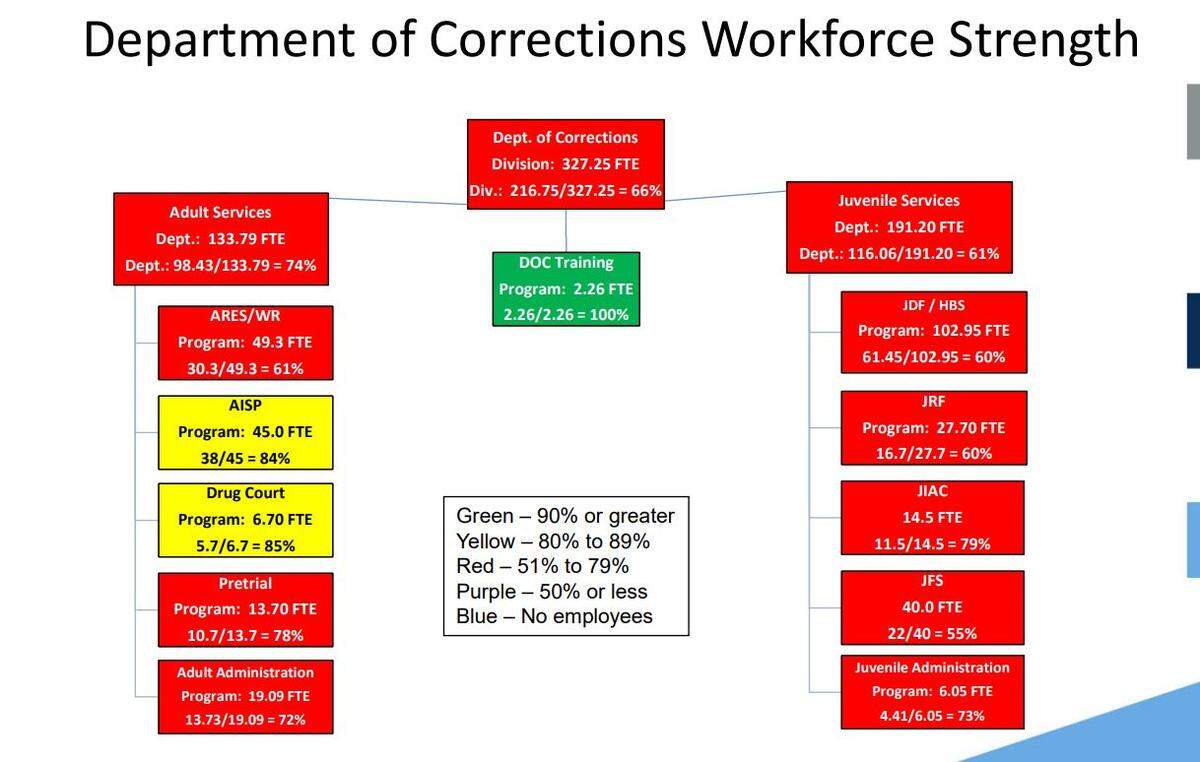
Stonehouse said the county is 11 employees short at JRF and 30 employees short at JDF. Overall, the county’s juvenile services division is down 75 full-time employees out of 191 budgeted positions, according to the latest data from the county.
To make up for the shortage, the county has shifted its 17 residential facility employees to the detention center.
“It is a huge deal,” said Jazmine Rogers, a representative from the juvenile justice organization Progeny. “At JRF, you’re given a lot more freedom. And in JDF, it is just like the adult jail. And because they’re so short staffed, young people are basically stuck in solitary confinement. It’s hard trying to get the public to care about it because they see it as young people who deserve to be there, but the fact of the matter is it’s young people who deserve to be at home with their families. They deserve to be given positive things to do, such as school and mentorship and programs where they get to have some type of social interaction.”
The JRF program is a 24-bed, state-licensed alternative to detention founded in 1994 for male and female at-risk youth between ages 10 and 17. It was licensed to operate out of a county-owned building at 881 S. Minnesota, but in recent months had moved into the Juvenile Detention Facility at 700 S. Hydraulic so the county could use JRF staff at the detention facility, county officials said.
“A couple of months ago, we moved the juvenile residential facility residents into the juvenile detention facility, isolated them from the others and used JRF staff to manage that population,” Rusty Leeds, assistant county manager, told county commissioners recently. “And we also used JRF staff to supplement JDF staffing because of the shortage of employees.”
“DCF gave us a waiver to allow us to do that, but it had to be renewed on a 30-day basis. And we had to have a plan going forward to re-establish JRF permanently. We couldn’t keep limping along having them housed at JDF. We were about two months into that, and DCF indicated they were not going to give us another waiver because there wasn’t an end in sight to our staffing problems, and since we didn’t have a solid plan on a date that we could reinstate full operations of JRF, they said we’re not getting any more waivers.”
Leeds said the county is unable to keep juvenile corrections staff for a variety of reasons.
“We lose people, we hire a couple people, and then we lose two or three more for a number of reasons, largely because of burnout, overwork and because of pay,” Leeds said.
The starting salary for an officer in juvenile corrections is $17.82 an hour. Corrections employees also receive a 10% boost for COVID related “critical pay” and are eligible for a $1,500 sign-on bonus after 60 days. Stonehouse said some supervisor-level employees have recently transferred to other county departments that don’t require work on nights and weekends.
The staffing shortage had already limited the number of children who could be in the JRF program to five instead of 24. But Stonehouse said at least 24 juvenile offenders were eligible.
“When we closed, we only had five,” Stonehouse said. “Because that’s what we had staff for.”
“It’s an alternative for judges, and judges like it, and we cut them off today — or this week — because we can’t staff it,” Leeds told county commissioners. “So they don’t have that alternative at this point.”
‘More open, more interactive’
Nykia Gatson, 20, said she was in the juvenile justice system for nearly six years, including stays at JDF and JRF. She said JRF is a better program for juveniles than JDF.
“There is a big difference between JRF and JDF,” she said. “JDF is jail. JDF is almost similar to prison.”
“JRF is more friendly, more open, more interactive,” Gatson said. “You get to do things, you get to go outside in the real world, you get to go to physical school, you get to go to mental health services, a real therapist that you’ve worked with. You get to see your family members; they get to bring you food. Like, this is real life. This is normal. This is OK.”
“At JDF, where you’re in your room all day, it’s really like you are confined all day. . . . You’re constantly monitored. You get patted down. Sometimes, you get strip searched. It’s just little things like that, it’s violating a kid.”
Rogers said, if anything, the county should have transferred juvenile offenders to JRF and closed down JDF if it was having staffing issues. She said she fears closing JRF denies juvenile offenders the opportunity to turn their lives around.
“A lot of young people get out and re-offend because they have to go back into survival mode,” Rogers said. “Almost all of the young people in these facilities have experienced a lot of trauma in their lives before they committed a crime, before they ended up in these facilities.
“So if you’re in solitary confinement — if you haven’t had any healthy ways to address the trauma and things you’ve been through, if nobody’s been able to help you find coping skills that work for you — when you get out, you’ve been set back further than when you went in because you were in these facilities and there was no remedy for that,” Rogers said. “So now you’re out, you don’t have a job, you may be homeless, and it just sets young people up for failure.”
Commissioner: ‘Not the right answer’
Sedgwick County commissioners said they were blindsided by the announcement of the temporary shutdown of JRF.
Commissioner Jim Howell said the suspension is a policy decision that should have been made by the county commission.
“We’re simply turning our back to the problem,” Howell said. “This is another example of where we’re not actually effectively solving the problems. We’re simply, because of money, backing away from any type of effective program that actually helps these kids not re-offend and not become issues in the community, not end up in a penitentiary in the future.
“This is not the right answer,” he said. “I think we need to find out what it’s going to take to solve the staff issues, but this is an investment in solving the problem in a very foundational way. I think to say we don’t have the money is a policy choice.”
Leeds pushed back on Howell’s assertion that the decision should have been put to a vote. The county is not shutting down the facility for a lack of money but because it cannot keep employees, he said.
“This is not a recommendation to close JRF,” Leeds said. “This is just giving you information that we can’t run it right now. We don’t have staff to run it. We would like to open it back up as soon as possible; we simply don’t have the staff.”
Commissioner Sarah Lopez-Lewis said she’s disappointed in the decision but understands why it had to be made.
“Obviously, I hate to hear that we’re in a position that we have to do this,” Lopez-Lewis said. “I understand why we have to do that at this point and hope that we can get that up and running as soon as possible again, but I do think it just makes the point that going into this budget cycle, our number one priority has to be pay to our employees now, to retain them and to attract new employees.”
This story was originally published May 12, 2022 at 4:43 AM.