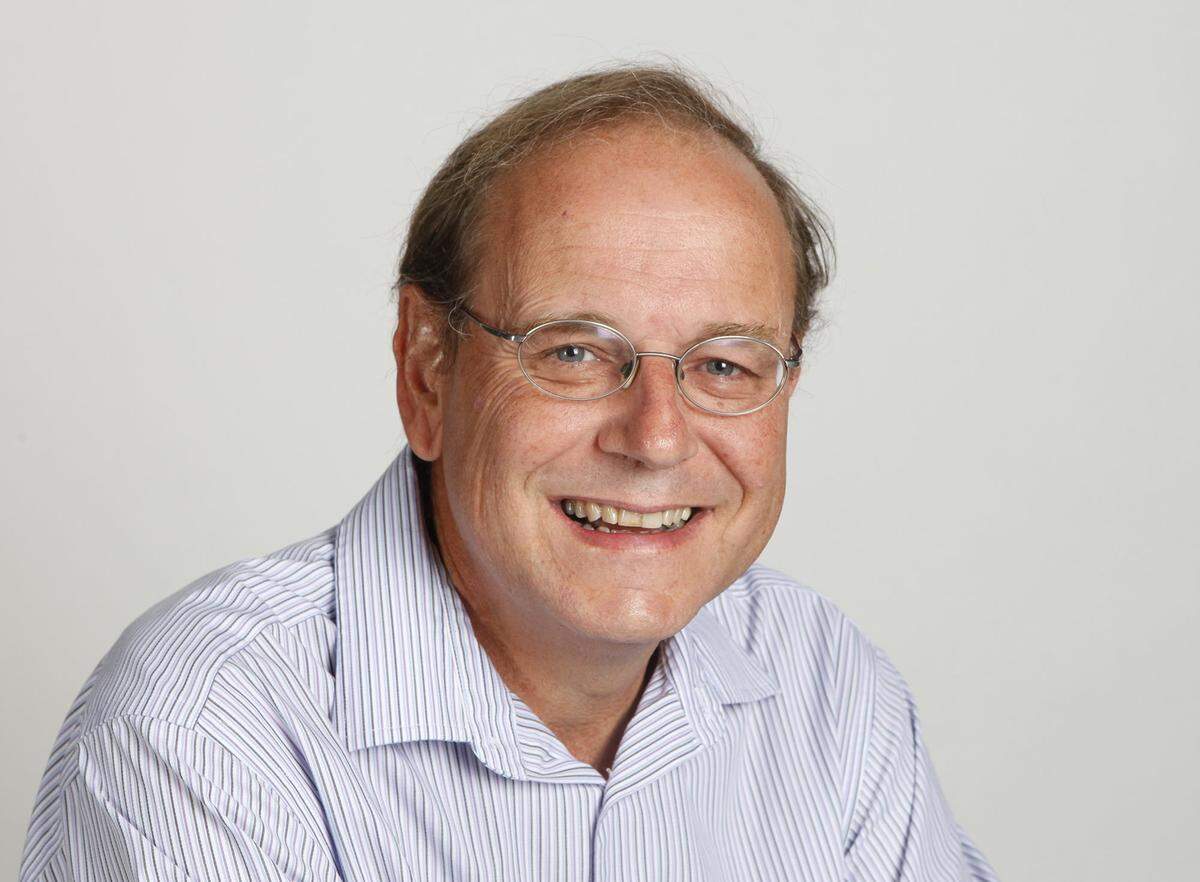
Michael O’Donnell calls Wichita Riverfront plan a farce to justify razing Century II
Sedgwick County’s representative on a committee overseeing a mammoth redevelopment effort on the east bank of the Arkansas River is calling the process a farce, designed mainly to drum up support for tearing down Century II and replacing it with more than $1 billion in new public and private development.
County Commissioner Michael O’Donnell says the committee is completely focused on building new convention and performing arts facilities and hasn’t taken a serious look at what it would take to save Century II.
O’Donnell represents south Wichita and says the committee isn’t listening to him or to thousands of residents who want to keep the iconic blue-roofed roundhouse that now serves as the city’s municipal auditorium.
“We’re in an echo chamber (on the committee) I think,” O’Donnell said. “Anybody asking questions or pushing back is getting discounted … I’m wondering if these other people are even listening or if truly nobody’s talked to them about it.”
Jon Rolph, co-chair of the Greater Wichita Partnership and a member of the Riverfront Legacy Master Plan committee alongside O’Donnell, questioned O’Donnell’s motives for speaking out before the plans are complete.
“A comment like that serves Commissioner O’Donnell seeking to get re-elected,” Rolph said. “But I think when you look at the evidence out there, there’s almost no evidence to support his standpoint and there’s a pile of evidence that shows we’ve been trying to go out and engage the community as broadly and openly as we can.”
By and large, city and county officials say they want to let the process play out, although some say they’re hearing the same concerns and are siding with O’Donnell, the first member of the Riverfront coalition to publicly break ranks and question the process.
“I get more people concerned about the Boeing 737 (grounded by federal aviation officials due to accidents) than I do asking if the Wichita Symphony has the best acoustics available,” O’Donnell said. “Let’s get in the real world for a minute.”
Billion dollar plan
At issue is the Riverfront Legacy Master Plan, a comprehensive process to replan and redevelop to try to bring more activity to the east bank of the Arkansas River downtown.
The area involved in the plan is from Douglas on the north to Kellogg on the south, between Main on the east and the river on the west. It includes the grounds of the Century II and the WaterWalk, an ambitious but underperforming redevelopment project undertaken in 2002.
The Riverfront committee is taking the position that the Century II roundhouse is obsolete for its current use, mainly a performing arts center hosting the symphony, Music Theatre of Wichita and traveling Broadway shows.
All the plans envision replacing it with new and separate convention and performing arts centers.
All but one of the scenarios envision demolishing the entire Century II complex for a combination of parkland, new public facilities and/or private tax-generating businesses to partially fund the project. One scenario would preserve the metal skeleton of the roundhouse as a design element framing an open park space.
The planning process is being funded with $700,000. City and county government are spending $100,000 each and $500,000 is coming from a constellation of private and quasi-public groups including the Chamber of Commerce, Visit Wichita, Downtown Wichita, Greater Wichita Partnership, Wichita Community Foundation and W, an association for young professionals.
The money is going to Populous, an international design firm, that has released five potential plans for the site, ranging in price from just under $1 billion to $1.5 billion. After a round of public input, elements from the proposals will be condensed into a final plan for presentation to the City Council next month.
Council member Brandon Johnson, the city’s representative on the Riverfront committee and whose district includes the plan area, said he’s talked with residents who supported saving Century II but changed their minds when informed of the daunting task of remodeling the 50-year-old building.
Previous studies have estimated the cost at $180 million to $270 million to bring the facility up to current standards that would accommodate all but the biggest traveling Broadway shows.
Critics, however, say the proposals are inflated with unnecessary frills – one plan proposed physically raising the roof to accommodate hanging props like the giant chandelier that’s part of the set for the traveling version of Phantom of the Opera.
Johnson acknowledged that there could be excess expenses baked into the estimates, but even if they were eliminated, he thinks Century II would likely need at least $150 million in upgrades to continue as a performance center.
In any case, Populous wasn’t hired to plan what to do with Century II, but to plan improvement of the riverfront, Johnson said.
He said he thinks they’re accomplishing that.
Johnson also said he doesn’t see a problem with the community engagement activity so far and praised committee members for making themselves available to explain the process and plans to community groups of all sizes – including a presentation at a community meeting he held on Saturday.
He said he’s not against saving Century II. “If a viable solution is put forward, it could be,” he said.
But so far, most of the ideas for Century II have been non-starters, he said.
For example, some have suggested turning it into an aquarium, but no one has come up with a way to fund such as project and in any case, it would compete with long-term plans for one at the Sedgwick County Zoo, he said.
City Council member Cindy Claycomb said she’s also open to considering repurposing Century II if the right idea comes along.
“The ones that have surfaced, some of them are fantastic ideas, but not economically feasible,” she said. ”So I think that’s the question: Is there something economically feasible that can be done? And I don’t think that question’s been answered in my mind.”
Bill Warren, a Century II supporter who built and then sold a near-monopoly on Wichita movie theaters, has offered to use his contacts and experience to help the city find a developer that could turn the iconic building into a destination building that benefits the city. And he said he would do it for free.
An empty shell?
O’Donnell said the one Riverfront Legacy proposal that includes Century II as an actual building can’t be taken seriously because it takes away everything happening there now and doesn’t envision anything happening there in the future.
“Jon Rolph stopped me at the Riverfront Legacy meeting at the Hyatt and he says, “Hey, look, we save Century II in that one. I said “That’s not saving Century II, I wouldn’t even support saving Century II in the way you have this set up. You’re spending a billion dollars and you have a shell, you have no plans for it.’
“I voted to spend $100,000 of county money so that we could at least have a seat at the table and they’re not even listening.”
O’Donnell said he thought it would be more like the process that the county used when it asked voters in 2004 for a temporary sales tax increase to build Intrust Bank Arena.
The county provided a realistic estimate of what it would take to fix up the Kansas Coliseum versus the cost of a new downtown arena, he said.
“What they did with the Coliseum I think was much more transparent, in saying hey, we have a couple options here,” he said. “They didn’t take it off the table. They didn’t say the Coliseum can’t be used further, they allowed the voters to decide.”
Rolph said he’s “disappointed that Commissioner O’Donnell feels the way that he does,” but that his concerns are being heard.
“What’s disappointing to me is that it feels like Michael is putting the personal, and his own re-election, above his community,” Rolph said.
O’Donnell said “that’s silly.” As an elected official, it’s his job to represent his constituents — the voters in his district — and he said he’s hearing that they want to remodel Century II.
O’Donnell and Rolph fundamentally disagree on whether that has been given enough thought. O’Donnell said he thinks it’s been overlooked in favor of other priorities that the community at-large doesn’t think is necessary. Rolph said the issue has been thoroughly studied.
“What’s disingenuous about what he’s saying,” Rolph said, “Is if he’s been sitting in these meetings and paying attention, he’s heard the conversations about the realities of saving Century II and the cost and the hard parts about this.”
Century II just isn’t suited for a performing arts center or a convention center, Rolph added.
That tracks with what the Riverfront Legacy Master Plan group has been saying all along, building on previous studies by Populous and other consultants.
O’Donnell’s not buying it, especially given the high price of replacing Century II, he said.
In a recent meeting about the Riverfront plan, “Amber Luther from Populous told me, ‘Commissioner, it’s not feasible,’” to remodel Century II, O’Donnell said. “And I said ‘I hate to be disrespectful, but don’t come to my office and tell me something’s not feasible when you’re bringing me plans between a billion and a billion and a half dollars.’”
Elected officials divided
City Council members Jeff Blubaugh and James Clendenin said they’ve been hearing the same sort of input as O’Donnell from their constituents.
Blubaugh said during his recent campaign for re-election to the City Council, he sent out a survey to about 5,000 voters.
Although the mailing didn’t have a question on the riverfront plan, “People were writing that on the survey: ‘Century II, save Century II,’” Blubaugh said.
He estimated that about three-quarters of respondents wrote something about it on their form.
In addition to Century II, the former downtown library is also slated for demolition in the Riverfront plan and Blubaugh says he’s gotten an earful on that too.
“I’m not getting anybody saying they want to scrape those buildings,” he said. “People are coming to me saying they don’t feel like we took enough effort to repurpose Century II.”
Blubaugh said the Coliseum, considered a white elephant when it was shut down in favor of the Intrust Bank Arena, has been successfully repurposed by Wichita State University.
The former sports and entertainment arena is now used by WSU’s National Institute for Aviation Research as a laboratory and testing facility.
Clendenin said he also wants to see more effort made to keep Century II.
“I think Michael and I are on the same page,” Clendenin said. “I talk to my constituents in southwest Wichita and the subject of tearing down Century II is met with impassioned opposition. I truly do believe we need to figure out a way through this plan to honor the past and look forward to the future.”
Several other officials are still on the fence.
Sedgwick County Commissioner Lacey Cruse said she’s “letting it play out.”
“I mean, there’s been no final decisions made,” she said. “I think they’ve done a great job of engaging with the community, . . . and I think it’s too soon to really tell what’s going to happen. Now is the time to engage.”
Although the Riverfront plan’s proposals have all stripped Century II of its primary functions, Cruse said that doesn’t necessarily mean it will be torn down.
“So I think we’re kind of getting a little up in arms about this when we really don’t know yet,” she said. “And I love the community engagement on both sides.”
Commissioner Pete Meitzner wouldn’t say what he thinks should be done with Century II.
“It’s a little bit disrespectful and somewhat arrogant to the approach that everybody has kind of agreed to” for him to share his opinions until after the coalition makes a recommendation, he said.
“I guess it’s a building; I don’t know what to do with it,” Meitzner said. “It’s not a convention center at all. And it struggles — drastically struggles — as a performing arts center.”
To vote or not
One major unanswered question is whether the project will be put to a vote of the people, like Intrust Bank Arena, or passed by City Council action, like the new baseball stadium under construction on the west bank of the river at the former site of Lawrence-Dumont Stadium.
Rolph, a local restaurateur that has partnered with the city in the past for projects, said the Riverfront Legacy Master Plan’s model is the best way to plan, because it takes it outside of the political process.
“An effective model is when the private sector funds and helps take the lead and partners with the city and county, because you can push through different election cycles and create a concrete plan to go execute,” he said.
But because the entire area considered under the Riverfront plan is city-owned property, elected officials are going to have to answer to voters sooner or later. If they make a decision that’s unpopular, they could be voted out.
However, consensus seems to be emerging among local officials to put it on a ballot.
Johnson said he doesn’t see how the plans can be accomplished without doing that.
Any plan of this size will almost certainly require a sales tax increase – which could be county- or citywide – and state law requires a public vote to do that, he said.
Cruse said she supports putting it to a vote of the public, although she would rather the development be privately funded instead of publicly funded.
Commissioner Pete Meitzner said he agrees something so big should be put to a vote by the people.
“My thing is: respect the current process. This is city-of-Wichita driven, so we will officially be brought in when it’s time to be brought in,” he said.
Claycomb, however, said she thinks it could go either way.
I haven’t made my mind up on that,” she said. “Is it that we spend a lot of money to do a public referendum and is that the best use of taxpayer dollars? I don’t know. So I don’t have enough information to say. But in general, having people vote on things — it depends on the magnitude of the decision, I think.”
Rolph said the project should definitely be left up to the city, but that the purpose of his group’s work is to give the city options.
“This has never been about just Century II,” he said. “Part of the idea of doing a master plan was that we wouldn’t try to solve piecemeal inside of this thing. We’re looking at it holistically.”
“Doing nothing has always been on the table,” Rolph said.
This story was originally published December 8, 2019 at 7:01 AM.