This is what Wichita residents say they want in our next police chief
READ MORE
What does Wichita want in its next police chief?
With Police Chief Gordon Ramsay’s upcoming resignation, people in Wichita are already thinking about what qualities and priorities the next top cop should have.
Expand All
With Police Chief Gordon Ramsay’s upcoming resignation next month, people who live and work in Wichita are already thinking about what qualities, background and priorities the city’s next top cop should have.
Over the past few weeks, The Wichita Eagle asked residents as well as elected officials, community advocates, organizations and others whose lives and work routinely cross paths with police to share their opinions about the type of law enforcement leader the agency needs.
Most of the more than 80 people who answered The Eagle’s online survey or agreed to a phone or email interview said they want a chief who prioritizes community policing, transparency and diversifying the department so it more-closely mirrors the city’s population.
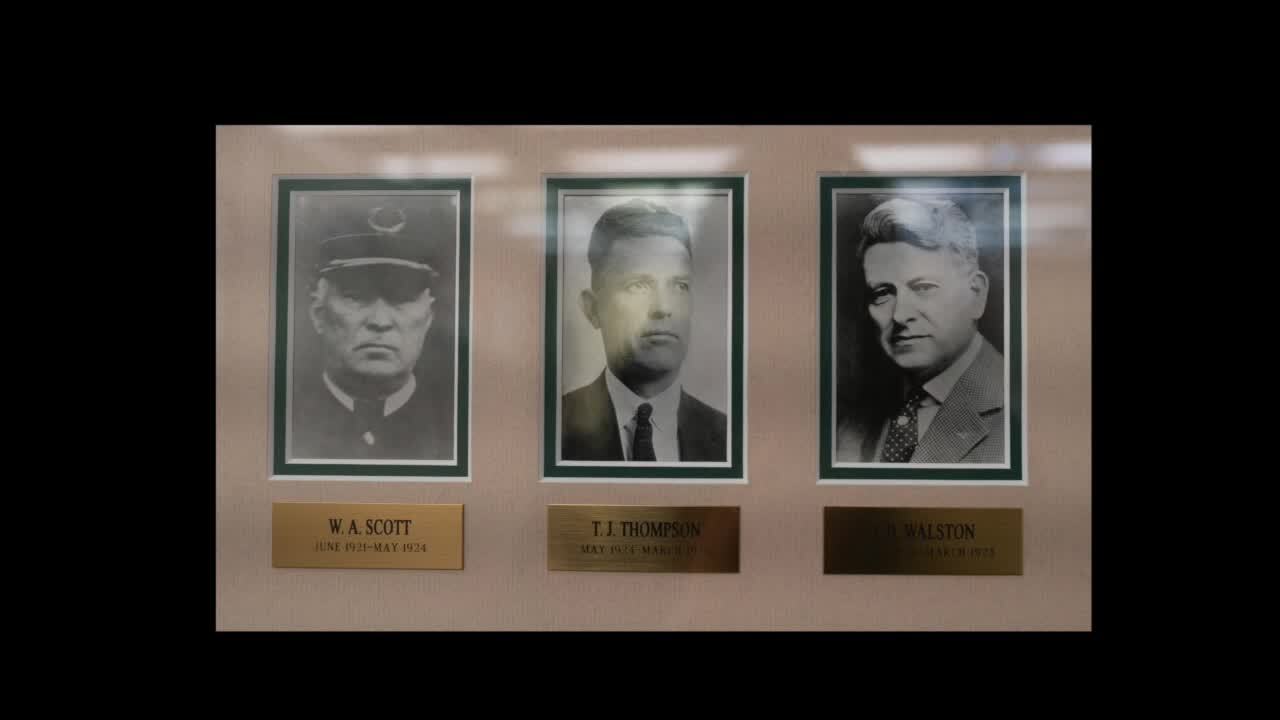
Some said they want the city to pick a person of color or an external candidate. Only three chiefs in the WPD’s 151-year history have been Black men, two of whom were interim chiefs. The next interim chief is also Black. The other chiefs have all been white men.
Before Ramsay, the city last hired a chief from outside of department ranks in 1989.
Many also think someone with several years of patrol and managerial experience at a department similar in size or larger than Wichita’s who has “a proven track record of reducing violent crime” would be the best choice.
The majority of respondents agreed that the new chief, whomever they are, would need to listen to the concerns of all residents and hold “bad cops” accountable.
Many want a chief ready to battle crime while being sensitive to social issues tied to it — homelessness, poverty, domestic violence, mental illness and substance abuse.
And they want better support and training for the officers who handle those 911 calls.
As one resident put it: “We need a chief that is going to bring new ideas.”
Keep progress moving in police department
Mostly, people who were surveyed and interviewed said they don’t want the department to lose track on hard-won progress under a new chief.
Several mentioned strides to diversify the department and recent inroads into the Hispanic and Black populations that have eased some of the distrust historically felt toward police.
“There’s a lot of fear (in the Latino community) due to police, and I think they’ve done a great job building trust, and I’d just like that continued,” said Angel Martinez, president and founder of Love Your Community, an outreach and mentoring organization.
“Having people who look like us policing our communities is important to having an understanding of who you’re dealing with because you relate. That can bring down walls,” he said.
Many stakeholders who spoke with The Eagle also agreed that the next police chief should continue innovative programs introduced in recent years. Those include the three-person Integrated Care Team, or ICT-1, which responds when someone is having a mental health crisis, and ones that address sexual, domestic and intimate partner violence.
“We have made great strides over the last five years in terms of funding and community partnerships and making sure that resources are available for victims,” said Keri McGregor, program director at Harbor House, a local shelter that helps victims of domestic violence — one of the call types to which Wichita police most often respond.
“I hope we don’t lose any ground on that front,” Kathy Williams, executive director of the Wichita Area Sexual Assault Center, said.
Doug Nolte, a retired WPD captain who is now the CEO of the Union Rescue Mission, an organization that helps those who are homeless, wants someone experienced in “social service partnering, so community resources are not wasted.”
“For instance, do we need a large Homeless Outreach Team, or can service providers with the backup of the WPD have a more effective role in taking care of the issues?” he asked.
“We can not enforce our way out of any problem.”
Police Chief Ramsay’s departure
Ramsay, who announced his resignation in December amid rumors of his departure, is leaving the WPD on March 1 to return to Duluth, Minnesota, where he previously served as police chief, to be with his family and explore a run for sheriff. He declined to answer questions for this story through a spokesman, who said his priority now is transitioning the agency to an interim head and “continuing the success” of the department.
Deputy Chief Lemuel Moore, a 30-year veteran, will take over March 2 but is not planning to pursue the job permanently at this time, he told The Eagle.
The last time Wichita looked for a police chief, in 2014, the job was open for more than a year before Wichita City Manager Robert Layton hired Ramsay.
Layton is also responsible for picking Ramsay’s replacement but says he plans to do so with community input — something some citizens and organizations have worried the city would proceed without. He told The Eagle he doesn’t have a time frame yet for hiring a new chief but expects a quicker search than in 2014.
As head of the state’s largest police department, the WPD chief oversees nearly 900 employees that serve a population base of 397,500 people. The department has a budget of more than $102 million.
What makes a good police chief?
The next Wichita police chief will inherit a department that under Ramsay’s lead made considerable strides in improving relationships with the community, hiring and promoting women and people of color and piloting new programs — but also one that’s struggled with filling open jobs, low morale among officers and lowering the city’s crime rate long term, according to respondents.
Those who responded to The Eagle’s survey or who were interviewed individually had a number of ideas about what would make a good chief.
Many said they wanted “a good communicator” who values transparency with both the public and officers and is willing to work with leaders throughout the community — not just politicians — for everyone’s betterment.
One woman summed up her ideal chief simply: “Upfront, involved and personable.”
Others are looking for a leader who has “compassion and understanding of the complexities that go with a diverse population” and “a modern approach to policing” that is “less combative.”
Hire from without or within?
Answers were mixed on whether the city should hire a chief from another department or promote from within.
Those who preferred an internal candidate cited their ties to the city, familiarity with its challenges and needs, and their understanding of the department’s history, procedures and track record.
“If a person presents him/her self with the needed background and qualities, of course promote from within — that local knowledge can be helpful,” a man who lives in east Wichita wrote in a survey response.
More than a third of residents who took the online survey wanted an outsider, though.
Their reasons ranged from an internal candidate being “too comfortable” with the status quo to a desire for a “fresh outlook” on “old problems.”
“The department still needs to continue a path of reform. An internal candidate may want to get things back to old times,” one resident with an Andover-area zip code said.
About half of community survey respondents didn’t care either way, as long as the most-qualified person filled the job.
“Qualifications trump everything else,” Wichita Crime Commission president Jeff Geoffroy said.
The Fraternal Order of Police
The president of the local police union, the Fraternal Order of Police Lodge 5, is among those calling for the city to hire its next chief from outside of the department. In an emailed response to questions, he said officer morale “has plunged under the current administration.”
Hiring from within “would leave the Police Department in the same rut,” David Inkelaar wrote.
“Staffing issues, lack of support from Command Staff coupled with retaliation and the rise in violent crimes are all challenges our Officers face every day,” Inkelaar said in the email. “The current Command Staff decisions and treatment of employees have diminished the trust in the current administration, which will have a long-lasting effect.”
He urged the city to seek a transparent and forward-thinking chief “who does not pass blame,” “is not afraid of being held accountable” and is a “strong supporter” of officers.
“The Wichita Police Department is in desperate need of an inspiring Chief to bring out the best in the Department’s Officers and in the Community the Officers serve,” he wrote.
The union is the organization with perhaps the most external influence over police operations because of the contract it negotiates with City Hall. The union represents more than 600 WPD staff members.
Mental health, de-escalation and transparency
Changing how police respond to calls with a mental health component was a common topic mentioned by residents and community stakeholders in interviews with The Eagle.
People call police “whenever they don’t know what else to do” even though law enforcement departments generally aren’t equipped to handle mental health issues, Eric Litwiller, director of development and communications for the Mental Health Association of South Central Kansas, pointed out.
He says a chief must “recognize not only the mental health issues themselves, but also the ancillary issues that go along with that” including substance abuse disorders and homelessness, he said.
One resident said they didn’t think traditional policing meets societal demands because cops “are poorly trained in general and lack the training to handle some of the most common problems.” Others noted that police officers aren’t social workers.
“An increase in training for Wichita Officers in dealing with mental health crises and deescalation of situations involving those living with mental illness would of course be beneficial,” said Teresa Carter, who sits on the board of directors of the National Alliance on Mental Illness chapter in Wichita.
Sheila Officer, chair of the Racial Profiling Citizens Advisory Board of Wichita, said she wants a chief who will continually revisit the department’s policies on excessive force, restraint use and deescalation. A common demand after police-involved killings, the push to review policy has received renewed attention following the September death of Wichita teen Cedric Lofton, who died after juvenile detention facility workers restrained and held him face down for more than 40 minutes.
Wichita police who responded to a 911 call from Lofton’s foster father saying the boy was mentally unstable subdued the teen with a wrap-style restraint before taking him to the facility instead of to the hospital after he allegedly assaulted officers.
“I don’t care whether you’re using it on an adult or on a child,” Officer said, referring to the wrap restraint. “That needs to be revisited, and immediately.” Police have said the restraint is safe and was used properly.
Jazmine Rogers, a youth leader for Progeny, a Wichita-based juvenile justice group that has also called for changes following Lofton’s death, asked for the next chief to adopt “a better mental health response” that includes crisis intervention training for all officers, too.
“We would prefer someone committed to making changes rather than maintaining the status quo,” she said in a written response to survey questions.
Several people also asked for a chief who will be more transparent than previous administrations about both internal and criminal investigations.
Suggestions for doing that included embedding citizens in the WPD’s professional standards bureau to help assess officer misconduct allegations and giving the Citizen’s Review Board access to all discipline records and files.
In the past, some community members have also called for the department to release the names of officers involved in shootings. But neither Ramsay nor the police union have supported it.
Community connections, community policing
Several people The Eagle talked to said they wanted a more visible, robust community policing program, especially among minority groups that historically have feared or distrusted cops.
To Officer, the racial profiling board president, community policing “is when the officers get out and engage the community that they serve ... on a continuous basis.”
“We’ve been told we have community policing, but we haven’t seen it,” she said.
The next chief should “reimagine” the program in a way that promotes transparency and keeps officers on the same neighborhood beats, another board member, LaWanda DeShazer, suggested.
“Recent studies with WPD have shown that black citizens are twice as likely to get pulled over than their white counterparts,” she said, adding: “More investment in community policing could help reduce these stops” and end over policing of persons of color.
Ariel Rodriguez, executive director of Empower, which serves Wichita’s Hispanic population and businesses on the city’s north end, said he wants the next chief to continue making inroads into marginalized or stereotyped populations that are “on the fringes or have difficult relationships because of history and the past.”
“Obviously, policing is a very challenging issue in micro communities. So I think it’s important that this person is truly a consistent builder,” he said.
For NAACP Wichita chapter president Larry Burks, having a chief with experience policing in a city at least as diverse as Wichita and wants to partner with community-based groups is vital.
“We have a diversity of people here and likewise with that is a diversity of issues that need to be addressed,” he said.
Wichita is 59% white, 18% Hispanic or Latino, 11% Black, about 7% native or bi- or multiracial, and 5% Asian, according to 2020 U.S. Census Bureau data.
“The proper level of education and experience” and “the full range of all the proper practices . . . is something that’s very important.”
Will Rapp, statewide organizer for GLSEN Kansas, a grassroots initiative aimed at safe schools for all students regardless of sexual orientation or gender identity, asked that the next chief consider routine reviews of recruitment practices and department policies and to ensure officers are trained to interact with people of color and members of the LGBTQ+ population “to reduce arrests or deaths as a result of unnecessary escalations.”
“There are a lot of great officers who we appreciate their dedication to fair treatment of all citizens,” Rapp said, “but there is always more that can be done to create systemic change in the way marginalized populations are treated by law enforcement.”
The Sedgwick County District Attorney
Sedgwick County District Attorney Marc Bennett, whose office reviews a substantial number of the WPD’s criminal investigations and makes decisions on whether its cops should be charged in officer-involved shootings and other cases, thinks the new chief should have “strong communication skills both internally and externally” as well as a history of community collaboration.
A willingness to “pursue effective collaboration with non-law enforcement stakeholders” to address mental health calls is also key, he said in a written response to questions.
In addition, Bennett suggested the next chief consider requiring new detectives to stay for at least a year before promoting to sergeant because “quality investigations are at the heart of what makes a solid police department.”
“Community relations and community-based policing are more important than ever, but for any community to have trust in their law enforcement agencies, they have to know that the cops who show up at their door in response to that 911 call understand how to conduct a quality investigation,” he wrote.
Wichita’s crime rate
Several stakeholders and citizens who responded to The Eagle’s survey said one of their biggest concerns is the city’s crime rate.
Violent crime is so “out of control,” it’s scary, one resident said.
In 2020, Wichita broke its homicide record, with 59 people killed. Last year, there were 54.
Violent crime also includes robberies, rapes, aggravated assaults and other offenses. In recent years, the city’s violent crime rate has been double the national average.
Property crimes like car break ins, property theft and shoplifting were also a problem some people mentioned.
Wichita’s property crime rate in 2020, the most recent year for which data are available, was more than double the statewide rate, according to Kansas Bureau of Investigation.
The rate that year was second among the state’s Top 9 largest cities (Manhattan specific data wasn’t available to make a Top 10), only behind Kansas City. The Top 9 cities had an average of 31.2 property crime incidents per 1,000 people. Wichita had a rate of 50.3 that year.
The next chief must be “tough on crime of all types,” a man who lives around Maize said. “Petty to felonies. No blind eye to crime.”
Some solutions residents think the next department head should consider? Hiring more officers, training them more quickly and holding overlapping academy classes.
“Visibility on the streets will reduce all crime. If the police are visible the criminals might get the message, ‘not in Wichita,’” one west Wichita resident said.
Amanda Meyers, executive director of the Wichita Family Crisis Center, which provides shelter and services to domestic violence victims, said she hopes the next chief will continue to prioritize domestic, sexual and intimate partner violence since it is “a predicate to other forms of violence” that needs a “holistic approach” to solve.
Kit Lambertz, executive director of StepStone, which also helps DV survivors, said the new chief should also focus on training staff to not re-traumatize victims and treating people who contact law enforcement with dignity, regardless of their circumstances.
Others said they want to see the next chief implement more preventative programs that steer youth away from gangs and other criminal activities.
Brandilyn Parks, president and CEO of the Kansas Coalition for Sentence and Prison Reform, urged the next WPD leader to prioritize community safety but be willing to explore alternatives to jail and incarceration.
“Lockup shouldn’t be our first answer for everything,” she said.
Addiction physician Gregory Lakin, who runs a downtown treatment clinic called the Center for Change, said the next chief needs to be open to treating people with problems that factor into crime “from a social standpoint, not just a criminal standpoint.” Those include mood and mental health disorders, drug dependencies and homelessness.
“The criminal system can’t solve those problems,” said Lakin, who said he formerly worked as a police officer and prosecuting attorney outside of Wichita.
“But they’re often the ones that have to meet them on the street where they are.”
This story was originally published February 13, 2022 at 5:00 AM.