
7 Kansas lakes now pose risks due to toxic blue-green algae. Here’s what to know
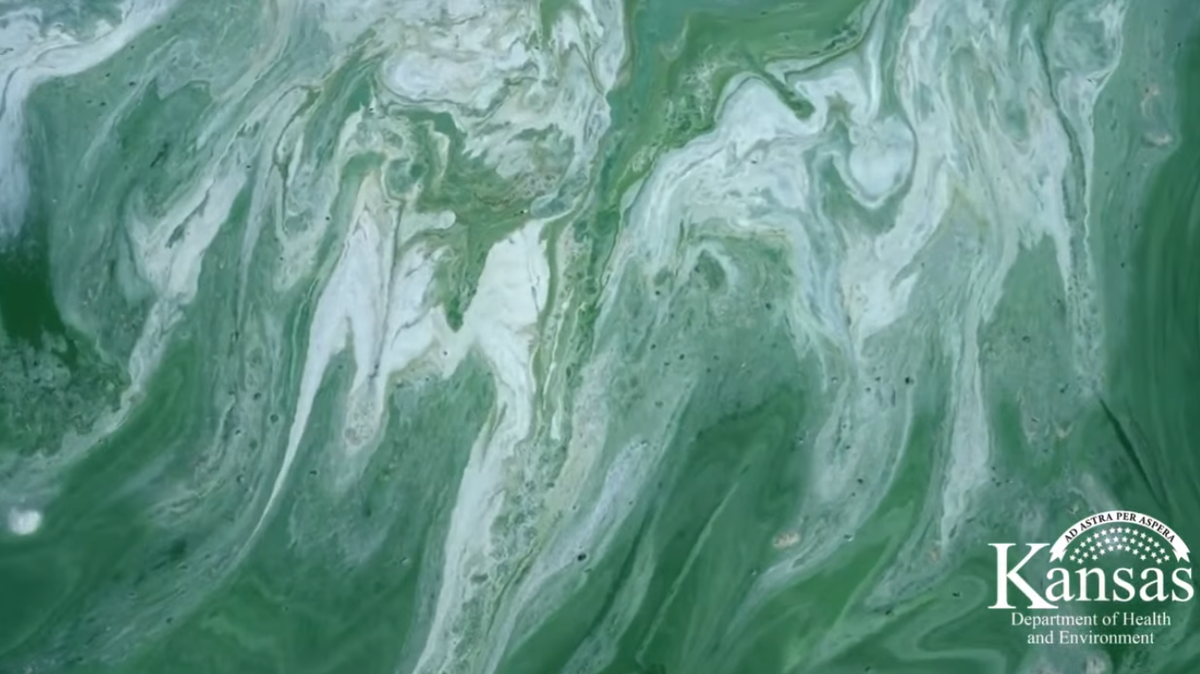
In the latest public health advisory from the Kansas Department of Health and Environment, seven bodies of water now pose a risk to people and their pets due to toxic blue-green algae growth.
“Kansans should remain vigilant while engaging in activities taking place in or on the water, such as swimming, boating, and fishing,” the KDHE said in a June 5 update. State officials are monitoring Kansas lakes for harmful algal blooms through Oct. 31 and issuing weekly updates.
Exposure to harmful algal blooms can cause sickness or death in humans and animals.
What lakes are under blue-green algae advisories?
Five bodies of water are under blue-green algae warnings as of June 5. A warning means a harmful algal bloom is either expected or already present. The lakes under a warning are:
- Gathering Pond, Geary County (Elevated June 5)
- Jewell State Fishing Lake, Jewell County (Elevated June 5)
- King Lake, Lyon County
- Chisholm Ridge Ponds (Clearwater), Sedgwick County
- Lake Afton, Sedgwick County
Two lakes are under a watch, meaning a harmful algal bloom is possible and could be present. Those lakes are:
- Herington City Lake (Old), Dickinson County
- Wellington Lake, Sumner County (Added June 5)
State health officials say harmful algal blooms could look like paint, scum or foam on top of the water. Blooms can range in color, including bright green, blue, brown and red.
What’s the difference between a warning and a watch?
KDHE has varying guidances depending on what level of advisory a lake or body of water is given. Here’s what state health officials say about warnings and watches.
Warning recommendations
- Water is unsafe; avoid all contact
- Inhaling spray from the water could be harmful
- If you catch fish, clean your catches with potable water and only eat the fillet portion
Watch recommendations
- Water may be unsafe for people and pets
- Avoid any algae that has accumulated
- Do not let people or pets drink contaminated water
- Boating and fishing are considered safe, but inhaling the spray can bother some people
- If you fish, be sure to clean your catches with potable water and only eat the fillet portion
- Swimming and water sports are discouraged near any blooms
- Clean yourself and pets with clean water after contact
If extreme conditions exist, the lake will be moved to a hazard status. In these cases, partial or full closures may be issued.