Veterans Day: As nurses, instructors and recruiters, these Kansas women served in WWII
As World War II raged across the globe, some 350,000 American women joined the armed forces, serving in branches including the Women’s Army Corp (WAC), the Coast Guard Women’s Reserve (SPARS), the Women Air Force Service Pilots (WASP), the Marine Corps Women’s Reserve (WR) and the Women Accepted for Volunteer Emergency Service (WAVES).
In honor of Veterans Day, below are the stories of some Kansas women who answered the call to serve in any capacity, as told by their families and friends in 2020.
If you want to express gratitude for or tell us a story about a friend or loved one who served in the armed forces at any time, please fill out the submission form at the end of this article. Below, you’ll also find our exhaustive database of Kansans in the military who died during World War II.
From The Eagle: We thank all of the men and women who served to defend our freedoms.
Staff Sgt. Katherine Conkling, Army Air Corps
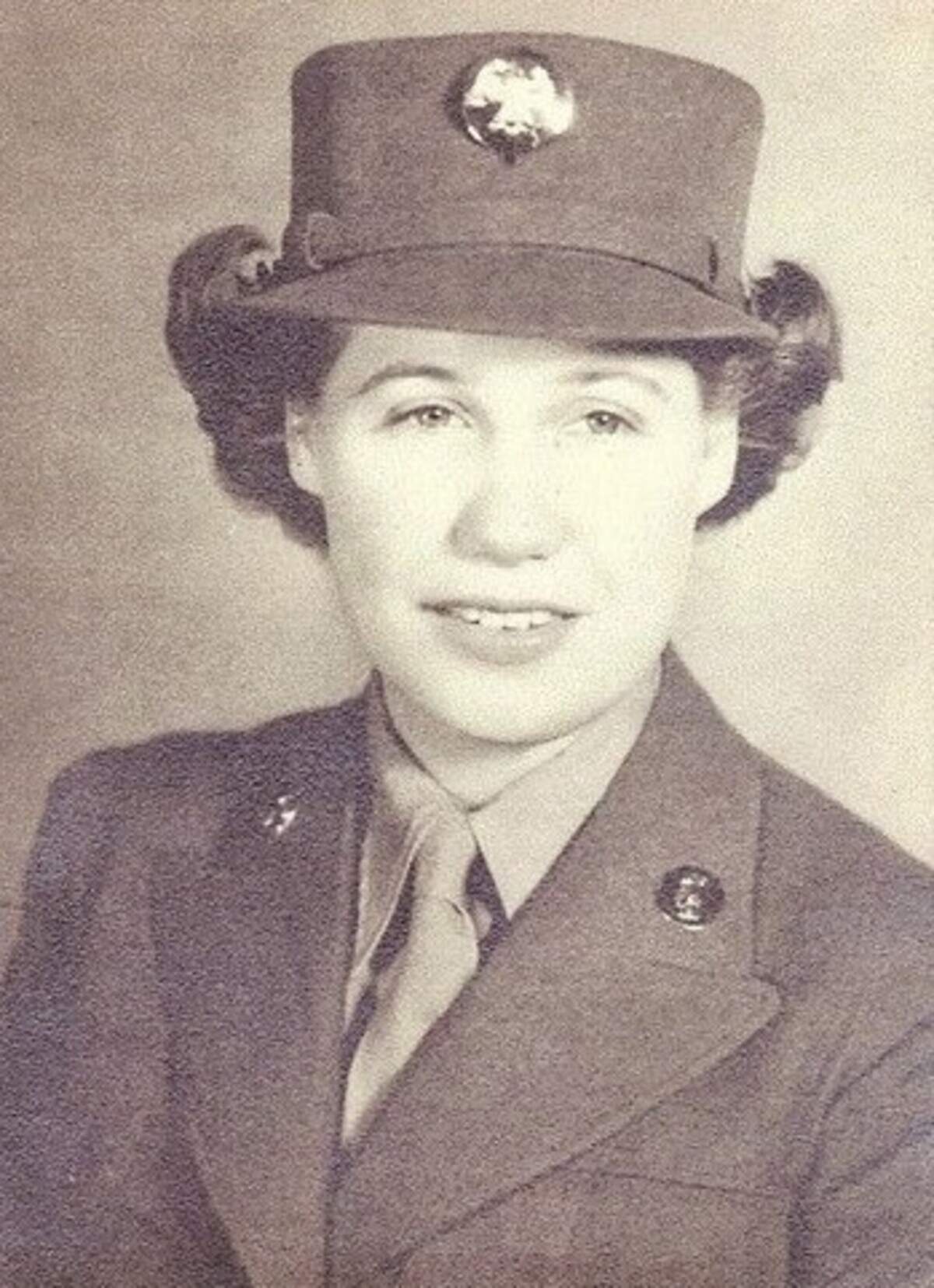
Katherine V. “Katie” (Lawrence) Conkling was born in Coffeyville, Kansas, on Jan. 18, 1921, to a first-generation German-American carpenter from Wisconsin, and a Texas landowner’s daughter.
Shortly after Katie’s birth, the family moved to Wichita. Her father died when she was a baby. Her mother couldn’t care for Katie and her three brothers so they were placed in the Wichita Children’s Home and returned to their mother when Katie was 8.
During the Depression, Katie virtually lived at the city library, where she read voraciously. Later, she worked after school, babysitting, plucking chickens at a packing house, grading papers for her high school accounting teacher, clerking at Kress. She graduated from East High School in 1939.
Soon after the attack on Pearl Harbor, Katie answered a newspaper ad to join the new Women’s Army Auxiliary Corps. The applicants underwent a battery of tests and most of the women were sent home. The rest – including Katie – were sworn into the WAAC (later the WAC).
Her Army career as an administrative specialist took her to Orlando Air Base, where she helped track aviation traffic on a huge map; then to Fairfield, California, and Hickam Field in Hawaii, where she worked for Headquarters Air Transport Command Pacific, running the post office, handling mail and intelligence reports. She was sworn to secrecy about the mail she handled: It was often addressed to generals on islands the Allies hadn’t yet taken.
When the Japanese surrendered, she was at Pearl Harbor for the celebration. Then, because she enlisted only “for the duration” of the war, she and most of the other women were quickly sent home.
In Kansas, she reunited with the Partridge, Kansas, college student she met in Wichita before the war – her husband-to-be, John Conkling. During the war, he served in the Army Air Corps as a B-26 co-pilot, flying 66 missions over Europe, including the D-Day invasion.
They married in 1945 and had two children, Mike Conkling, of Pretty Prairie, and Judy Conkling, of Wichita. After the war, Katie, like John, became a private pilot. John became a teacher and the family moved to Wisconsin, but returned to Kansas when they retired, in 1981.
John died in 2004 and is interred in the Columbarium at Arlington National Cemetery. Someday, as a veteran, Katie will join him there.
Now age 99, she remains active, renovating her new home (with her children’s help), and planning to live to at least 105!
- Judy Conkling, daughter
1st Lt. Mary Weymouth Tadlock, Army
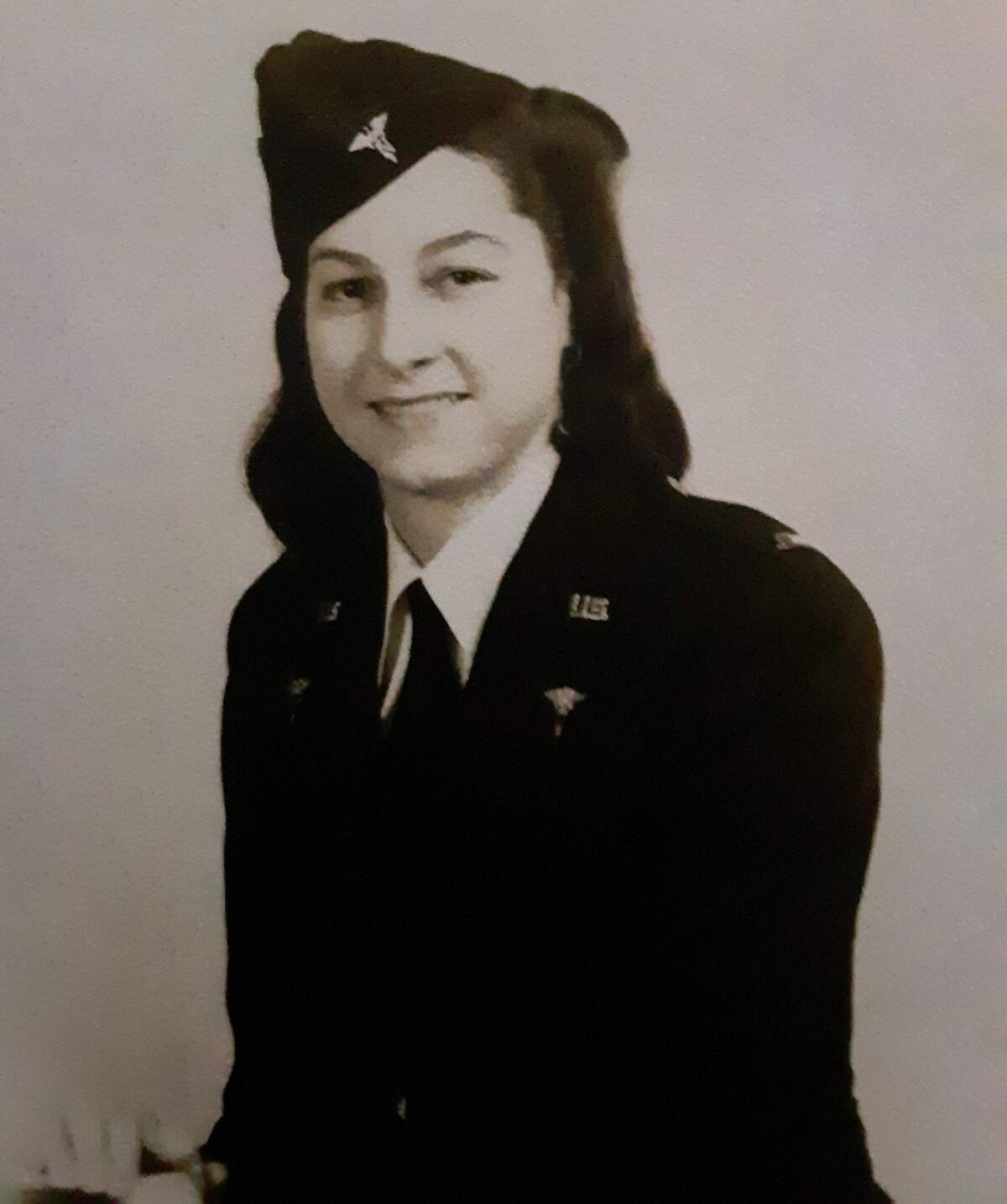
My mom, Mary Weymouth Tadlock, grew up in Scammon, KS, and graduated from Mt. Carmel School of Nursing in Pittsburg, KS in 1941. She joined the Army Air Force in 1942 and served at the 225th Army Air Force Base Unit near Rapid City, SD, as a 1st Lt. surgical nurse in the medical detachment. Her base trained air crews for B-17 bombers being deployed to Europe. She served until her discharge in 1944.
She continued her nursing career in Wichita at the old Wichita Hospital. She met my dad, Joe, after the war and started a family. She worked for many years at St. Joseph Hospital in Wichita mostly on the surgical floors. She ended her career working on the dressing team and then enjoyed her retirement with Dad until he passed away in 1995. She passed away in 2001.
- Mike Costello, son
Fay Anna Ludiker, WAVES
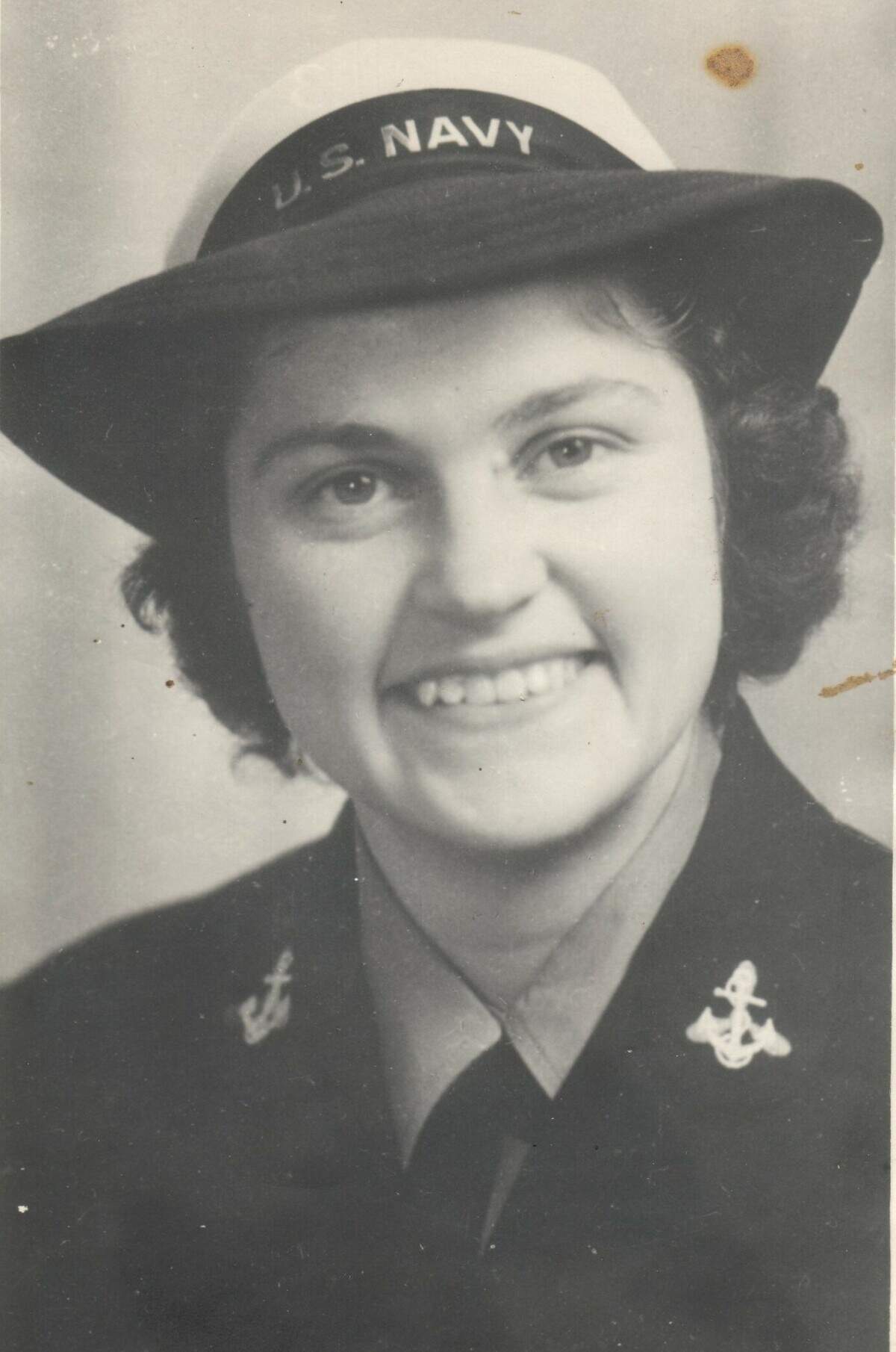
My mother, Fay Lemanski, nee Ludiker, joined as soon as the recruiting began in 1943, at age 25. She was sent a train ticket to go from Pittsburg, Kansas, to Kansas City, Missouri. She underwent her physical and passed. Actually, she wasn’t sure if her left eye was strong enough without glasses, so she asked to read the eye chart with her right eye first, then just repeated the letters when looking with her left. (Hey, there was a war on and everybody wanted to help.)
From KC, she shipped out to Cedar Rapid, Iowa, for beginning basic training. From there, she went to Hunter College in New York City (Brooklyn) to finish training. She ended up stationed in Washington, DC, in the Marine building, which was adjacent to the Pentagon.
She and her friends would sunbathe in Arlington in the nice weather and enjoy the wartime establishments that Washington held. She was basically clerical help, to allow men to go to the battle areas. She maintained several friendships from that time until her death in 1987.
- Michael Lemanski, son
Sp(T)3 Marjorie G. Taylor, SPARS
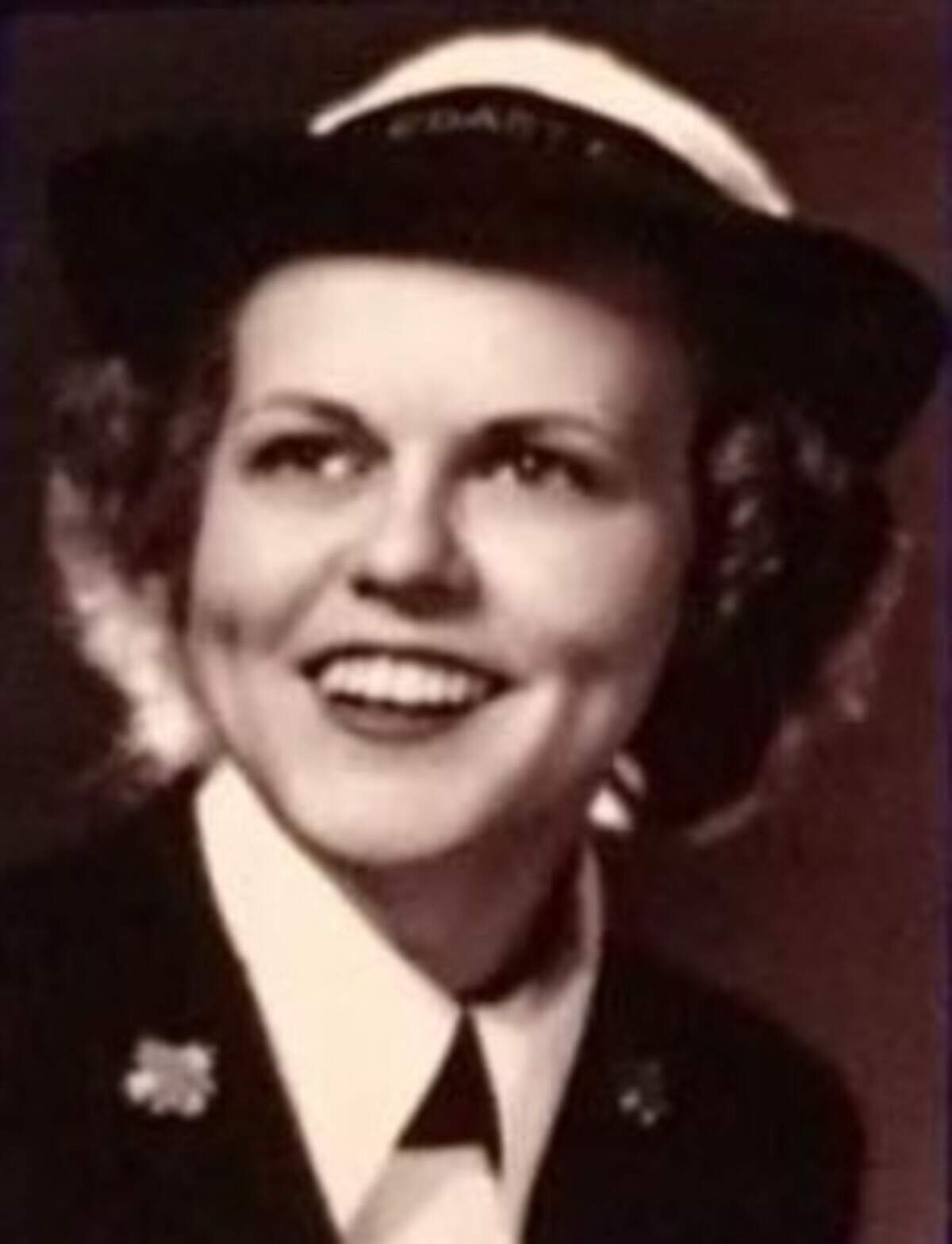
My mom served in the Coast Guard as a link trainer instructor, where she met my dad who was in pilot training. Born at home in Wilmer, KS, she eventually worked for Bill Lear at Lear Jet and retired as the highest ranked woman at Lear Jet. Her bio is shown at the Women in Military display at Arlington National Cemetery where she is entombed with my dad. It reads:
“Blessed with a true pioneer spirit, sense of adventure, fearless attitude and keen mind, Marjorie led a blessed (sic) and remarkable life. Educated in a one-room schoolhouse, she left the farm to seek her fortune in Wichita, KS, and achieved far beyond her dreams. She became a pilot, served her country as an instructor in the Coast Guard during World War II, rose to the position of highest female executive in Lear Jet Corporation, traveled the world and raised a family. Her achievements as an executive earned her honors in the U.S. aircraft industry and abroad. She counted among her friends and associates countless celebrities and notables.”
- Steve Taylor, son
Sgt. Marie Smith, WAC
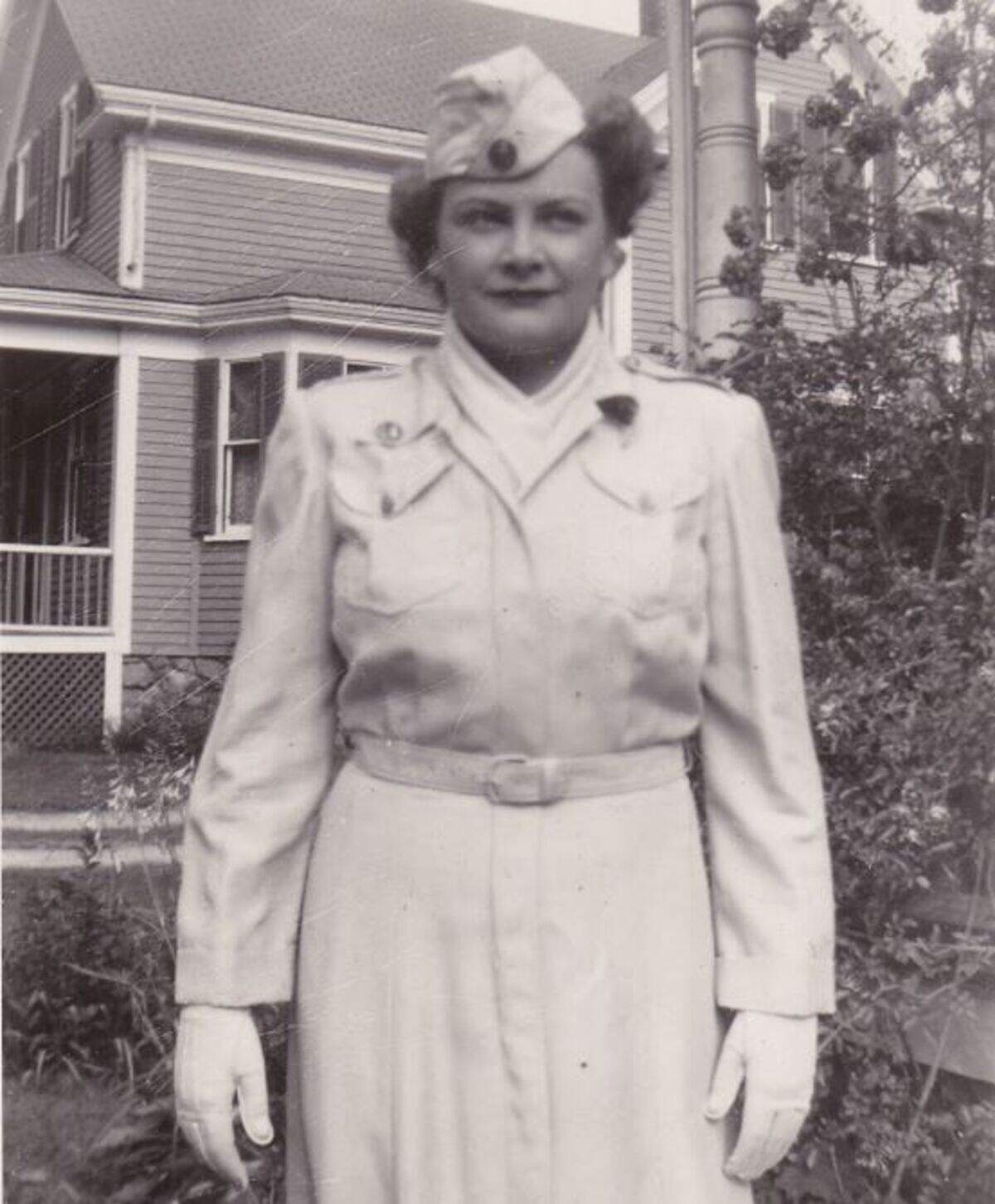
My mom, Marie (Filz) Smith was in the WAC in WWII. Her main duty was to recruit other women into the Women’s Army Corps. Her final rank was sergeant. She met my father at a tea dance at Fort Wright, New York, in 1943. They married in full dress Army uniforms at Fort Wright on Jan. 22, 1944.
Her daughter, Sandy, has access to Marie’s Army scrapbook. I also have a book documenting their 50th anniversary, which covers their initial courtship and Army wedding, including a picture of the complete wedding party, all in Army uniforms in 1944.
Marie loved to visit me and my family in Wichita before she was physically unable to travel anymore.
- Ron Smith and Sandra Wycklendt, daughter
Ila Armsbury, U.S. Army Nurse Corps
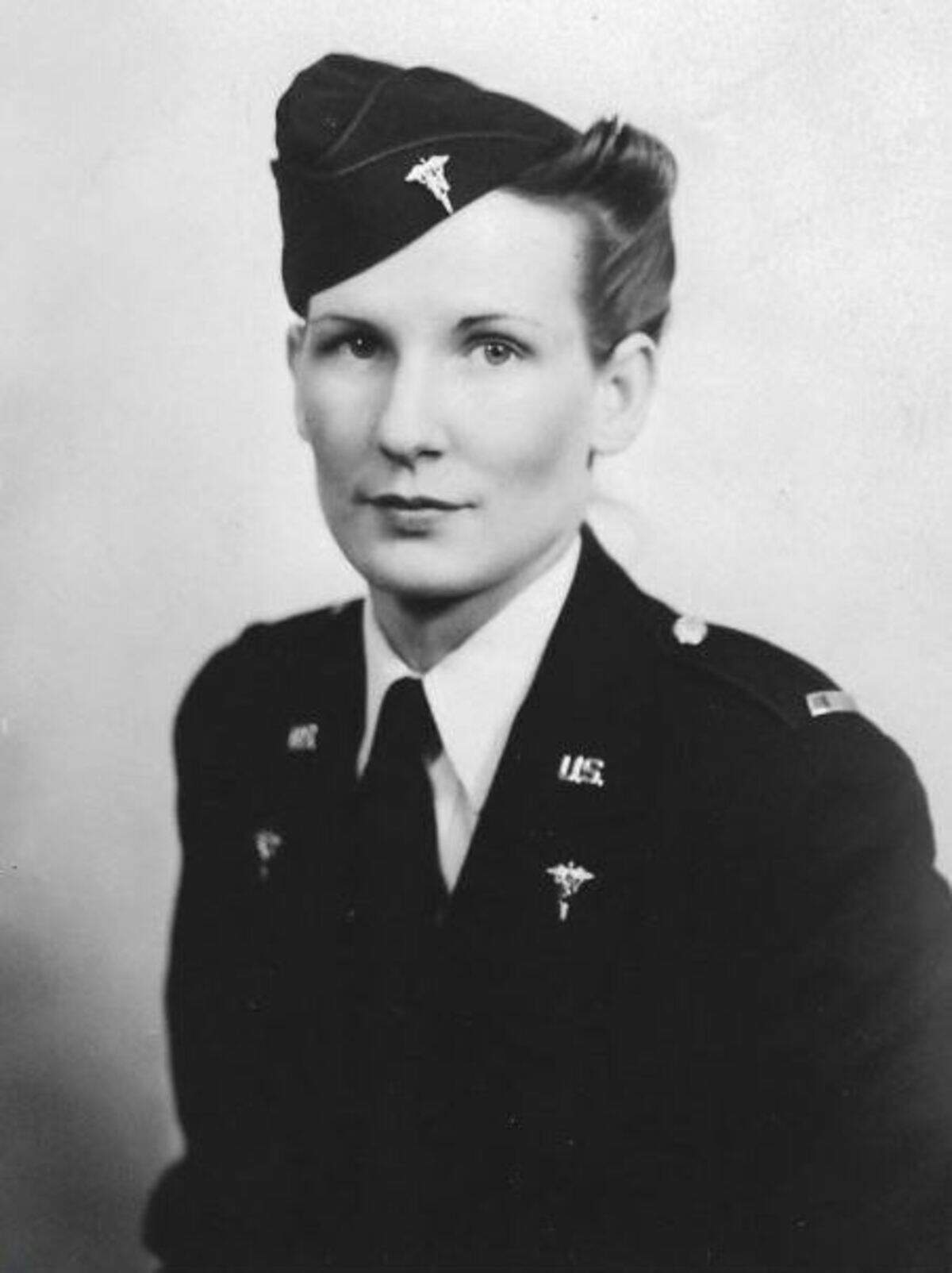
Ila Armsbury was my great aunt. I grew up hearing stories about her enlistment in the U. S. Army as a nurse and her two-year assignment to a military camp in Australia during WWII.
In 1991 my grandmother gave me over 475 pages of letters that Ila had written to my great grandparents. I used those letters, plus a tape recording Ila made about her life, her military records, interviews with family and friends, and other sources to write a soon-to-be-released book, a WWII memoir about Ila titled “Ila’s War.” It’s the true story of the first 30 years of Ila’s life including a confrontation with the Ku Klux Klan in Lincoln, Kansas; the arrest of her father on a charge of white slavery in Russell County; the havoc of dust storms during the Dirty 30s; and the crippling of five Lincoln men, part of a group of 50,000 Americans who drank adulterated Jamaica Ginger.
In addition to detailed and colorful stories of Kansas history, Ila’s War tells of her experiences as a U.S. Army nurse with the 155th Station Hospital at Camp Cable, Australia; about the horrors of battle on New Guinea; how Camp Cable was overwhelmed when more than 2,000 US Marines — all sick with malaria — were evacuated from Guadalcanal just before Christmas 1942; about Ila’s successful fight with an Army Board of Disposition to stay in the Army Nurse Corps; and about Ila’s struggle with post-traumatic stress disorder after the war.
While some readers may see Ila’s War as a coming-of-age tale, its real power lies in her triumph over the adversities of poverty, prejudice, betrayal, and war. Ila represents strong Kansas women, and she will serve as a role model for all of us living through difficult times.
-- Cindy Entriken, great niece
Treva E. (Peters) Wilson, WAC
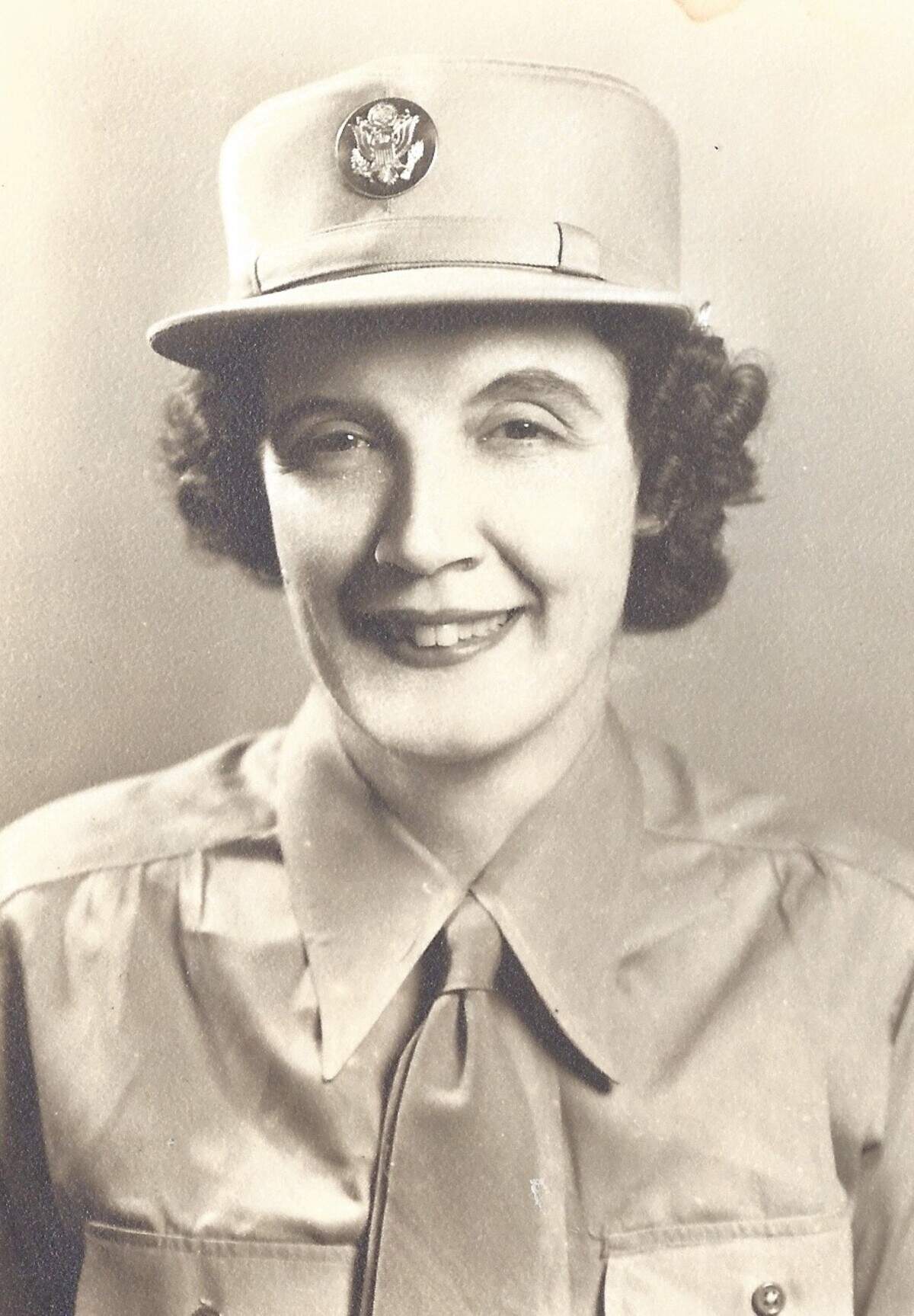
The story starts with my father, Charles Peters, telling his mother after high school he was not going to slop hogs anymore and be poor. My father’s father died on his 16th birthday. My father told his mother he was going to join the Navy. After he left, Treva sold the farm at 85th and Seneca and joined the war effort. Her husband, Jacob Peters, was the postmaster in Valley Center, and when he passed, she took over the role. Once she entered the military, she worked in the same capacity out in California, where she was stationed.
My father became a dental corpsman and when the war was over, came back to Wichita College and eventually became a dentist in Valley Center.
After the war my grandmother married James H. Wilson, who survived Pearl Harbor because he traded with a friend to be on the night watch. His barrack was bombed that morning, and my grandfather survived because he was on guard duty.
James Wilson was in the Air Force, ended up at McConnell and finished his military career as recruiter. That is when he met my grandmother, Treva. They married and continued their lives in Valley Center.
Treva became the longest serving postmaster in Valley Center, serving 26 years. She passed away in 1990 at the age of 86.
- Carolyn McGinn, granddaughter
Arliene Matthews, WAC
Arliene (Berkley) Matthews of Tescott, Kansas, was just 19 when she started work as a civil service employee with the Office of Chief of Ordnance at the War Department in Washington, D. C. She wrote her family at least once a week, sometimes more. She told her folks about her apartment, her job, the people she worked with. After the bombing of Pearl Harbor on Dec. 7, 1941, the content of her next letter, dated December 10, 1941, changed:
“Dearest Mother, Daddy, and Boys:
I full(y) intended to write last night, but . . . Sunday Westie and I walked over to the zoo and on the way back we could hear the newsboys hollering two blocks away. We were sure surprised when we saw the headlines...
The Japanese are burning a lot of things at the Embassy, and the police think it is valuable papers they don’t want to fall into the hands of the United States government. The Germans are also doing the same thing at their embassy.
Sunday night over the radio all army officials were told to come to work in full uniform so they could be easily identified. There are a lot of army officers in the Social Security Building. Major Rick looks very nice in his uniform.
Monday morning a memo was sent around to everyone telling them not to say anything about their work to anyone. This morning when I got to work, all the shades in the building were down. I guess all the government buildings have to draw the blinds from now on. Yes all the buildings are carefully guarded. A guard walks around our building all day long carrying a big gun. There is also a special guard in the mailing and records room.
...There is serious talk about having a 7 – day work week. I am hoping that don’t [sic] go into being because I just live from one week end till the next so I can sleep late on Sunday morning.
All the army officers who are overweight were told to report for exercises. Major Rick weighs about 225 so he had to exercise all yesterday afternoon. He walked 8 miles and was late getting to work this morning. I am going to take this letter down and mail it and will come back and write you another. I still have more to say.
Love, Arliene”
Arliene died on February 9, 2013. She was an avid collector of all things historical, and also a fascinating conversationalist.
- Cindy Entriken, friend
Thank a veteran
Express gratitude for or tell us a story about a friend or loved one who served in the armed forces at any time by filling out the submission form below. If you have a photo of the veteran or service member, please upload it with your submission. If you don’t know the answer to a question, simply leave it blank.
There is no cost to submit information about a military member or note of appreciation. We are asking for your contact information so we can reach you if we have questions about your submission, but it will not be shared publicly or used for marketing purposes.
You can view thank yous that have already been submitted here.
If you have questions about this project or the submission process, please contact Amy Renee Leiker at aleiker@wichitaeagle.com or call 316-268-6644.
These Kansans gave their lives in WWII
In the weeks and months following Japan’s attack on Pearl Harbor on Dec. 7, 1941, Kansans answered the call to serve their country. All told, an estimated 215,000 Kansans, a little over 12% of the state’s population at the time, were in uniform during World War II.
The number of lives lost during those terrible years was extraordinarily high. Among that number were 5,478 Kansans in the Army, Navy, Marines, Coast Guard and Merchant Marines who laid down their lives for our country. The Eagle is taking the time to honor these heroes by listing their names, ranks and military branches — and in some cases, stories and photos shared by family and friends — in a searchable database below.
As you search through the database, you’ll also notice photos and stories are missing for most of the Kansans who died. We encourage you to tell us more about these service members by sharing their images, letters, news clippings and a little about their lives and deaths. We will update the database as new information comes in.
This story was originally published November 11, 2020 at 4:35 AM.