
Another new car wash chain is coming to Wichita, which begs a question: Why?
The car wash craze continues in Wichita, with another new chain — this time it’s South Dakota-based Silverstar Car Wash — planning to enter the market.
Take 5 Car Wash also is working on a couple of new sites, and Tommy’s Express Car Wash is going to have more announcements later this year.
It all begs a question: Why?
“The simple answer is just supply and demand,” said Eric Wulf, CEO of the International Carwash Association, which is based in the Chicago area.
There’s “just a massive increase in consumer demand for professional car washes.”
The association has done a national consumer study since the late 1990s, back when not quite 50% of vehicle owners reported that they wash their cars and trucks themselves.
Now, Wulf said, almost 80% of people most frequently use a car wash to get their vehicles clean.
“It’s a massive number,” he said. “That underpins everything.”
It’s not the only reason for the proliferation of car washes, though.
Technology, particularly automation, plays a big role, too.
“The whole industry has been disrupted by the fact that there’s so much better technology,” said Tommy’s franchisee Milton Wolf.
At Tommy’s, customers pull onto “a flat conveyor belt as opposed to the old chain-and-hook system,” he said.
Customers can get in, get their cars washed and get out in three minutes curb to curb, Wolf said.
“It’s pretty incredible if you think about it.”
Also, thanks to a water reclamation system, Wolf said it takes less water to wash a car at Tommy’s than it does to do it in your own driveway.
“These things just didn’t exist several years ago,” he said.
Wulf said that “there are many things that have allowed these to become a much more scalable enterprise.”
It may take a $5 million to $7 million investment to open a car wash, but then Wulf said operating margins can exceed 40% to 50% for what he called an elite level of rate of return. In the last 10 to 15 years, he said that’s been more the norm than the exception.
Wolf said those margins vary depending on how you count supplies, whether that’s just detergent or gas and electricity, too, for instance.
“It’s certainly been a profitable business, but only insofar as you run things right,” Wolf said. Otherwise, he said car wash operators “can watch their profits go right down the drain.”
Then there’s perhaps the biggest game-changer: the subscription model.
For a monthly fee, customers can have unlimited washes, though Wulf said most usually go only two or three times a month.
“We as Wichitans, and Americans anyhow, are really into subscriptions right now,” said Dotty Harpool, executive director of marketing, enrollment and communication at the Barton School of Business at Wichita State University and a senior educator in marketing there.
“Consumers were so comfortable with that concept, we bought into it, including me.”
Fueling the growth
The car wash industry grew up with the automobile industry, Wulf said. He said the first big proliferation of car washes happened just after World War II.
Then there was incremental growth until automation changed the industry in the 1980s and 1990s.
Wulf said 2002 is the year that most people in the industry point to as the advent of modern express car washes.
“The subscription model has really fueled a lot of the growth.”
He said rainy days used to be bad ones in the business, but thanks to subscriptions, a rainy day is simply a good day for maintenance at the car washes.
With supply chain issues, Harpool said people are protecting their cars more than ever these days.
“We all understand it’s going to be difficult to get another one.”
Wolf said he’s always been a car guy and has loved getting his cars washed regularly, and now even people who aren’t car aficionados are doing it, too.
“The more we wash, the more need there is,” he said. “People are realizing it’s an affordable luxury.”
Wolf said it’s a luxury that’s turned into a necessity.
In 2020, the International Carwash Association commissioned a study that showed there were almost 63,000 car washes nationally, and car wash retail sales in North America generated about $15 billion annually.
In the two years since, the number of car washes in Wichita seems to grow almost monthly.
Last year, Take 5 Car Wash, which is part of the Colorado-based International Car Wash Group, entered the market with plans for a car wash at the southwest corner of 29th and Maize Road. It also has a site at 3028 S. Seneca and recently submitted an application to the city for a permit to put a car wash at 2110 N. Webb Road, behind Cambridge Market, at the southeast corner of 21st and Webb Road.
No one with Silverstar Car Wash could be reached for comment, but the company lists Wichita in the coming soon section of its website. It sounds like it may be eyeing Kellogg and Greenwich for its first site.
That’s also where Charlie’s Car Wash plans to reopen its former store on the corner, then called Green Lantern, since Kellogg construction is now finished there. That store will reopen on the southwest corner of the intersection most likely next year.
Zip’s Car Wash also is in the market and has acquired other car washes here, and Club Carwash also entered the market with several sites and plans for more.
East and west Wichita are where most of the car washes are opening. On the west side, there soon will be at least one car wash every mile on Maize Road from 13th Street to 37th Street.
Charlie’s senior vice president Austin Walker said Wichita’s size makes it appealing for car washes to come here and cover the market with a smattering of sites.
“It’s the nice sweet spot of not too big, not too small.”
When is enough finally enough?
The immediate question after why so many car washes is how many can survive?
“I would expect over the next few years we will ultimately see fewer because saturating the market is never a good idea,” Harpool said.
“To break into this market now is going to be extremely difficult,” she said.
For people who already have subscriptions to one place, new car wash companies are “going to have to make an offer you can’t refuse. A lot of consumers are not going to go through all of that.”
Wolf said some are, though.
Since Tommy’s began offering to buy people’s contracts for them to switch, he said his franchise already has collected 1,000 car wash stickers from elsewhere in just a few months.
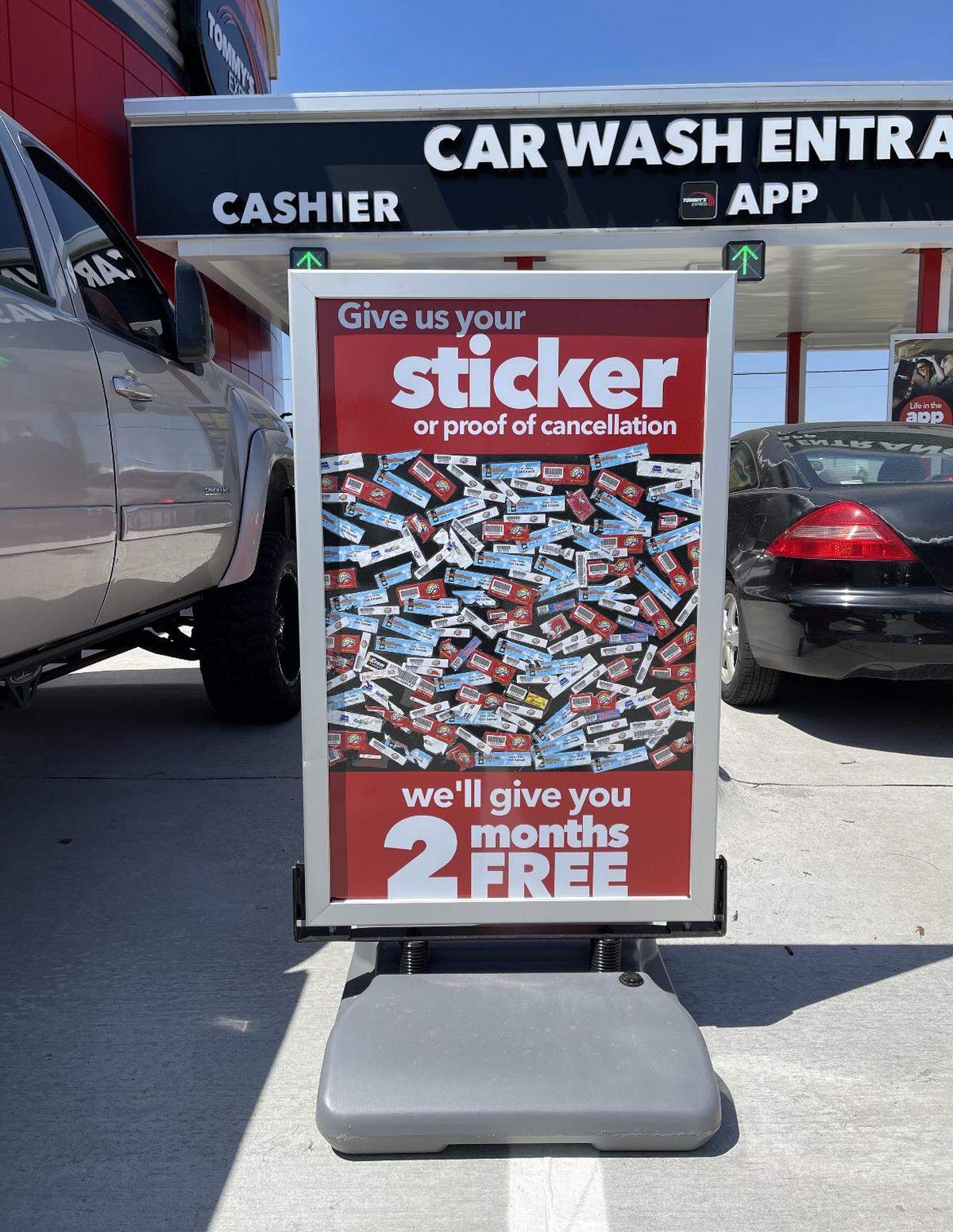
“Right now, we continue to grow,” Wolf said. “We don’t let our competitors dictate to us how many we’ll build.”
Walker said Charlie’s isn’t changing its strategy either, especially since it’s a little different than all the new places in part since it offers interior service.
“Obviously, we prefer to not have as many competitors, but business is still good.”
Charlie’s has three car washes in Wichita currently.
“It was an underserved market probably until a few years ago,” Walker said. Now, he said, “I would think we’d be getting close to saturation.”
Wulf said in the past, car wash industry leaders were family businesses with car buffs and people who enjoyed the mechanical aspect of the business.
Now, he said, they’re marketers and retailers that are propelling the industry through rapid change.
“This industry is growing up fast,” he said. “It’s sort of a great American success story.”
This story was originally published August 22, 2022 at 4:47 AM.