
In-demand Wichita restaurant keeps selling out early. Here’s how it’s adjusting:
He opened his new pizza restaurant two weeks ago, filled with confidence by the success of his soft opening.
But Tom Geagan — owner of the new Tommy’s Apizza at 2330 E. Douglas — was not prepared for what happened next.
Excited by gushing online and word-of-mouth reviews, Wichita descended on the restaurant, which specializes in the New Haven-style pizza that Geagan grew up eating in Connecticut. The line stretched out the door every day, except for the day that it stretched to the back of the parking lot.
Geagan, a people person who envisioned himself getting to know his customers face-to-face, was stuck in the kitchen, feverishly preparing “ah-beetz,” which is how East Coasters pronounce the word “apizza.” And the 180 balls of pizza dough he’d figured would get him through a day of service were quickly depleting.
In fact, Geagan now says, the restaurant has made it to its stated 9 p.m. closing time only once since opening. Most days, it’s been sold out of dough by 4 or 5 p.m. Geagan said he’s yet to see what the restaurant’s carefully-designed lighting looks like after dark.
“I didn’t expect to be a lunch place,” he said. “We’re out of here, and it’s still light out every night.”
Although being too popular is technically a good problem, it’s a problem Geagan is trying to address. Though Wichita diners have been overwhelmingly supportive, even when they get to the front of the line and learn the dough is gone, he’s found himself frequently having to explain why he doesn’t just make more dough.
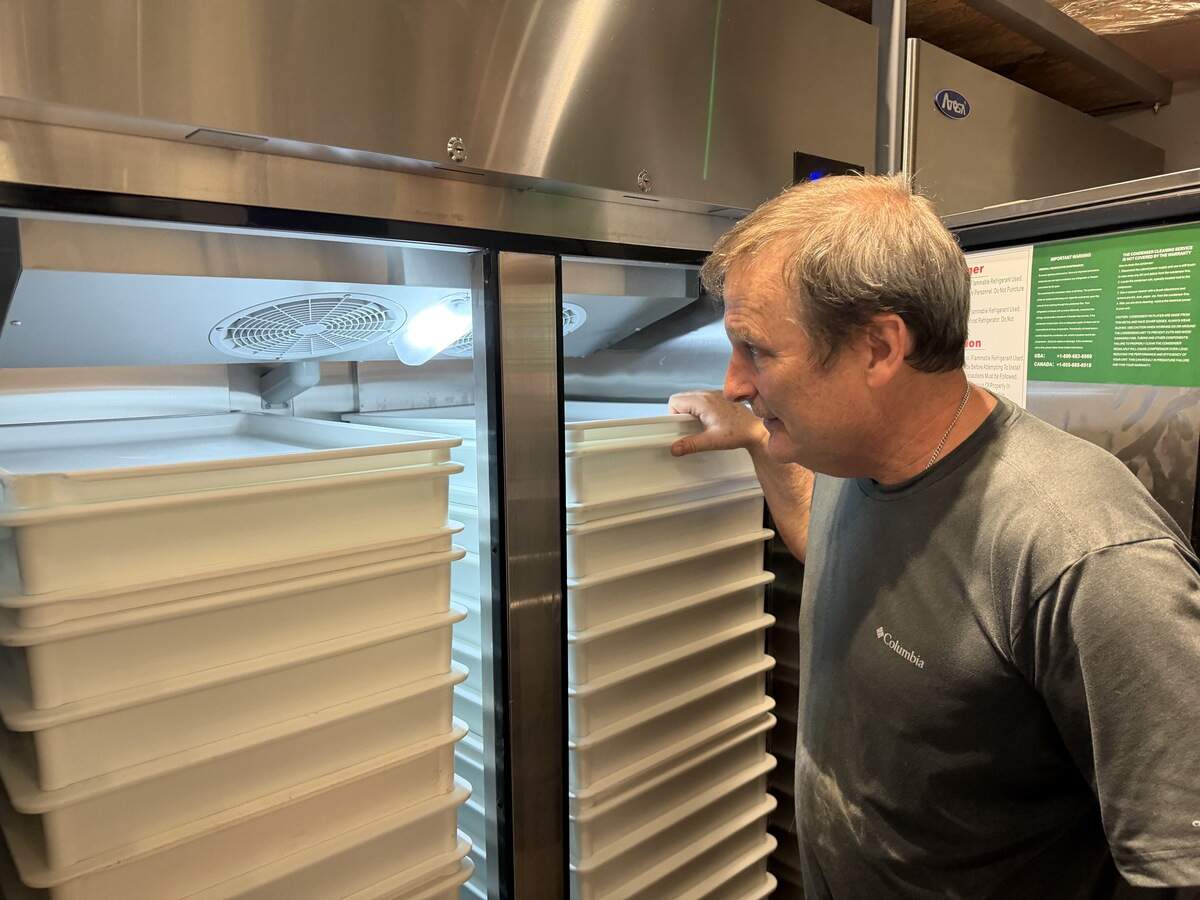
It’s not that simple, he said this week. But Geagan has pinpointed a few changes he needs to make to get the restaurant running the way he wants it to run.
A change he won’t make, though: Rushing his dough-making process.
“I could make dough today and leave it out, and it would be ready tomorrow,” he said. “. . . Nobody would like the pizza. So if people do get upset, I understand why, but I want them to know the ‘why’ for me. I want them to have that experience. I want them to have this kind of pizza, and if I don’t do this kind of pizza, I don’t want to do it.”
A 72-hour process
The dough that serves as the base of Geagan’s pizzas takes three days to produce. He begins with his 6-year-old sourdough starter, which he uses to make a “poolish.” That process takes six hours. He then prepares 10 bins worth of dough, which takes another six hours.
The next day, the dough begins “bulk fermentation,” which requires it to sit in the refrigerator for 24 hours. After that, he separates the dough into balls, and the balls need to be refrigerated for two more days. Complicating matters more, the dough must be removed from the refrigerator for its final rise by 3 a.m. the night before service so that the staff can make pizza when the restaurant opens at 11 a.m. Geagan has been setting an alarm each night and driving to the restaurant to take the dough out.
He could, in theory, make more, he said. The problem: He has nowhere to store it. The tiny restaurant space has three shelved refrigerators in back. One of them holds the dough he’ll use that day. The other two hold fermenting dough for the following two days.
Geagan, though, has decided that he needs a commercial kitchen space where he can prepare and store the dough then haul it to the restaurant each day. That way, he could use his three refrigerators just to store ready-to-use dough balls and always have enough. (He currently has about 180 dough balls ready each day but estimates he needs more like 250 to 300 to meet the demand.) Geagan has looked at a few commercial kitchen spaces already but hasn’t found the right fit.
His other plan: Hire more people. If the reception of his restaurant had been less enthusiastic, Geagan said, he could have made it through with 10 staff members. He has 15 now, including someone he’s training to make the dough to his standards. He plans to hire five more people and encourages anyone interested to email him at tommysapizza@gmail.com
When he has more staff, he said, he’ll be freed up to work the dining room.
“The biggest thing to me is customer experience, and my fear is that they’re not having the experience I want them to have. I certainly can’t come out front and talk to anybody because I’m back there. I need to get to a place with employees where I can be out here and really talk to people, make that part of the experience, and not just be like, ‘Hey, we have great pizza, but we don’t care what your experience is.’”
More employees, he said, also will help him get tables bussed more quickly, which should help the lines move. It’ll also allow him to reactivate online ordering, a feature he turned off so that he could focus on the customers waiting in the restaurant.
Geagan said he knows he should be happy to have such “problems” so soon. He hoped demand would be high but was not expecting it to be this high.
He said he’s also realistic enough to know that the demand will eventually level off a bit.
“I’m trying to evaluate and not overreact and say, ‘Oh, we need all these employees. We’ve got to make more dough. Go, go, go,’” he said. “And then all of a sudden it’s like, the first two weeks are crazy, and then it settles back into what it’s going to be. I don’t know what that is yet. I don’t know what that looks like.”
A good problem to have
For now, Geagan is trying to keep everything in perspective. He’s exhausted but knows that things will eventually calm down. But he refuses to cut corners.
“I love my pizza the way it is, and I love the pizza that I grew up with, and it feels like a disservice to call it what I call it if I’m not going to do it that way,” he said. “So I do it that way, and come hell or high water, it’s going to happen. And, and I know it’s not forever, so if I have to do this for two or three months, I can do it. I can sneak in sleep here and there.”
He feels terrible when he has to send people away, especially when those people have driven into Wichita from places like Hutchinson or McPherson just to try his restaurant. That’s happened over the last two weeks.
But people have been kind, some even congratulating him on his success when he runs out of dough rather than getting angry. He wants customers to know he appreciates their patience — and their praise.
“When somebody tells me they love my pizza, it feels like two hours of sleep to me,” Geagan said. “It just fills my heart.”
For now, Geagan tries to communicate with his customers through his social media channels, where he posts each day when the dough runs out. He also updates the restaurant’s outgoing voicemail message so that customers who call can find out whether the restaurant is open before they head over. That number is 316-246-6821.
This story was originally published July 8, 2026 at 1:39 PM.
.jpg)