
Wichita sales tax vote bringing home costs of future water needs
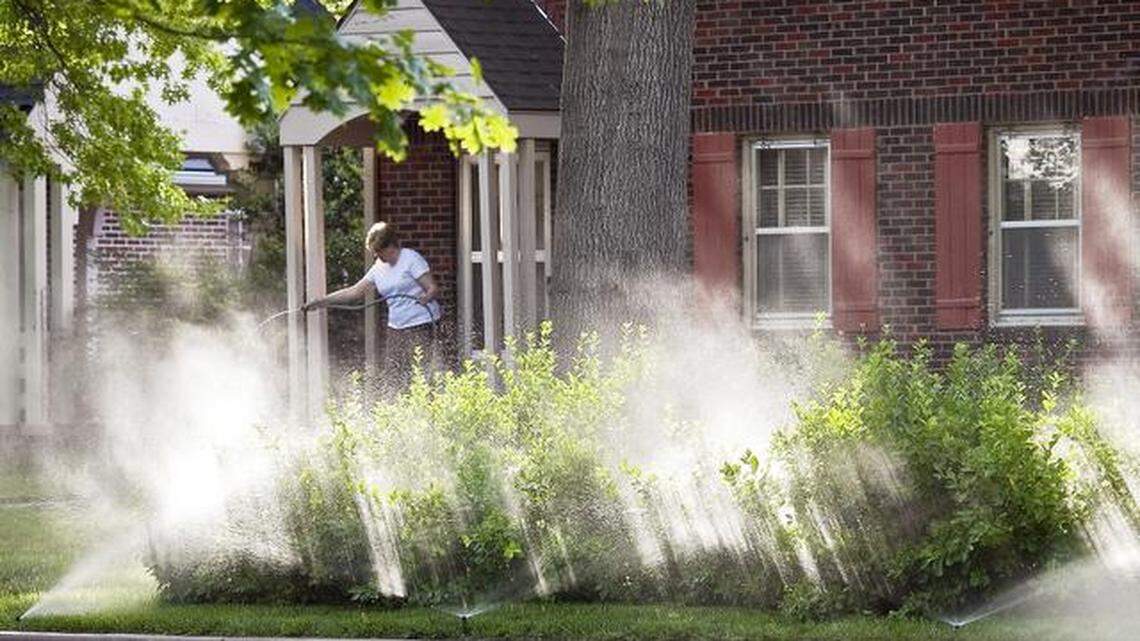
Wichita voters are being asked to approve a 1-cent sales tax to ensure a future water supply and protect against the most severe drought.
If the tax vote fails, city officials say a likely alternative is to increase water rates by nearly one third.
The proposed sales tax on the Nov. 4 ballot would add a penny for every dollar spent and generate nearly $400 million over five years, the city projects. Of that, $250 million would go to expand an existing treatment and storage facility that pulls water out of the Little Arkansas River. The rest would go to job development, street maintenance and public transit.
Consumers still would have to pay annual water rate increases to maintain the existing system.
But if voters reject the tax, the rate increases could be much higher in four years.
That’s because the City Council would have to decide whether it wants to increase water rates to pay for a project that would jump in cost by almost 90 percent with financing costs tacked on. Financing the $250 million through bonds would add another $221 million over 20 years and bring the total cost of the work to $471 million, city officials say.
Water rates are the only other funding source currently on the table, city officials said.
The rate increase would be for only the water usage part of your water bill – or what’s noted on the bill as the “water base charge.”
Without the sales tax, water rates would have to increase 32 percent over the next four years to pay for expansion at the city’s Aquifer Storage and Recovery (ASR) facility northwest of Wichita. That would set the rates high enough so the city could start making bond payments in 2018, Public Works and Utilities Director Alan King said.
That increase would be on top of projected water rate increases totaling nearly 20 percent over the next four years to meet regular maintenance needs of the existing infrastructure.
So the total rate increase for the water base charge would be nearly 52 percent by 2018.
Today, the average monthly water base charge for a residential customer is $22.40, according to city officials. That’s the cost of using 6,000 gallons in a month.
The overall increase of nearly 52 percent would push that average monthly residential bill to $34 by 2018. Rate increases would be for all customers – residential, commercial and wholesale.
Yearly rate increases have bounced around. About a year ago, the City Council made it clear it wanted to stabilize the rates and make adjustments only for inflation. So 3 percent was projected by city staff as the annual increase going forward, starting in 2018.
But if the sales tax failed, the annual increases over the next four years wouldn’t be enough to get the city in a position to start making bond payments in 2018.
So, the rate would have to be bumped up to 11 percent each of the next four years. That compounds to about a 52 percent jump by 2018.
If the sales tax passes, there’s one caveat: The 2018 increase would have to be doubled to 6 percent to get the rate level high enough to pay the expanded ASR’s annual operating cost of $2.8 million.
City officials point to an outside study done by Black & Veatch that shows Wichita’s 2013 water rates rank 11th lowest among the nation’s 50 largest cities.
Dead lawns
Although there has been discussion about additional water sources since the early 1990s, the issue was brought into sharp focus in early 2013.
The area was drying up after two years of severe drought. No end was in sight.
In February 2013, city officials told the council that Cheney Reservoir – from which Wichita draws 60 percent of its water – was only 58 percent full and would run dry within 2 1/2 years at the current pace of drought and use.
Alarm bells went off.
The city put conservation measures in place. It also made some temporary adjustments by drawing less water out of Cheney and more from its wells in the Equus Beds northwest of Wichita.
But the saving factor was rain. Lots of it.
From mid-July to mid-August 2013, the Wichita area saw 18 1/2 inches of rain and Cheney filled up quickly.
The City Council opted not to rest on the good fortune. Council members and city officials began discussions about developing a new water source and drafting a drought response plan.
A year ago, the council adopted a plan that ranged from voluntary conservation and mandated outdoor watering restrictions in the early stages to fines reaching $500 and an outdoor watering ban.
“You’ll survive it,” King said of the most severe restrictions. “You can turn on the faucet and water will come out, but there will be dead lawns and golf courses.”
Using less water is a good thing, but the dramatic drop brought on by mandated restrictions would create another problem: Rates would have to double to make up for revenue loss from lower water use so the city could maintain the existing water system, King said.
The drought response plan was based on what would happen if the city were hit by a drought like the one that created the Dust Bowl in the 1930s.
That’s also known as a 1 percent drought – or a drought that happens once every 100 years.
The area’s drought that lasted for five years in the 1950s is known as a 2 percent drought – or one that happens once every 50 years.
The state requires water providers, such as the city of Wichita, to have plans to prepare for a 2 percent drought.
“If you want to get state funding for any kind of water projects,” King said, “you have to meet that requirement. So there is some teeth in it.”
Wichita’s water supply out of Cheney and the Equus Beds will handle a 2 percent drought. There’s enough water to handle the city’s thirst for a daily average of 56 million gallons.
Until 2023.
“Then our demand for water will even outgrow a 2 percent drought,” King said. “After 2023, we’re going to have to do something to even meet the state’s minimum requirements.”
Preparing for a 2 percent drought instead of a 1 percent drought wouldn’t result in “a proportional savings,” King said.
In 2013, the city also began sifting through options for an additional water source. Tapping into El Dorado Reservoir and expanding the ASR were finalists, and the ASR option was selected in July.
El Dorado was eliminated primarily because the city of El Dorado, which owns the reservoir’s water, couldn’t guarantee it could deliver water in the final stages of a drought, city officials have said.
A study showed the ASR could deliver the needed water, officials said.
If the current plan to expand the ASR happens – no matter how it’s funded – the city would be able to handle a 1 percent drought through 2060, King said.
If nothing is done now and the ASR is expanded in 2023, he said, the cost is projected to be 20 to 25 percent more because of inflation.
Doubling capacity
Expansion of the ASR would protect the city from future droughts and provide an additional water source to meet growing needs through 2060, King said.
For the last eight years, the city has been taking water from the Little Arkansas River, treating it and putting it into the Equus Beds, a sprawling underground water formation northwest of Wichita. The city then pulls the water from its wells in the aquifer.
The ASR is the facility that does all this.
Plans for the ASR began in 2000. The first phase began operating in 2006 and the second in the spring of 2013.
The ASR now has the capacity to pull up to 30 million gallons a day out of the river, when the flow is high enough. The river is at that point an average of 100 days per year, King said.
The proposed expansion would allow the ASR to potentially pull twice as much – 60 million gallons – out of the river, according to plans.
The expansion would better use existing infrastructure and add several pieces:
▪ More wells would be drilled so more water could be injected into the aquifer. This would provide an added benefit of keeping the Equus Beds’ water level higher to help stave off a salt plume that has been gradually inching its way toward the aquifer.
▪ Two new basins – one allowing sediments to settle, one for storage – would be constructed.
▪ An additional pipeline would be constructed to take the water from the ASR to Wichita.
The first two phases cost $244 million. Most of that – $226 million – was financed through bonds. With interest, the cost grows to $358 million.
State and federal money provided about $8 million; Congress had originally appropriated much more – $30 million – for the work.
When the ASR plan was established, 87 percent of the funding was supposed to come from Wichita water utility revenues. Now it’s at 97 percent, city officials said.
About 17 percent of the water base charge is dedicated to paying for existing ASR facilities and annual operating costs, city officials said.
Weighing risks
Wichita’s yearly water demand is 20.5 billion gallons. By 2060, the need is expected to reach 27.5 billion gallons.
That’s with normal growth, King said.
Conservation efforts are part of the city’s plan to deal with the demand, he added.
The projection is to cut use by 72 million gallons annually, although that’s only 16 million gallons over the city’s average daily use.
That goal was surpassed last year when the city initiated a rebate plan that encouraged water customers to buy low-flow toilets and other conservation devices. Ninety million gallons were saved as the result of the effort, the city said.
Similar results are expected this year, King said, and the rebate plan may continue.
Defeat of the sales tax would force the City Council to make more decisions.
Search funding options other than increasing rates? Delay a decision?
“Risk really becomes a policy issue,” King said. “What is the level of risk that the council members want the public to take? That’s the council’s decision.”
Reach Rick Plumlee at 316-268-6660 or rplumlee@wichitaeagle.com. Follow him on Twitter: @rickplumlee.
Water rates
This table reflects the average residential monthly bill for water use. Baseline rate increases are projected regardless of the sales tax outcome. If the tax question is defeated and the City Council still opts to expand the Aquifer Storage and Recovery (ASR) program and finance it with bonds, rate increases would be higher.
RATE INCREASES | WATER BILL | |||
Year | Baseline rate | ASR expansion without sales tax | Baseline | ASR expansion without sales tax |
2014 | -- | -- | $22.40 | $22.40 |
2015 | 6% | 11% | $23.74 | $24.86 |
2016 | 5.5% | 11% | $25.05 | $27.59 |
2017 | 4% | 11% | $26.05 | $30.63 |
2018* | 3% | 11% | $26.83 | $34.00 |
Compounded total | 19.79% | 51.81% | Compounded difference | 32% |
*If sales tax passes, baseline rate in 2018 would go to 6 percent to pay for ASR’s expanded operating cost.
Source: Projected rate increases from city of Wichita
Send us your sales tax questions
What would you like to know about the proposed 1-cent sales tax?
The Wichita Eagle will work to answer your questions about the tax. Send them to reporter Kelsey Ryan at kryan@wichitaeagle.com or call 316-269-6752.
This story was originally published October 12, 2014 at 8:18 AM with the headline "Wichita sales tax vote bringing home costs of future water needs."