
$24 million to keep guns out of state hospitals? Lawmakers leaning against it
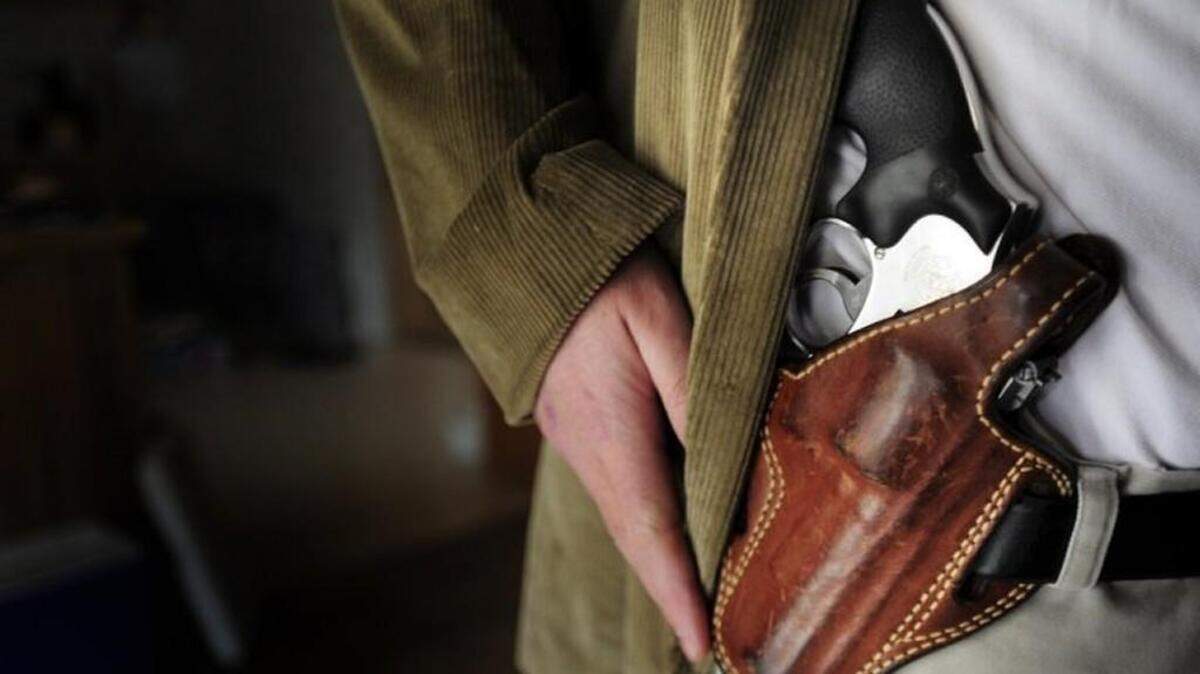
Lawmakers are leaning toward rejecting Gov. Sam Brownback’s request for $24 million to keep guns out of the state’s psychiatric hospitals.
Both the House and Senate budget committees have opted not to include the money, which would purchase metal detectors and pay for armed guards, in their spending plans.
Instead, lawmakers want to exempt the facilities from a law allowing concealed weapons – and some want to exempt public hospitals and college campuses, too.
A 2013 Kansas law expanded the areas where concealed weapons are allowed. Since then, public colleges and universities, public hospitals and the state’s psychiatric hospitals in Larned and Osawatomie have been able to exempt themselves from allowing concealed weapons. Those exemptions run out on July 1, however.
Facilities can continue to exclude guns if they provide adequate security measures under the law, which means armed guards and metal detectors.
Brownback’s staff asked a joint meeting of the House and Senate budget committees last week for the $24 million to pay for adequate security measures. But in meetings since then, the committees turned down the request.
The House Appropriations Committee chairman, Rep. Troy Waymaster, R-Bunker Hill, questioned the timing of the request. The law has been in place since 2013, but Brownback didn’t include the request in his budget proposal in January.
“It’s a little suspect as to why they are saying they need 10 months in order to enact their plan – hire nearly 200 security officers, make sure they’re staffed and trained by the time July 1 kicks into effect – yet they know that time frame will be totally – it would not be feasible at all,” Waymaster said.
The Kansas Department for Aging and Disability Services estimates implementing the security measures will take a minimum of 10 months – meaning that even if funding is approved now, the measures won’t be in place by July 1.
A bidding process for the equipment will take three months; ordering and installing it will take three more. Another three or four months will be needed to hire and train the armed guards.
The Senate Ways and Means chairwoman, Sen. Carolyn McGinn, R-Sedgwick, said she doesn’t believe the $24 million figure is accurate. She also appeared skeptical of the timing.
“They have done nothing to prepare to have to do this by July 1,” McGinn said.
The governor’s office didn’t offer an explanation on Monday for why the budget request was not made earlier. It has not said whether Brownback supports exempting the facilities from the requirements.
“If the Legislature chooses to pass new legislation exempting these facilities, Governor Brownback will, as always, review any legislation that comes to his desk,” Brownback spokeswoman Melika Willoughby said last week.
However, KDADS Secretary Tim Keck has been vocal in asking lawmakers to consider an exemption.
Rep. J.R. Claeys, R-Salina, supported a motion in the House Appropriations Committee to reject the funding request. But he did so because he believes the measures are unnecessary.
“Right now, nothing stops someone from bringing a gun in. Nothing,” Claeys said.
Bringing a narrow exemption to the concealed carry law for state hospitals to the House or Senate floor could open up the door to a wide-ranging debate over exempting other institutions, such as the University of Kansas Medical Center or public universities. Lawmakers who want to see more facilities carved out of the law would almost certainly bring amendments.
Rep. Kathy Wolfe Moore, D-Kansas City, said she wants a bill that exempts all public hospitals and community mental health centers.
“We’re planning on a bill on one floor or the other that has to go farther than state hospitals,” Wolfe Moore said. “Just taking care of the state hospitals is not good enough, and I won’t vote for a bill that only takes care of the state hospitals.”
Jonathan Shorman: 785-296-3006, @jonshorman
This story was originally published May 1, 2017 at 6:55 PM with the headline "$24 million to keep guns out of state hospitals? Lawmakers leaning against it."