
Private-school vouchers next round in school funding debate
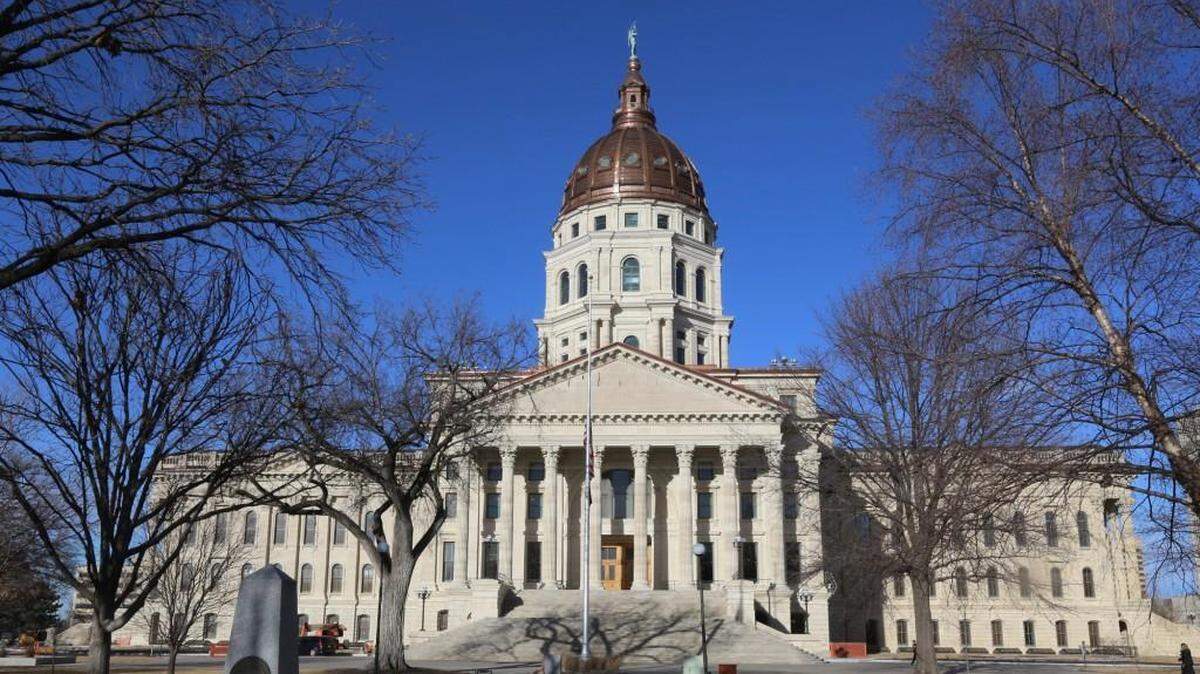
The Kansas Supreme Court ruling that schools are constitutionally underfunded could turn into a fight at the Statehouse over private-school vouchers.
Gov. Sam Brownback took the first shot Thursday with his written response to the decision, in which the court gave the Legislature until June 30 to craft a constitutional formula for funding public education or face a possible shutdown of the school system.
“The time has come to equip parents of struggling students with the power they need to determine the best education for their child,” Brownback wrote. “If they believe a quality education is not possible in their local public school, they should be given the opportunity and resources to set their child up for success through other educational choices.”
By Friday, lawmakers on both sides were gearing up.
Rep. John Whitmer, R-Wichita, noted that the court opinion specifically directed the Legislature to improve outcomes for low-income and other hard-to-teach students. He said efforts to comply with the court ruling should focus on them.
“One of the best ways to help them get the education they need is through vouchers and school choice,” Whitmer said. “If they want to get conservatives to support something, they’re going to have to include school choice.”
House Minority Leader Jim Ward, D-Wichita, said the court’s message was clear: The Legislature ultimately has to take care of public schools and only public schools.
“There’s nothing in that (Supreme Court) opinion that indicates spending money on nonpublic schools will have any impact on the court’s decision about the constitutionality of our public school system,” Ward said. “We have a constitutional mandate, imposed by the people, to fund schools adequately and equitably, and that’s what we should keep focused on, public schools.”
No fall-back position
The court ruling will be handled by a Legislature that has changed substantially since 2015.
Then, with largely bulletproof majorities behind him, Brownback instituted block grants to schools, essentially freezing funding for two years to give lawmakers time to write a new school-finance formula.
Thursday’s court decision struck down the block grant plan, which was scheduled to expire on June 30. That means the Legislature won’t be able to extend block grants to give itself more time to work.
And there’s no fall-back position.
In passing the block grant plan, the Legislature also repealed the former school funding formula, which courts had ruled to be constitutional in form but unconstitutionally underfunded in practice.
The old formula was built around a base amount of state aid per pupil, plus “weightings” to send extra money to districts with poor, limited-English and other at-risk students. Small-government conservative lawmakers said it increased school costs without demanding accountability for academic progress.
In last year’s election, some Democrats and more moderate Republicans won enough seats to build a working majority to pass legislation – but maybe not enough for a two-thirds vote to override a governor’s veto of a school-finance bill that doesn’t include his call for choice.
Religious ties
Vouchers for private schools in Kansas have always faced an uphill climb, because most private schools are tied to churches. It’s written into the state Constitution: “No religious sect or sects shall control any part of the public educational funds.”
The state has worked around that prohibition with a multimillion-dollar program giving tax credits to corporations and individuals that donate to private-school scholarships for qualifying students.
Almost all of the participants in the program are attending religious schools, records show.
Of the seven “scholarship granting organizations” authorized by the state, The Independent School in Wichita is the only one that isn’t religion-based.
And of the 90 schools subsidized through the state program, The Independent School and Topeka Collegiate School are the only two that aren’t tied to churches.
In his State of the State speech in January, Brownback called for enlarging the program.
“The ZIP code in which you are born should not determine the quality of education you receive,” Brownback said. “We should expand eligibility of the existing tax-exempt scholarship program.”
‘Vouchers by another name’
Ward said that’s not practical when the Supreme Court decision is expected to require the Legislature to add hundreds of millions of dollars to the public school budget.
“Diverting money under any guise or legal trick doesn’t help us in the goal of fully funding ... our public school system,” he said. “By taking money out of the public school system in the scholarship program, vouchers by another name, it drives up the cost for the remaining children” because enrollment declines in schools increase the per-pupil cost.
He said he expects school-choice supporters to try to delay legislative deliberations, “pretty much the behavior we’ve seen from the governor and his followers since the session started.”
“We’re still going to get it done, despite their obstructions,” Ward said. “We have to. We’re under a court order.”
While the Supreme Court did give the Legislature a deadline to create a constitutional means of financing schools, it didn’t order any specific remedies nor set any dollar amounts.
And that, Whitmer said, gives the Legislature room to come up with something new instead of just tweaking and reinstating the previous funding formula.
He said the Constitution’s ban on religious groups controlling state education funds might be overcome if the schools receiving the money can be brought under the standards and regulations of the state Education Department.
Also, he said, the Legislature could require more consolidation of public school administrative functions to save money that could be diverted to serving the low-income students the Supreme Court identified as being shortchanged by the block-grant system.
He said he won’t support any plan that just gives more money to public schools without operational changes.
“What (other) programs do we cut or whose taxes do we raise to do that?” he said. “I’m not willing to do that.”
The Legislature was off work the past week when the Supreme Court ruling was handed down. Lawmakers return to the Capitol on Monday.
Dion Lefler: 316-268-6527, @DionKansas
This story was originally published March 5, 2017 at 5:16 PM with the headline "Private-school vouchers next round in school funding debate."