
Guns in car stops: What to do in Wichita to prevent tragedies
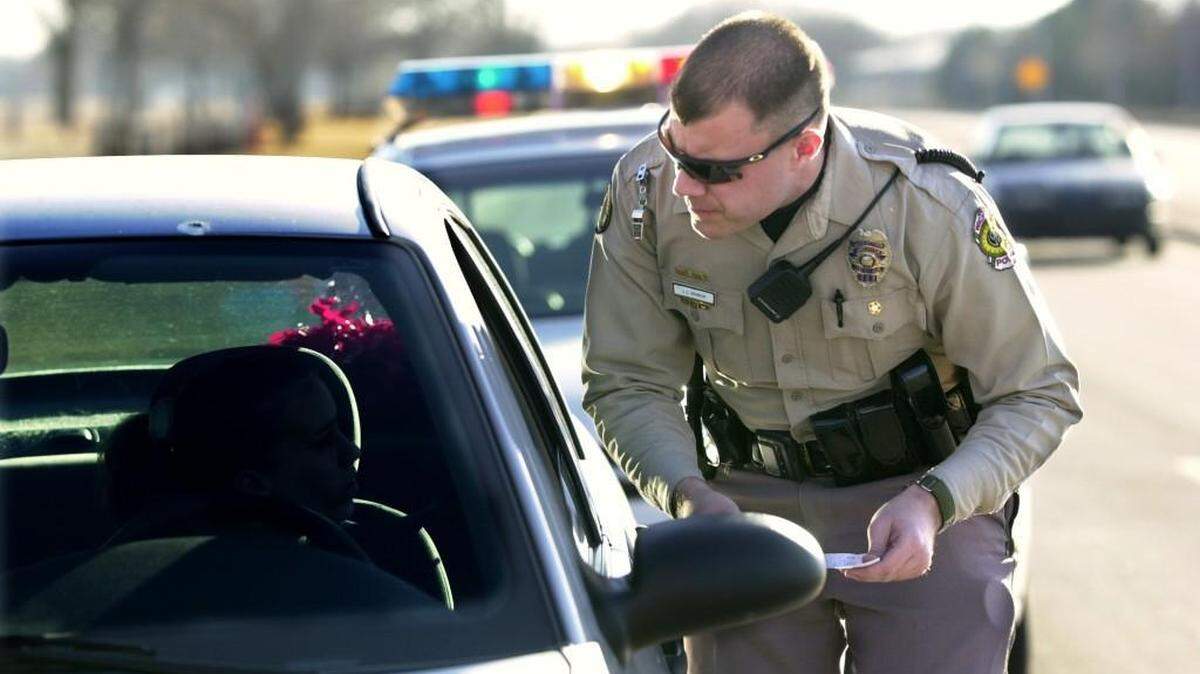
As long as you can legally have a gun, you can carry it in Kansas while rolling down the road.
You can conceal it, keep it in a holster on your belt, or lay it out on the front seat, under changes to Kansas gun laws last year.
And that leads to a working hypothesis for Wichita State University criminal justice Professor Michael Birzer: that police are going to encounter more gun-toting people during traffic stops.
And that’s behind a concern of James A. Thompson, a gun-rights defender in his personal life and a lawyer who has sued Wichita police over allegations of excessive force: that an increasing presence of guns on the streets – although legal – is a recipe for more deadly run-ins between officers and the public.
Dujuan Wash, a community organizer in Wichita, says the issue is crucial for African-Americans because “the reality of the situation is there are a lot of officers that fear black men. It’s because of bias and stereotypes.”
That perception underlies what has been called the trust gap.
The issue came to a head nationally about two weeks ago when a police officer in a Minnesota suburb shot and killed Philando Castile, a 32-year-old black man. According to media reports, Castile’s girlfriend – who was in the car and streamed a portion of the shooting aftermath live on Facebook – said her boyfriend was reaching for his ID. The officer’s attorney said the officer was reacting to Castile’s gun, not his race.
What Wichita police want motorists to do in a traffic stop is tell them right away if they have a gun and to follow the officer’s directions. The officer most likely will ask the driver to keep his hands on the wheel until the officer can sort out things and minimize any perceived risk, police Capt. Brent Allred said.
Shooting range owner
Mike Relihan, owner of Bullseye Shooting Range in Wichita, is in the business of handling guns. His steps on how to deal with a gun during a traffic stop:
1. Turn the lights on in your vehicle, and put your hands where the officer can see them. “They (police) don’t like walking up on dark cars,” Relihan said officers have told him over the years.
2. If you have a gun, tell the officer you have it, where it is and leave your hands visible.
3. Follow the officer’s instructions.
“Everyone can just be nice,” Relihan said. “That’s the point.”
About a year and a half ago, he got stopped by a Dickinson County sheriff’s deputy. Relihan switched his interior lights on and put his hands up where the deputy could see them. “You know I have a gun in the car here,” he informed the deputy, adding that he had a conceal-carry permit that was required at the time. The deputy said he stopped Relihan for going too fast.
The deputy learned from checking the tag that the vehicle was owned by the shooting range and didn’t ask to see the gun before letting Relihan go with a warning.
Training center considerations
With laws now allowing more people to carry guns, the Kansas Law Enforcement Training Center has published an online list of considerations for officers encountering a motorist with a gun.
The list includes asking drivers to keep their hands on the steering wheel when the person is not being asked to show a driver’s license, telling the driver why the officer “might be apprehensive when someone has access to a firearm,” asking the person to step out of the car to a safe spot “while we finish our business here,” asking the driver if the officer can lock the gun in the trunk until the traffic stop is completed, or asking the motorist if the officer could hold the gun until the stop is over.
Wichita police training captain
The Wichita Police Department policy on vehicle stops doesn’t say anything about how officers are supposed to deal with guns in a car.
Still, officers are trained in a variety of situations, and every stop is unique, so officers’ discretion is a key factor, said Allred, the police captain who oversees the department’s training.
Police want to avoid rapid, life-and-death decisions on whether someone is reaching for a gun. So they want to know right away if there is a gun in a car and where it is, Allred said.
“A lot of it is communication,” he said. Police realize that a driver is going to naturally be anxious or nervous with police lights on behind him, that he or she might forget about a gun in the glove box.
His advice: Try to relax, say if you have a gun. “That tells me you’re communicating with me.”
The goal for an officer, before he can determine whether he is in danger, is to safely, calmly separate the gun from the person. So the officer might ask the driver to step out of the vehicle to create distance between the driver and the gun, might ask the driver to keep his hands where the officer can see them until a back-up officer arrives, might tell the driver, “I’m just doing this for my safety until somebody else gets here.
“It’s very important to slow things down,” Allred said.
If a gun is in the glove box, away from the driver, the officer might not need to see it.
The officer might get to a point on the threat continuum where he reaches for his gun, “but no one wants to get to that point,” Allred said.
Officers don’t know who they are stopping, but know the risk grows with the numbers, Allred said. Police assigned to traffic enforcement might stop 20 cars a day; others on regular patrol might pull over three to four vehicles.
Wichita lawyer
Thompson, the Wichita lawyer who has sued police over shootings by officers, said odds are that police are going to deal with more guns under more permissible laws. Part of the risk is that there are too many people who aren’t trained in how to safely handle guns, he said.
“There’s a lot of stupid people that are getting guns that scare the hell out of me,” Thompson said. Deaths will occur when people make “stupid mistakes,” he said.
Still, Thompson said, officers have to use good judgment as well.
“The presence of a gun does not automatically mean a presence of danger” to police – and doesn’t by itself justify deadly force, he said.
Thompson, as with the others, stresses that the first step for any motorist should be to keep your hands on the steering wheel.
One of the risks is that many people who carry a gun keep it in a holster on their right side – close to their wallet.
What does Thompson think police can do to reduce the risk? “Stop assuming the worst about people,” and don’t make assumptions so quickly.
“Both sides have to start using their heads,” Thompson said.
Community organizer
Wash, 32, is a community organizer with Kansas Appleseed, which he describes as a nonprofit group that seeks social justice and represents vulnerable people. His advice for motorists: “First off, comply with officers. Make officers aware when you are armed” and allow the officer to disarm you if the officer chooses to.
“I think this is an important topic in light of what happened in Minnesota with Philando Castile,” Wash said.
Still, he said, “For a certain segment of society, particularly African-American men, compliance may not necessarily save your life.
“The question becomes how can you comply … and reach for identification without being seen as a threat?”
Citing the Minnesota shooting, he said, “Here’s a situation where we have … a gentleman who was compliant with officers, and that still was not enough.”
Criminal justice professor
Birzer, the criminal justice professor and director of WSU’s School of Community Affairs, is a former sheriff’s officer. Any cop, he says, will say: “There’s no such thing as a routine car stop.” Every motorist pulled over is seen as a potential threat. “And that’s drilled in at the training level.”
But with most of the public having little, if any, training with a gun and with more guns out in traffic, the risks rise, he said.
Another part of the equation – in Wichita and nationwide – is that African-American men are disproportionately stopped by police while driving, and those stops tend to have higher rates of physical confrontations, Birzer said.
Police say they don’t base their decisions on a person’s race, just their behavior.
That police assertion is the opposite of the perception that Wash says African-Americans have.
Asked whether police need to do more to protect motorists, Birzer said that is “the million dollar question” that needs to be discussed by the community and police.
As it is, with each stop, “the officer has to size it up,” Birzer said.
“So much of it is based on what that officer perceives.”
Birzer, who is white, says: “If I’m stopped by police, my hands are going on the dash.
“I think communication skills are so important. If you don’t have effective communication skills, you probably shouldn’t be in policing. Because you’ll use your communication skills to de-escalate more so than you will ever use your firearm.”
Tim Potter: 316-268-6684, @terporter
This story was originally published July 19, 2016 at 11:53 AM with the headline "Guns in car stops: What to do in Wichita to prevent tragedies."