
Covered in pheasants
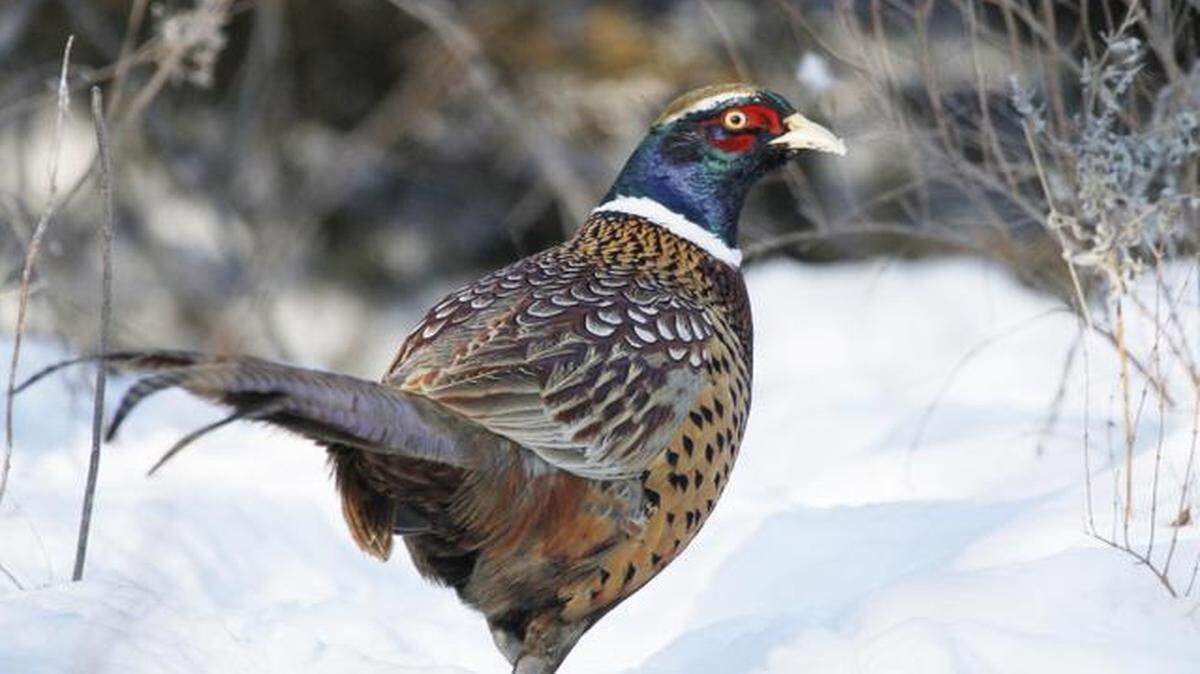
Jeff Prendergast said life is pretty easy for a grown Kansas pheasant. With so many cropfields, food is seldom a problem. Even with reductions in Conservation Reserve Program fields there’s normally enough cover to protect a lot of the birds from predators and the elements. With nearly 8 million acres of wheat there’s no shortage of potential nesting cover. Still.…
“Our main limiting factor is brood-rearing cover,” said Prendergast, Kansas Department of Wildlife, Parks and Tourism pheasant biologist. “Wheat fields have been the nesting cover, and when they grew into weeds they were our brood-rearing cover. Then (when farmers began spraying harvested fields with herbicides) those fields became essentially deserts without any vegetation and insects for the chicks.”
But Prendergast sees the growing practice of planting freshly harvested fields to non-harvested plants as a positive for pheasant numbers in the future.
Kelly Griffeth, a farmer in Mitchell and Jewell counties, is a believer in such cover crops.
“We’re using cover crops about everywhere we farm,” Griffeth said. “It’s making us money by improving our soil, and we have tons of wildlife, too.”
Natural soil care
Dean Krehbiel, of the U.S. Department of Agriculture Natural Resource Conservation Service in Salina, said farmers around the world have been using cover crops for about 2,000 years. The use of plants to protect and enrich the soil began to fade around the end of World War II, when farmers started using commercial fertilizers. Keeping harvested cropfields clean of other plants, by the use of herbicides, was also seen as a way for land to retain moisture until the next crop was planted.
But the tide has begin to shift toward a more natural balance, according to Dale Strickler, an agronomist for Star Seeds in Osborne.
“There’s no doubt cover crops take moisture to grow,” Strickler said. “But they pay for themselves with how they help the soil. It’s good to have something on the soil, to protect the soil (from erosion) and to help hold in moisture. Nobody grows big tomatoes without a good bed of mulch holding in the moisture.”
He said farmers plant up to 20 species of plants within their cover crops, hoping to help the soil in many ways. Legumes, like clovers, put nitrogen back into the soils, reducing future fertilizer costs. Plants like forage radishes, which can be bigger than a large carrot, help break up the soil many inches down in to the ground. That makes it easier for the soil to hold water, and for the next crop to access more nutrients.
“As it has been, if you harvest your wheat July 1, and don’t plant it to corn until May 1, that’s 10 months your soil hasn’t been doing anything,” Strickler said. “It just makes since to be growing organic matter than can help your soil in many ways.”
Griffeth agreed, saying it reduces his family’s costs for fertilizers and chemicals.
“We also don’t have to worry about dust storms any more,” he said, “Rather than degrading it, we know we’re making our soil better.”
Under the right conditions, biologists say it can make the state’s pheasant population better, too.
Good old days
Aaron Deters, Star Seeds’ conservation specialist, said possibly the way that best serves the pheasant population is a cover crop following a harvested row crop, like corn, when the field is to be planted to wheat the next fall. Deter said such fields are often planted to a mix of plants early the next spring, meaning it should be prime for young pheasants, with plenty of plants that attract insects, provide overhead protection yet have plenty of walking room on the ground.
One such blend produced by his company is so specifically designed that it’s named “Chick Magnet.”
He said cover crops planted following the harvest of a late spring wheat crop, if the field is to be planted to corn the next spring, are also beneficial. Such fields should provide nesting and brood-rearing cover for late-nesting hen pheasants, like those that had an earlier clutch destroyed. Planted to things like sunflowers and hemp, the fields may grow dense and tall with seed-producing plants that later offer food and cover for grown birds.
Griffeth said his family often adds a mix that includes sunflowers to his harvested wheat fields, then later harvests the sunflower seeds, adding more profit to his operation.
“We’re cutting the tops off the sunflowers, but there’s still a couple of feet of cover left below of the other plants,” he said. “There’s also a lot of seed left in the fields for the wildlife, too.”
Prendergast said the possibilities seem almost limitless. Such fields, he said, could almost replicate the pre-herbicide days of 30-plus years ago, when hen pheasants easily raised big broods in wheat fields left to grow thick with vegetation. He’s confident the concept of using cover crops to improve soils will grow.
“You can’t turn around without hearing something about cover crops in agriculture these days,” he said. “If we end up with cover crop on 10 percent of the fields in Kansas, that’s a lot of acres. We feel this is our best opportunity to have a positive effect on our pheasant population as anything we’re seeing.”
Still, it may be too early for hunters to plan on an extra case of shells for upcoming seasons. There are a variety of uses, and plantings, for cover crops and some may offer very little for nesting hens or young chicks. One big example is cover crops that are planted and heavily grazed.
“It could be good for us,” said Prendergast, who said Wildlife and Parks, and conservation groups like Pheasants Forever, are working to help landowners implement cover crops. “We’ll just have to see what we can tweak to make things more wildlife friendly. We’re optimistic we can see some improvements.”
This story was originally published March 7, 2015 at 1:26 PM with the headline "Covered in pheasants."