
Mellinger Minutes: Why Chiefs aren’t rushing Mahomes back (no matter what) and more
Patrick Mahomes might make Kansas City’s most anticipated return from injury since George Brett and hemorrhoids* when the Chiefs play at the Titans on Sunday.
Or he might not!
*That might be an exaggeration borne from recency bias. But it feels true.
Once Mahomes’ dislocated kneecap underwent a wave or three of MRIs and doctors’ examinations, the collective diagnosis was as positive as could ever be hoped for.
Almost right away, this weekend’s game against the Titans became something like a soft target for the NFL MVP to return. When Mahomes told NBC’s broadcast crew that he would’ve played against the Packers if it was a playoff game, a quick return felt even likelier.
When he did a little more in practice last week before the Vikings game, and was seen moving and jumping around on the sideline, that thought only hardened.
But this is not a guess: the Chiefs truly do not know whether Mahomes will play.
We can all assume that. And we can base that assumption on subtle signs the Chiefs are offering, but again, this is not a guess: they don’t know.
They want to see how he moves in practice. He probably needs to do more than he’s done, and he needs to do it with more agility and strength in that knee than he’s done so far.
It’s too early. They don’t know. Which underlines another point that needs underlining:
Whether Mahomes plays this week or next, it is hard to imagine the Chiefs pushing before he’s ready.
You know what Mahomes means. I know what Mahomes means. But the Chiefs live everyday with what Mahomes means, and with a two-win lead in the AFC West and win over the Vikings and a record contract extension likely to be signed after the season, both sides have every conceivable motivation to take this slow. To be sure. To be safe.
Rarely has a franchise’s long-term future been so intrinsically tied to one person as the Chiefs and Mahomes. Doctors’ opinions are sought. Then second opinions. Third.
One of the worst labels imaginable would be as the team that ruined a 23-year-old MVP. Think about what Washington did with Robert Griffin, then multiply it by 100, and you might be close.
That’s why I find the questions about whether the Chiefs are rushing Mahomes back to miss the point. Maybe this is naive, but I cannot imagine they would take that risk.
I cannot imagine they wouldn’t want to be 100% sure on this, or that Matt Moore’s performance and the division standings and the abject terror of messing with a generational talent wouldn’t push even the most cavalier doctor or coach into a corner of caution.
Missing just two games seems, superficially, like a ridiculously short amount of time for a man to miss playing football after his kneecap jumped to the side of his leg. Every layman’s indication would be to hold him out another week, and maybe two.
Playing him on Sunday would put the Chiefs directly into a line of furious criticism if Mahomes was reinjured, even if it had nothing to do with the knee.
For a lot of people, that causes heightened apprehension at the idea of Mahomes playing again so soon. And I get that.
But for me, all of that context is exactly why I trust the team on this. They have more to lose than anyone.
This week’s reading recommendation is Kevin Van Valkenburg on Teddy Bridgewater’s brief but brilliant starting run as a glimpse of what could have been and the eating recommendation is the roast beef sandwich at Rozzelle Court.
Please give me a follow on Twitter and Facebook and as always thanks for your help and thanks for reading.
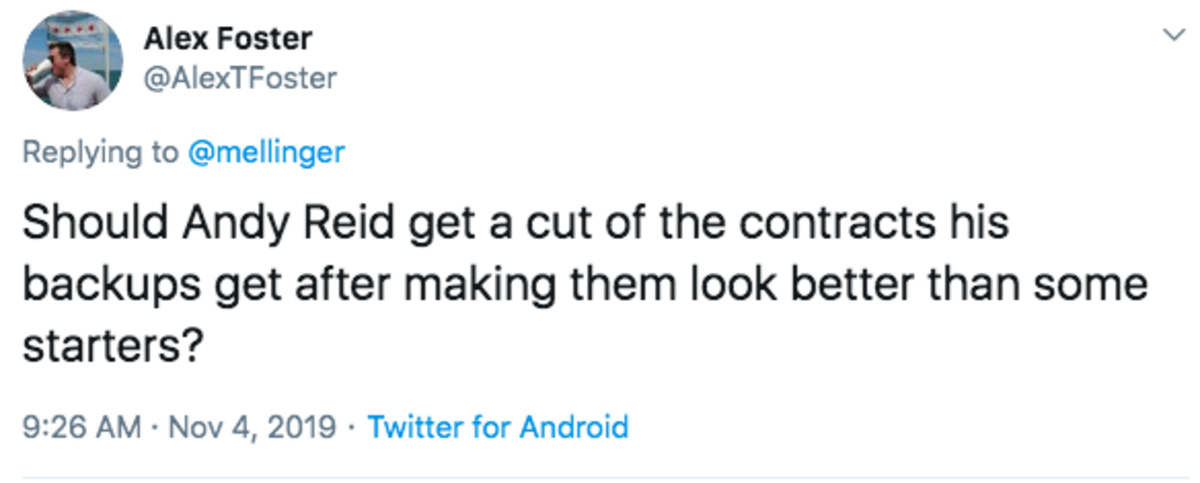
Andy Reid is one of the league’s highest paid coaches, and the highest paid coach who has not won a Super Bowl. Some of that is the normal way people make more money. He’s been around a long time, was in high demand when he was hired, and the employer was desperate for his skills and credibility.
But there are other reasons. Primarily, here is what the Chiefs are paying for:
▪ a reputation and leadership style that prevent the kind of fractures and distrust that defined the Chiefs for a few years before his hiring in 2013.
▪ an eye for talent and precise coaching methods that put players in advantageous situations, particularly on offense, and PARTICULARLY quarterbacks.
▪ a brain that’s long been on the cutting edge for NFL offenses with schemes and specific play calls that give average players the opportunity to produce and great players the opportunity to truly shine.
Each of those traits has been critical this season. The Chiefs have, even by NFL standards, been rocked by injuries. At various times they have played without one of the league’s best receivers, a starting left tackle, a starting left guard, two franchise-level defensive linemen, the team’s No. 1 cornerback and, of course, the reigning MVP and (is it too early to say this?) best player in franchise history.
They have done this through a tough stretch of opponents, with a defense that has at times been rocked and appeared utterly incapable of relatively simple tasks like tackling running backs or covering them in the pass game.
Those are the types of challenges that can split a locker room or, at the very least, dissolve that extra focus and effort athletes give when they believe they are capable of a championship.
Far as I can tell, none of that has happened, and the Chiefs now stand 6-3 with Patrick Mahomes expected back for the next game and a schedule that opens up.
The Chiefs are likely to be favored in each of their remaining regular season games, with the notable exception of Week 14 at New England.
A 7-0 finish would likely earn the No. 1 seed.
A 6-1 finish would likely earn a first-round bye.
A 5-2 finish might earn a first-round bye.
The Chiefs just stole a win over one of the NFL’s better teams playing a quarterback who was out of the league the last week of August.
They did that for a hundred reasons, including Harrison Butker’s swagger and the defense winning the most important moments and Tyreek Hill’s superhuman abilities.
But underneath it all is Reid.
A coach of his reputation should be a tide that lifts all boats. Part of why the Chiefs pay him so much and believe in him so much is they believe he can guide them through tough moments.
Sunday was one.
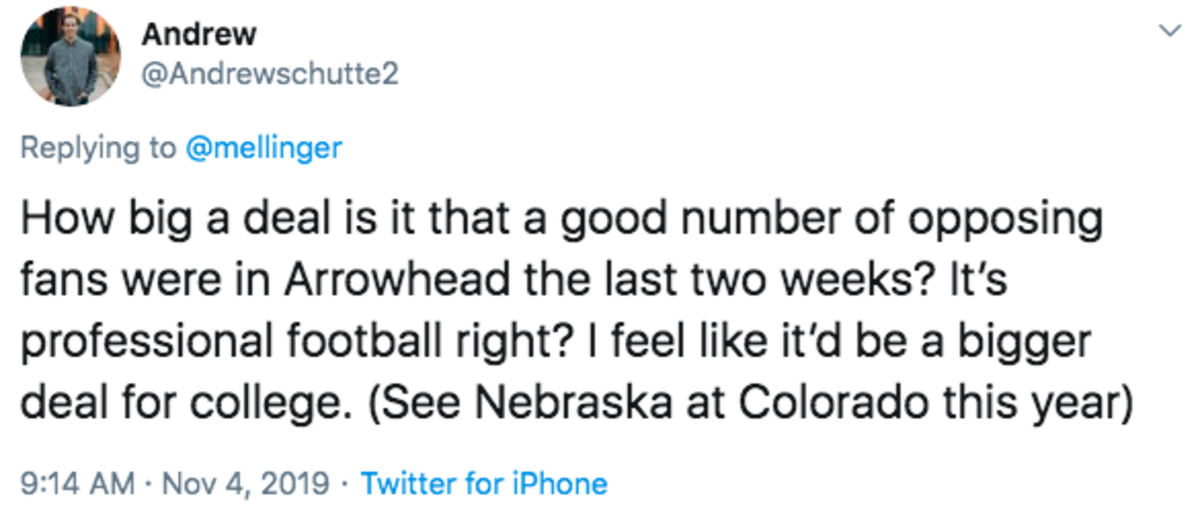
The idea that fans of professional football teams owe those franchises their time, money or passion is some combination of insulting, delusional, out-of-touch and nonsensical.
There are certain deep beliefs that I’ve repeated here and other places over the years and here is one that you can pry out of my cold and dead hands:
It’s not up to fans to spend their time and money on a sports team.
It’s up to the team to be worth their fans’ time and money.
Now, we can have a different debate about whether the Chiefs have been worth following. I’d argue that they have been, but then that would bring us to another deep belief that I will have the rest of my life and hopefully pass on to my kids:
Nobody can tell anyone else how they should spend their money.
This debate is built on a fault line. Selling your ticket does not make you less of a fan. It might just mean you saw you could make some extra money and thought it’d be cool to take a road trip to Nashville to watch your team this week. It might mean someone in your family got sick, or maybe you had other plans, or maybe you could use the cash for Christmas presents.
The reason doesn’t have to make sense to anybody but the person making the decision.
Now, that said, I totally understand why the athletes noticed it and are bothered by it. Their performance is deeply personal, and literally changes their lives. They operate in a bubble, their schedules not their own, their exposure to the outside world often choreographed in a way that pits us vs. them.
They put their souls into this, so when they get the chance to perform and see tens of thousands of seats cheering for the other side of course it can be jarring.
A Twitter exchange between Charvarius Ward and a fan is getting some attention, but similar sentiments were expressed throughout the locker room, from Chris Jones to Damien Williams and other.
There is an underlying issue here that has existed for a long time and isn’t going away anytime soon. The barriers between fans and athletes have never been lower, and too many fans use the opportunity to say stupid stuff they don’t mean or would never say in person or both.
Those experiences matter, too, and as much as we can say professional athletes need to be above that (and they do) they are also human beings. It’s unrealistic to expect someone to approach their job with passion but then turn it off when they hear something ugly from fans.
More on that later.
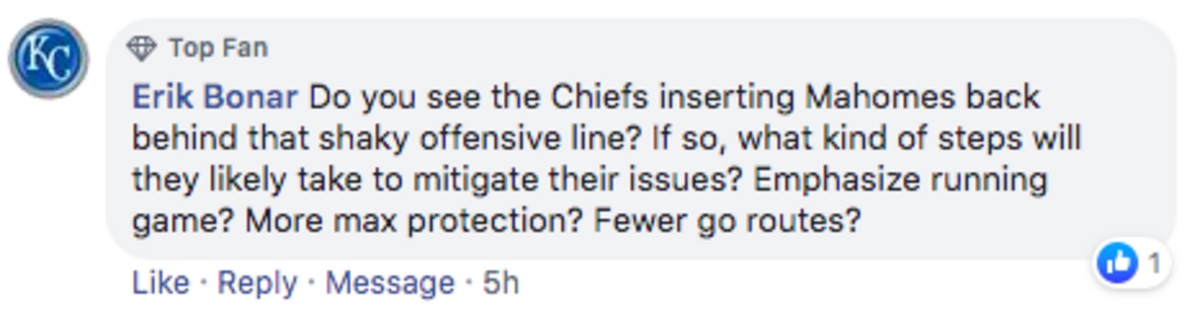
To me, the only thing that matters here is Mahomes’ health.
If he’s healthy, play him.
If he’s not, don’t.
But once he’s back, sure, there are some minor tweaks to maximize his effectiveness and minimize the risk. They can max protect more, they can call for more quick throws, and at least until Eric Fisher returns they can give Cam Erving some help at left tackle.
I’m an extremist when it comes to the running game — I believe the Chiefs can be effective throwing it 75% — but at some point there is a blurry line.
Because football is all about putting players in positions to succeed, but how much of a safety net for Mahomes is too much? If you have to max protect all the time because you don’t want him scrambling around on his right knee and left ankle, maybe the smarter thing to do is let him rest.
The complications are amplified because, honestly, it’s silly for any of us to say when he should return. I haven’t examined his knee and wouldn’t know what the hell I was looking at if I did.
I know that you are in the same situation because the people who have examined it and do know what the hell they’re looking at have more important things to do than this weekly timesuck*.
*But if I’m wrong, welcome medical team! Good to have you!
If it’s determined that he’s at 90% (or whatever) and won’t improve with more rest, then fine, as long as there is not an increased risk for long-term damage.
But one thing I’d keep in mind is that the Titans game might feel important in the moment but in the broader picture is meaningless when weighed against Mahomes’ health.
There’s no reason to rush this. The Chiefs lead the AFC West by two wins, and might be able to beat the Titans with or without Mahomes. If he misses more time and the team implodes, then the whole thing was never good enough for the Super Bowl anyway and you’ve saved yourself some trouble.
This is a fascinating moment. The Chiefs are making a decision with enormous ramifications not just for this season but for their future, and they’ll be judged either way by people who simply do not have even a relative crumb of information.
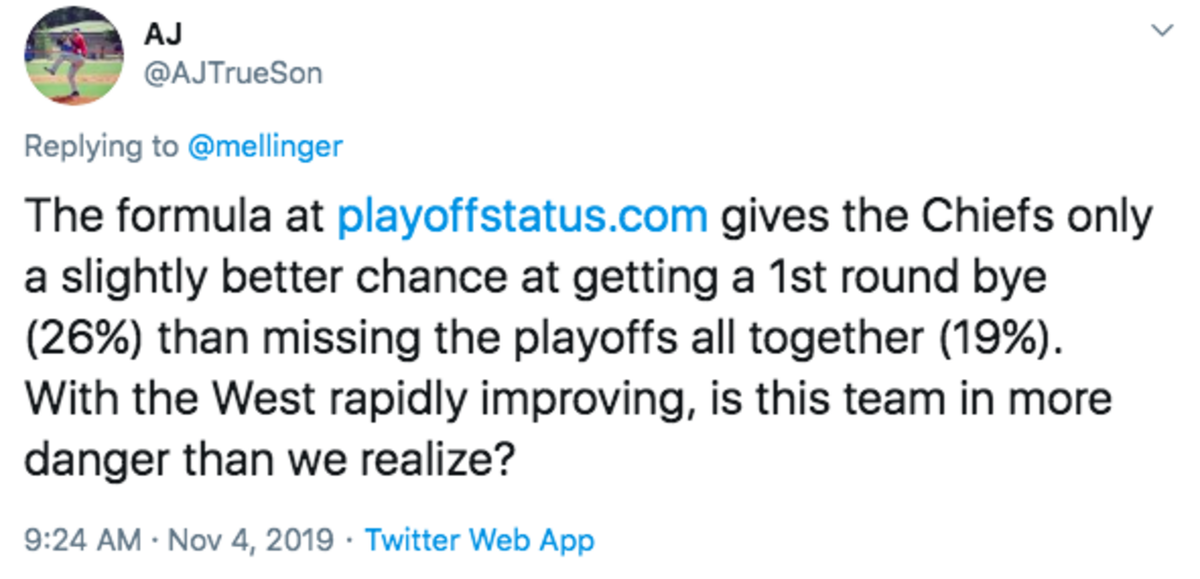
You know I love me some computer formulas, but I don’t think the worst-case is much to worry about here.
The Chiefs lead the division by two wins with seven games to go. Four of those games are in the division, and Reid has owned the AFC West so long he’s paid it off.
The Chiefs appear to be improving defensively, and whether it’s this week or next or even after the bye the offense should again be one of the league’s best when Mahomes returns.
None of that means the Chiefs are unicorns and rainbows.
Injuries remain a concern. Even before Mahomes’ injury the offense had been held to a total of 37 points in two games. Maybe teams have seen something in the Chiefs’ protections to exploit.
The defense looks better, and some of that is a growing mutual comfort between defensive coordinator Steve Spagnuolo and his personnel, but even if you assume that’s real they will now have to deal with the inevitable adjustment-against-an-adjustment phase.
The NFL is the least predictable of our major sports leagues. The Chiefs appear in great position at the moment. Appearances can change in a blink.
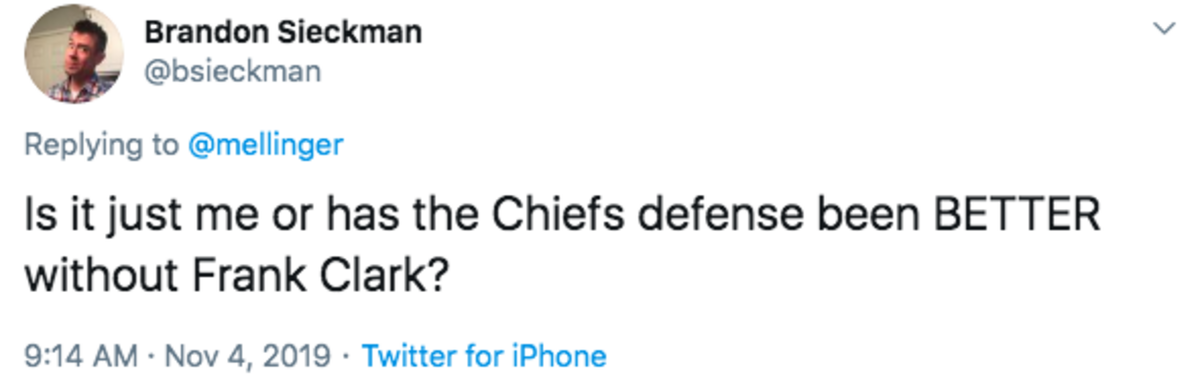
The defense’s best game of the year happened in Denver, and Frank Clark played 51 snaps that night.
Clark is a noticeable* run stopper and if he’d been playing through a neck injury, that could explain the lack of production against the pass.
*On film, anyway. I know there are times everyone looks terrible against the run.
This is obvious: Chris Jones made a huge difference.
His most important play was his last, with this annihilation of Vikings left guard Pat Elflein:
But he was terrific throughout, with seven pressures according to Pro Football Focus.
The biggest thing, at least to my eye, is the secondary. Charvarius Ward is improving every week, the confidence visibly growing as he’s finding more success. Juan Thornhill looks like a potential star, a promising combination of speed, instincts, ball skills, and a growing impact in the run game. Tyrann Mathieu is an alpha.
Most of this season has involved talk about the Chiefs needing cornerbacks. And, to be sure, the front office looked hard at trade possibilities and will likely be targeting the position in the offseason (especially with everyone but Ward a free agent).
But if that group isn’t quite a strength, it is no longer performing like a weakness. The Chiefs have been getting coverage sacks, for crying out loud.
Clark (or Jones, for that matter) have nothing to do with whether the corners can cover or the safeties can make plays.
I do expect Clark to make an impact when he returns, too. And if he’s been limited by the neck and comes back close to 100%, it could be a huge impact.
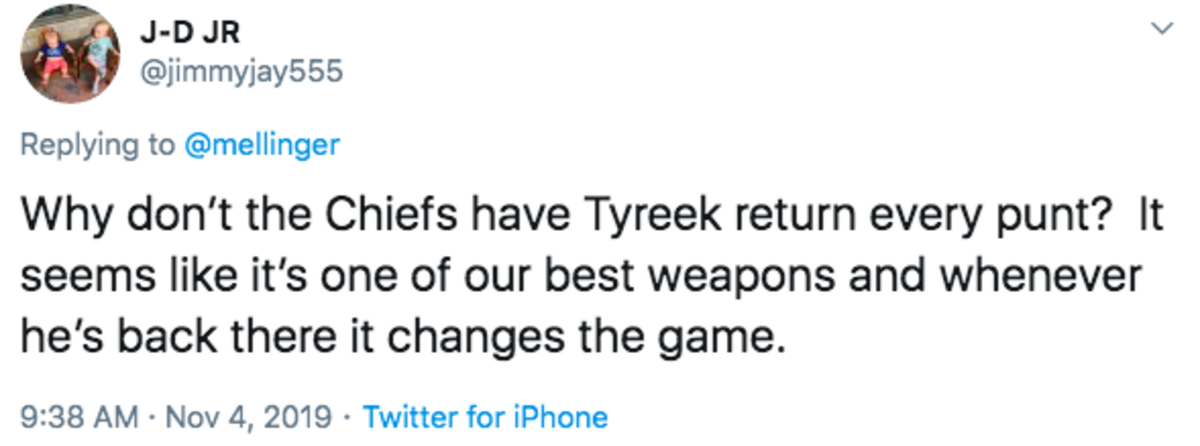
If Patrick Mahomes did not exist or was merely a good human quarterback we would focus a lot more on the need to keep Tyreek Hill healthy.
Yes, I’m aware that he missed most of the Jaguars game and all of the next four and the Chiefs were still (mostly) effective on offense.
I also know that the “blueprint” of going man-to-man against the Chiefs does not work nearly the same when Hill is healthy. He is the league’s fastest player, and, yes, that is his greatest strength.
But I maintain that he would be a terrific receiver even with the speed of, say, Sammy Watkins because of his supernatural vertical leap, ball tracking, timing, quickness, instincts, and hands.
Put it all together and stuff like this seems to happen every week:
The point I’m making here is that the risk-reward balance on having Hill return punts must account for his importance to the offense.
We saw glimpses of what his presence on special teams does when the Vikings essentially wet their pants and kicked short out of bounds at the first sight of him.
That’s a valuable weapon, and I know you can’t play football scared, but it makes sense to me to limit his regular season punt returns to high-leverage spots.
I’d expect him to be the primary guy in the postseason.
I’ll admit I’ve never seen something quite like this:
It looks unrealistic. You probably saw the NFL Next Gen Stat that had Tyreek Hill clocked at 22.64 mph, his fastest speed on a play from scrimmage. Keep in mind that Damien Williams ran a 4.45-second 40-yard dash at the NFL Combine. He’s a very fast human, and Hill made him look like a kindergartner.
“I told him,” Williams said. “I said, ‘Don’t embarrass me like that anymore on TV.’”
At the time, I said it looked like Damien Williams was running and then Tyreek Hill was on one of those airport people movers. I saw someone else compare it to Mr. Freeze.
But I’m also glad the broadcast highlighted the rest of what happened:
The play design sucked the Vikings defense toward the Chiefs’ left, and Williams pressed the line of scrimmage to sell the point. He then bounced to the right, where Andrew Wylie and especially Mitchell Schwartz wiped out an entire side of the Vikings’ defense.
At that point, Williams only needed to beat the Vikings’ safeties: he outran Harrison Smith, then beat Anthony Harris with a cutback.
“All I did was run,” Williams said. “Everybody else did the hard work.”
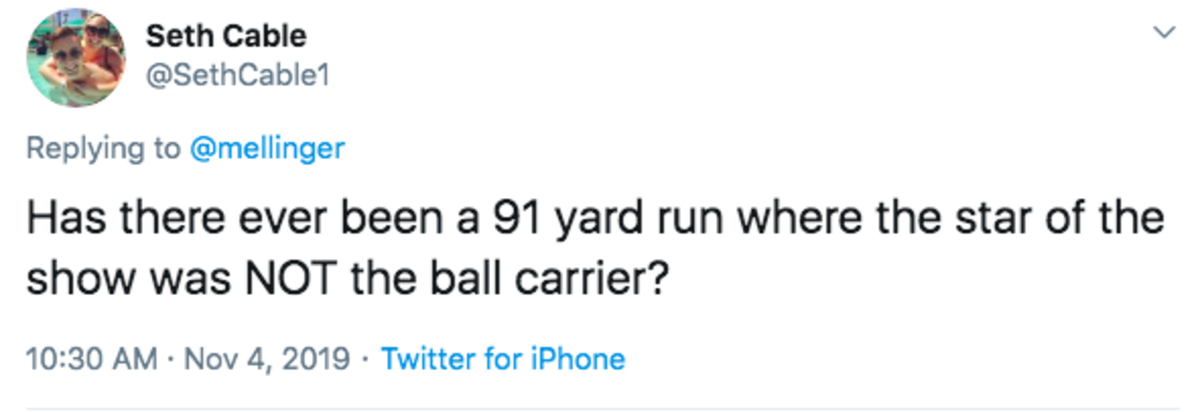
Williams is being humble. Obviously. He still needed to do his job, sell the movement to the left, cut back at the right moment with the right explosiveness and then beat two good safeties for what is tied as the longest run in Chiefs history.
That’s not nothing.
But there was a lot more going on than the running back.
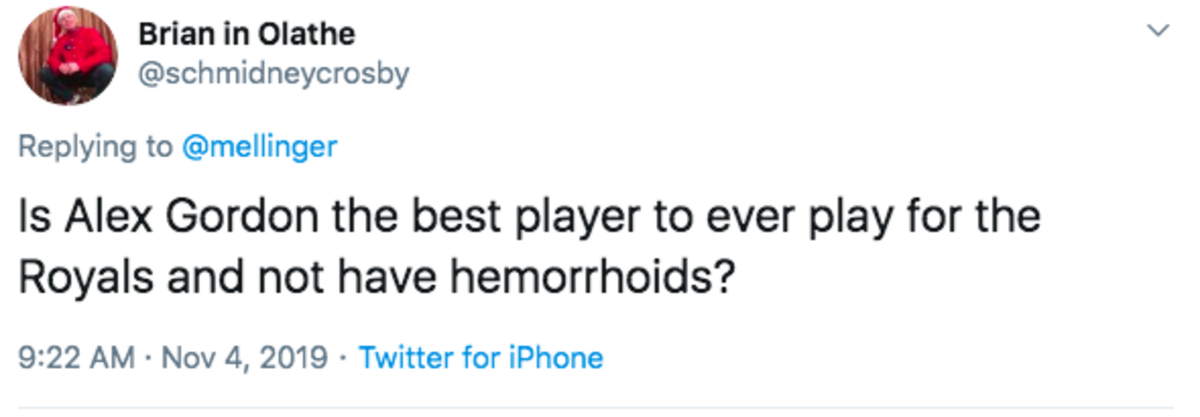
Wait. Are you asking for a list of the 10 best position players in Royals history?
A list?
A list!
10. John Mayberry. I’m admittedly guided but not dictated by WAR. There are no perfect ways to compare players across eras, but that’s the best one I know, particularly because it accounts for defense. As it happens, this list will leave out Hal McRae, Freddie Patek, Johnny Damon and others who deserve consideration. But Mayberry was a consistent force on the Royals’ first rise, a power-on-base presence who was a star in his day and even more valuable with hindsight.
9. Mike Sweeney. There was a time he was the best young right-handed hitter in the American League. All hitting numbers were inflated in those days, but he was a consistent .300 hitter, a tough strikeout who took his walks, and his 144 RBIs in 2000 is a club record that may outlive all of us.
8. Salvador Perez. Like I say, these lists are hard, and by the time he’s done Perez will probably have climbed this list. He’s 10th all-time in WAR, so I’ve already bumped him a bit on account of his energy and part in the Royals’ second rise.
7. Carlos Beltran. He might be the most difficult to place of them all. On pure talent, he’s No. 1. On overall career, he’s behind Brett and nobody else. But his time in Kansas City was short — I won’t mention again how the Royals had the gift of Beltran going behind Scott Boras’ back in negotiations but still played hardball over $1 million* — but he grew into one of the best players in baseball here.
*Oops.
6. Lorenzo Cain. This is an oversimplification, but in some ways he was Carlos Beltran if you trade some individual offensive production for being the best player on the 2015 World Series champions.
5. Alex Gordon. I could make an argument for him to be higher, particularly if you want to account for longevity and intangibles. I know at least a guy or two ranked higher here would be lower on most lists. I’ve said this before, but nobody personifies where the Royals came from and where they got to more perfectly than Gordon. He won Gold Gloves even in his worst years, was the game’s best overall left fielder for a span of five years, and the World Series homer off Jeurys Familia is one of the franchise’s all-time best moments.
4. Frank White. The only Royals player in history with more Gold Gloves than Gordon. I’m not old enough to use personal memories to judge these next three, so I’m using a combination of statistics and what I hear from people who lived the times.
3. Willie Wilson. An absolute terror of a leadoff hitter, there are old folks whose best baseball memories are Wilson rounding first and second on his way to a triple. His 1980 season looks like a mistake: .326, 230 hits, 133 runs, 15 triples, 79 stolen bases.
2. Amos Otis. His numbers don’t necessarily jump out, but the way his contemporaries talk about him is unmistakable. He won three Gold Gloves, had four top 10 MVP finishes, led the league in doubles and stolen bases and was so good he kept Willie Wilson out of center field. The Cain or Beltran of his time, in some ways.
1. George Brett. The only easy decision on the list.
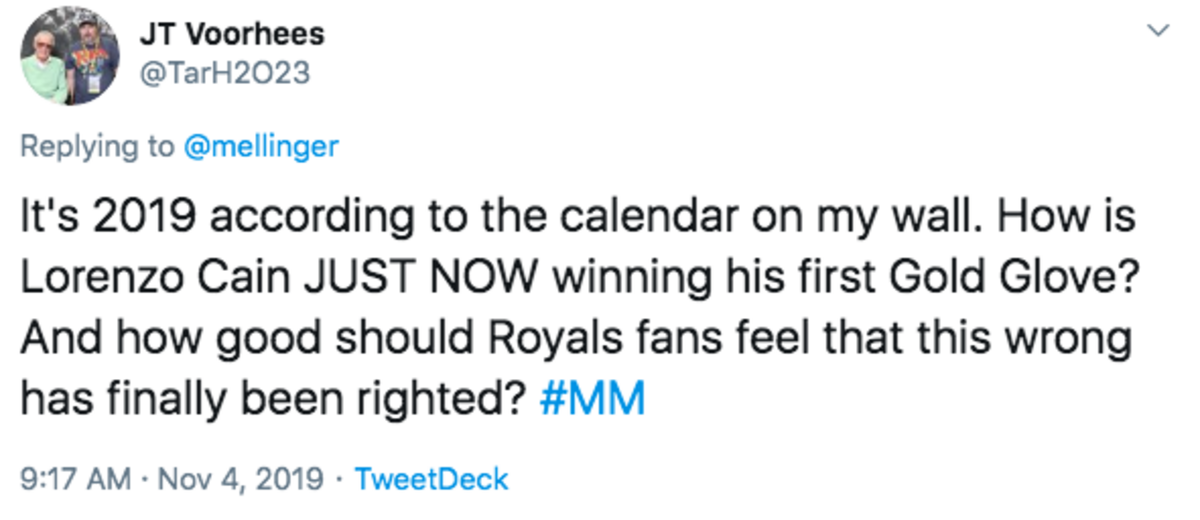
The way I know the Gold Glove has one of the strongest brands of any sports award is that it still carries this much weight after all the award has done to discredit itself.
Cain won his first Gold Glove, but he also won his third Fielding Bible award. That might not have the mainstream cache of Gold Glove, but in my opinion is a much better indication of excellence.
It’s run by Baseball Info Solutions and voted on by a panel of experts who put a lot of time and study into it, instead of coaches who have a lot of other stuff going on and often vote on name recognition.
Cain is the first center fielder to win the award in consecutive seasons since the award was started in 2006.
Also worth noting that the Fielding Bible is more exclusive since there’s only one spot per position (plus one for multi-position) for all of baseball, instead of one per league.
Again, it might not matter as much in the mainstream but my hope is that as the Hall of Fame voting bloc gets younger and more skeptical of traditional stats and awards that stuff like this matters.
Cain isn’t a Hall of Famer. But you get my point.
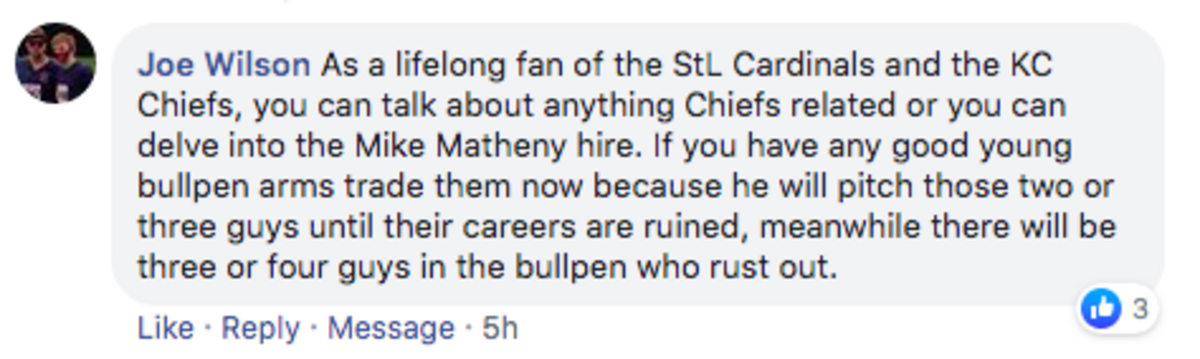
I might’ve set a new record for columns about a manager before he was hired, including a book report, and then wrote two more after the hire.
I’m fresh out of fresh Matheny takes, is what I’m trying to say, but I do find myself with two main thoughts.
First, what Matheny was in St. Louis is not necessarily what he’ll be in Kansas City, same way what Ned Yost was in Milwaukee wasn’t what he was in Kansas City. He learned to delegate, to trust, and perhaps most importantly let go.
Second, the impact of a manager on a big league baseball team continues to be vastly overstated. So many of these decisions are made by front offices these days, from lineup construction to bullpen management to roster makeup. Managers are less and less powerful, but the general perception has not caught up.
Put it this way: the Royals are in WAY better shape if their pitching prospects turn out but Matheny ends up as a dud than the other way around.
Actually, if the pitching prospects don’t turn out it’s probably impossible to tell if Matheny is doing a good job. It won’t matter. The Royals will be sunk.
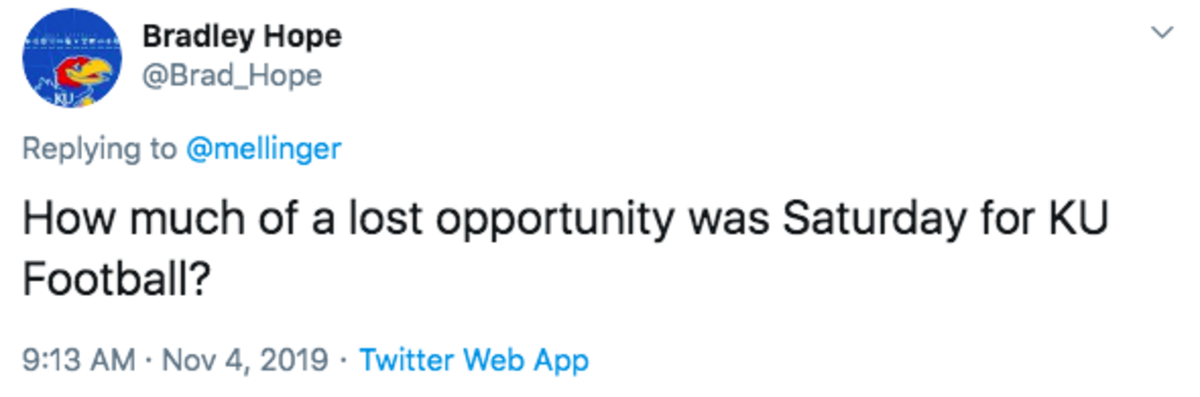
Significant, and getting rocked at home by your rival is a bad look, but that’s less of a bad loss than it would’ve been a good win, if that makes sense.
I think I’ve been pretty consistent on Les Miles and KU football. The important stuff is not this year. Outside of a 1-11 season there is virtually nothing Miles could’ve done this year to convince me he can’t do the job.
With three wins, including one in conference and one at Boston College — plus the close call against Texas — he’s already exceeded my expectations.
Now, that’s a very different thing than saying I’m convinced he’ll be great. Because I’m not.
Beating K-State would’ve been massive for Miles and the program. It would’ve been KU’s best football win in years, and probably in a decade. It would’ve been both substantial and symbolic and I understand the argument that getting blow’d out at home by the other in-state first-year coach can be seen as a step back.
But to me, it’s more a reminder about what Miles took over.
Missed opportunity, sure. Every loss is a missed opportunity.
But I don’t think it’s fair to knock him for it*.
*Except allowing the “K-State who?” locker room scene after the Texas Tech game to find the light of day. I’m not big on bulletin board material and generally believe that stuff is overblown. But college football is the most emotional sport we have and, really, in year one why set yourself up like that?
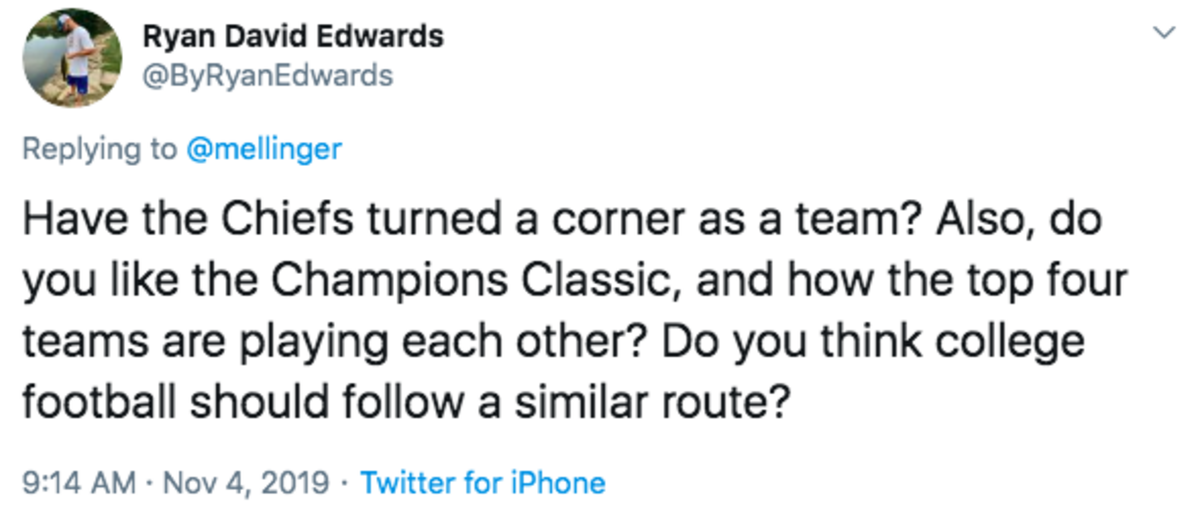
We’ve talked enough Chiefs, so lets look at the other parts of this.
I like the Champions Classic. I wouldn’t say I love it. I like it.
College basketball has improved its marketing in recent years. The Champions Classic is a big part of that, serving as the opener of the season. College basketball used to begin with a whisper, almost an apology, the awkward overlap with football filled with forgettable mismatches.
The Champions Classic changes all of that because no matter the particulars of any season if some combination of Kansas, Kentucky, Duke, and Michigan State are playing each other on the same night you know it’s real.
I wonder if there are ways to improve on this. I wonder if there was a way to claim, say, the same Tuesday (get out of football’s shadow) each November with all-day basketball buffet. Right now you have two games, and that’s great, but what if you had eight?
What if you could move interesting nonconference games involving schools like North Carolina, Michigan, Villanova, and Oregon to be the undercard for the four schools already locked in the Champions Classic?
Or, here’s a little more radical idea: do all that and shove the season back a month. Have college basketball start after football’s regular season is over. That might give the sport a clearer runway.
Pushing more of college basketball away from football’s shadow — not just on the front end, but on the back end with more conference games after the Super Bowl — could only be good for the sport.
This would create some other problems, obviously. This season’s NBA playoffs are set to begin April 19. If you wanted the NCAA Tournament over by then you’d have to shorten or condense the regular season, but to me, the juice would be worth the squeeze.
And, hell yes, a Champions Classic in football would be amazing.
College football has some similar issues as basketball in terms of teams often beginning their season with mismatches, so what if you began the season with this doubleheader: LSU-Ohio State at 5:30 Central, and Alabama-Clemson at 8?
You and I can both come up with a hundred reasons this will never happen, from schedules being done years in advance to coaches preferring to avoid that kind of risk early in the season.
But it’d be sweet.
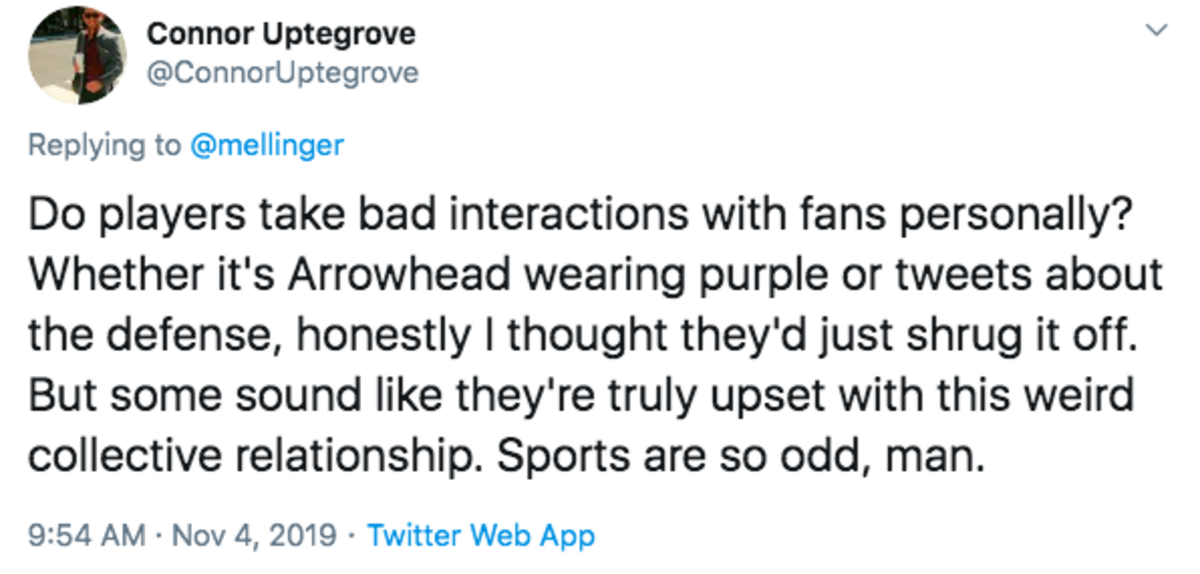
I have all the thoughts about this question.
From one perspective, yes, absolutely, you are 100% right. They are the athletes. They live great lives. They are paid well and, in practical terms, function as entertainers. Having strangers say dumb stuff to you that they don’t really mean is part of it. Get over it. Move on.
But that’s not the real world.
In the real world, these are almost always very young men and often very young men whose life experiences leave them unprepared for the exposure.
I do not say that as an insult. I got this job when I was 30, and before I say another word, I want to be as clear as possible that I am not comparing the blowback of a sports columnist to anything athletes take. Which is actually the point.
I was 30 years old with a life preparation that, superficially, gave me the tools to deal with public criticism: two loving parents, a support group of good friends, a life that included both success and failure.
I’m here to tell you there were nights I couldn’t sleep, and other nights I had a drink too many, and other days I stewed at my computer screen or fired off a stupid email or message to a stranger.
I can admit now that it took me at least a few years of that to actually develop the thick skin and perspective I was pretending to have. It took, if I’m honest, a personal life that included reconnecting with the love of my life and maybe even the overwhelming shift that happens when you have kids.
Again: I was in my 30s when I got this job.
Most athletes dealing with this are in their 20s, often their early 20s. They’re highly trained and advanced in their specific discipline but often unprepared and under qualified as public speakers.
Their value — and focus — is on being badass athletes, not on pausing to consider the real worth of some Twitter troll. They are modern gladiators on the field but they have the same insecurities of anyone in the stands. If anything, their status can amplify those insecurities.
Because what if the haters are right?
For me, if they’re right, I’d be exposed as a sports writer. Not a big deal. I love my job and all of that but I could go do something else. I could get a real job and I’d be disappointed this didn’t work but I could still pay bills. Maybe I could make more money, who knows?
For an athlete, this might be their only way. Or, at least, it’s BY FAR they’re best way. The lowest paid make half a million per year. The best make $20 million or more. The fall is long and hard and no matter what they say on the outside a terrifying thought.
That’s a lot of pressure, and remember, their jobs are in some ways literally tied to acting aggressively and decisively in the face of threats.
You and I can both agree they should be able to turn it off on Twitter or whatever, the same way you and I can both understand that’s unrealistic.
So, look. Whenever some social media interaction goes the wrong way it’s almost always the fault of multiple parties. Fans (too) often say dumb stuff they don’t mean, and athletes (too) often respond in kind.
Here’s one more twist in the conversation: sometimes athletes climb their way toward the top of their sport by being meticulous, leaving no detail uncovered, and taking in a massive amount of information.
The same stuff that can help them athletically can get in the way with this other stuff. It’s unfortunate, but I don’t know that you can have one without the other.
This probably got deeper than either of us intended.
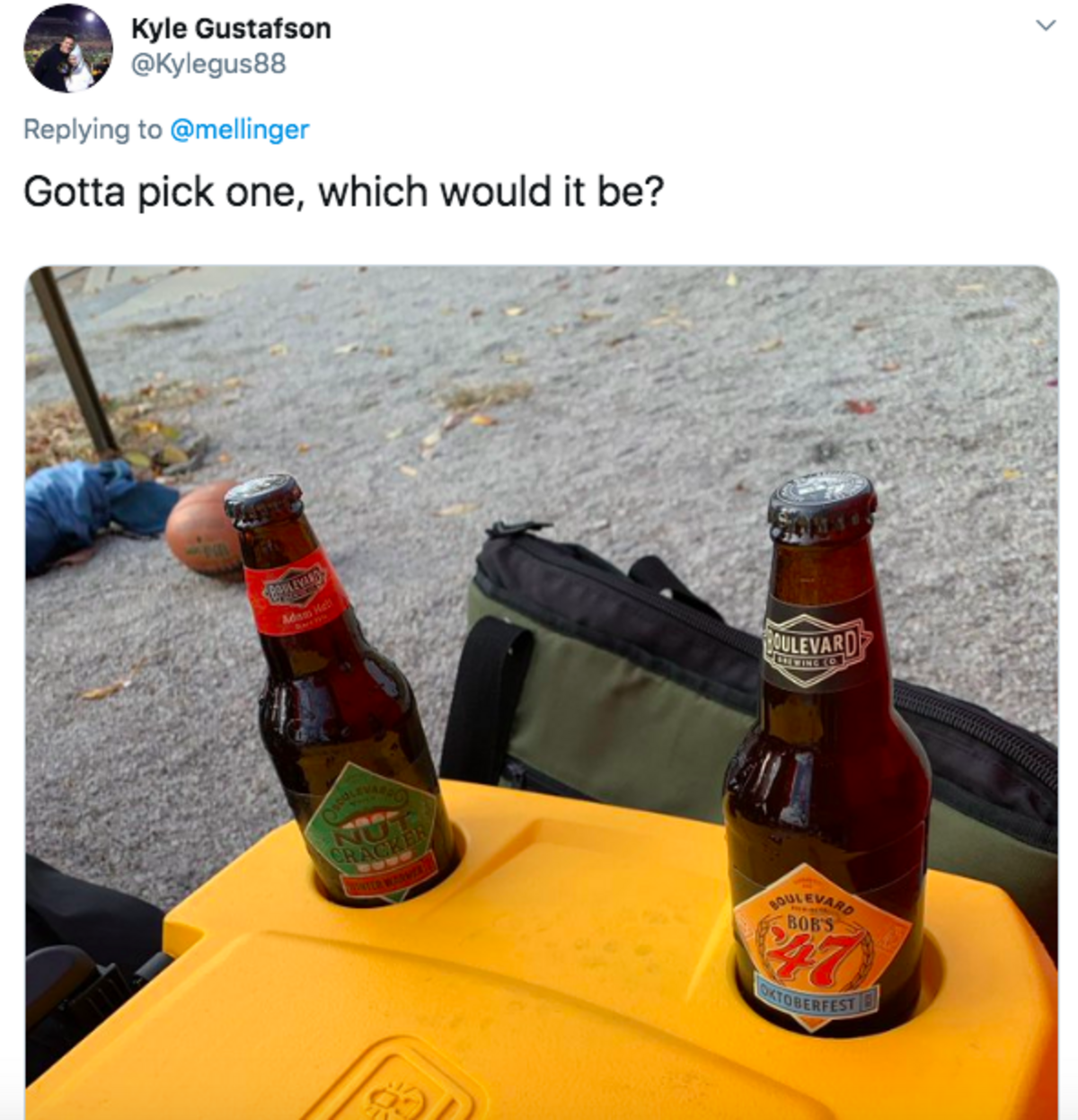
I’m a Bob’s guy, which I might get from my dad, but more than that during the winter I’m a stout and porter guy.
This is a relatively new phenomenon to me. There was a time I liked what I liked no matter the calendar or the weather, so maybe this is an old man thing, I don’t know, but as the weather gets colder I like my beers darker.
And, look, I’m not kicking Nutcracker or Bob’s out of my fridge.
But I’m also more focused on Founders CBS, Anchor Christmas Ale, Thirsty Dog Christmas beer (barrel aged if possible), Prairie Bomb (Christmas when available), Lagunitas Brown Sugar, Great Divide Hibernation, and I’m sure others that I’m forgetting right now.
I must admit I’ve forgotten the names of some of the local winter seasonals I had last year, but remember at least two I loved from Double Shift and at least one from Torn Label.
Here’s one thing I know. Thanksgiving is the best holiday, and with kids Christmas is impossible to beat. But I also know that at some point soon we’re going to have a family movie night where I’m going to make stovetop popcorn and sit on the couch with the kids and my wife.
There will be another night next month when we extend my mom’s completely manufactured tradition of watching the Grinch and one other vaguely Christmas movie while devouring a disgusting amount and assortment of snacks like wing dip, spin dip, nachos and more.
Those would be great nights if all I had to drink was cranberry juice, and I despite cranberry juice.
But they’ll be at least 1% better with dark beers and a fire going.
This week I’m particularly grateful for these new sheets we got. I’m not a shill, and paid for them myself, so I’ll only say that you can find them by googling “dry fit sheets.” They were too expensive. I never thought I’d be the kind of person who spends that much for sheets. But my goodness they’re comfortable.
This story was originally published November 5, 2019 at 5:00 AM with the headline "Mellinger Minutes: Why Chiefs aren’t rushing Mahomes back (no matter what) and more."