
‘Shocker culture is back’: Wichita State retains Battie, Berg and Williams
Wichita State hit the offseason trifecta Monday.
In one fell swoop, the Shockers went 3 for 3 on their biggest retention challenges when center Will Berg joined Dillon Battie and T.J. Williams in announcing he will return next season, giving Paul Mills three of the program’s most important offseason wins before the transfer portal even opens on April 7.
For a program trying to build on a 24-win season, there may not have been three more important names to keep.
Berg, Battie and Williams each emerged as major pieces on a Wichita State team that finished second in the American, played for the conference tournament championship and reached the third round of the NIT. More than that, all three were central to the defense-and-rebounding formula that fueled WSU’s surge late in the season.
That identity became the backbone of WSU’s turnaround.
“The Shocker culture is back,” a source inside the program texted The Eagle. “There’s pride in being a Shocker again.”
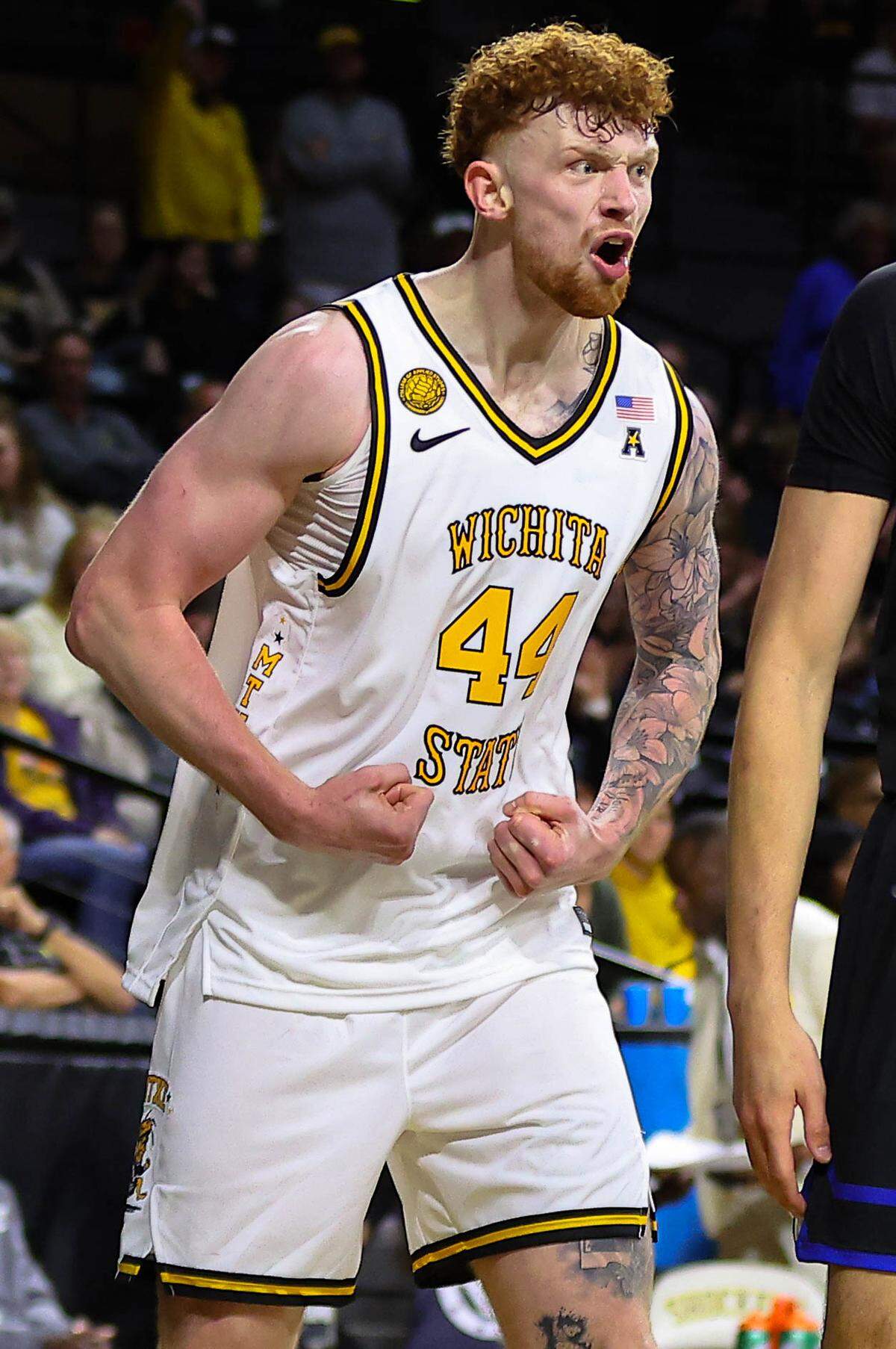
Berg anchored the middle as an elite rim protector and one of the nation’s best offensive rebounders. Battie brought athleticism, mobility and physicality to the frontcourt while emerging as a plus defender and active rebounder. Williams gave the Shockers another rugged, instinctive presence on the glass who could guard, scrap for extra possessions and impact winning without needing plays called for him.
All three helped Wichita State impose itself with second-chance points, defensive stops and sheer force around the basket.
That is why keeping them matters so much.
In today’s transfer market, players with Berg’s size and production, Battie’s upward trajectory and Williams’ upside are exactly the kind of pieces that can attract bigger programs. Instead, Wichita State kept all three and, in doing so, preserved the exact formula that made it so dangerous down the stretch. The Shockers should again have the makings of a team built on rebounding, rim protection, defensive versatility and physicality.
And now the next dream for Wichita State comes into sharper focus.
With Berg locked in as the lead center and centerpiece rebounder, the question becomes how far WSU can go if Battie and Williams both take the next step as shooters. Both are already highly productive players. Both already fit what Mills wants stylistically. But if one or both can become credible perimeter threats, then WSU may have a path to play them together even more often around Berg and create one of the most intriguing big, physical lineups in the American.
Berg was one of the clearest development wins of Mills’ season and arguably one of the most important players on the roster. After playing just 187 total minutes across two seasons at Purdue, the 7-foot-2 center blossomed into the American’s Sixth Man of the Year by averaging 8.8 points, 8.1 rebounds and 1.3 blocks.
But Berg’s value went well beyond the raw numbers. He became central to WSU’s identity, one of the best offensive rebounders in the country and the anchor of the second-chance dominance that carried the Shockers for much of the season. The impact metrics reinforced just how much he changed the game: WSU posted a team-best plus-16.2 net rating with Berg on the floor, with the offense jumping to a 120.2 rating and the defense improving to 102.4.
He also got dramatically better as the season wore on. After struggling to finish early, Berg shot 68.3% from the field over the final 10 games, including 76.7% at the rim. He also developed into a credible post scorer, producing 0.98 points per possession on post-ups, good for the 68th percentile.
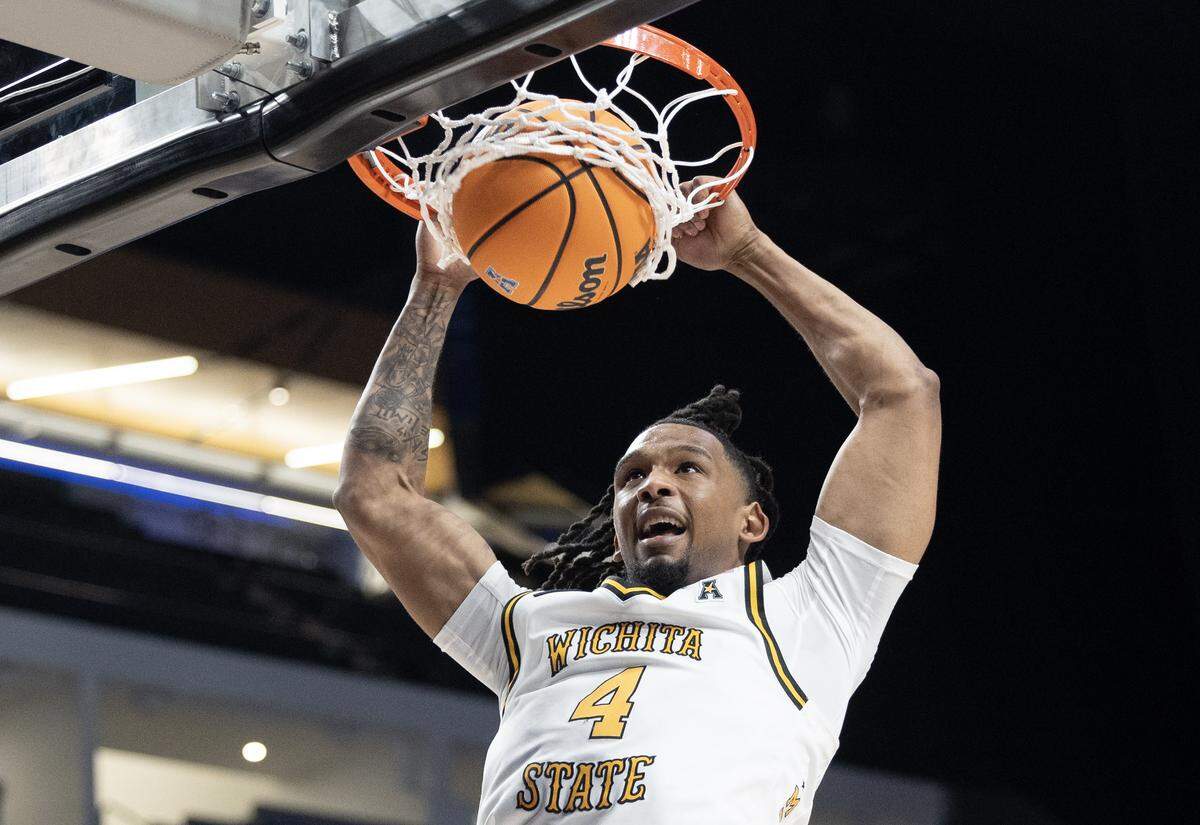
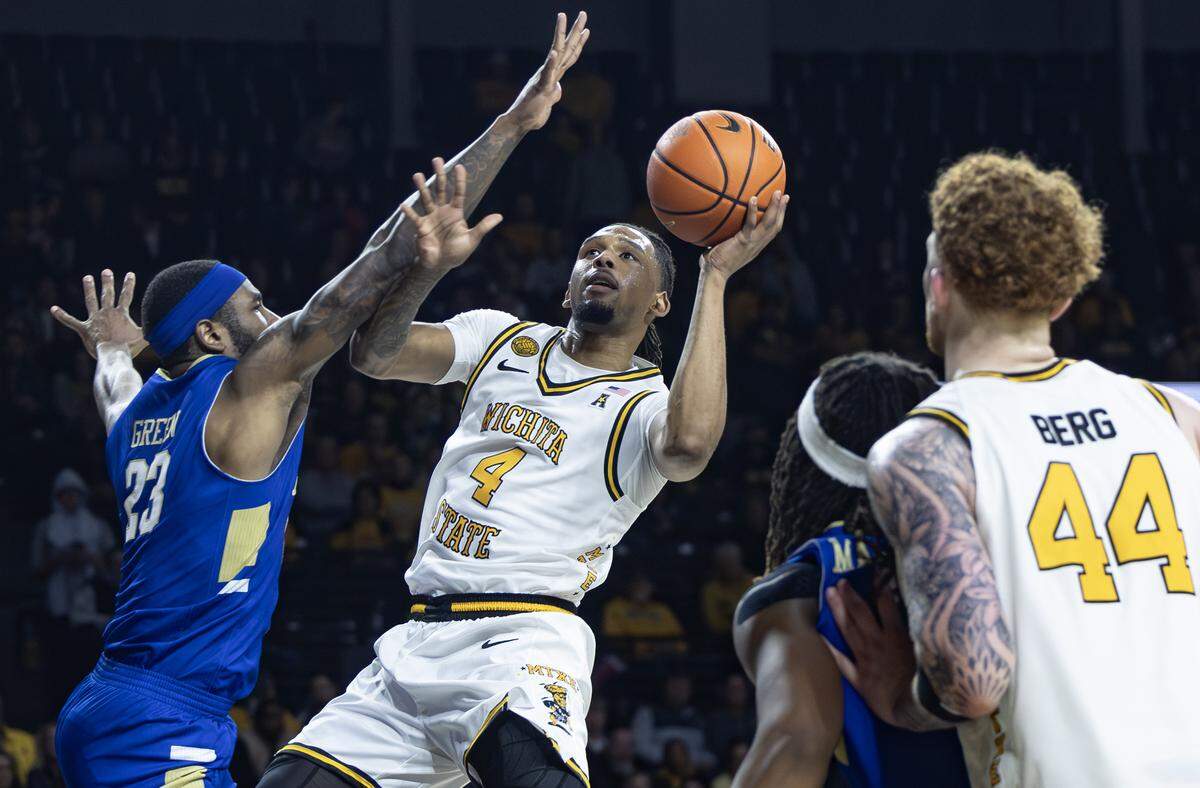
Battie’s return was almost as important because of how dramatically his game evolved. He started the year largely outside the main rotation before becoming one of WSU’s biggest breakout stories and perhaps the best example of player development under Mills. After entering the starting lineup on Jan. 11, Battie averaged 10.0 points and 5.7 rebounds over the final 20 games, then 12.4 points and 6.3 rebounds over the final month.
What stood out most was the growth in his offensive game. Early in the season, Battie could look rushed and out of control. By March, he was playing with much more poise, using jump stops, pump fakes and improved footwork to create cleaner finishes. He became an excellent cutter in Mills’ system, scoring 1.40 points per possession in the 80th percentile, and he shot 68.9% at the rim.
Just as importantly, Battie became a major piece in WSU’s defensive identity. Since January, WSU posted a 97.5 defensive rating with Battie on the floor, a reflection of how much his athleticism, mobility and energy helped the Shockers cover ground, rebound and defend with more force.
Williams brings a similar appeal, which is why his return felt so important too.
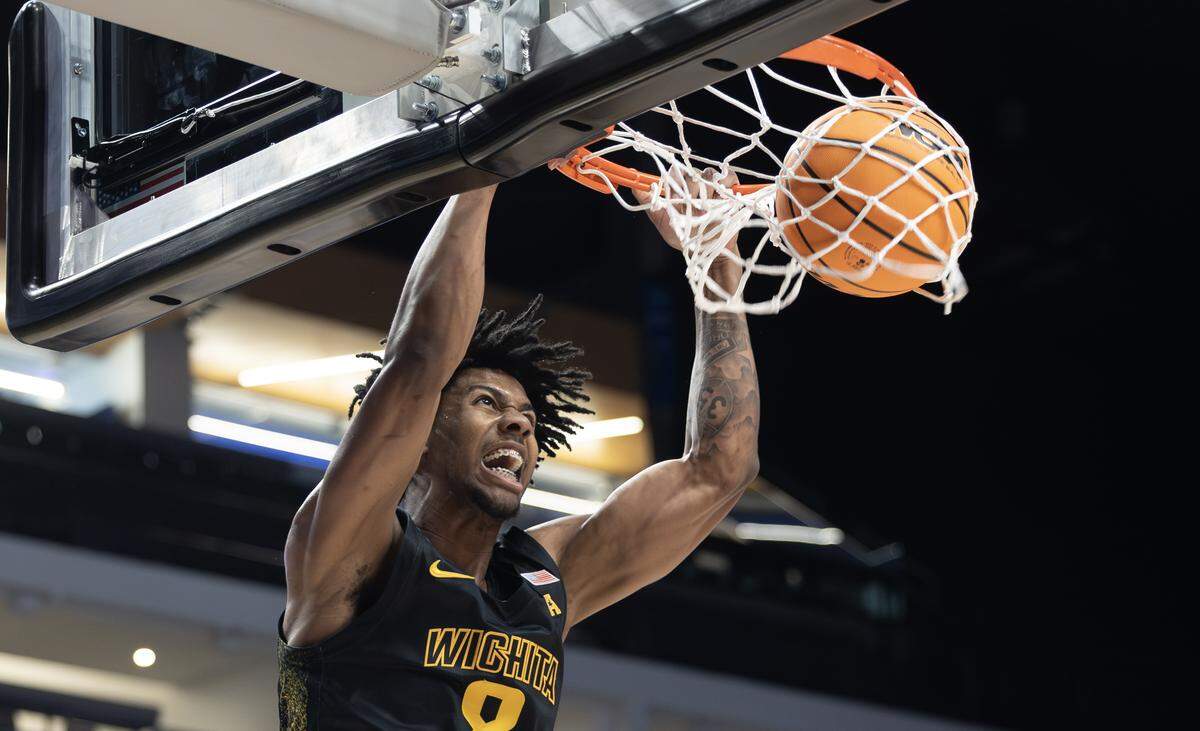
The 6-foot-5 Wichita native was one of the biggest success stories of the season and already looks like one of the most important building blocks on next year’s roster. He closed the year averaging 12.2 points and 6.5 rebounds over the final month, highlighted by a 27-point breakout in the double-overtime win at East Carolina. He finished his debut season averaging 8.4 points and 4.9 rebounds, but his impact ran much deeper than that.
Wichita State’s offense exploded with Williams on the floor, posting a 121.3 offensive rating compared to 106.6 when he sat. The Shockers shot better, turned it over less, rebounded better and got to the foul line more often with him in the game. Like Battie, Williams was highly effective without much shooting range. He took roughly two-thirds of his shots at the rim and finished 53.5%, posted a 51% foul rate, ranked in the 76th percentile on cuts at 1.37 points per possession and helped WSU recover 40% of its misses while he was on the floor.
And like Battie, the obvious swing skill is the jumper.
Battie went just 4 for 18 on jumpers, while Williams went 3 for 23 on jumpers. That is the next frontier for both players and perhaps the biggest offensive question for Wichita State’s roster. Because defensively and on the glass, both already fit perfectly next to Berg. All three helped create the exact formula that allowed WSU to win late in the season: defend, rebound, protect the rim and overwhelm teams with second chances.
That is why Monday was so significant.
The Shockers did not just keep three talented players. They kept the foundation of their late-season identity. Berg, Battie and Williams are three of the biggest reasons WSU went 14-4 in its final 18 games and now all three give Mills a chance to bring that same formula back next season.
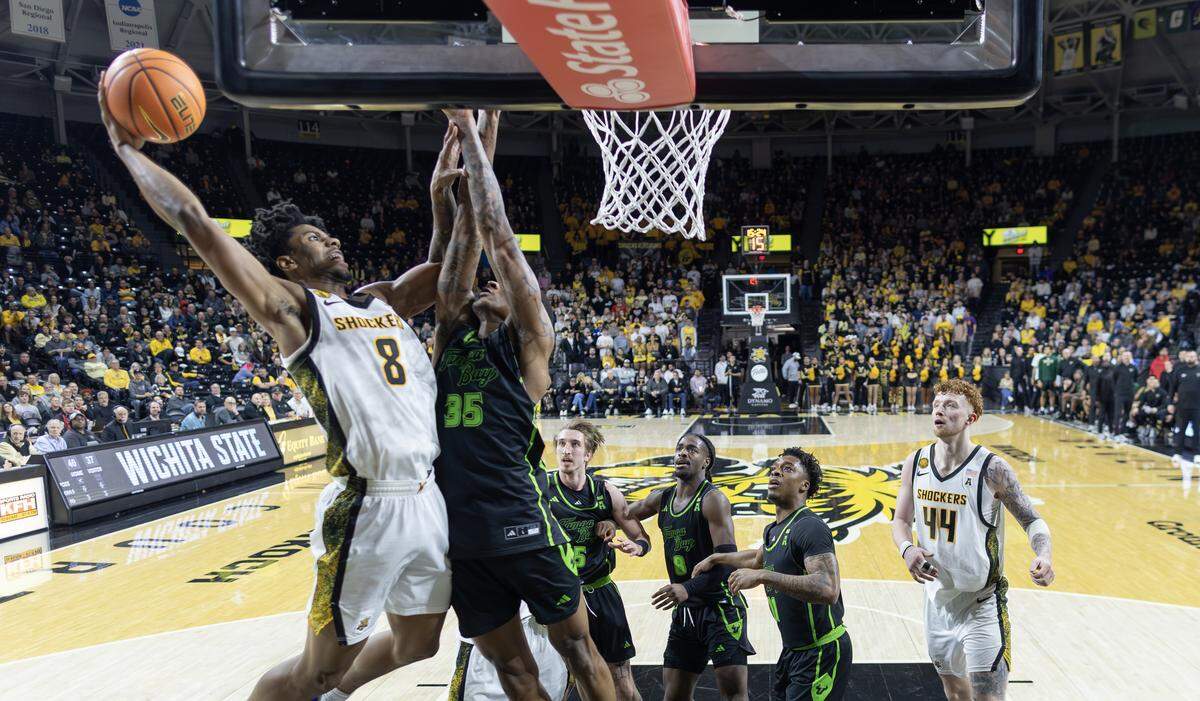
If Battie becomes even a respectable 3-point threat and Williams develops enough of a jumper to keep defenses honest, then WSU’s vision becomes even more dangerous. Berg can remain the anchor in the middle, while Battie and Williams can spend more time together in bigger lineups that punish teams with size, force and activity.
That is the dream now. Bring back the defense. Bring back the rebounding. Then see if the shooting development can unlock an even higher ceiling.
Berg, Battie and Williams are the first three players to publicly declare they will return next season and sources inside the program remain optimistic the team is bringing back a large core of players. So far, the only outward movement has been backup point guard Dre Kindell, who announced late last week that he intends to transfer once the portal opens on April 7.
For now, WSU has already secured three enormous offseason wins and, with them, the core of the formula that made the Shockers winners again.
This story was originally published March 30, 2026 at 2:46 PM.
.jpg)