
‘It’s about championships’: Kevin Saal’s vision as new Wichita State athletic director
On the day following his official announcement as the next athletic director at Wichita State, Kevin Saal gave an exclusive interview to The Eagle in a 30-minute conversation that touched on a wide range of topics.
The current Murray State athletic director, who will take over in Wichita in mid-July, spoke on Thursday about how his past experience has helped mold the vision he has for Wichita State athletics and prepared him to spearhead fundraising efforts aimed at turning around the financial situation in the athletic department.
Saal also spoke extensively about his philosophy as an athletic director and his role in the new world of NIL, how he plans on improving the in-game experience at Koch Arena and his plan of action to ensure all sports at Wichita State can reach their potential, including how he wants to help the men’s basketball team win more championships.
Before he is formally introduced as WSU’s next athletic director during a Friday afternoon’s news conference at Koch Arena, Saal (pronounced “Saul”) offered Wichita State fans a glimpse into his mindset toward the challenges awaiting him in Wichita.
How Saal plans to move Wichita State athletics forward
It’s no secret that Saal is taking over a Wichita State athletic department badly in need of a jolt.
The financial hit for the 2022 fiscal year is still to be determined, but the numbers from 2021 paint a concerning picture: WSU’s athletic department operated at a $8.76 million deficit.
WSU is far from the only athletic department in desperate need of a bounce back following the pandemic and it’s clear one of the new athletic director’s most pressing challenges will be taking the Shockers from operating in the red to the black.
Saal is up for the challenge after successfully leading Murray State back from the dip, as the athletic department he is leaving is stronger financially than it was before the pandemic. He views the first “90 to 120 days” as critical to meeting with as many Shocker fans as possible.
“It took a lot of time and effort and investing in folks in the community,” Saal said. “We want to tell our story, generate emotion and ultimately it’s about making friends. I like to call it ‘friendraising’ and that develops over time for what we’re doing, why we’re doing it and how we’re doing it. We have to be visible and accessible and we have to do a great job in the community. Ultimately, energy comes from emotional connection and emotional connection comes from hearing stories of our student-athletes and their individual stories. We want to develop leaders of character in athletics and in life and that development really resonates with folks.
“At Murray State, we’ve had a lot of generous supporters willing to come and say, ‘How can I help?’ For us, we have to create pathways to help so when that individual comes to us and says, ‘How can I help?’ then we have a wide menu of diverse options for them and they can select one and get involved.”
Another pillar Saal has found success with at Murray State is creating a definitive plan that puts a premium on career development for student-athletes once their playing careers are finished.
“I strongly believe in developing our young people in this order: as a student, as a person and as a player,” Saal said. “That’s not exactly revolutionary, but it’s very important to me because graduation is not the finish line from my perspective. Winning championships is great, but for us to achieve our goals, we ultimately have got to help our young people transition into obtaining jobs.”
That vision is how he became a resource for coaches at Murray State in the recruiting process. Athletic directors are typically not involved much during an official visit for a prospective student-athlete.
Saal is different. He enjoys putting together unique presentations for different sports and serving as a complimentary piece that can help in recruiting for his coaches.
“I really like meeting the recruits and their families and giving them a sense of what their son or daughter is in for,” Saal said. “My wife Jennifer and I have two boys, 20 and 22, so just a couple years ago we were in their shoes. I want to make sure they know their child is safe and secure and we have their best interests at heart and they’re going to develop into the best student, person and athlete they can be and there’s an athletic director here that’s committed to that.”
A current concern at WSU is the dwindling ticket sales, SASO memberships and contributions, which are expected to be down from their pre-pandemic marks for the fiscal year of 2022.
Even before the pandemic hit, Koch Arena was becoming more and more empty for the average men’s basketball game. WSU’s streak of selling at least 10,000 tickets to home games, which dated back to 2004, ended unceremoniously this past season when Koch Arena returned to being able to host full-capacity crowds.
Trying to convince fans to buy tickets, attend games and spend their money in the arena is not unique to WSU. In fact, WSU is better off than most. But Koch Arena has nowhere close to the same buzz it once did and Saal wants to restore that on his watch.
“First off, we’ve got to have a first-class game production and home environment,” Saal said. “I tell my staff here all the time, ‘Don’t be afraid to make mistakes when it comes to in-game production.’ We’re going to throw a lot of stuff at the wall. Some of it will stick and some of it won’t. We’ll take the stuff that does and we will absolutely accentuate it and over the course of time, as we improve daily, we’ll arrive at something very special.
“If you walk into Koch Arena or Eck Stadium and it feels somewhere between a rodeo and a circus, we’re doing something right.”
A key part in attracting fans to games is winning and Saal plans to conduct a meticulous audit of each and every program at WSU to optimize spending and create a plan of action for each program to succeed in their own way.
His goal is for WSU to rank in the top-100 annually in the National Association of Collegiate Directors of Athletics’ Directors’ Cup, which measures the all-sport success of an athletic department. WSU’s national average has been 130 over the past 10 years with the Shockers peaking with a No. 63 ranking in the 2012-13 school year.
“We’re going to take a look at every single one of our 15 programs and within those programs, we’re going to look at salaries, benefits, annual operating funds, travel, recruiting, nutrition, you name it,” Saal said. “And we have to look at how we rank within our league to understand where we sit from a resource standpoint. Ultimately, it’s about matching resources to expectations. If you expect to finish in the top-third in the league, I’m a firm believer we’ve got to have resources at the midpoint or above to do that. We don’t necessarily need to be the single greatest-resourced program in the league to win a championship. You can win championships from the midpoint.
“We’re going to meet with each program to get an understanding of our current state and we have to be really genuine and authentic when we define our current state. It may not be pretty, but let’s rip off the band-aid and recognize what a reasonable objective is. And once we do that and define the gap, then we’ll get after it in terms of filling that gap.”
Saal’s vision for Wichita State men’s basketball
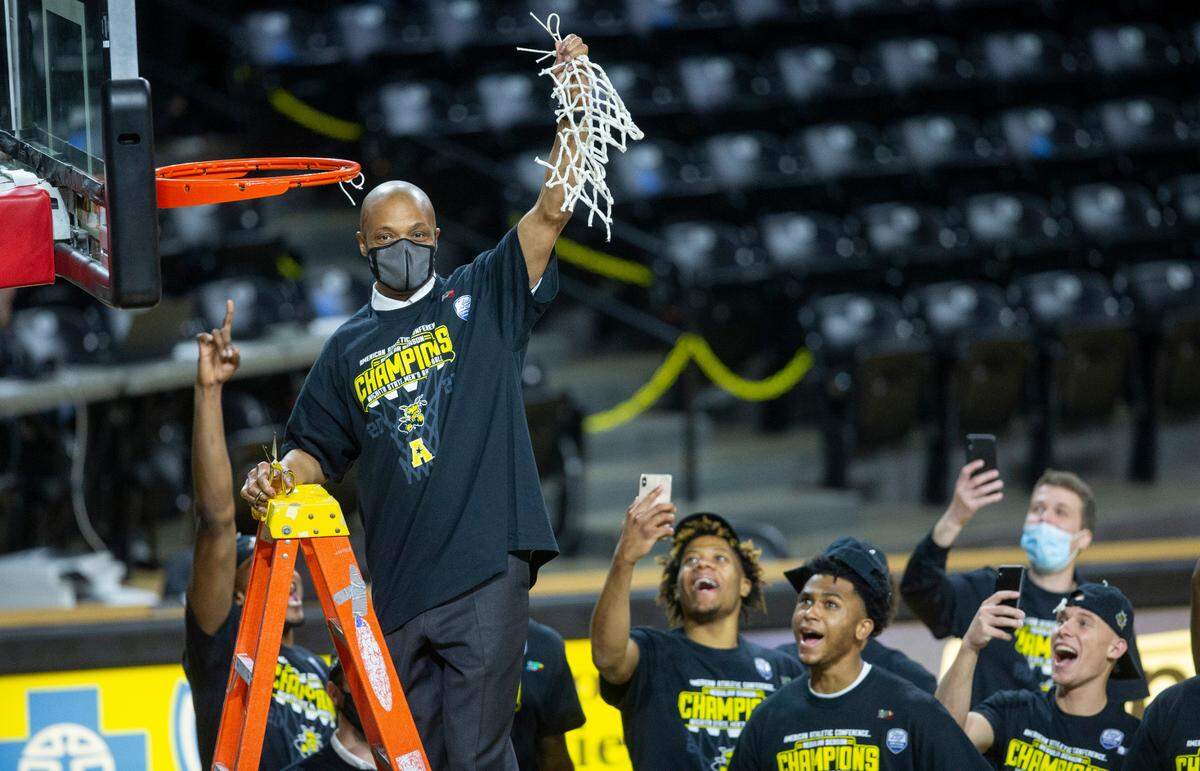
Saal has seen the inner workings of great men’s basketball programs, a luxury of his 23-year career.
When he was at Kentucky, he saw how John Calipari led the Wildcats to three Final Fours, including winning the 2012 national championship. In the last three years, he worked closely with Matt McMahon and saw how he turned the Racers into a mid-major power, winning 31 games, sweeping the Ohio Valley championships and advancing to the second round of this past year’s NCAA tournament.
He’s bringing the same championship expectation with him to Wichita State.
“We have to be very clear and transparent about understanding the landscape of where we are in the American Athletic Conference and what we aspire to be,” Saal said. “And we are going to aspire to win championships, so we need to match resources to those expectations.
“We know American Athletic Conference championships lead to NCAA tournaments and I know from Wichita State’s success over many, many years that it’s not just about making the NCAA tournament. We’ve got to make deep runs. It’s about the Sweet 16 and the Elite 8 and the Final Four and national championships. That’s the goal and what we have to aspire to be.”
Saal brings with him experience of working in athletic departments of all sizes: he’s worked at UMKC, where the budget was $6 million for 16 sports, and he’s worked at Kentucky, where the budget was $152 million for 22 sports.
“The similar theme everywhere I’ve been is that successful programs have to be well-resourced,” Saal said. “If we expect elite results, then we’ve got to meet expectations with elite resources and we have to remove obstacles.
“It’s our job as administrators to remove obstacles for our coaches and our students and let them do what they do. Our coaches need to understand we’re absolutely locking arms with them and we’re in the trenches with them.”
In his department-wide audit, Saal plans to evaluate how WSU stacks up with its budget compared to its peers in the AAC. While he will be privy to more updated information, some data can be gleaned from a report from basketball blog Three Man Weave, which tracked the budgets of every men’s college basketball program from the 2020-21 season (data from the 2021-22 season is not publicly available yet).
On the surface, it looks like WSU is one of the biggest spenders in the country with its $11.78 million in expenses for men’s basketball, but $7.32 million of that total is from former coach Gregg Marshall’s settlement with the university.
Take out that dead money and WSU spent just $4.17 million for its men’s basketball program, which ranks No. 8 in the 11-team AAC, only above South Florida, Tulane and East Carolina. Remove the teams leaving for the Big 12 and add the newcomers arriving from Conference USA and WSU sits No. 5 in the new-look, 14-team league.
Saal said if WSU expects to win titles, it needs to be in the upper-third of the league in budget. That includes pushing for facility upgrades, namely an improved weight room for the men’s basketball team, which Saal said is “absolutely a priority” for him.
“Facilities are critically important to the success of any athletic department for two reasons: from a recruiting perspective and from a player development perspective,” Saal said. “I look forward to taking a comprehensive tour of the facilities because I know we have needs all over. Whether it’s the basketball weight room, I’ve read those accounts of where it sits, the work that’s needed for coach (Kristi) Bredbenner with the softball field, our tennis facility needs some work. Many of these things I’ve sat down and talked with president (Rick) Muma about and we’re aligned and we share a vision for what we’re looking for in terms of Wichita State athletics.”
How Saal plans to tackle the NIL era at Wichita State
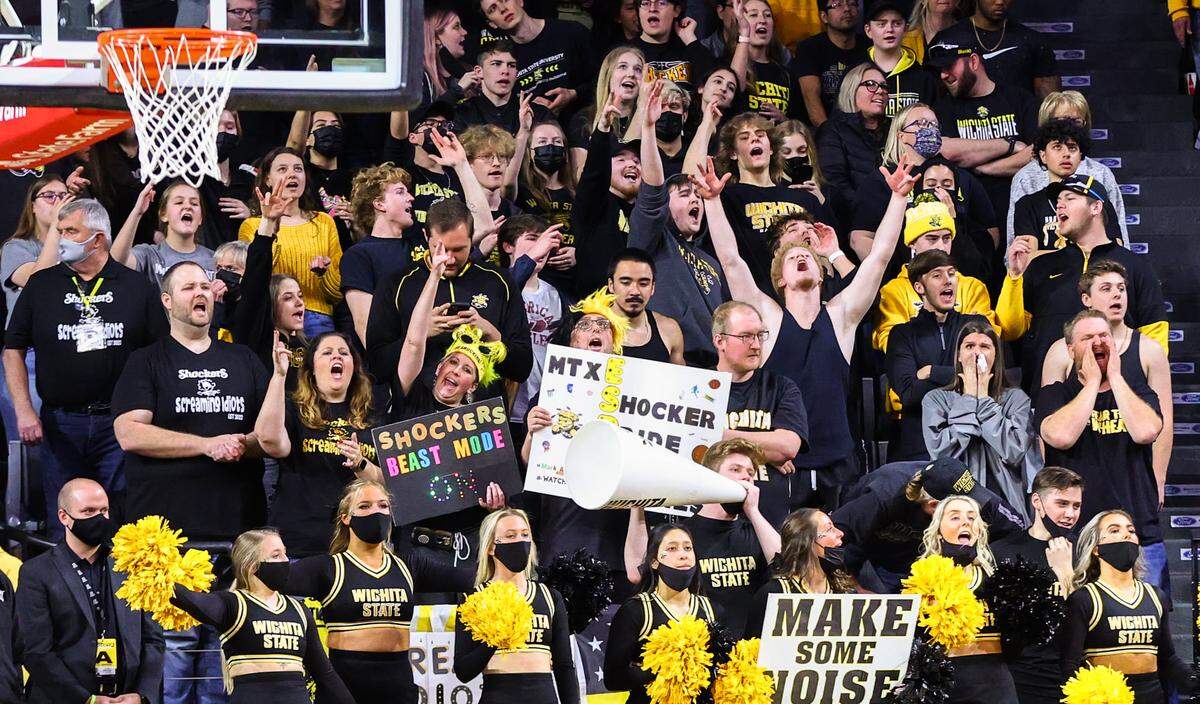
The era of Name, Image and Likeness has drastically altered the landscape of college sports, a reality that Saal is well aware of.
In the last year, Saal has worked closely with Murray State donors who can now put money directly in the pockets of student-athletes by following the rules put forth by the NCAA.
While he has not worked with an organized group of donors the size of Wichita State’s NIL collective operated independently by Armchair Strategies, Saal said he has embraced the changes with NIL from the start and looks forward to a collaborative relationship with the collective in Wichita.
“What we’ve done at Murray State is embrace that there is a community of several individuals that are interested in matching resources to expectation to keep our programs at an elite level,” Saal said. “So my involvement with that from Day 1 has been advising, counseling and suggesting how we can be very efficient and very effective in our activities.
“Institutional representatives can’t play a lead role in terms of leading and directing those activities, so there’s many layers to it. But at the end of the day, it is our responsibility to embrace it and it is our responsibility to help make that process efficient and effective and really encourage it because it is such a critical part now.”
If there isn’t a collaborative relationship between an athletic department and a collective supporting the school, then awkward conversations can happen with boosters who could feel like they’re being torn in two different directions between giving to the school and giving to the student-athletes.
That’s why Saal plans to take a proactive approach in building a relationship with Tyler Weber and Tymber Lee, a pair of former Shocker baseball players who have taken the lead on the lone Wichita State collective.
To maximize Wichita State’s potential, Saal believes he has to work hand-in-hand with the collective instead of competing with it for dollars from donors. It’s an approach that has worked well for him so far at Murray State.
“From my perspective here at Murray State, what’s been very helpful from Day 1 in my role of counseling and advising is we know there’s going to be some overlap with donors and season-ticket holders that want to contribute both to the NIL and to the school,” Saal said. “We’ve just strongly encouraged them to consider going above and beyond for what they’re doing for athletics so we’re not just shifting a pool of dollars from the annual operating budget into NIL. Our fans here have been very receptive to that and understanding that concept and I have no doubt we can do the same thing in Wichita.”
Is Saal motivated to try to bring Wichita State football back?
Anytime there’s a new person in charge at Wichita State, the inevitable question will be asked: Are you going to bring back Shocker football?
A 2016 independent study estimated it would cost more than $40 million to renovate Cessna Stadium and then another $6 million for an annual operating budget to restore WSU football, which was discontinued in 1986.
Support for the undertaking eventually fizzled out and has not been seriously broached since. In more recent years, a segment of WSU fans have wondered if the university should add a soccer or wrestling program.
Saal does have experience overseeing an athletic department with football at Murray State, but he isn’t coming into the job with a desire to add a new sport at Wichita State.
“There are so many elements to (adding football) from the facilities to fundraising to Title IX to gender equity, it’s a complex discussion,” Saal said. “I think first and foremost for us is maintaining focus on our current 15 sports programs at Wichita State. I want to focus on that before we start looking at adding programs to our sport portfolio.”
Another challenge in the modern college sports landscape is navigating conference realignment, a topic Saal has plenty of experience in after spearheading Murray State’s transition from the Ohio Valley Conference to the Missouri Valley Conference that will begin this summer.
Saal has a new appreciation for the work required to successfully sell your school to move up a level of competition and said he admired the job his predecessor, Darron Boatright, did in taking WSU from the Missouri Valley to the American Athletic Conference in 2017.
“I understand what goes into that process and I’ve spent a lot of time with presidents and with the commissioner selling our institution,” Saal said. “I know that was the case with Wichita State and the American. I think it’s really important that we honor the job that has been done before us in terms of getting into a new league and a higher competitive environment. And now we have a great responsibility to continue to push our programs forward to be competitive within this league.”
This story was originally published June 17, 2022 at 8:05 AM.
.jpg)