
The five biggest challenges facing new Wichita State athletic director Kevin Saal
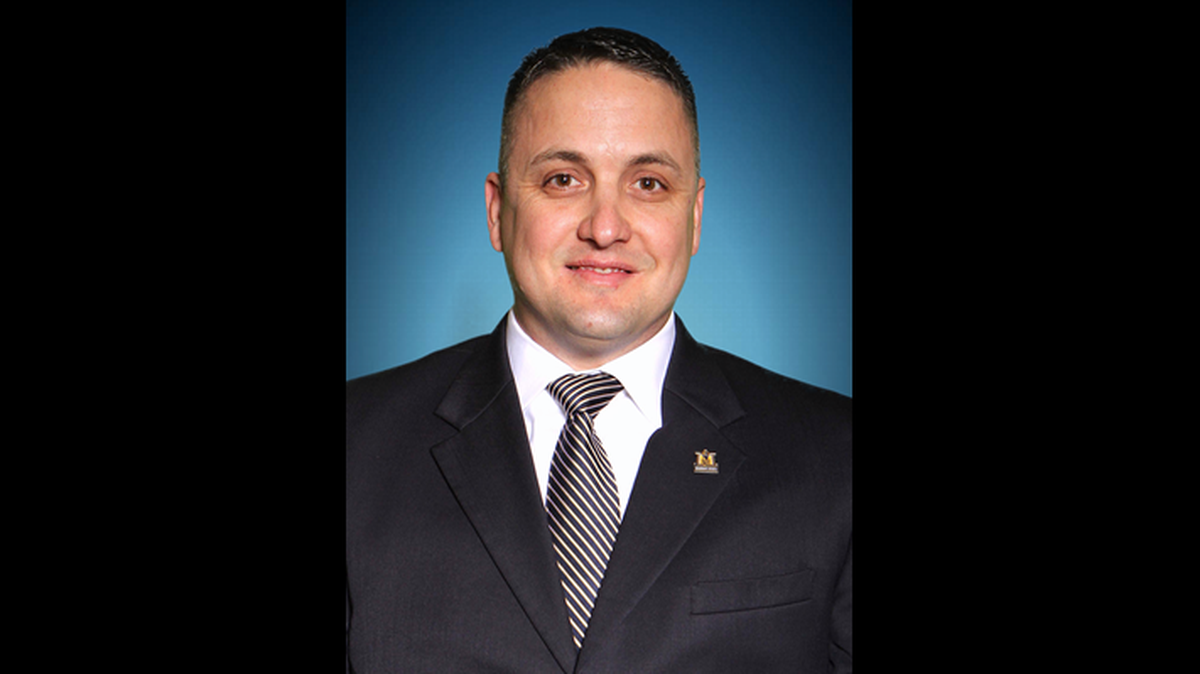
Now that Wichita State has found its next athletic department leader with the hiring of Kevin Saal, the current athletic director at Murray State, it’s a good time to look ahead at the challenges he will face in his new job.
1. Navigating the Shockers in a new age of Name, Image and Likeness
Wichita State took a cautious approach when the NCAA ruled last summer student-athletes could begin making money off their name, image and likeness and the failure to adapt to the rapidly changing landscape ultimately played a role in the firing of former AD Darron Boatright.
Progress has been made with the arrival of the first Wichita State NIL collective, which launched in April and is operated independently by Armchair Strategies.
Athletic directors all across the country are still trying to figure out the best way to approach the NIL era, but the way forward seems to be for athletic departments to develop a plan of action and to work with, not against, the NIL collective.
The NCAA is beginning to crack down on the unregulated activity that created much of the havoc in the transfer portal earlier this year, but the importance of NIL money-making opportunities to the modern student-athlete remains paramount.
It’s unclear how much experience Saal has directly working with a NIL collective from his time at Murray State, but his background suggests he could adapt quickly to the challenge.
For starters, he is a former student-athlete himself with a career as a Division I swimmer at Arkansas and TCU. He also has 12 years of experience working in the athletic department at Kentucky, a basketball blue-blood, and supported a state NIL law when it passed Kentucky legislation earlier this year.
“It gives our young people an opportunity to do something that they’ve never had the ability to do before and I certainly think it’s a positive step forward,” Saal told The Murray Ledger in March. “I think young people, and I was one of them, come from all different walks of life into college athletics.
“To give some perspective, we have 330 student-athletes at Murray State University, and 40% of those are first-generation college students. So those 120 who are first-generation college students, about 100 of them, 80% of them, are on athletics aid and-or federal Pell assistance. So we serve student-athletes where a good segment of them are doing something that has never been done before in their family, No. 1, and No. 2, couldn’t do it otherwise without (either) federal assistance or athletics aid. We don’t want to paint everybody with a general, broad brush, but I would tell you that any assistance is helpful.”
2. Re-energizing the donor base at Wichita State
It’s no secret a good chunk of Wichita State donors were left miffed by the university’s handling of the dismissal of Gregg Marshall and how athletic director Darron Boatright, who was in the athletic department during the alleged incidents of physical abuse, remained in power.
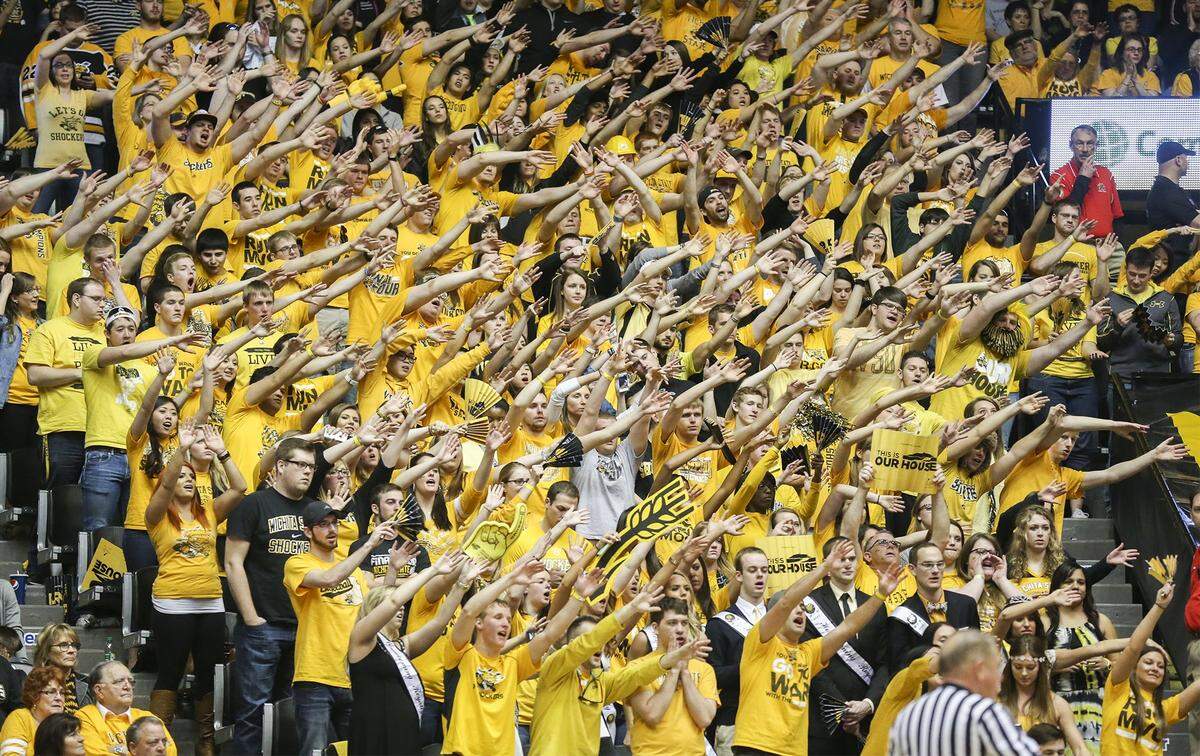
The pandemic is the primary reason why ticket sales, SASO memberships and contributions dropped 66% in the fiscal year 2021 from the previous year, but WSU had to fight off growing apathy in the fan base during a school year where the volleyball, men’s basketball and baseball teams, the three largest revenue-generating programs, all failed to qualify for the postseason for the first time since the 2000-01 school year.
Koch Arena was left a little more than half-full for most men’s basketball games, a far cry from the 10,000-plus that used to regularly pack the Roundhouse. Winning can help solve that problem, but athletic departments everywhere are fighting an uphill challenge to convince fans to leave their homes and still attend games like they once did.
A new face in charge is sure to bring a certain level of new excitement to the fold, but it will be up to Saal to personally win over the donors who left and find a way to re-energize Wichita State’s fan base.
Making alterations to how SASO works could be a place to start, which could include changing the method of the priority point system and creating new incentives and benefits for donors.
Saal has had a great deal of success doing just that at Murray State, as the Racer Club saw unprecedented growth in fundraising under his leadership.
He also has a track record of fundraising success at Kentucky, where he developed relationships with donors and played a significant role in the design and construction or renovation of eight athletic facilities, including a $135 million project to renovate the football field and and a $49 million construction project to build a baseball stadium.
3. Taking Wichita State from in the red back to in the black
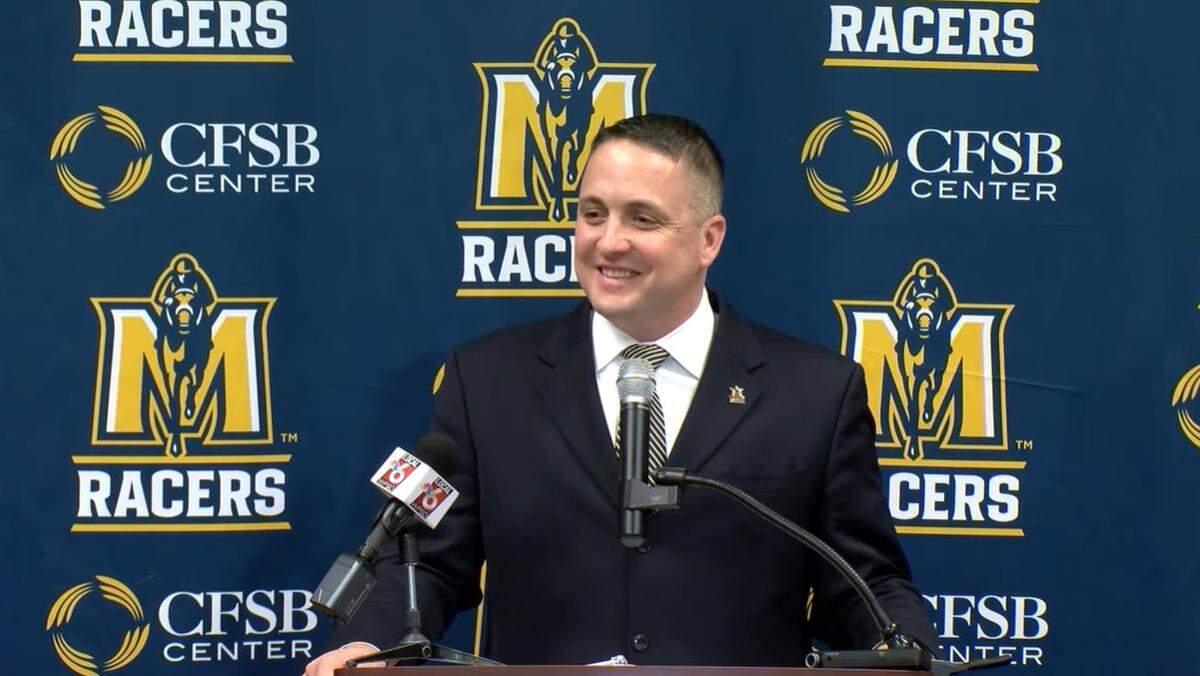
Wichita State is far from the only athletic department across the country still reeling following the coronavirus pandemic, but it’s evident the new athletic director is going to have his work cut out turning things around after the athletic department operated at a $8.76 million deficit in the fiscal year 2021, which ranged from June 30, 2020 to June 30, 2021.
The massive blow came during the 2020-21 men’s basketball season, which saw the Shockers host just 12 home games at a severely limited-capacity crowd at Koch Arena, and sometimes with no fans at all. It’s no surprise, as a result, the primary money-making program in the department generated $5.55 million fewer than it did in the previous season.
Also counting against WSU is its annual payment of $1.25 million to former coach Gregg Marshall, who reached a $7.75 million settlement with the university in November 2020 that will keep him on WSU’s books until 2026.
A more clear picture of where WSU’s athletic department stands will be revealed in the fall with the publication of the fiscal year 2022 report, but it’s safe to assume ticket sales, SASO memberships and contributions are still down from where they once were before the pandemic.
It remains to be seen how quickly Saal can turn things around for the Shockers, but it’s promising that Murray State’s athletic department remained in a stable situation through the pandemic under Saal’s leadership. In an interview with GoRacers.com, Saal said the key was focusing on three core values.
“The student-athlete experience. Maximizing the way we use our resources. Our human resources, our financial resources, our time. And ultimately the competitive excellence is really the third piece,” Saal said.
4. Making sure the facilities for men’s basketball remain top-notch
While NIL money has become the new arms race in college athletics, offering top-notch facilities will always be important to successful programs.
Improvements to Wichita State’s facilities specifically for men’s basketball became a hot topic of conversation last summer when several recent alumni gathered at Koch Arena to watch the AfterShocks play in The Basketball Tournament.
Fred VanVleet, the most visible former Shocker who is now a star in the NBA, brought the conversation of upgrading the men’s basketball team’s locker room, lounge area and weight room to light in talking to local media last July.
“We’ve got to do better for the basketball team here,” VanVleet said. “I know we’ve had a ton of success and there’s been money generated all across the university and it seems to have gone everywhere except to the basketball team.”
It was a win for WSU athletics as a whole when it raised $13.8 million to build a 36,000-square foot Student-Athlete Center, which features a state-of-the-art weight room.
The issue VanVleet and other alumni had was that the current men’s basketball players don’t work out in that new weight room, rather in the same, windowless and dated weight room that they used while they were Shockers.
“I think it was old when I was here,” VanVleet said with a laugh. “I think that should be our next focus as an alumni and former basketball player here. That’s the way we can keep it going and keep it growing. You have to put back into it. It’s nice there’s a new student center and a new weight room, but you would have thought the team that drove a lot of that would have received a lot of that. That hasn’t been the case so far.”
Former strength and conditioning coach Kerry Rosenboom, who resigned from WSU after 35 years this spring, told The Eagle he was frustrated in recent years by the athletic department’s indifference to what he viewed as necessary upgrades to the weight room.
After traveling with the WSU men’s basketball team around the American Athletic Conference, Rosenboom saw the difference in quality and said WSU must adapt to keep up with its peers.
“When the strength coaches from around the conference come in, they can’t believe that this is our men’s basketball weight room,” Rosenboom said. “I hope the fans understand these are things that are needed in the recruiting battle. I know over the last few years, the men’s and women’s basketball teams tended not to bring recruits to the weight room. I had to meet them somewhere else. I’m hoping whoever gets my position will keep fighting for those things and hopefully it will happen for the student-athletes because they deserve it, they really do.”
The good news is that Saal developed a “facilities master plan” at Murray State, which meticulously detailed goals to update and advance every athletic facility, that included an emphasis on improving the weight room and training spaces for the men’s basketball team.
5. Guiding Wichita State through conference realignment era
This would have seemed like a preposterous notion five years ago when Wichita State was celebrating its arrival to the American Athletic Conference.
WSU believed it was leaving a one-bid men’s basketball league in the Missouri Valley for the strongest conference outside of the power-conference structure. While the move is still regarded as a good one for WSU, it’s also true the AAC is no longer the same league for men’s basketball that tempted WSU to join in 2017.
Connecticut has since bolted for the Big East and Houston, Cincinnati and UCF are on their way out the door to the Big 12 next summer. While the additions of UAB, North Texas, UNC Charlotte, Florida Atlantic, Rice and Texas-San Antonio keep the AAC afloat, they don’t come close to replacing the stature of Houston, Cincinnati or UConn in the men’s basketball realm.
With a pair of basketball-centric conferences likely to expand soon, it could make some sense to potentially pursue a new life in the Big East or Atlantic 10.
It’s unlikely WSU would change conferences again so quickly, but if recent history has proven anything, it’s that things can change quickly when it comes to conference realignment. It’s never bad to have someone in charge with some experience guiding an athletic department through a transition like Saal, who was instrumental in Murray State receiving an invitation to leave the Ohio Valley Conference to join the Missouri Valley Conference this summer.
.jpg)