
After tumultuous pandemic season, here’s how college football can return to normal
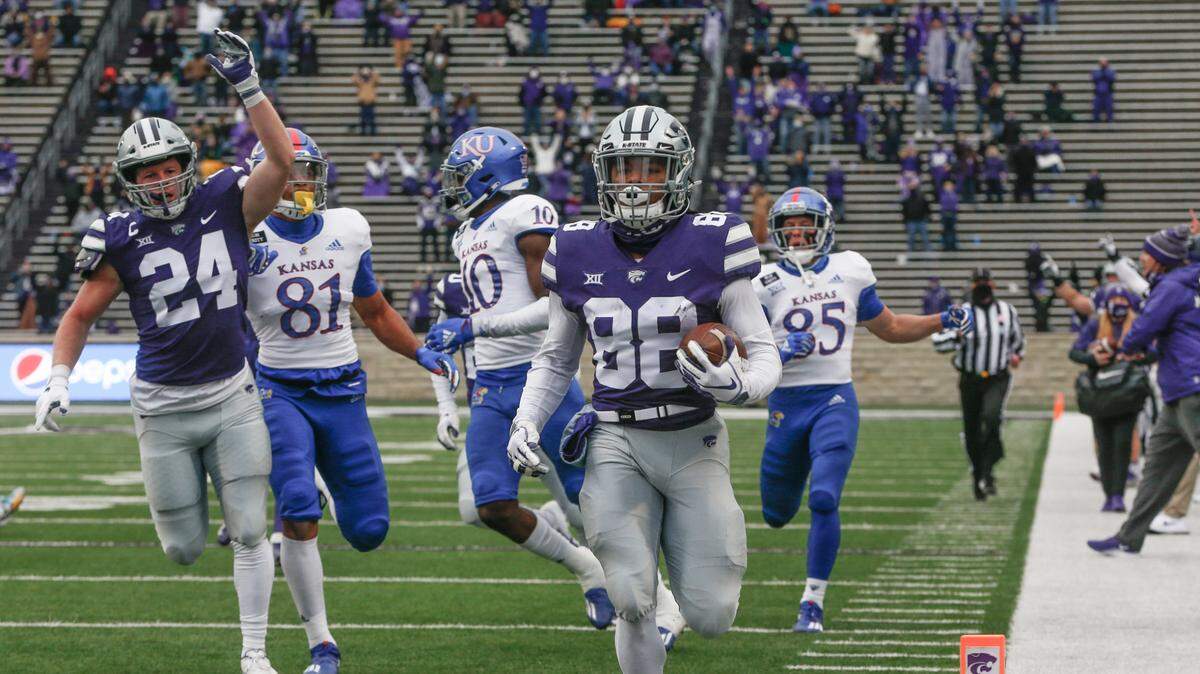
For college football fans, the challenging months that made up 2020 will be remembered for game cancellations, empty stadiums and round-the-clock COVID-19 testing more than just about anything that transpired on the field.
Will next season be different?
Now seems like a good time to begin wondering. Everyone is eager for things to return to normal, and with nearly nine months to prepare for the first football games of 2021 there is growing optimism that the coronavirus pandemic will no longer be the same nuisance it was for coaches, players and fans last year.
“We’re going to be in a much better place,” said Dr. Kyle Goerl, medical director at Kansas State’s Lafene Health Center and chair of the Big 12’s medical advisory committee. “We’ve got a lot of work to do, but I am hopeful that by next (season) we’re starting to see things look a lot more familiar.”
But there are many hurdles for college athletics to clear before tailgating, packed stadiums and healthy rosters are once again synonymous with Saturday afternoons in the fall.
The biggest: herd immunity. Experts say between 70% and 90% of the population will need to be vaccinated or have contracted COVID-19 before that can be achieved. Though distribution of the vaccine is underway, it is slow. Furthermore, it is currently going only to the people that need it most, putting healthy and young college athletes at the end of line.
Eager as college football players may be to stop wearing masks, to quit undergoing COVID-19 tests three times a week and to forget all about the possibility of spending two weeks in quarantine because of a positive result or a close contact, it will be a race to see if any of those things can happen before September arrives.
College basketball teams are still dealing with all of it. More game postponements are happening than ever before in the Big 12. Managing COVID will remain a huge factor for the sport through March Madness. The expectation is also for spring football to feel like 2020, with lots of social distancing and Zoom calls.
Things could begin to change as early as May. That’s when Goerl envisions college athletes beginning to receive the vaccine. He expects every athlete who wants the vaccine to receive it, though K-State won’t require athletes to get vaccinated. They will only strongly advise them to do so.
“That is when you will probably start to see things open up widely,” Goerl said, “and that is basically because vaccine rollout has been a huge challenge, and that is the major, big-ticket item that needs to go well for us to move back to some level of normalcy.”
What will that normal look like?
Well, that depends on your definition of the term.
“Over the last 10 months I have kind of purged that word from my vocabulary,” Big 12 commissioner Bob Bowlsby said. “I’m not sure I remember what normal looked like. I’m going to guess it’s going to be a new normal. The HIV virus has not been conquered, the flu virus has not been conquered and I’m going to guess that coronavirus will not be conquered. But I have great confidence in American medical and scientific technology, and I think we will get to a place where we can co-exist and defend ourselves.”
Will full stadiums return?
Perhaps the best indicator that college football is back to its pre-pandemic ways will be the sight of a sellout crowd at kickoff.
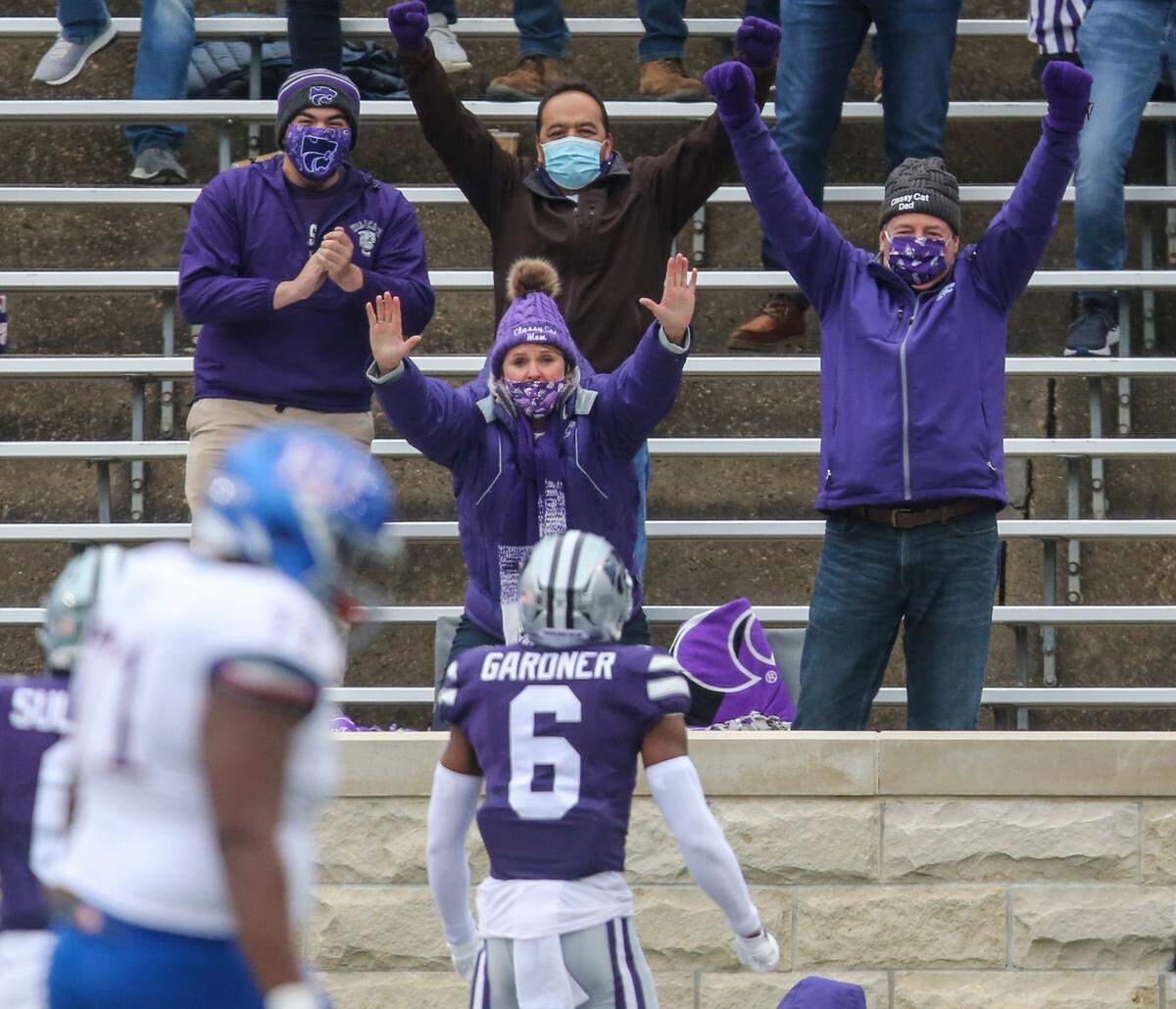
K-State athletic director Gene Taylor says the Wildcats are planning several attendance models for football games next season that go all the way up to max capacity of 50,000 at Bill Snyder Family Stadium. Outside factors will determine if that is feasible, but that is what he is aiming for a season after K-State allowed approximately 12,500 fans (or 25% capacity) at games.
“If the vaccine gets widely distributed and the numbers get under control,” Taylor said, “we are planning to be as back to normal as possible. But we can’t be definitive right now. It is way too early.”
Bowlsby also envisions larger crowds attending games next season. Now that schools have experience hosting games during a pandemic, and fans are getting vaccinated, it makes sense that the days of severely limited capacity may be over, especially at outdoor venues.
Still, full capacity might be a pipe dream.
“That’s a challenge,” Goerl said, “because let’s say you have 60% of your population that has either had (COVID-19) or has been immunized. That means 40% haven’t. And that’s more than 20,000 people in a 50,000-person stadium. There’s a lot of bad that could come from that sort of situation.”
There is another factor that could hurt crowd sizes next season, and it has nothing to do with the pandemic.
How many fans will be ready to attend mass gatherings after spending the past year away from games? Some will surely jump at any opportunity to safely support their favorite teams in person. Others may be more cautious, or now have different viewing habits.
Bowlsby pointed out that tickets went unsold for the Big 12’s football championship game last month, even with a reduced capacity. Several Big 12 schools have also struggled to sell their reduced allotment of basketball tickets for home games. It seems some fans are comfortable watching games from their living room.
“The real question is what is going to be the psychology around public assembly?” Bowlsby said. “Are average people ready to go back into a concert sitting next to people they don’t know and be comfortable with that? Are they going to go into a football stadium and sit with people they don’t know for four hours?
“I think the whole psychology is in some ways trailing the development of vaccines and co-existence. It’s just impossible to tell.”
How much longer will testing continue?
Testing was arguably the biggest headache for college football teams last season.
They cost universities thousands, they ate up players’ time and their results were impossible to predict. One day, coaches had a full report by lunch. The next, coaches had to delay practice while they waited on them.
Everyone involved would love for a different process to be in place next season. But experts suggest that will likely be too soon for players to stop wearing masks and quit getting tested.
Now, if vaccine distribution is ahead of schedule and immunity proves to last longer than current research indicates, it’s possible athletes could avoid testing in 2021. But that is the best-case scenario, like a football team scoring a touchdown on all its drives.
More likely, testing will continue but in a different way.
Instead of visiting a clinic for a nasal swab that produces results a day later, experts are hopeful that college athletes will have access to at-home COVID-19 tests that can be administered easily and provide results quickly with saliva on a card. Goerl compared them to pregnancy tests, saying they could be handled in a team’s training room.
That would make life easier on everyone, especially team trainers that were overworked trying to coordinate testing schedules in 2020. They would also be much cheaper.
“If we are still testing, I certainly hope we come up with a more streamlined version of what testing looks like,” Goerl said. “The current model is not sustainable.”
.jpg "AP20270566180215 (1).jpg")
Will contact tracing continue to sideline players?
It will be interesting to see how many players get sent into quarantine following a positive test by one of their teammates next season.
More than 80 K-State football players tested positive for COVID-19 last year, according to Riley County health data, and more than 100 members of the roster missed games or practices after factoring in close contacts.
But those numbers should be lower next season, as vaccinated players should be exempt from contact-tracing protocol. It’s also possible that players that have already had coronavirus will be considered immune, but that is up for debate.
Last season, players that tested positive were given a 90-day grace period in which they were not in danger of being sidelined as a close contact. Goerl says research has shown that immunity might last much longer. Even after a person loses his or her antibodies to the virus, he said, their B cells and T cells “response remains robust when re-challenged with the virus.” He compared it to research on the SARS virus, which shows strong B cell and T cell defense against it all these years later.
In time, perhaps college athletes will see their grace period extended after getting the virus. And maybe a roster that was hit hard by the virus last year won’t have to worry about it as much next season.
“I’m hopeful that those that have already had it are going to maintain some level of immunity, hopefully for at least a year, if not longer than that,” Goerl said. “For a team that has been through it, I would think they have some reasonable protection at this point.”
Bowlsy is sure of one thing.
Game cancellations will be much less of a concern now that 2020 is behind us.
“We were almost completely unprepared and unequipped to deal with this last year,” Bowlsby said. “None of us had any immunity to it and when one person got sick it tended to get a whole lot of people around them sick. I think that is going to be much less moving forward.”