
Natasha Fife, pioneer who transformed women’s sports in Wichita, dies at 89
Natasha Matson Fife was 14 years old when she watched women’s sports history come through Wichita.
The best women golfers in the country had gathered at Rolling Hills Country Club for the 1950 U.S. Women’s Open and what happened that week was something even larger than a major championship. The LPGA was founded there, inside a clubhouse Fife could still picture more than seven decades later — the iron chairs, the linoleum tables, the room where women’s golf took a historic step forward.
At the time, she did not fully grasp the magnitude of what she had witnessed. She was a young golfer from Wichita still discovering the game, coming of age around legends such as Babe Didrikson Zaharias, Marilynn Smith and Judy Bell.
But Fife spent the rest of her life proving what women’s sports could become.
Fife, one of the most decorated women’s golfers in Kansas history and a foundational figure in the growth of women’s athletics at Wichita State, died this past Friday in Wichita. She was 89, less than two months shy of her 90th birthday. Funeral arrangements have not yet been announced by the family.
Known by nearly everyone as “Tash,” Fife won five Kansas Women’s Amateur titles, seven Wichita city championships, three prestigious Broadmoor Invitational titles and seven Kansas Senior Women’s Amateur titles. She made four U.S. Women’s Amateur appearances, highlighted by a quarterfinal run in 1960, and was regarded as one of the top amateur golfers in the country during her career.
But her legacy stretched well beyond the golf course.
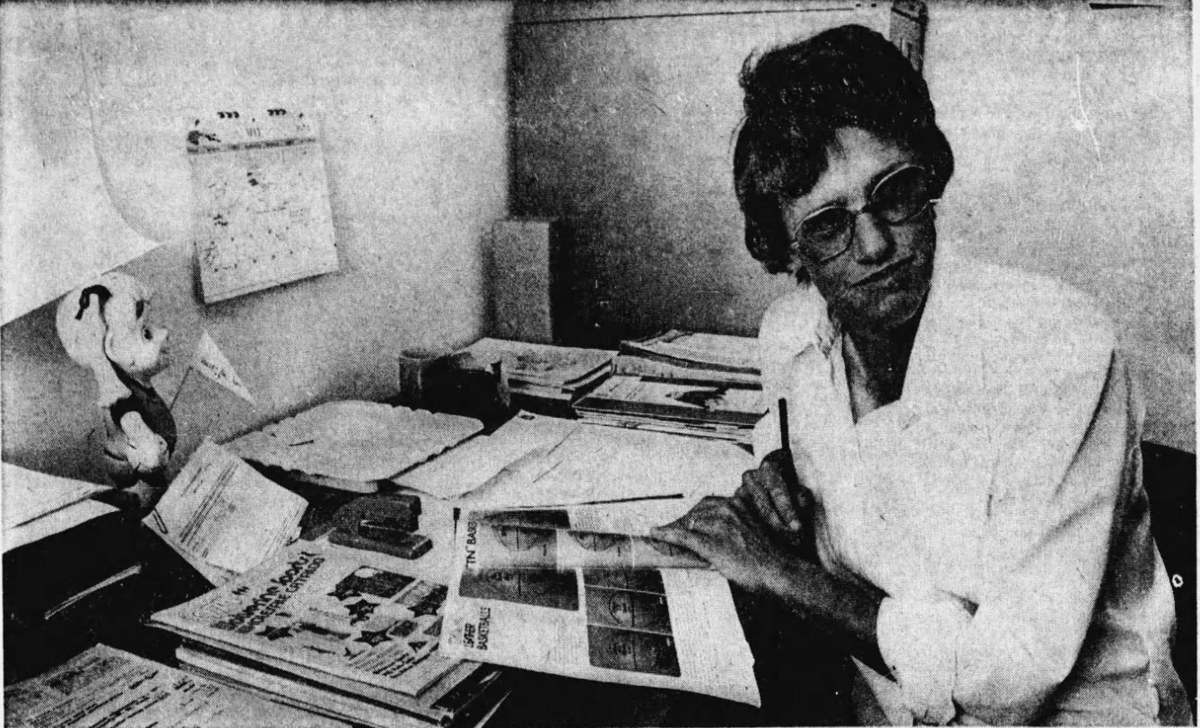
At Wichita State, Fife helped create opportunities for women athletes at a time when those opportunities barely existed. She helped organize women’s athletics before WSU had a full varsity structure, then was hired in 1974 as the school’s first director of women’s intercollegiate athletics. Later, when she believed the university was not providing enough financial support for women athletes to travel, compete and function like a real college athletic program, she filed a Title IX grievance that helped force the school to confront inequities between its men’s and women’s programs.
It was not an easy fight. It was not a popular fight. But Fife believed it was necessary.
“I’m not going to stop fighting for equal opportunity,” Fife told The Eagle in 1981 after resigning from her position.
That fight, more than four decades later, remains one of the defining moments in the history of women’s sports at Wichita State.
The competitiveness and conviction that carried Fife through that fight were forged early.
Fife was born August 19, 1936 in Wichita, the daughter of George and Maxine Matson. She attended high school in Winfield, then spent her adult life in Wichita.
Golf was part of her life almost from the beginning.
Her father was a four-time Kansas Amateur champion and Fife began playing around age 8 on a nine-hole course in Arkansas City.
“I started playing so dad wouldn’t make me work,” Fife told The Eagle in 1977. “I figured if I was out on the course playing golf, he wouldn’t have me doing something for him.”
What started as a way to escape chores became the center of her competitive life. Fife learned the game from her father and from Rolling Hills golf professional Gene O’Brien, who helped shape her smooth, powerful swing.
Fife’s life changed in 1955 when her mother, Maxine, died suddenly at age 43. Fife was 19 and in college. She felt lost and the golf course became a place where she could grieve, compete and regain a sense of direction. O’Brien and her father helped get her back to Rolling Hills.
She dove into the game and fell in love with it.
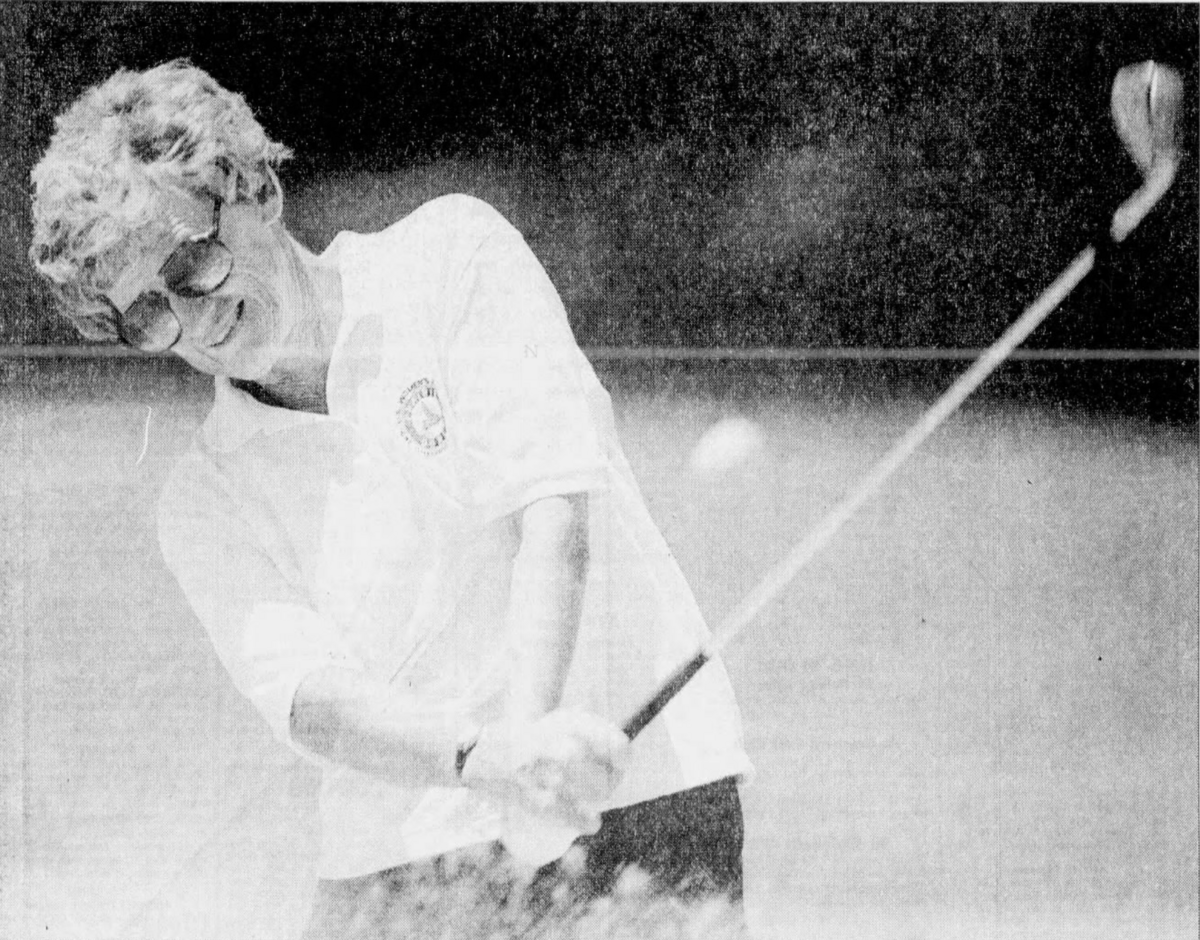
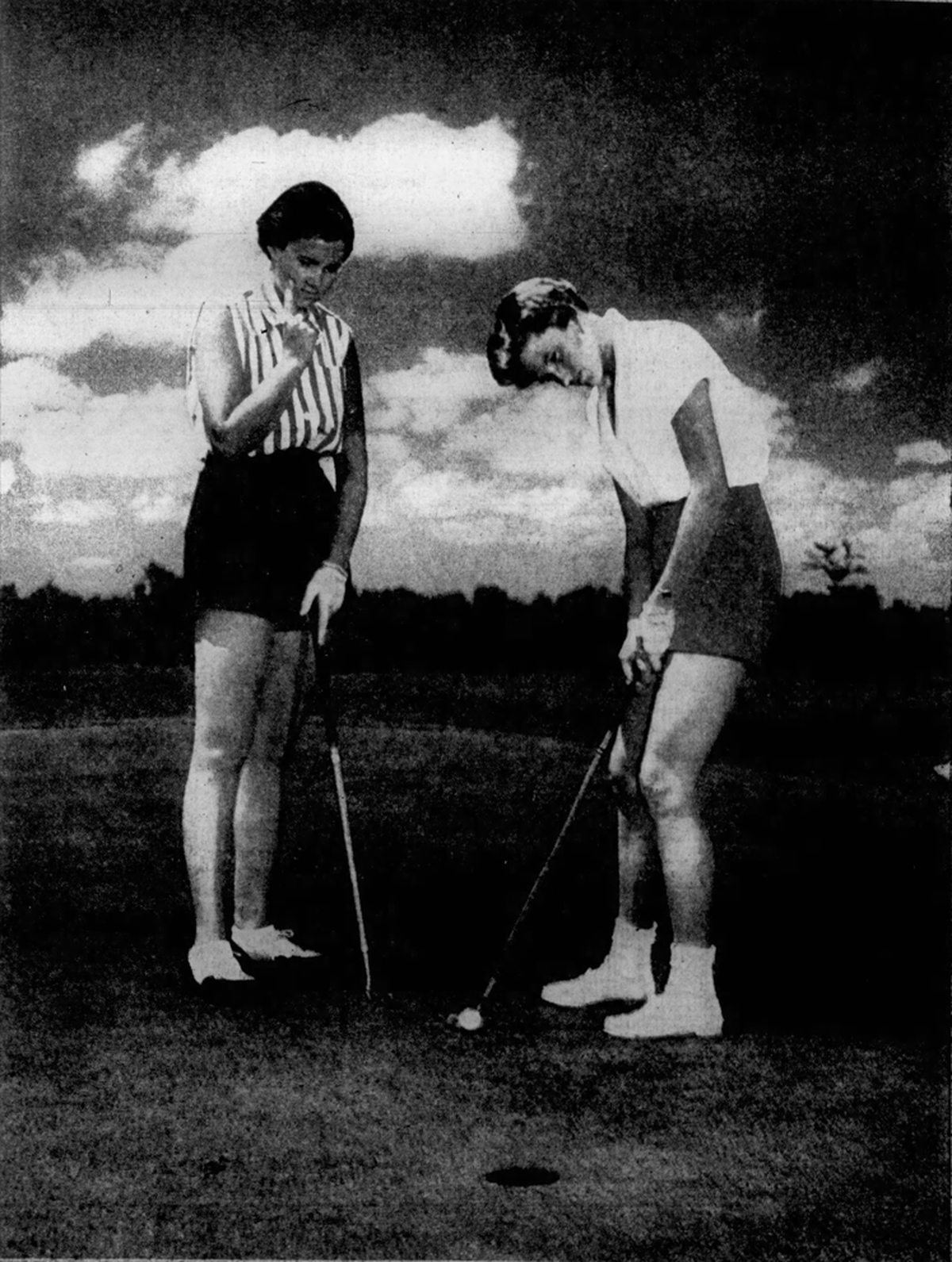
That same year, at age 18, she won the Wichita city title. It was the first of seven city championships with Fife winning in 1955 and then every year from 1957-62.
Her dominance quickly spread statewide. Fife won the Kansas Women’s Amateur in 1956, 1957, 1959, 1960 and 1962. She also won three Broadmoor Invitational titles in Colorado and played in four U.S. Women’s Amateurs, including her run to the quarterfinals in 1960.
She was part of a golden generation of Wichita women’s golf, linked to the same city and courses that produced Smith, one of the LPGA’s founding members, and Bell, who later became president of the USGA.
“At the time, we didn’t really think about it,” Fife told The Eagle in 2022. “We were just trying to grow the game. I never realized it until afterwards just what a big deal it was.”
Fife’s own chance to chase a professional golf career came during an era when women’s professional golf was still trying to find stable footing. The LPGA was young, prize money was limited and even elite players had to fight for attention and financial security.
O’Brien believed Fife had the game to compete at that level.
“She could have beaten any of them,” O’Brien once said of Fife’s professional potential. “She had a beautiful swing.”
Fife never became a touring professional. Instead, she dominated city and state amateur tournaments, married Roger Fife and raised two daughters, Kirsten and Kaaren.
In 1963, Fife started teaching golf as a physical education teacher at Wichita State. Under the amateur rules of the era, that cost her amateur status. She stepped away from the amateur scene in Kansas and, for about a decade, was away from competitive golf while teaching and raising her family.
Her second golf act came years later, and it was as dominant as the first.
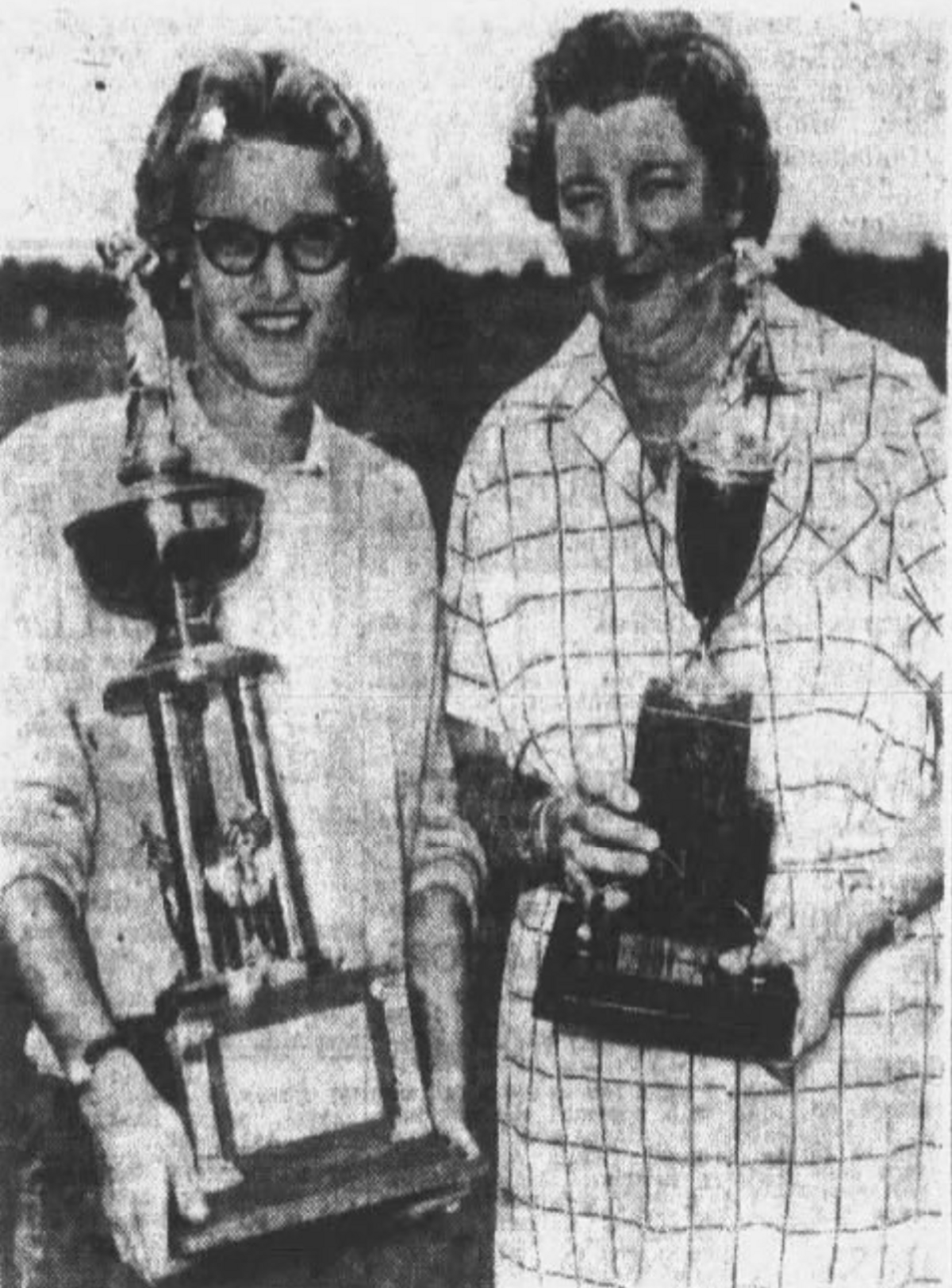
Fife won seven of the first eight Kansas Senior Women’s Amateur titles from 1988-95. The only year in that stretch she did not win was 1991, when a work conflict kept her from playing. In 1995, at age 58, she won the senior title by 20 strokes at Rolling Hills, the course that had shaped so much of her life.
“To me, the best way to spend time is still to come out and hit a few golf balls,” Fife said in 1995.
That competitiveness never left her. In 1987, before her senior run, Fife explained why she had stayed away from tournaments for a time.
“I won’t play in the tournaments now because it’s too stressful and I’m not going to settle for second place,” Fife told The Eagle. “If I can’t play up to the capabilities of a champion golfer, I don’t want to play it any more.”
Fife could have been remembered on golf alone. Her resume was more than enough: city champion, state champion, national-caliber amateur, senior champion, Kansas Golf Hall of Fame inductee, Kansas Sports Hall of Fame inductee.
But the other half of her life’s work unfolded at Wichita State.
Fife first began working at WSU in 1959. By the late 1960s, she was part of the push to create women’s athletic opportunities at the university. WSU joined the Association for Kansas Women’s Intercollegiate Sports in 1970, and in 1974, Fife was named the school’s first director of women’s intercollegiate athletics as WSU joined the Association of Intercollegiate Athletics for Women.
It marked the start of what is considered the varsity era of women’s athletics at Wichita State.
The early years were not glamorous. Before WSU sponsored women’s sports at the varsity level, coaches paid for their own gas and used their own cars on trips. Athletes paid for their own food and wore whatever they could piece together, sometimes buying T-shirts from the campus bookstore to use as uniforms. Coaches were not paid salaries.
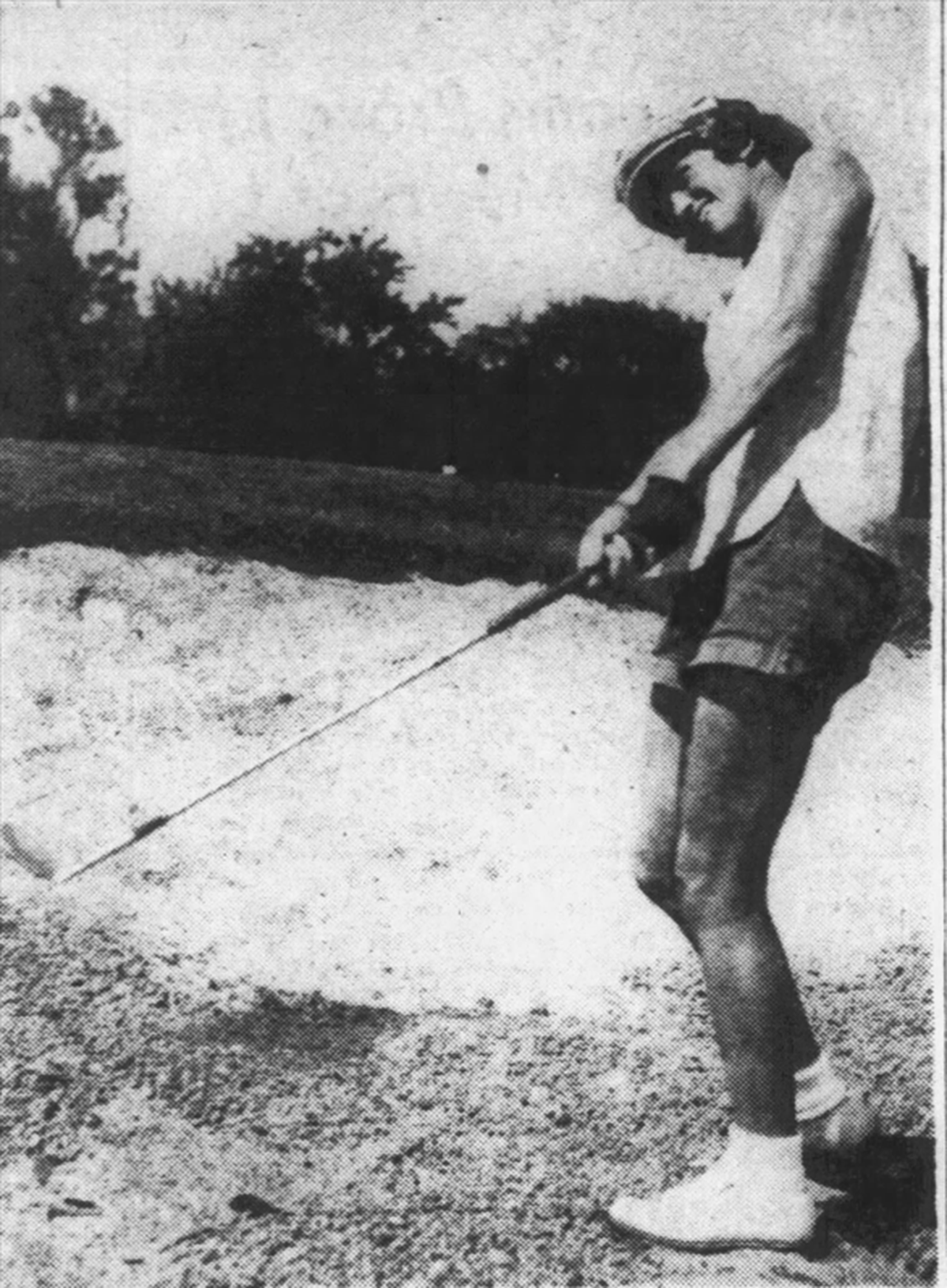
Fife was not taking over a built-out department. She was trying to build one from the ground up.
Fife led the women’s programs on their own for six years before the men’s and women’s athletic departments merged in 1980. She then became associate athletic director under WSU athletic director Ted Bredehoft.
But the merger did not erase the inequities.
In August 1980, Fife filed a Title IX grievance against WSU. Her central argument was that the school’s budget for women’s athletics was not enough to cover travel and basic support for teams. Fife believed the complaint was the only way to bring meaningful change.
The internal review backed much of her case.
In February 1981, WSU’s internal Title IX committee substantiated most of Fife’s grievances, finding funding inequities in scholarships, coaching, recruiting, facilities, equipment, supplies, practice opportunities, travel budgets and non-economic areas such as publicity and level of competition. The committee determined the women’s program deserved $75,900 in additional support, nearly double the shortfall Fife had identified and recommended a long-term equalization plan.
The findings confirmed what Fife had argued: WSU’s women athletes were not being supported at the same level as the men.
The complaint came at a cost. It helped lead to Fife leaving the athletic department in 1981 and returning to teaching physical education. But the grievance became a game changer for women’s athletics at WSU, pushing the university toward a more serious commitment to funding and supporting women’s teams.
Fife later made clear she did not regret the stand.
“I can look in the mirror in the morning and like myself,” Fife told The Eagle in 1987. “And that’s the key to happiness.”
Fife retired from teaching at WSU in 1998 after 39 years. By then, the women’s sports program she helped build no longer resembled the shoestring operation of its earliest years.
She lived long enough to see Wichita State women’s teams play in front of thousands of fans. She saw NCAA banners hanging in Koch Arena for basketball and volleyball. She saw women athletes receive scholarships, travel, gear, publicity and institutional support that had once seemed far out of reach.
“I knew it would happen, it would go,” Fife told the Roundhouse in 2018. “It’s satisfying to know that the interest is out there.”
The honors followed.
Fife was inducted into the Kansas Golf Hall of Fame in 1993, the Kansas Sports Hall of Fame in 2006 and the Shocker Sports Hall of Fame in 2018. She served as president of the Kansas Women’s Golf Association and has a plaque on the history wall at Rolling Hills, the course that connected so many chapters of her life.
Even in her 80s, Fife remained tied to the game. She was still an active member of Rolling Hills at 85 and volunteered at the Heritage Classic, the women’s professional golf tournament that brought the sport back to the same Wichita course where the LPGA was founded in 1950.
For Fife, that history was never abstract. She lived it.
She had been the young golfer watching women’s golf try to legitimize itself in Wichita. She had become one of the best amateurs in Kansas. She had walked away, raised a family, returned and won again. She had fought for women athletes at WSU when the fight was uncomfortable.
In 2022, reflecting on the women who built the game before her and around her, Fife framed their work in simple terms.
“I don’t think those women were fighting so much for their rights as they were just fighting for fairness,” Fife told The Eagle. “They put in all of the work. I don’t think that they felt like they deserved anything. It wasn’t, ‘Give it to me.’ They went out and they worked for it.”
That could have described Fife, too.
Her husband, Roger Fife, died last October at age 91. The couple had been married for 65 years. She is survived by two daughters, Kirsten Teague and Kaaren Fife, and son-in-law Larry Teague.
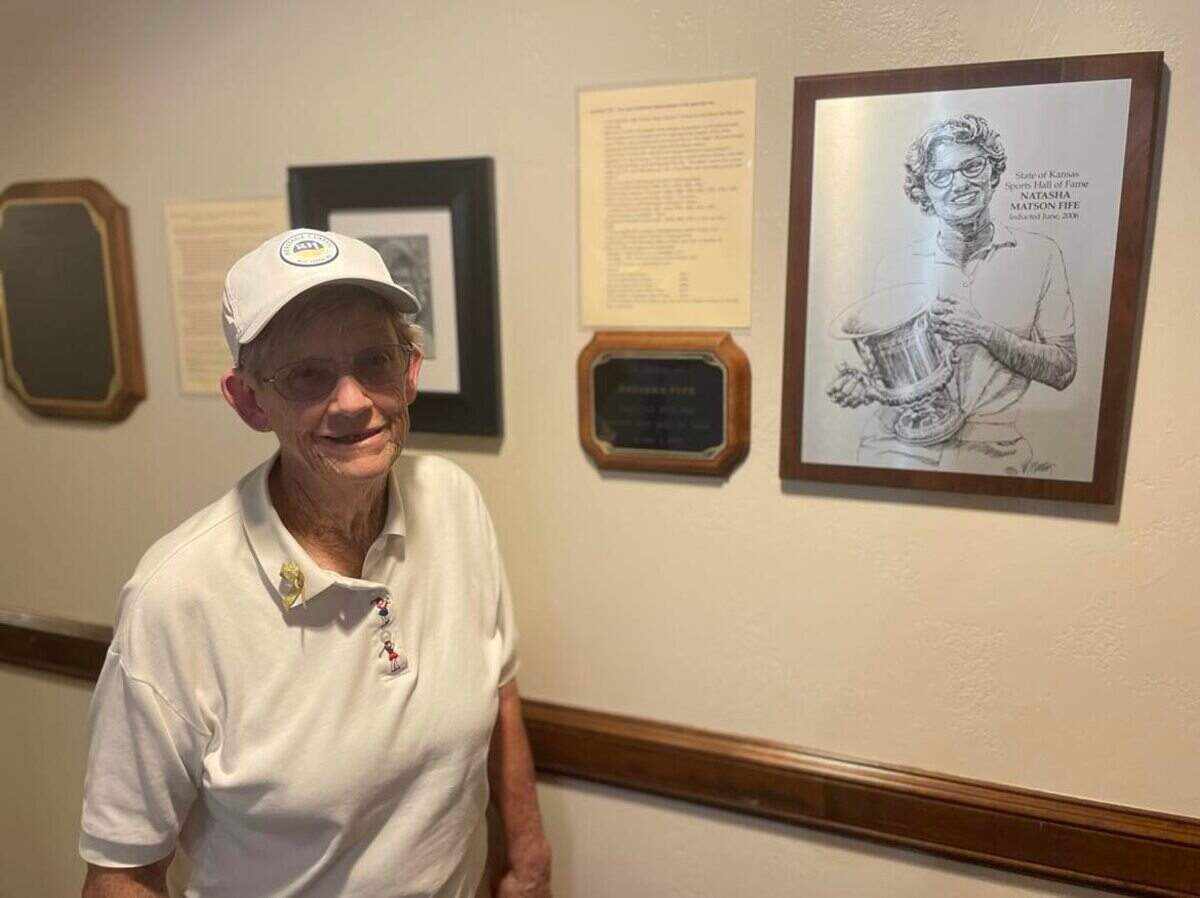
Near the end of her life, golf was still where Fife returned — to memories, to friendships, to the place where she first found herself after loss and where she remained connected to the game’s larger history.
“Golf is still part of my life and it will always be a part of my life,” Fife told The Eagle in 2022. “You can’t go wrong on the golf course.”
She had been the young golfer watching women’s golf claim a future in Wichita. She had become one of Kansas’ best. She had helped build women’s athletics at Wichita State from almost nothing. And when she believed women athletes still were not being treated fairly, she was willing to stand alone and say so.
That was the lasting mark of Fife’s life: She did not just play the game. She pushed it forward.
.jpg)