
It’s time to reopen Kansas schools — and be honest about learning losses | Editorial
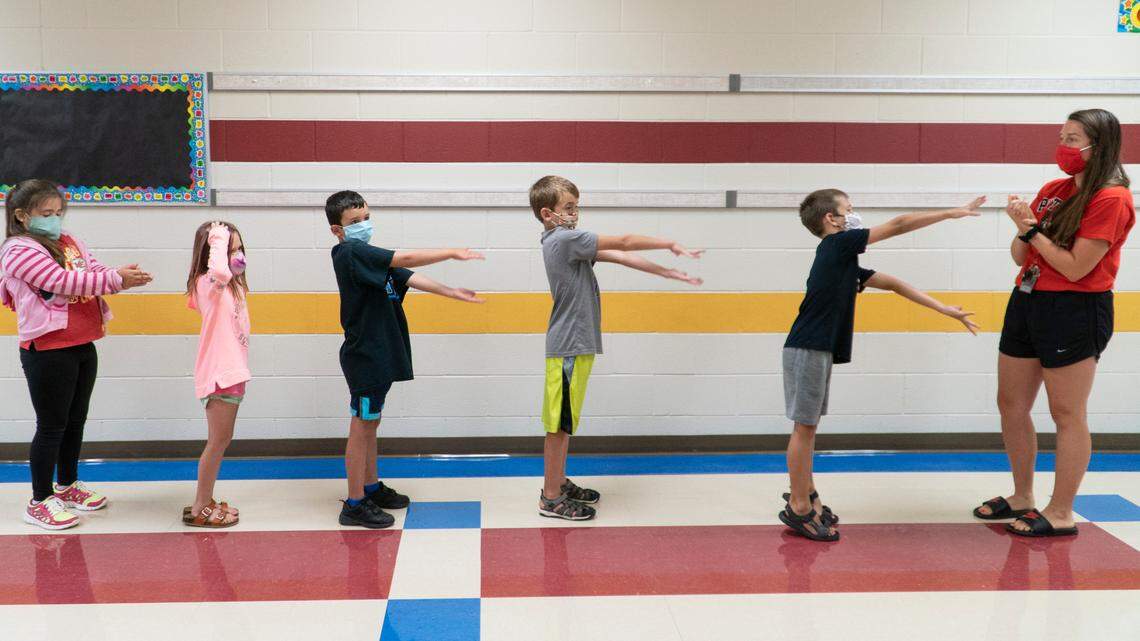
After wisely opting to fast-track vaccines for teachers, Kansas should soon see a widespread return to in-person learning.
And not a moment too soon.
It’s been nearly a year since Gov. Laura Kelly closed schools statewide to curb the spread of COVID-19 — a prudent decision, but one that led to massive upheaval for students and their families.
And while teachers should be commended for continuing lessons through an unprecedented pandemic — adjusting, adapting, persisting and pivoting more than an NBA All-Star — the fact remains that students will return to classrooms with marked deficits in both academic and social/emotional areas.
Moving forward, Kansas school districts must be honest about those challenges and craft a plan to make up for lost time.
We don’t yet know how far behind students may have fallen during the pandemic in Wichita or elsewhere. But using data from past school closures, along with regular trends such as summer breaks, national researchers have started releasing projections of learning loss — and the picture is grim.
McKinsey, a national consulting and research firm, predicts that by the fall of 2021, students will have lost three months to a year of academic growth, depending on the quality of their remote instruction.
While the COVID-19 pandemic has affected all students, it has taken an especially heavy toll on Black, Hispanic and American Indian communities, and school shutdowns could prove devastating to students of color, McKinsey reports.
Another consequence of the pandemic: More parents are holding children out of preschool and kindergarten altogether — a fact that will widen learning gaps and could even affect school funding.
In Wichita, where overall enrollment is down more than 5% from 2019, kindergarten enrollment is down 9%, and pre-K enrollment is down nearly 22%, according to figures provided by the district.
“We know parents of younger students had concerns of sending their children to school,” district spokeswoman Susan Arensman said in an e-mail. “We heard this from families as we were enrolling students this year.”
Although Kansas doesn’t require kindergarten — a fact lawmakers should reconsider moving forward — educators say kindergarten helps children develop academic, social and emotional skills and has a notable effect on later learning.
And then there’s the issue of overall attendance.
Last summer, Wichita officials said 16.3% of high-schoolers, 15% of middle-schoolers and 8.1% of elementary students had no contact with educators during the final months of the 2019-2020 school year. They pointed to a lack of digital devices as a reason some students were AWOL, and they spent $24 million on technology to bridge the divide.
This year, teachers have a better handle on remote learning. But quarantines, spotty internet and the challenges of keeping kids engaged online has illuminated the need to get students back in schools as quickly as is safely possible.
Now, thanks to the COVID-19 vaccine, it could finally be back-to-school time in Kansas — time to get a closer look at where students are and where we go from here.
This story was originally published February 26, 2021 at 3:19 PM.