Could La Niña mean fewer thunderstorms in the Wichita area? What one forecaster says
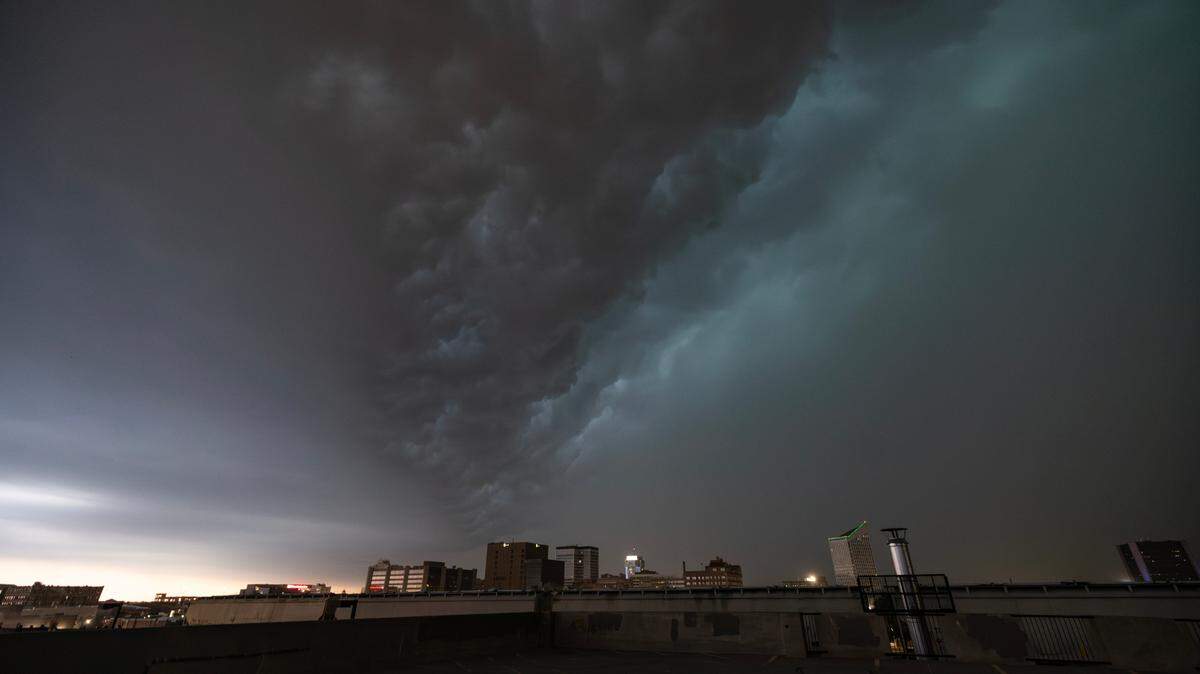
A transition to a different weather pattern could mean a decline in thunderstorms in the Wichita area.
The Wichita area has seen its fair share of showers and thunderstorms recently, and this week does not look like it will be much different. But a switch from El Niño to La Niña could mean a much-needed break for Wichitans.
“At some point, late June and July, I think we might see everything to switch off for as far as precipitation, and then it goes dry,” said Eric Metzger, a forecaster with the National Weather Service’s Wichita office.
The United States has been under El Niño for about a year, and we’re now in the transition period from El Niño to La Niña.
“That’s generally how a transition period is, you just go go go the way you are, and then all of a sudden you got to switch. You don’t realize the switch happened until two or three weeks after,” Metzger said.
So, what should you know about these weather patterns? And what could they mean for weather in Wichita this summer? Here’s a quick guide.
What are La Niña and El Niño?
La Niña, which translates to “little girl” in Spanish, happens when strong winds push warm water toward Asia. This causes upwelling to increase, which in turn brings cold water to the surface. The colder water pushes the jet stream northward in the pacific.
According to the National Oceanic and Atmospheric Administration, this weather pattern typically brings drought to the southern United States and higher precipitation as well as flooding to the Pacific Northwest and Canada. Temperatures in the wintertime lean warmer in the southern U.S. and cooler in the northern U.S.
El Niño, on the other hand, happens when winds are weakened, causing warm water to be pushed back toward the east, near the west coast of the Americas.
This usually leads to northern U.S. and Canada seeing warmer-than-average temps, the National Oceanic and Atmospheric Administration reports.
Both La Niña and El Niño affect weather because as ocean surface temperature changes, often air temperatures and rainfall patterns do, too.
How could La Niña impact Wichita weather?
It’s been a stormy spring in Wichita, which goes hand-in-hand with the El Niño weather pattern.
“Take a look what we’ve had a couple of weeks ... that’s fairly typical of an El Niño,” Metzger said. “El Niños tend to produce a lot of activity.”
Once we start feeling the impacts of La Niña, that could change, Metzger said. But when the area feels the switch to a La Niña depends.
“We’ve been under an El Niño for most of the winter, but we really didn’t feel the effects of it until late winter, early spring,” Metzger said.
“With the rate things are things are falling and transitioning, we’ll probably roll into a La Niña sometime in July,” Metzger said. “Now, it can take months for that to actually translate into the area. So we could start feeling the effects as early as mid-July or it could be as late as November.”
This weather pattern usually means hot and dry weather in the summertime, Metzger said. A La Niña usually means a dry winter, as well, but that does not mean a warmer winter.
“That February cold snap we had in 2021 that was in the heart of deep, strong La Niña,” Metzger said.
While weather patterns can be used to predict the patterns of seasons, it’s hard to get it perfect, Metzger said.
“This is one of the climate things that is very, very difficult to really nail down, especially with rapid transitions that we’re seeing,” Metzger said.